

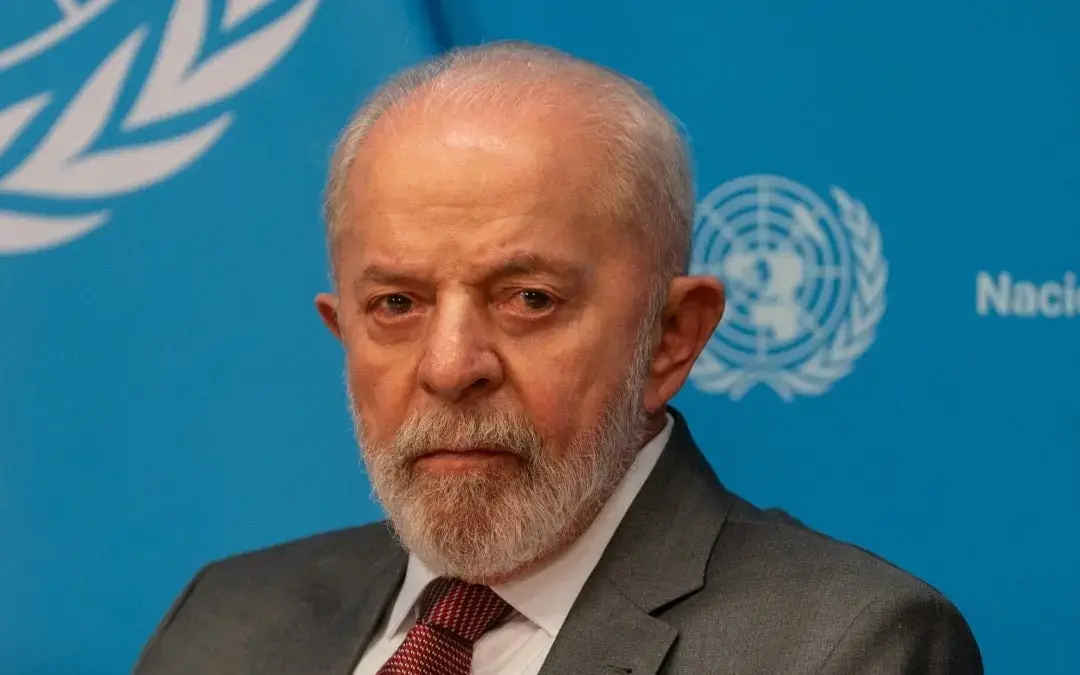
BRASÍLIA — In a stunning regulatory reversal, Brazilian President Luiz Inácio Lula da Silva has signed an emergency decree banning online betting across the country. The decisive executive action comes less than two years after his own administration established a comprehensive legal framework to regulate, license, and tax the multi-billion-dollar digital gambling sector.
The immediate suspension of online betting has sent shockwaves through the Latin American tech, financial, and sports industries. It also marks a dramatic escalation in the political battle ahead of the highly contested elections on October 4, where President Lula is currently locked in a statistical tie with right-wing Senator Flávio Bolsonaro, the eldest son of former President Jair Bolsonaro.
1. Main Facts: The Executive Ban and the 120-Day Countdown
The presidential decree, known locally as a Medida Provisória (Provisional Measure), takes effect immediately, effectively outlawing all digital gambling platforms, sportsbooks, and online casinos operating within Brazilian territory. However, under the Brazilian Constitution, the decree carries a strict legislative shelf-life: the National Congress must review, debate, and formally vote to approve the measure within 120 days. If Congress fails to ratify the decree within this window, the ban will expire, and the previous regulatory framework will be reinstated.
The sudden policy shift represents a complete about-face for the Lula administration. In late 2023, the government successfully pushed through Law 14.790, which sought to regulate the grey-market betting industry, project substantial tax revenues, and establish consumer protection guidelines.
The administration’s abrupt decision to dismantle this framework is driven by a combination of severe macroeconomic warnings regarding household debt, rising public health concerns over gambling addiction, and shifting political winds as the country approaches a critical electoral cycle.
2. Chronology: From Legalization to an Absolute Ban
To understand the rapid rise and sudden fall of online betting in Brazil, one must trace the regulatory timeline over the last six years:
[December 2018] ──► Law 13.756 passed under President Michel Temer, decriminalizing sports betting but leaving it unregulated.
      │
[2019 – 2022]   ──► The market operates in a regulatory vacuum. Offshore platforms aggressively target Brazilian consumers.
      │
[December 2023] ──► President Lula signs Law 14.790, creating a formal licensing, taxing, and regulatory framework.
      │
[Mid-2024]      ──► Economic indicators reveal surging household debt and a sharp drop in retail spending linked to betting.
      │
[September]     ──► Public opinion polls show 75% of Brazilians support a complete ban on online gambling.
      │
[Present Day]   ──► Lula issues an emergency decree banning online betting, sparking a 120-day congressional countdown.
The Regulatory Vacuum (2018–2022)
The foundation for online betting in Brazil was laid in December 2018, when outgoing President Michel Temer signed Law 13.756. This law decriminalized fixed-odds sports betting but mandated that the Ministry of Finance formalize regulations within four years. During the presidency of Jair Bolsonaro (2019–2022), these regulations were repeatedly delayed due to pressure from conservative and evangelical congressional factions, leaving the market in a highly profitable, untaxed, and unregulated "grey area." Offshore operators aggressively sponsored domestic football teams and saturated television and digital advertising.
The Push for Regulation (2023)
Upon returning to office, President Lula sought to capitalize on this unregulated market. In December 2023, the government enacted Law 14.790, designed to bring "Bets" (as online sportsbooks are known in Brazil) under federal oversight. The law imposed a 12% tax on operators’ gross gaming revenue (GGR), a 15% tax on individual winnings over a certain threshold, and established a hefty licensing fee of R$30 million (approximately $6 million USD) for operators.
The Backlash and the Sudden Pivot (2024)
By mid-2024, the social and economic consequences of unregulated gambling became impossible to ignore. Reports from the Central Bank of Brazil, retail associations, and mental health organizations painted a grim picture of escalating addiction and financial distress. Despite the financial windfall the government anticipated from licensing fees, public outcry reached a fever pitch, culminating in the emergency decree issued on the eve of the October elections.
3. Supporting Data: Debt, Public Health, and Public Opinion
The decision to implement an outright ban is backed by alarming macroeconomic and public opinion data that forced the government’s hand.
The Household Debt Crisis
A primary catalyst for the ban was a series of economic indicators showing that online betting was cannibalizing household consumption. According to recent data, Brazil’s household debt levels have hovered near historic highs, with approximately 78% of families reporting some form of debt.
A landmark study by the Central Bank of Brazil revealed that lower-income families were disproportionately affected. In a single month, beneficiaries of Bolsa Família—Brazil’s flagship social welfare program designed to alleviate extreme poverty—transferred an estimated R$3 billion ($550 million USD) to online betting platforms via the country’s instant payment system, Pix. The revelation that state-funded welfare was being funneled directly into online casinos sparked national outrage.
Impact on Retail and Commerce
The retail sector also sounded the alarm. The National Confederation of Commerce in Goods, Services, and Tourism (CNC) reported a noticeable decline in retail sales, particularly in non-durable consumer goods such as clothing, home appliances, and food. The CNC estimated that Brazilians spent more on online gambling in the first half of 2024 than on traditional leisure, culture, and personal care combined, threatening the country’s broader economic recovery.
| Economic Indicator | Impact of Online Betting Era |
|---|---|
| Household Debt Level | Reached historic highs, affecting ~78% of families |
| Welfare Leakage (Bolsa Família) | Estimated R$3 billion ($550 million USD) spent on betting in a single month |
| Retail Sector Performance | Drop in sales of non-durable goods as consumer capital shifted to digital casinos |
| Public Approval of Ban | Approximately 75% (three-quarters) of the population in favor of a total ban |
Public Opinion Shifts
This economic strain translated into overwhelming public support for government intervention. Recent opinion polls conducted across diverse demographics revealed that approximately three-quarters (75%) of Brazilians support a total ban on online betting. This high level of consensus cut across polarized political lines, making a crackdown highly attractive to an administration fighting for its political survival.
4. Official Responses: A Polarized Political Battleground
The announcement of the decree has immediately become a central flashpoint in the campaign trail, reflecting the deep polarization of modern Brazilian politics.
The Government’s Defense: A Public Health Emergency
The Lula administration has framed the ban not as a political maneuver, but as an urgent intervention to protect vulnerable citizens.
Speaking at the official announcement, Executive Secretary of the Finance Ministry Dario Durigan emphasized the clinical and social dangers of unregulated gambling:
"We are facing a public health problem related to online betting. It is a serious, systemic issue that is destroying families and draining the financial resources of our most vulnerable citizens. The government cannot stand by while public health and economic stability are compromised."
Government officials have also indicated that the Ministry of Health is preparing a specialized task force to treat gambling addiction (ludopathy) within the Unified Health System (SUS), treating it with the same clinical urgency as chemical dependency.
The Opposition’s Counterattack: "Hypocritical and Populist"
The opposition, led by Senator Flávio Bolsonaro, has fiercely condemned the ban. Speaking at a high-energy campaign rally in Rio de Janeiro, the right-wing senator accused President Lula of using the ban as an opportunistic electoral tool to win over conservative and evangelical voters who are traditionally hostile to gambling.
"This measure is populist, hypocritical, and entirely politically motivated. The government spent the last year bragging about the tax revenues they would collect from this sector, and now, weeks before an election, they destroy an industry, kill jobs, and violate legal certainty just to score cheap political points."
        — Senator Flávio Bolsonaro, speaking in Rio de Janeiro
Flávio Bolsonaro and his allies argue that the ban will not stop gambling but will instead destroy legitimate businesses, eliminate thousands of jobs, and push millions of Brazilian bettors back into the unregulated, untaxed, and dangerous criminal underworld of offshore, black-market betting sites.
5. Implications: Economic, Social, and Legislative Fallout
The immediate ban on online betting has profound implications that extend far beyond the ballot box on October 4.
1. The Fiscal Impact and Budgetary Shortfalls
The ban represents a massive fiscal blow to the Ministry of Finance. The government had previously projected that licensing fees and taxes on online betting would generate between R$10 billion and R$12 billion ($1.8 billion to $2.2 billion USD) annually. These funds were earmarked to help meet the administration’s ambitious zero-deficit fiscal targets. Without this revenue stream, Finance Minister Fernando Haddad will face significant hurdles in balancing the federal budget, potentially forcing unpopular spending cuts or tax hikes in other sectors.
2. Crisis in Sports Sponsorship
Brazilian football—the cultural heart of the nation—is facing an unprecedented financial crisis as a direct result of the decree. Currently, online betting companies sponsor 19 out of the 20 clubs in Brazil’s top-tier football league, Série A. Many of these multi-million-dollar contracts serve as the primary source of revenue for these clubs, funding player salaries, stadium maintenance, and youth academies.
The immediate ban invalidates these sponsorships, leaving clubs scrambling to fill massive budgetary deficits. Broadcasters, advertising agencies, and sports marketing firms are also bracing for a sharp decline in ad spend, as betting platforms were among the largest advertising spenders in the country.
3. The Rise of the Black Market
Industry analysts warn that a total ban will inevitably lead to a massive resurgence of the underground gambling economy. Because the internet bypasses physical borders, blocking access to thousands of international gambling websites is a technical challenge.
Without domestic, regulated platforms, users are highly likely to turn to unregulated offshore sites using virtual private networks (VPNs) and cryptocurrencies. This shift would leave consumers entirely unprotected against fraud, identity theft, and unfair gaming practices, while stripping the state of any regulatory oversight.
4. Legislative Showdown in Congress
The ultimate fate of the ban lies in the hands of the National Congress. Over the next 120 days, the decree will be subjected to intense lobbying from both sides.
- The Pro-Ban Coalition: Composed of evangelical lawmakers, consumer protection advocates, and leftist factions concerned with social welfare.
- The Opposition Coalition: Composed of libertarian-leaning politicians, representatives of the sports industry, and centrist lawmakers (Centrão) who argue that regulation, rather than prohibition, is the only realistic way to manage the industry.
This upcoming legislative battle will test President Lula’s coalition building skills and could reshape the regulatory and economic landscape of Latin America’s largest nation for years to come.


Leave a Reply