

By Global Sports Desk
Main Facts
The landscape of Colombian professional football broadcasting faces a seismic shift as the battle for television and digital rights for the 2027–2030 cycle intensifies. At the epicenter of this high-stakes corporate drama is Mauricio Correa, a foundational figure in the creation of Win Sports—the very network that has dominated Colombian football broadcasts for over a decade.
Correa has now emerged as the face of a formidable rival proposal to wrest control of the Fútbol Profesional Colombiano (FPC) rights away from Win Sports and Disney, positioning himself on the opposite side of the negotiating table from an enterprise he helped build.
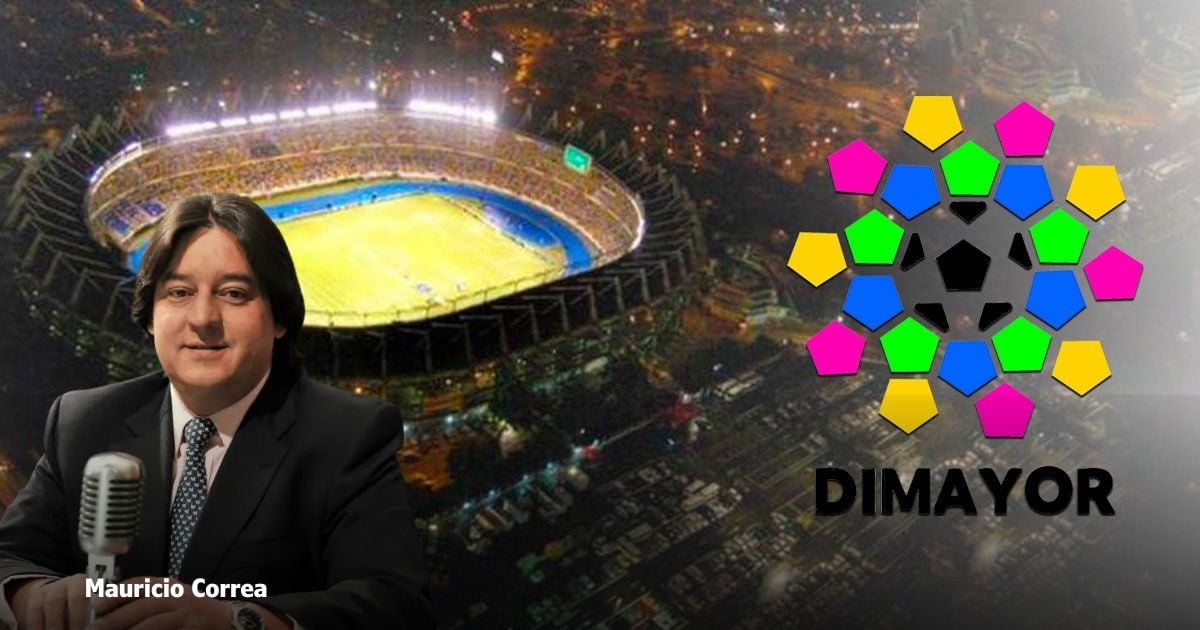
The competing bid, submitted to the División Mayor del Fútbol Colombiano (Dimayor), dangles a headline-grabbing figure of up to $90 million USD annually. However, investigative reporting by journalist Alejandro Pino Calad on his program Historias Secretas has unmasked critical nuances within the proposal. Notably, the multi-million-dollar price tag is not entirely guaranteed upfront; rather, it features a guaranteed base of $50 million USD annually, with the remaining $40 million USD tied to performance milestones and business metrics.
Financial backing for Correa’s group reportedly stems from Central America: specifically, the Grupo Financiero Atlántida of Honduras. Meanwhile, the bid has sparked a flurry of corporate intrigue, corporate entities, and public clarifications involving Go Sports, corporate shell structures, and strict confidentiality agreements instituted by Dimayor.
Chronology: The Evolution of Colombian Football Broadcasting
To understand the weight of Mauricio Correa’s current challenge, it is essential to trace the historical timeline of how Colombian football became one of the country’s most lucrative and fiercely contested media assets.

- Pre-2012 (The Open and Cable Era): For decades, Colombian football matches were scattered across various traditional television networks and regional channels, lacking a unified, high-definition home dedicated entirely to the sport. Rights negotiations were fragmented, and clubs frequently complained about under-monetization.
- 2012 (The Birth of Win Sports): Backed by industry veterans and executive leadership, Mauricio Correa stepped in as the inaugural president of Win Sports. Under his watch, the channel was conceptualized and launched as a joint venture designed to bundle and maximize the audiovisual rights of the FPC, transforming it into a pay-TV staple.
- 2012–2026 (The Win Monopoly): Over the next decade and a half, Win Sports solidified its position as the undisputed gatekeeper of Colombian football, introducing subscription models (Win Sports+) that generated significant revenue streams for Dimayor and its member clubs, albeit amid frequent criticism from fans over paywalls.
- April 2026 (Dimayor Opens the Bidding Process): Looking ahead to the 2027–2030 broadcast cycle, Dimayor established a strict confidentiality framework, opening the floor for domestic and international operators to bid on the next era of FPC media rights, aiming to expand international reach and integrate modern digital formats.
- September 2026 (The Challenge and Revelations): Mauricio Correa steps back into the spotlight, not as an incumbent executive, but as the representative of a major outside bid. Investigative reports by Alejandro Pino Calad expose the backing of Grupo Financiero Atlántida and unravel the complex corporate connections linking the bid to offshore entities and the legacy of Go Sports. Dimayor is subsequently forced to issue public clarifications regarding corporate identities while incumbent operators prepare their contractual responses.
Supporting Data and Financial Architecture
The financial anatomy of the $90 million USD proposal reveals a sophisticated, risk-mitigated strategy rather than a simple blank check.
Breakdown of the Bid
- Total Headline Figure: Up to $90 million USD per year.
- Guaranteed Floor: $50 million USD annually, ensuring a baseline revenue stream for the Dimayor and its clubs regardless of market performance.
- Conditional Variable: Up to $40 million USD annually, contingent upon commercial performance, subscriber metrics, digital monetization, and strategic business benchmarks.
The Financial Backer: Grupo Financiero Atlántida
The financial muscle behind Correa’s consortium originates in Honduras. Grupo Financiero Atlántida is a powerful, long-standing Central American financial conglomerate with diverse interests across banking, insurance, and investments. Its involvement injects substantial international capital into the Colombian sports market, signaling a cross-border push by regional conglomerates into lucrative sports rights ecosystems.
The Go Sports Nexus and Offshore Structures
A major point of contention during the rollout of the bid involved the name Go Sports. Initial reports linked Go Sports to the offering, prompting Dimayor to release a swift public clarification stating that Go Sports Media S.A.S.—the local entity—did not participate in the bidding process.

However, investigative disclosures highlighted that while the domestic S.A.S. entity may not have officially stepped forward, structural connections tied to Go Sports Media S.R.L. (a corporate vehicle allegedly founded in a tax haven) run deep. Documents revealed by Alejandro Pino Calad connected former Win Sports Vice President Gerardo Alejandro Lugo (who served alongside Correa during his presidential tenure) and Correa himself to corporate shells such as Placar Marketing e Inversiones, which forms part of the Go Sports historical architecture.
This creates a paradoxical corporate web: executives who built the original infrastructure are now utilizing specialized offshore and regional networks to challenge the very asset they helped institutionalize.
Official Responses and Institutional Reactions
As the media storm grew, key stakeholders issued formal statements to clarify positions and manage public perception.

Dimayor’s Stance
Faced with escalating speculation across social media and investigative journalism platforms, Dimayor moved quickly to protect the integrity of its administrative process. Through official channels, the governing body reiterated:
"The administration of Dimayor is permitted to inform public opinion that the company Go Sports Media S.A.S. has not participated nor formed part of the bidding process related to television and audiovisual rights…"
Dimayor’s leadership has maintained a strict stance of confidentiality since opening the bidding parameters in April 2026, aiming to insulate the multi-million-dollar negotiations from external political or media pressure.
The Incumbent Response (Win Sports & Disney)
While Win Sports holds the contractual right of first refusal—allowing them to match or counter competitive proposals under specific terms set by Dimayor—executives and partners like Disney are evaluating the full scope of the $50M+$40M proposal. Because the challenge involves not just a flat monetary value, but also digital integration, international scaling, and risk-sharing structures, the incumbent operators must weigh whether their current model can fend off a well-capitalized international consortium.
Implications for Colombian Football and Media Consumption
The entry of Correa’s consortium and the backing of Grupo Financiero Atlántida carry profound implications for the immediate future of sports business in Latin America.
1. Revenue Realism vs. Inflated Expectations
For Colombian clubs accustomed to weathering financial pressures, a guaranteed $50 million USD base offers stability, while the potential for $90 million USD represents an enticing financial ceiling. However, club presidents must weigh the risks of the conditional $40 million USD. If subscriber acquisition targets or digital monetization goals fall short, clubs could face budgetary shortfalls compared to a more predictable, traditional broadcast contract.

2. The End of the Win Monopoly?
Since 2012, Win Sports has been synonymous with televised Colombian football. If Dimayor ultimately pivots toward Correa’s proposal—or uses it to force Win into a much richer renewal—it marks a watershed moment. It proves that the domestic market is no longer a closed loop, inviting international financial groups to view Colombian sports content as prime assets for regional expansion.
3. Digital Transformation and Consumer Impact
The 2027–2030 cycle is explicitly designed to modernize how fans consume the FPC. Beyond traditional cable television, the new rights holder will be tasked with scaling global streaming, mobile applications, and alternate digital formats. Whether this results in a dismantling of restrictive paywalls (such as the controversial Win Sports+ model) or introduces new subscription tiers remains the primary concern for millions of Colombian football supporters.
4. A Poetic Corporate Irony
Ultimately, the narrative is defined by Mauricio Correa’s trajectory. Having navigated executive suites at Sky, Telmex, and UNE, and having laid the groundwork for Win Sports nearly fifteen years ago, Correa has stepped out of the historical blueprint he drew. By aligning with Central American capital to challenge the establishment, he has positioned himself as the ultimate disruptor in a game he helped invent—proving once again that in modern sports business, there are no permanent allies, only permanent interests.


Leave a Reply