

Main Facts
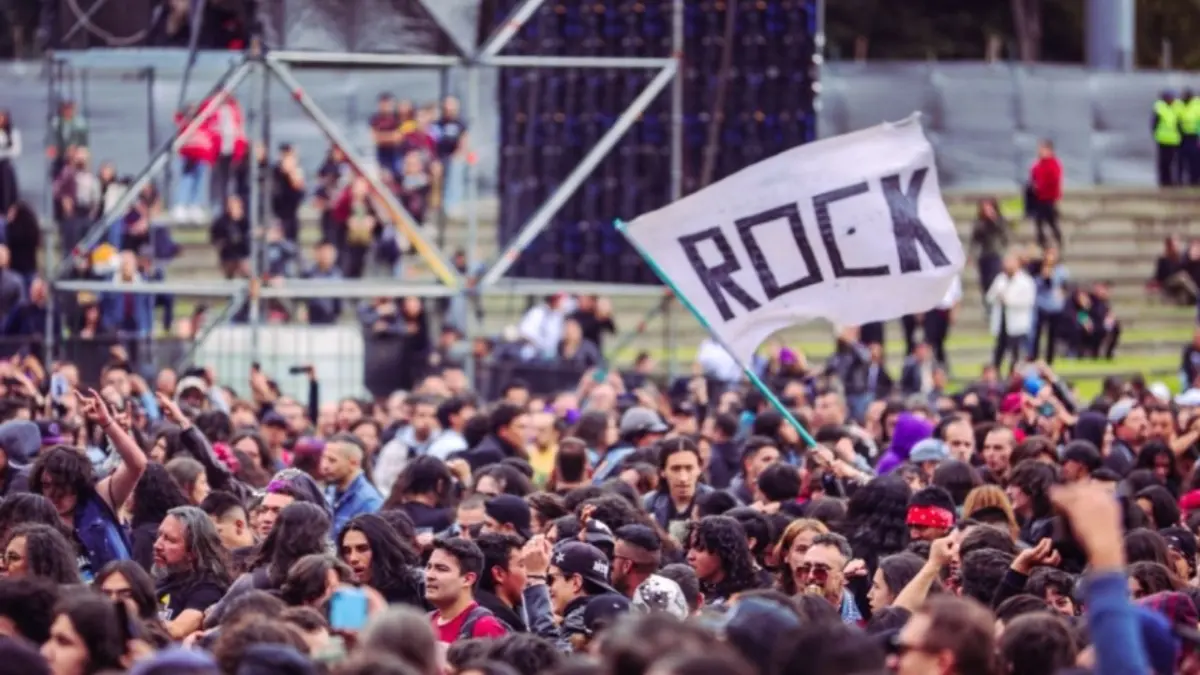
Bogotá’s iconic Parque Metropolitano Simón Bolívar has once again opened its expansive gates to host one of the most anticipated cultural events in Latin America: Rock al Parque. Marking its monumental 30th anniversary, this year’s festival solidifies its legacy as a cornerstone of free public art, bringing together multi-generational crowds of rock and metal enthusiasts from across the globe.
Running from October 10 to 12, the three-day festival features a meticulously curated lineup of over 60 musical acts spanning international icons and homegrown talent. Distributed across four distinct stages—Escenario Plaza, Escenario Bio by Vans, Escenario Eco, and Escenario BBC—the festival promises an immersive auditory experience.
The initial day of the festival sets a heavy, thunderous tone, showcasing a diverse roster of artists hailing from countries as far-flung as Sweden, Switzerland, Finland, the United States, and Spain, alongside regional powerhouses from Bogotá, Medellín, and other Colombian cultural hubs. Headliners and fan favorites such as Stratovarius, Apocalyptica, Burning Witches, Between the Buried and Me, Triptykon (performing classic Hellhammer and Celtic Frost anthems), Darkest Hour, and legendary Colombian metal pioneers Kraken dominate the day’s billing.
Maintaining its foundational ethos, Rock al Parque remains entirely free to the public, welcoming thousands of attendees into a communal celebration of counterculture, resilience, and musical diversity. To manage the massive influx of fans, local authorities, transit operators, and municipal entities have coordinated extensive logistical frameworks, ensuring safe mobility, extended public transport hours, and organized parking facilities for the duration of the weekend.
Chronology: Day One Stage Schedules and Performances
The festival’s opening day is a masterclass in pacing, moving seamlessly from underground grit to symphonic metal grandeur across the four designated zones. Below is the official minute-by-minute schedule for the performances.
Escenario Plaza
The grand central stage plays host to some of the heaviest and most cinematic acts of the festival, culminating in a breathtaking double-header of symphonic and extreme metal.
- 2:00 p.m. – 2:40 p.m.: Solegnium
- 2:55 p.m. – 3:35 p.m.: Narcocracia
- 3:50 p.m. – 4:30 p.m.: Vein
- 4:50 p.m. – 5:40 p.m.: Hellbutcher
- 6:00 p.m. – 6:50 p.m.: Burning Witches
- 7:15 p.m. – 8:15 p.m.: Stratovarius
- 8:35 p.m. – 9:20 p.m.: Perpetual Warfare
- 9:45 p.m. – 10:45 p.m.: Apocalyptica
Escenario Bio by Vans
Curated for lovers of progressive, avant-garde, and extreme sounds, this stage delivers a heavy dose of technical prowess and historic extreme metal reinterpretations.
- 3:20 p.m. – 4:00 p.m.: Maskhera
- 4:15 p.m. – 4:55 p.m.: Ataque de Pánico
- 5:15 p.m. – 5:55 p.m.: Syracuse
- 6:15 p.m. – 7:05 p.m.: Between the Buried and Me
- 7:20 p.m. – 8:00 p.m.: Valore
- 8:20 p.m. – 9:10 p.m.: Grave
- 9:30 p.m. – 10:30 p.m.: Triptykon (featuring exclusive classics from Hellhammer and Celtic Frost)
Escenario Eco
Emphasizing punk, hardcore, and alternative heavy sounds, the Eco stage is a relentless showcase of raw energy and sociopolitical lyricism.
- 3:00 p.m. – 3:40 p.m.: No Dependiente
- 3:55 p.m. – 4:45 p.m.: End It
- 5:00 p.m. – 5:50 p.m.: Agua Bendita
- 6:05 p.m. – 6:55 p.m.: Nadie
- 7:10 p.m. – 8:00 p.m.: I.R.A.
- 8:15 p.m. – 9:15 p.m.: Darkest Hour
Escenario BBC
A celebration of national identity and alternative subgenres, the BBC stage highlights the deep roots and ongoing evolution of Colombia’s domestic rock scene.
- 2:50 p.m. – 3:35 p.m.: Darkness
- 3:50 p.m. – 4:35 p.m.: El EM3
- 4:55 p.m. – 5:40 p.m.: Real House of Hate
- 6:00 p.m. – 6:45 p.m.: Kraken
- 7:05 p.m. – 7:50 p.m.: Info
- 8:10 p.m. – 8:55 p.m.: Pornomotora
- 9:15 p.m. – 10:00 p.m.: Los Setas
Supporting Data: Mobility, Logistics, and Infrastructure
Hosting a festival of this magnitude requires a staggering level of logistical coordination. To ensure attendees can travel to and from Parque Metropolitano Simón Bolívar safely and efficiently, city officials have deployed comprehensive transit and infrastructure plans.
Extended Public Transport via TransMilenio
Understanding that tens of thousands of fans will disperse simultaneously late at night, Bogotá’s mass transit system, TransMilenio, has announced specialized operational strategies. Stations near the park will operate with extended hours—keeping doors open until midnight—and will adjust route frequencies based on real-time passenger demand.
Key stations and their designated connecting routes include:
- Estación Siete de Agosto: Routes D21, Fácil 4, B12, F32, G12, S42, H17, and H21.
- Estación Movistar Arena: Routes Fácil 4, B72, D21, C25, H21, L25, and H72.
- Estación CAN – British Council: Routes Fácil 1, K10, K54, B16, B23, H54, L10, and M86.
- Estación Salitre El Greco – Vive Claro: Routes Fácil 1, K43, K10, K54, S43, L10, B16, B23, and H54.
Transport authorities strongly advise attendees to consult official TransMilenio channels prior to departure, as last-minute adjustments may occur depending on crowd density and perimeter safety conditions.
Private Vehicle Parking Facilities
For those preferring to travel by private car or motorcycle, official parking options have been established at the venue. According to data provided by the Instituto Distrital de Recreación y Deporte (IDRD), the main parking lot at Parque Metropolitano Simón Bolívar boasts a total capacity of 800 vehicles.
- Operating Hours: 5:00 a.m. to 10:00 p.m. across all three days of the festival.
- Conditions: Standard parking tariffs apply. Attendees choosing this option are encouraged to verify rates, availability, and vehicle entry regulations directly with the on-site parking administration prior to arrival.
Official Responses and Institutional Statements
The milestone 30th anniversary of Rock al Parque has prompted widespread celebration and commentary from cultural administrators, city officials, and the festival’s organizing committee. Through official communication channels, representatives have emphasized the festival’s evolution from a modest local gathering into a globally recognized institution.
In an official statement released via social media, the festival’s organizing body highlighted the breadth of this year’s landmark edition:
"¡Ya está la programación por días de #RockAlParque30Años! Del 10 al 12 de octubre, el Parque Simón Bolívar recibe a más de 60 agrupaciones. Mon Laferte, Serú Girán, Apocalyptica y grandes nombres nacionales e internacionales. Entrada libre Bogotá Ciudad Rock."
— RockalParqueOFICIAL (@rockalparquefes), September 24, 2026.
Cultural curators note that this year’s curation is a deliberate nod to historical preservation and generational bridge-building. By pairing foundational heavy metal acts that shaped the genre’s global identity with contemporary extreme metal and localized Colombian rock, the festival honors its past while aggressively charting its future. Municipal authorities have echoed these sentiments, framing Rock al Parque not merely as a concert series, but as an essential driver of social cohesion, tourism, and economic vitality for the Colombian capital.
Implications: Cultural Legacy and Socio-Economic Impact
As Rock al Parque commemorates three decades of sonic rebellion, its cultural, social, and economic implications for Bogotá and the broader Latin American music landscape cannot be overstated.
A Catalyst for Cultural Democratization
Since its inception, Rock al Parque’s core promise has been absolute accessibility. By maintaining free entry across three decades of political shifts, economic fluctuations, and musical trends, the festival has democratized access to high-art production. Fans who might otherwise be priced out of international arena tours are given direct access to world-class production values, stellar sound engineering, and legendary international touring acts. This open-door policy has fostered a uniquely inclusive subcultural ecosystem where generations of metalheads, punks, and rockers coexist peacefully.
Economic and Tourism Surge
Beyond its artistic value, the festival serves as a massive economic engine for Bogotá. Hotels, restaurants, transport providers, and local vendors experience a substantial surge in revenue during the October weekend. Music tourists from across Colombia, neighboring South American nations, and North America flock to the capital, transforming Bogotá into the undisputed rock capital of the region during the festival window.
Mentorship and Global Visibility for Colombian Talent
For domestic acts—ranging from legacy icons like Kraken to burgeoning underground outfits playing the Eco and BBC stages—Rock al Parque acts as an invaluable professional springboard. Sharing festival grounds and backstage spaces with international heavyweights like Stratovarius and Apocalyptica provides local musicians with vital networking opportunities, professional validation, and exposure to international booking agents and media outlets.
As the amps roar to life across the four stages of Parque Metropolitano Simón Bolívar, Rock al Parque reaffirms its status: it is far more than a music festival. It is a living, breathing testament to the enduring power of rock and roll, written collectively by the millions of fans who have walked its grounds over the last thirty years.

Leave a Reply