

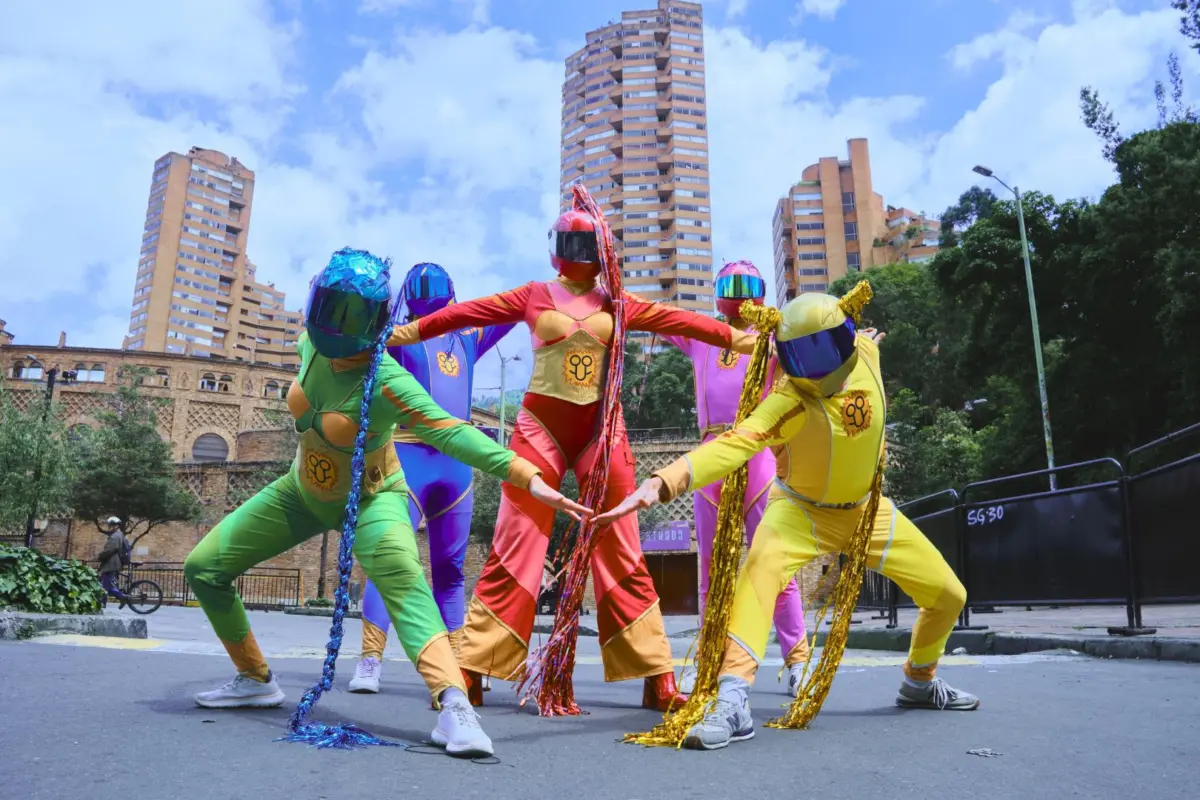
BOGOTÁ, COLOMBIA — In the sprawling, high-altitude expanse of the Colombian capital, a new musical vanguard has quietly taken root. Born from the minds of classically trained instrumentalists who traded their conservatory sheet music for the hypnotic grooves of the tropics, Los Cotopla Boyz have spent the last half-decade redefining what it means to be a modern band in Bogotá.
Since their formation in 2018, this eclectic quintet has become a cornerstone of the nueva tropicalia bogotana—a vibrant movement that blends the rustic charm of traditional coastal rhythms with the anxious, hyper-connected realities of the 21st-century millennial generation. With a grandiose moniker that simultaneously signals high-end aesthetic value and a cheeky sense of humor, Los Cotopla Boyz are far more than a novelty act. They are sonic architects of a post-pandemic cultural renaissance, armed with synthesizers, electric guitars, and an unwavering commitment to keeping the dancefloor alive.
1. Main Facts: Who Are Los Cotopla Boyz?
At its core, Los Cotopla Boyz is a quintet composed of seasoned, academy-trained musicians who approach tropical music not as a historical artifact, but as a living, breathing canvas for experimentation. Influenced heavily by the hypnotic loops of psychedelic cumbia and the raw, unbridled energy of tropicanibal sounds, the group creates music that serves as a mirror for contemporary urban youth.
Their artistic identity is rooted in duality: high-level musical execution paired with self-aware, down-to-earth storytelling. While their technical proficiency allows them to seamlessly weave intricate arrangements, their lyrical content focuses on the mundane, everyday struggles and absurdities of city life.
However, it is their visual and conceptual identity that truly sets them apart. The band members describe themselves as inhabitants of a “post-pandemic dystopian multiverse whose mission is to save the party.” This narrative translates directly into their explosive live performances, where the quintet channels the frantic, colorful energy of a modern-day Power Rangers squad. On stage, they embark on theatrical musical journeys that frame ordinary, everyday occurrences as grand, epic quests—turning a mundane trip to the corner store or a disastrous weekend date into the stuff of cinematic legend.
2. Chronology: From Academic Halls to the Psychotropic Tropics
To understand the trajectory of Los Cotopla Boyz, one must trace their evolution from a conceptual side project into a vital force within Colombia’s independent music scene.
2018–2019: The Genesis in Bogotá
The seeds of the project were planted in 2018 within the creative hubs of Bogotá. The founding members, all veterans of formal musical institutions, found themselves drawn away from traditional Western classical structures and toward the infectious, syncopated rhythms of the Caribbean and Andean lowlands. Recognizing a cultural hunger for something fresh yet deeply rooted, they began experimenting with vintage synthesizers overlaid on traditional cumbia beats.
2020–2021: Navigating the Dystopian Interregnum
Like many artists worldwide, the group faced unprecedented challenges during the global COVID-19 pandemic. However, rather than halting their creative output, the lockdown period served as the conceptual crucible for their lore. Locked away in isolation, they formulated the mythos of their "dystopian multiverse." They conceptualized their music as a necessary antidote to social alienation—a sonic rescue mission designed to revive communal celebration the moment quarantine restrictions lifted.
2022: Mamarrón Vol. 1 and Vinyl Revival
Emerging from the pandemic shadows, Los Cotopla Boyz made a definitive statement with the release of their debut studio album, Mamarrón Vol. 1. Eschewing the purely digital-first approach typical of modern indie acts, the band opted to release the project on a tangible, physical medium: the vinyl record. This artistic choice underscored their appreciation for retro aesthetics and high production values, earning them critical acclaim and cementing their status within Bogotá’s underground circuit.
2024–Present: Guau, no joda and National Recognition
Building on the momentum of their debut, the quintet turned their attention toward their sophomore album, Guau, no joda. Slated for release in June, the record expands their sonic palette further into psychedelic territory. Among its standout tracks is a tribute to a potent, artisanal alcoholic beverage native to Norte de Santander—a drink the band cheekily warns “carries its own trap.” The track’s rhythm is rooted in the classic Cuban charanga style, famously reinterpreted through the unique lens of legendary Colombian accordionist and composer Calixto Ochoa. The single received its premiere broadcast via Demo Estéreo, Radio Nacional de Colombia’s premier digital showcase for emerging independent talent.
3. Supporting Data: The Sound and Structure of a New Era
The musical architecture of Los Cotopla Boyz is a masterclass in cross-genre synthesis. To fully appreciate their contribution to contemporary Latin American music, it is helpful to examine the components that make up their sonic and physical footprint.
- Academic Foundation Meets Street Credibility: All five members possess formal training from recognized musical conservatories. This technical background allows them to experiment with complex time signatures, unorthodox chord progressions, and intricate sound design without losing the organic, danceable pulse of traditional folk genres.
- Instrumentation Balance: The band bridges the analog and digital worlds. Traditional percussion instruments (such as the guacharaca, caja, and timbales) are juxtaposed with analog synthesizers, fuzz-drenched electric guitars, and vintage drum machines.
- Discography Breakdown:
- Mamarrón Vol. 1 (2022): A foundational 8-track exploration of psychedelic cumbia and urban millennial anxieties, distributed physically on vinyl.
- Guau, no joda (Upcoming, June): A bolder, more stylistically diverse sophomore effort that dives deeper into regional Colombian lore, traditional Cuban rhythms, and high-energy tropical fusion.
- Media Footprint: Through platforms like Radio Nacional de Colombia’s Demo Estéreo, the group has successfully transitioned from a localized Bogotá underground secret to a nationally recognized act championed by cultural tastemakers.
4. Official Perspectives and Creative Philosophy
The members of Los Cotopla Boyz have been remarkably articulate regarding their artistic vision, viewing their work as a vital cultural intervention in an increasingly digitized and disconnected world.
"We don’t see ourselves just as a band playing songs on a stage," a band representative noted during a recent interview discussing their live philosophy. "We inhabit a multiversal timeline where the party is constantly under threat by boredom, isolation, and digital fatigue. Our armor is our instruments; our superpower is the groove. When we step on stage dressed like frantic guardians of joy, we are inviting the audience to escape the mundane weight of reality with us."
Discussing their lyrical approach, the band emphasizes the importance of chronicling the mundane experiences of contemporary youth. While traditional tropical music often speaks of grand romantic tragedies or rural mythologies, Los Cotopla Boyz turn their gaze toward the micro-dramas of modern city life—rent anxiety, absurd digital interactions, late-night cravings, and the bittersweet humor of trying to maintain social ties in an uncertain economic climate.
Regarding their stylistic choices, musicologists and cultural commentators have praised the group for avoiding hollow irony. Instead, their humor is deployed as a vehicle for genuine emotional connection. By combining virtuosic musicianship with playful conceptual framing, they honor the roots of Colombian tropical music while injecting it with a much-needed shot of surrealist adrenaline.
5. Implications: What Los Cotopla Boyz Mean for the Future of Colombian Music
The emergence and sustained growth of Los Cotopla Boyz carry significant implications for the broader landscape of Latin American independent music.
Redefining Tropicalia for the Digital Age
For decades, tropical music in Colombia—ranging from cumbia and vallenato to porro and salsa—was viewed either through a strictly traditional lens or commercialized into mass-market pop. The nueva tropicalia bogotana movement, spearheaded by acts like Los Cotopla Boyz, proves that young, academically trained musicians can engage with traditional roots music without falling into academic stiffness or cheap pastiche. By filtering these rhythms through indie rock, psychedelia, and millennial humor, they have opened the door for a new generation of listeners who previously felt disconnected from folkloric sounds.
Decentralization and Genre Fluidity
Bogotá has historically been viewed as a colder, more industrial metropolis compared to Colombia’s vibrant Caribbean coast. However, the capital has increasingly transformed into a melting pot where artists from across the country converge. Los Cotopla Boyz exemplify this phenomenon: musicians who draw inspiration from remote regional traditions (such as the artisanal liquors of Norte de Santander or the stylistic nuances of Calixto Ochoa) while operating out of the high-altitude urban center of the Andes.
The Survival of Live Performance Artistry
In an era dominated by playlist algorithms, backing tracks, and faceless streaming hits, Los Cotopla Boyz double down on the theatricality and physical intensity of the live band experience. Their conceptual framework—framing concerts as superhero rescue missions—transforms a standard gig into an immersive communal ritual. As audiences increasingly crave authentic, shared experiences in the wake of global isolation, the "party-saving" mission of Los Cotopla Boyz resonates on a deeply psychological level.
As they prepare for the release of Guau, no joda, Los Cotopla Boyz stand at a fascinating crossroads. They are proof that serious musicianship and absolute absurdity can coexist harmoniously, and that the best way to survive a dystopian reality is to turn up the amplifiers, pick up the accordion and the synthesizer, and refuse to let the dancefloor die.


Leave a Reply