

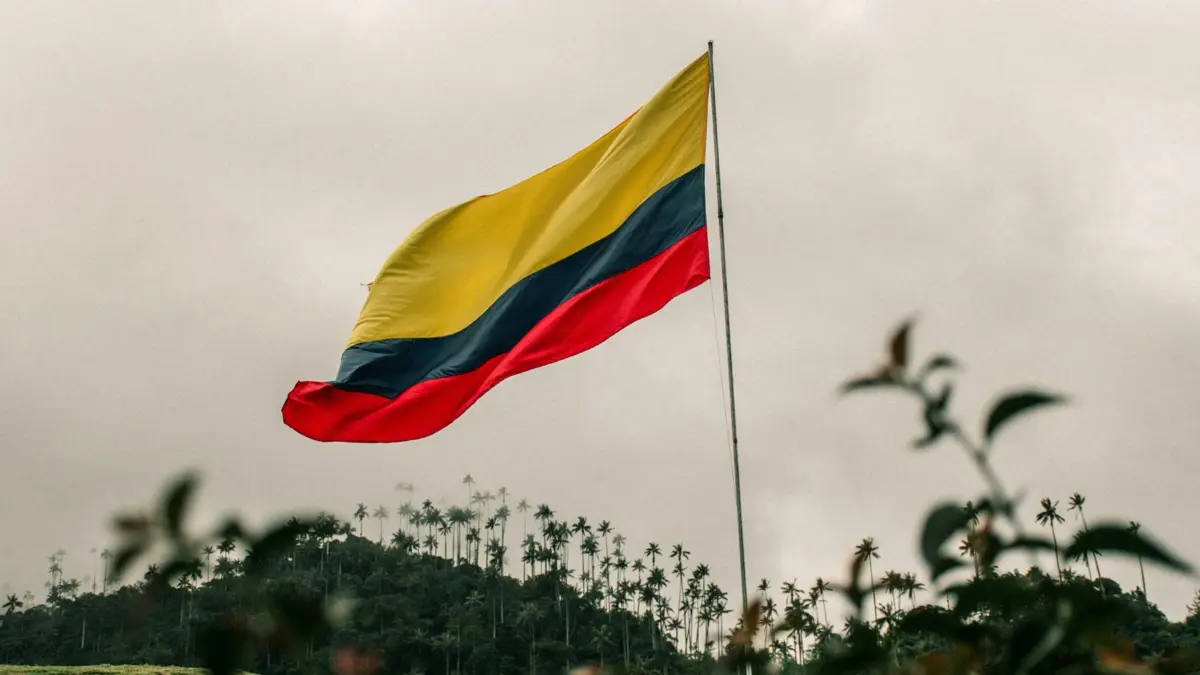
BOGOTÁ — In a momentous political transition that signals a profound ideological shift for the Andean nation, Abelardo de la Espriella officially assumed the presidency of Colombia on August 7. The inauguration ceremony, held in the heart of Bogotá, drew an unprecedented array of international leaders, most notably a high-level diplomatic and law enforcement delegation dispatched by United States President Donald Trump.
The presence of the U.S. delegation—led by Acting U.S. Attorney General Todd Blanche—underscores an immediate, robust alignment between Washington and the nascent Colombian administration. As de la Espriella takes the reins of power alongside Vice President José Manuel Restrepo Abondano, the international community is watching closely. This leadership transition not only redefines Colombia’s domestic governance trajectory but also reshapes the geopolitical architecture of Latin America, particularly concerning security cooperation, economic investment, and the coordinated war on transnational drug trafficking.
Main Facts
The inauguration of President Abelardo de la Espriella marks a definitive turning point in contemporary Colombian history. Moving away from the policies of previous administrations, de la Espriella’s rise to power has been met with immediate and enthusiastic endorsement from a bloc of conservative and right-of-center governments across the Americas and Europe.
- The Presidential Ticket: Abelardo de la Espriella assumes the presidency alongside Vice President José Manuel Restrepo Abondano, bringing a technocratic yet fiercely conservative vision to the executive branch.
- The U.S. Delegation: Representing President Donald Trump, the United States delegation was headed by Acting U.S. Attorney General Todd Blanche. This high-profile diplomatic presence serves as a clear signal of Washington’s commitment to the new administration.
- Key International Attendees: The inauguration attracted several prominent heads of state and global figures, including Argentine President Javier Milei, Chilean President José Antonio Kast, Ecuadorian President Daniel Noboa, and King Felipe VI of Spain.
- Core Policy Pillars: Bilateral discussions between the incoming Colombian administration and international partners centered on an aggressive reinvigoration of security cooperation, an unyielding fight against drug trafficking and addiction, and the expansion of bilateral trade and economic investment.
- Geopolitical Realignment: The event establishes a unified regional front among conservative leaders in South America, closely coordinated with U.S. strategic interests in the Western Hemisphere.
Chronology of the Inauguration Day and Diplomatic Engagements
The events of August 7 unfolded across a meticulously planned schedule, balancing the solemn constitutional traditions of the presidential handover with intense, behind-the-scenes bilateral diplomacy.
Pre-Inauguration Bilateral Meetings (Morning)
Hours before taking the oath of office, President-elect Abelardo de la Espriella engaged in a series of high-stakes diplomatic meetings at his transitional headquarters.
- 08:00 AM: De la Espriella met privately with Acting U.S. Attorney General Todd Blanche. The closed-door session laid the groundwork for immediate intelligence and security collaboration, focusing heavily on dismantling cartels and curbing the flow of narcotics northward.
- 09:15 AM: The incoming president received regional leaders, including Argentina’s Javier Milei and Ecuador’s Daniel Noboa. Discussions among the South American heads of state revolved around regional security pacts and coordinated economic liberalization policies.
- 10:30 AM: A courtesy meeting was held with King Felipe VI of Spain, reinforcing historical and diplomatic ties between Colombia and the European Union through Madrid.
The Inauguration Ceremony (Midday)
- 12:00 PM: Amid tight security and in front of thousands of citizens, foreign dignitaries, and members of the Colombian Congress, Abelardo de la Espriella was sworn in as the President of the Republic of Colombia.
- 12:45 PM: Vice President José Manuel Restrepo Abondano took his constitutional oath, immediately stepping into his role as a key liaison for domestic economic policy and international trade relations.
Post-Inauguration Receptions and Strategic Plenary (Afternoon)
- 03:00 PM: The newly minted administration hosted a joint press briefing and plenary session with the U.S. delegation. Vice President Restrepo and Acting U.S. Attorney General Todd Blanche addressed the press, officially declaring a "reboot" in bilateral relations.
- 06:00 PM: Formal banquets and diplomatic receptions concluded the day’s official agenda, cementing alliances that will guide Colombian foreign policy for the foreseeable future.
Supporting Data and Geopolitical Context
To understand the weight of President de la Espriella’s inauguration, one must examine the macroeconomic and security landscape of Colombia over the past decade. Colombia has long remained a critical linchpin in U.S. foreign policy in Latin America, serving historically as Washington’s primary strategic partner in the region. However, previous years saw diplomatic friction, shifting regional ideologies, and persistent challenges regarding coca cultivation and cocaine production.
Key Indicators of the Bilateral Relationship:
- Security Aid: Over the last twenty years, bilateral security assistance has totaled billions of dollars, primarily channeled through counter-narcotics programs, military modernization, and institutional capacity-building.
- Trade Volume: The United States remains Colombia’s largest trading partner. Bilateral trade in goods and services totals over $30 billion annually, governed by the U.S.-Colombia Trade Promotion Agreement (CTPA).
- Regional Migration and Stability: Colombia has absorbed over 2.8 million Venezuelan migrants fleeing the Maduro regime. The incoming de la Espriella administration has signaled a hardline stance against authoritarian regimes in the region, aligning closely with Washington, Buenos Aires, and Santiago.
- Coca Cultivation Pressures: Despite decades of eradication efforts, cocaine production levels have remained historically high, creating intense pressure from U.S. lawmakers for verifiable results on the ground—a mandate that de la Espriella’s campaign platform promised to deliver.
Official Responses and Statements
The transition of power elicited strong, forward-looking statements from both Colombian leadership and the high-ranking American delegation, signaling an era of renewed operational intimacy between the two nations.
Vice President José Manuel Restrepo Abondano emphasized the psychological and strategic boost provided by Washington’s early and emphatic support. Speaking to reporters following his meetings with the U.S. delegation, Restrepo stated:
"Listening to the endorsement of President Donald Trump, his commitment to work shoulder-to-shoulder with Colombia, and his conviction that we share the same values fills us with hope, but above all, with a profound sense of responsibility. Today we initiate a new stage of security, prosperity, and a frontal fight against drug trafficking and addiction."
Restrepo’s remarks reflect a deliberate pivot toward law-and-order governance, prioritizing public safety and economic resuscitation after years of post-pandemic inflation and social polarization.
From the American perspective, Acting U.S. Attorney General Todd Blanche delivered an equally resolute message on behalf of the White House. Blanche characterized the new chapter as a vital structural reset for bilateral ties, emphasizing law enforcement, economic development, and institutional integrity. Blanche noted:
"This new administration represents a profound reinvigoration of our bilateral relations. The United States stands ready to work hand-in-hand with President de la Espriella and Vice President Restrepo. Together, we will aggressively dismantle the criminal enterprises that traffic narcotics, poison our communities, and threaten regional stability. Beyond security, we are committed to expanding bilateral investment, fostering economic development, and ensuring that our shared democratic values translate into tangible prosperity for the citizens of both our great nations."
Implications for Colombia’s Future
The inauguration of Abelardo de la Espriella and the immediate, high-level embrace by the United States and allied South American conservative leaders carry profound domestic and international implications.
1. Domestic Security and Counter-Narcotics Policy
Domestically, the new administration is expected to adopt an uncompromising approach to public security. By aligning closely with U.S. law enforcement agencies—facilitated directly through channels involving the U.S. Department of Justice and Acting Attorney General Blanche—Colombia is likely to ramp up forced eradication of illicit crops, intelligence-sharing operations against transnational cartels, and judicial crackdowns on money laundering. This hardline stance aims to reassure rural landowners, business sectors, and international investors who have raised security concerns in recent years.
2. Economic Restructuring and Foreign Investment
Under the guidance of Vice President José Manuel Restrepo Abondano, an economist with deep institutional expertise, the administration is poised to implement market-friendly reforms. By signaling political stability and a predictable regulatory framework, Bogotá aims to attract fresh capital inflows from North American and European markets. Strengthening commercial ties with the United States under the existing trade frameworks will be paramount to mitigating domestic fiscal deficits and generating formal employment.
3. Regional Geopolitics and Ideological Realignment
Externally, Colombia’s foreign policy is undergoing a dramatic recalibration. The prominent presence of Argentina’s Javier Milei, Chile’s José Antonio Kast, and Ecuador’s Daniel Noboa at the inauguration highlights the formation of a cohesive, right-of-center diplomatic bloc in South America. This axis is expected to coordinate closely on regional security threats, take a unified diplomatic stance against authoritarian regimes in Venezuela, Nicaragua, and Cuba, and promote economic integration based on free-market principles rather than state-led interventionism.
4. Challenges Ahead
Despite the enthusiastic initial backing from Washington and regional allies, the de la Espriella administration faces significant hurdles. Implementing a successful counter-narcotics strategy without destabilizing vulnerable rural communities requires delicate socio-economic alternatives. Furthermore, managing domestic political opposition in a polarized Congress will test the administration’s legislative acumen.
Nevertheless, as the ceremonial banners come down in Bogotá and the reality of governance begins, the message is unmistakable: Colombia has turned a decisive new page. Backed by the full diplomatic and strategic weight of the United States and a revitalized coalition of regional partners, the de la Espriella-Restrepo administration steps onto the global stage determined to redefine Colombia’s security, prosperity, and international standing for years to come.



Leave a Reply