

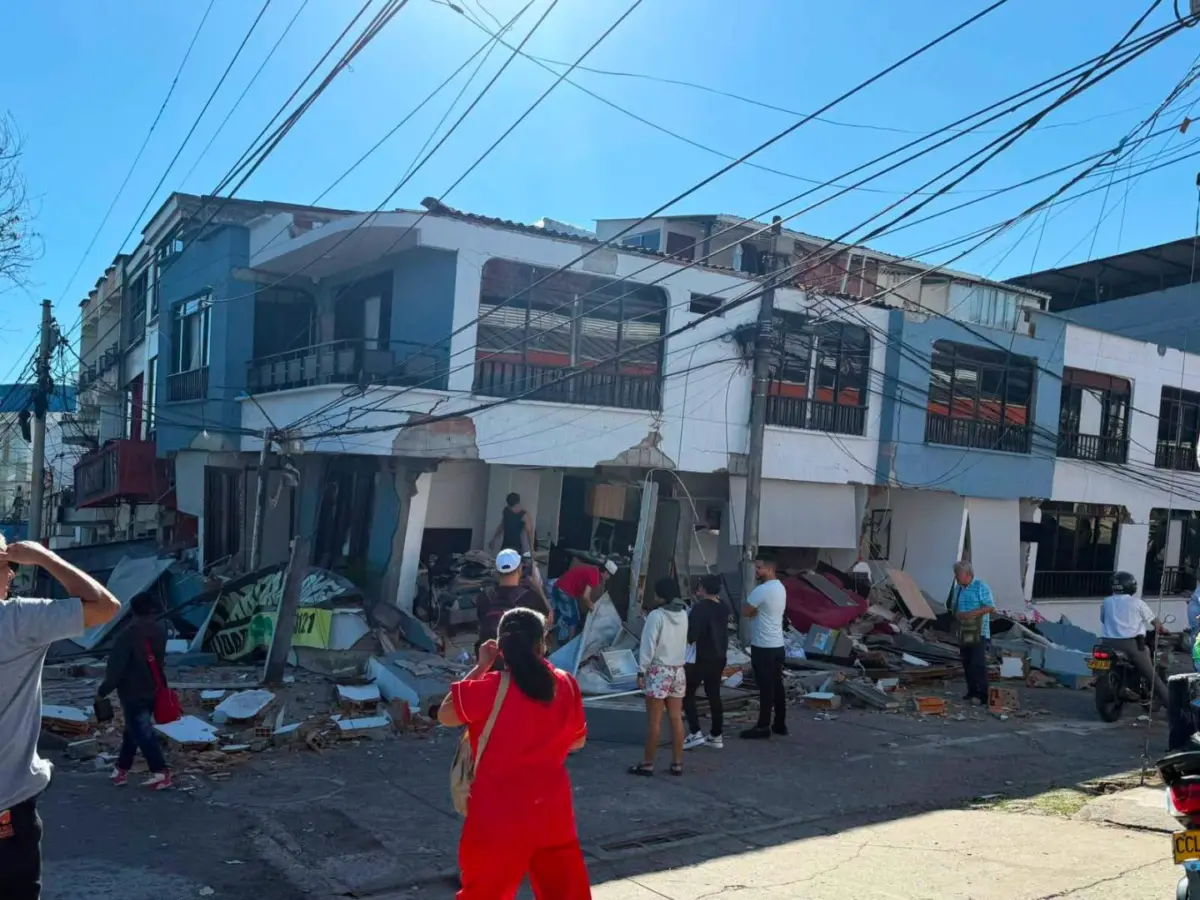
BOGOTÁ, COLOMBIA — In the wake of the powerful 7.4 magnitude earthquake that struck Colombia on August 10, the nation’s insurance landscape has been mobilized to its highest alert level. The Federation of Colombian Insurers (Federación de Aseguradores Colombianos — Fasecolda) has formally announced the nationwide activation of emergency response and claims protocols.
The primary objective of this mobilization is to provide immediate, structured assistance to individuals, commercial enterprises, and public entities whose properties and assets suffered damage during the seismic event. However, as the country grapples with the physical and emotional toll of the disaster, industry leaders and government officials are emphasizing that the path to financial recovery must be approached with caution, adherence to safety protocols, and a clear understanding of insurance policies.
1. Main Facts: The Immediate Aftermath and Sector Mobilization
The earthquake, which rattled multiple regions of Colombia, prompted an immediate institutional reaction. Fasecolda stepped forward to coordinate the insurance industry’s response, ensuring that companies with exposed portfolios could efficiently process incoming reports of structural compromise, property damage, and related losses.
According to baseline data released by Fasecolda, the national insurance inventory includes 2,258,594 active risks insured against earthquakes. While this figure underscores the vast penetration of catastrophe insurance across the country, industry experts stress that it does not imply every single insured asset has sustained damage.
Instead, the response has been geographically targeted. Fasecolda has identified 105 municipalities across 7 departments as zones of high seismic impact. Within these specific high-risk zones, preliminary mapping indicates that 442,514 insured risks are located. This sub-total encompasses a diverse portfolio of assets, ranging from residential homes and horizontal property complexes (copropiedades) to private commercial enterprises and critical public infrastructure.
2. Chronology of Events: From the Tremor to the Activation of Protocols
- August 10: A devastating 7.4 magnitude earthquake strikes Colombia, triggering widespread panic, structural collapses, and immediate emergency responses from civil defense authorities, rescue workers, and local governments.
- Immediate Post-Disaster Hours: Fasecolda initiates emergency coordination with affiliated insurance companies. Preliminary assessments of seismic data and risk maps are cross-referenced with national policy databases to identify the hardest-hit regions.
- The First 48 Hours: Insurance providers activate dedicated catastrophe response protocols, opening specialized phone lines, web portals, and mobile application pathways for policyholders to report damages. Public authorities concurrently focus on search-and-rescue operations, medical triage, and securing unstable structures.
- Subsequent Days: As search operations transition into structural evaluations, Fasecolda releases detailed breakdown figures regarding insured assets in high-impact zones, issuing comprehensive guidelines for safe claims reporting and damage documentation. Concurrently, the Institute of Legal Medicine (Medicina Legal) begins identifying initial casualties, while collection centers open nationwide to receive humanitarian aid.
3. Supporting Data: Breakdown of Insured Risks in High-Impact Zones
To understand the scale of potential claims, Fasecolda’s preliminary data provides a granular look at the distribution of insured assets within the 105 heavily affected municipalities. Out of the 442,514 total properties in these zones, the breakdown by category reveals the following distribution:
- Residential Households (Hogares): 277,308 insured risks representing individual houses, apartments, and private dwellings. This category forms the largest block of potential claims, highlighting the vulnerability of family housing stock.
- Private Commercial Risks (Riesgos Privados): 128,359 insured risks covering businesses, factories, commercial spaces, and corporate offices essential to local and regional economies.
- Public Infrastructure (Riesgos Públicos): 28,337 insured risks. Crucially, this category includes vital public infrastructure such as hospitals, clinics, educational institutions, and government administrative buildings.
- Horizontal Property Complexes (Copropiedades): 8,510 insured risks representing shared residential and commercial towers, apartment complexes, and managed communities governed by co-ownership laws.
In addition to property and casualty metrics, Fasecolda has confirmed that affiliated companies are actively compiling data on life insurance, health policies, workplace risk systems (Sistema General de Riesgos Laborales), and other specialized financial protection products. These aggregated metrics will be released periodically as the claims lifecycle progresses.
4. Official Responses and Guidelines: What Policyholders Must Do
Navigating the aftermath of a major natural disaster requires strict adherence to both safety protocols and contractual guidelines. Fasecolda, alongside regulatory bodies, has issued a comprehensive roadmap for citizens and business owners seeking to utilize their insurance coverage.
Step One: Prioritize Personal Safety
The fundamental rule underscored by Fasecolda is unequivocal: protection of human life supersedes any insurance paperwork. Citizens are strictly instructed to follow the direct orders of local authorities, civil defense, and emergency response teams before attempting to visit, inspect, or document damaged properties.
Step Two: Direct Communication with Insurers
Policyholders who have suffered damage to their homes, businesses, or insured assets must reach out directly to their respective insurance companies using official channels. Depending on the institution, claims can be reported via:
- Dedicated emergency phone lines
- Official company websites and client portals
- Mobile applications
- Physical service points and regional offices (where operational)
Step Three: Documenting the Damage Safely
When it is deemed safe by authorities to approach a property, policyholders are encouraged to photograph and videotape all visible damages. However, this must never be done at the expense of personal safety. If a building exhibits severe structural compromise, leaning walls, or a risk of collapse, individuals must not enter under any circumstances.
Step Four: Preserving Evidence and Delaying Repairs
A critical misstep often made by anxious property owners is undertaking immediate, permanent repairs or discarding damaged items. Fasecolda warns that policyholders should avoid permanent repairs or the disposal of damaged elements until the insurance company’s appointed adjuster has evaluated the site.
- The Exception: Emergency interventions strictly necessary to save lives, prevent further imminent damage (such as covering a compromised roof before a rainstorm), or comply with a direct municipal eviction or demolition order are permitted. Preserving the integrity of the loss scene is essential for the insurer to accurately assess coverage terms.
Step Five: Retaining Documentation
Policyholders must retain all paperwork associated with their policies, along with receipts for any emergency expenses incurred as a direct result of the disaster. For citizens whose homes are tied to a mortgage credit (crédito hipotecario), the mandatory property insurance associated with the loan remains fully active. Borrowers must review their credit documents, contact the lending bank or its associated insurer, and follow the exact same claims reporting protocol.
5. Implications: Rights, Limitations, and Regulatory Oversight
While the activation of insurance protocols brings a measure of hope to affected populations, financial analysts and consumer advocates remind the public of the legal and structural realities governing insurance contracts in Colombia.
Coverage Is Not Automatic
Having an insurance policy does not guarantee an immediate, automatic payout. Compensation is strictly governed by the terms, conditions, exclusions, deductibles, and coverage limits stipulated in the specific contract signed by the policyholder. Because policy structures vary widely between providers, each claim must be evaluated individually. Insurers are legally obligated to inform policyholders of the precise procedures applicable to their unique cases.
Regulatory Oversight and Consumer Recourse
The Superintendency Financiera de Colombia (Superfinanciera) serves as the ultimate regulatory authority tasked with overseeing all authorized insurance companies operating within the country.
If a policyholder believes that an insurance provider has acted in bad faith, delayed processing without justification, improperly denied a valid claim, or failed to meet its contractual obligations, they possess the legal right to file a formal complaint. Consumers can escalate grievances directly to the Superfinanciera through its official institutional channels for administrative review and consumer protection mediation.
Long-Term Economic and Social Impact
The 7.4 magnitude earthquake serves as a stark reminder of Colombia’s high seismic vulnerability. The performance of the insurance sector in the coming weeks and months will have profound implications for macroeconomic stability, public trust in financial institutions, and the speed at which regional commerce and community infrastructure can be rebuilt.
As insurers deploy adjustment teams into the field and citizens begin the arduous process of rebuilding, the collective emphasis remains on safety, transparency, and strict adherence to established legal and operational frameworks. For millions of Colombians, the journey toward recovery has only just begun, anchored by the safety nets they prudently secured long before the earth began to shake.




Leave a Reply