

By: Luis Alonso Colmenares Rodríguez
Introduction: The Mirage of the "Phoenix"
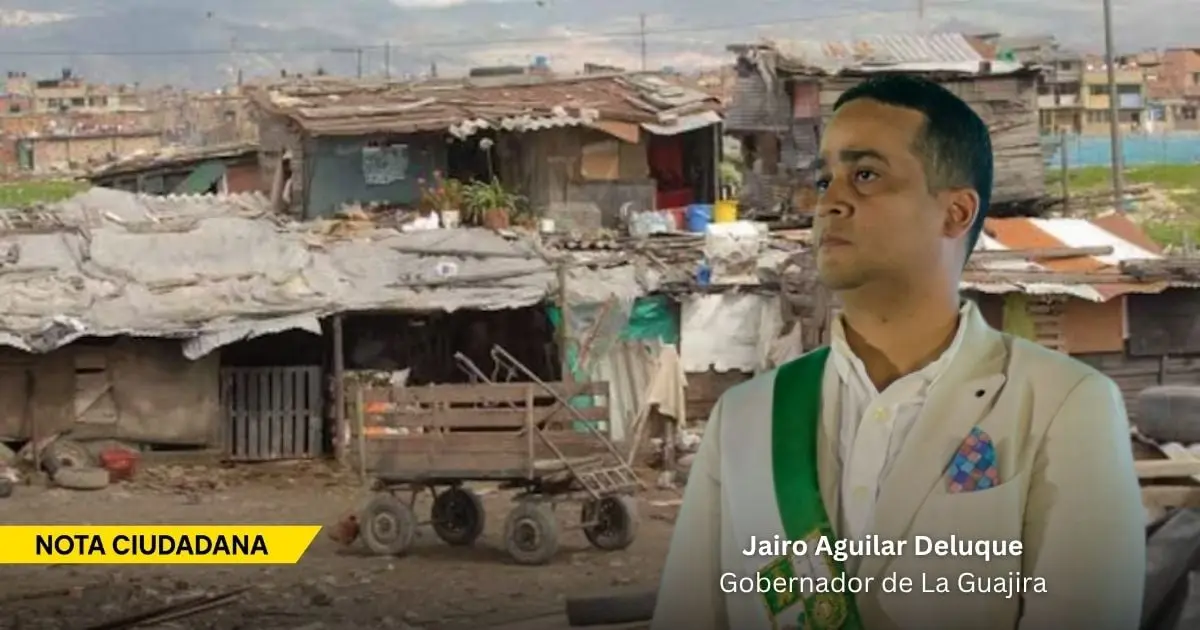
In the landscape of Colombian regional politics, narrative is often deployed as a substitute for transformation. Recently, the administration of La Guajira launched a heavily promoted and financially backed public relations campaign in a prominent national weekly magazine, Revista Semana, under the triumphant banner: "El renacer de La Guajira" (The Rebirth of La Guajira).
To the casual observer outside the department, the terminology suggests a heroic recovery—a phoenix rising from the ashes of systemic administrative failure, corruption, and historical abandonment. However, a rigorous, data-driven examination of the department’s actual socioeconomic indicators reveals a starkly different reality. Far from a renaissance, the current state of La Guajira remains a profound humanitarian and structural crisis. The official discourse, heavily reliant on digital metrics, vanity metrics, and selective statistics, acts as a thin veneer masking persistent poverty, hollowed-out public services, and institutional inertia.
This article deconstructs the claims made by the regional administration, contrasting political rhetoric with hard official data from agencies such as the National Administrative Department of Statistics (DANE), the Superintendency of Health (Supersalud), and ground-level realities experienced daily by the people of La Guajira.
Main Facts: Poverty, Propaganda, and the Disconnect from Reality
At the core of the friction between the governor’s narrative and the daily existence of ordinary Guajiros lies a profound statistical contradiction. The administration’s self-congratulatory profile paints a picture of a department leaping forward into economic modernization, educational expansion, and digital preeminence. Yet, the foundational metrics of human development tell a story of abandonment.
The Stark Truth of Monetary and Extreme Poverty
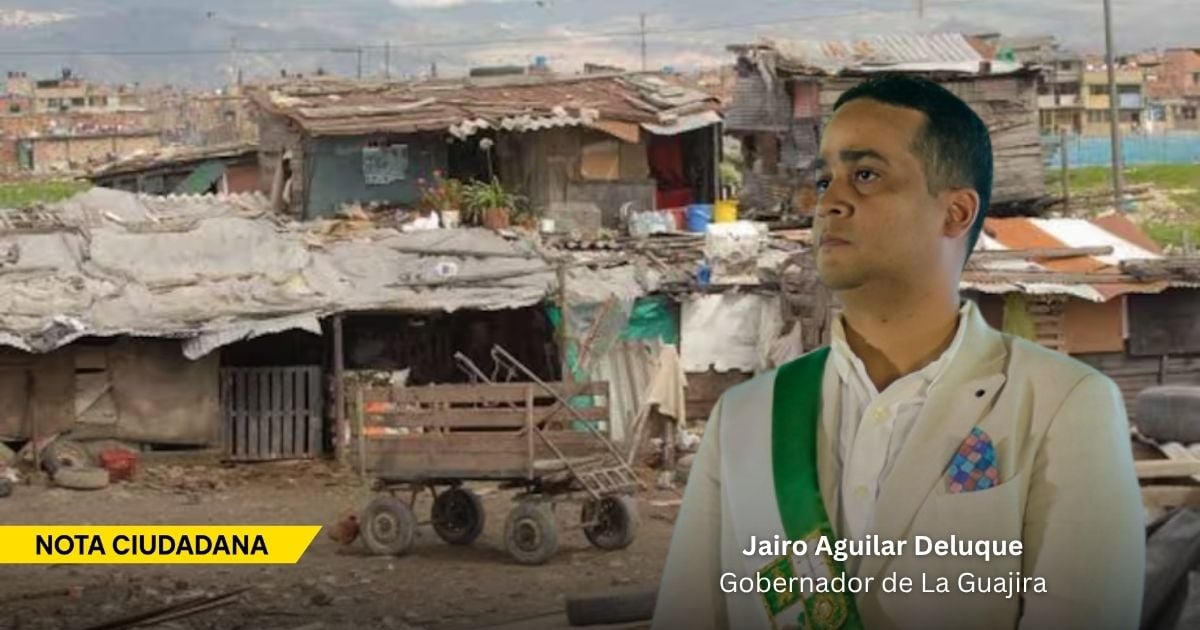
According to official figures, La Guajira closed a recent analytical period registering the second-highest monetary poverty rate in all of Colombia, standing at a staggering 60.2%, surpassed only by the department of Chocó. Even more alarming is the index of extreme poverty, which reached 33.8%—the absolute highest in the Colombian Caribbean region.
To speak of a "renaissance" or an institutional awakening while more than half of the population lives in monetary poverty, and a third endures extreme poverty, crosses the line from political optimism into demagoguery. A population struggling for basic survival cannot consume digital marketing campaigns, nor can they subsist on rhetorical flourishes published in national glossy magazines.
The Illusion of Educational Progress
The administration’s public relations campaign boasts significant milestones in education, specifically citing "10,800 students with school transportation across 371 routes" and "84,152 students benefiting from school feeding programs."
However, these figures crumble under basic investigative scrutiny. Records show that during critical operational months, such as July, the departmental government struggled deeply to execute these services. In several instances, crucial transportation licitations were declared desolate (desiertas), leaving thousands of children stranded or forced to abandon their classrooms due to impassable roads and a lack of logistical execution. Furthermore, independent national and international evaluations—including reports from the Food and Agriculture Organization (FAO)—consistently indicate that thousands of children in La Guajira continue to suffer from chronic malnutrition, rendering the touted metrics of the School Feeding Program (PAE) functionally hollow on the ground.
Chronology of Institutional Stagnation and Broken Promises
To understand how La Guajira arrived at this juncture of high-cost propaganda and low-impact governance, it is necessary to examine the timeline of infrastructural and administrative failures that have characterized recent years.

- Decades Prior to 2024: Structural corruption, political instability, and the systematic looting of departmental royalties leave La Guajira without basic utility networks, functional hospitals, or reliable potable water systems, particularly in rural and indigenous Wayuu communities.
- Early Administration Phase (2024–2025): The current regional administration assumes power amidst high expectations. Rather than focusing immediate capital on emergency water and nutritional infrastructure, administrative energy is increasingly channeled into external public relations, national media placements, and digital reputation management.
- Mid-2025 (The Infrastructure Bottleneck): The administration publicly identifies 24 long-standing unfinished projects, claiming to have concluded 5 and advanced 14. Among these is the much-heralded Riohacha Boardwalk (Malecón de Riohacha), which sees little more than a ceremonial first-stone-laying event in mid-2025. Concurrently, promises regarding the "Faro y Mausoleo" (Lighthouse and Mausoleum) project stall indefinitely, lacking concrete delivery dates or transparent progress reports.
- Late 2025 (The Digital vs. Material Divergence): While local hospitals are flagged by Supersalud for critical operational failures and rural areas experience frequent infrastructural blockades due to road deterioration, the administration celebrates ranking as the "third most digital governor in the Caribbean," boasting a 60% virtual approval rating driven by social media algorithms rather than material improvements.
Supporting Data: Examining the Claims vs. The Evidence
A systematic comparison between the administration’s claims and verifiable metrics highlights the depth of the discrepancy:
| Sector | Administration’s Claim | Empirical Reality / Official Data |
|---|---|---|
| Poverty | A department undergoing a "renaissance" and economic recovery. | 60.2% monetary poverty (2nd highest in Colombia); 33.8% extreme poverty (highest in the Caribbean). |
| Education | 10,800 students covered by school transport across 371 routes. | Bidding processes declared desolate in mid-2025; widespread gaps in actual service delivery. |
| Infrastructure | 24 unfinished projects addressed (5 completed, 14 advanced). | Ceremonial groundbreakings (e.g., Riohacha Boardwalk) without execution timelines; critical roads remain unpaved. |
| Health | Reductions in infant mortality (from 121 to 77) and maternal mortality. | Supersalud identifies severe structural failures in local hospitals; persistent, unaddressed infant malnutrition crises. |
| Social Programs | 3,000 gas connections benefiting 11,400 people; 800 community leaders strengthened. | Over 70% of rural and indigenous populations remain entirely disconnected from basic utility and water grids. |
| Digital Presence | 60% virtual approval rating; ranked "third most digital governor in the Caribbean." | Marketing metric irrelevant to populations facing water scarcity, food insecurity, and failing health infrastructure. |
Official Responses and Administrative Defenses
Faced with mounting criticism from local intellectuals, community leaders, and national watchdogs, representatives of the departmental administration have consistently defended their communication strategy.
According to regional spokespersons, highlighting achievements in national media is a necessary strategy to attract foreign investment, revitalize tourism, and combat the historically stigmatized image of the department. Administration officials argue that metrics regarding digital engagement, astroturism narratives, and promotional video awards are not mere vanity, but calculated tools designed to put La Guajira on the global economic map.
Regarding health and social welfare, the administration points to incremental improvements—such as the reported drop in specific infant and maternal mortality metrics—as proof that structural interventions are taking root. They maintain that decades of accumulated abandonment cannot be reversed overnight, and that the current administration is laying the foundational legal and logistical groundwork for long-term stability. Furthermore, officials emphasize that community leader capacity-building workshops and localized economic projects (familias productivas) represent tangible steps toward grassroots empowerment.
Implications: The Human Cost of Political Marketing
The disconnect between public relations victories and human suffering carries severe implications for the social fabric of La Guajira.

1. Deepening Institutional Distrust
When citizens living without a drop of potable water or electricity read glowing articles about a regional "renaissance," trust in public institutions evaporates. This disconnect fosters cynicism, deepens political apathy, and undermines the legitimacy of regional governance. Propaganda that ignores material reality is quickly recognized by the populace as an early campaign maneuver—often tied to political alliances and future electoral ambitions—rather than a genuine governance effort.
2. The Perpetuation of Humanitarian Crises
By prioritizing digital rankings, social media sentiment analysis, and international tourism videos over infrastructural fundamentals, the administration risks misallocating critical public resources. A department cannot build a sustainable tourism industry when access roads are impassable, when the capital city of Riohacha lacks consistent potable water, and when children continue to perish from preventable malnutrition and dehydration.
3. The Urgency of Accountability
The ultimate implication of this manufactured optimism is the urgent need for rigorous civic oversight. The structural challenges of La Guajira—water scarcity, educational deficits, healthcare corruption, and infrastructural neglect—require concrete, measurable actions rather than linguistic gymnastics.
As the local idiom famously reminds us, the truth of a territory is written not in the sponsored columns of national magazines, but in the daily struggles of its people: “Se las dejo ahí…” (I’ll leave that with you). Until the administration shifts its primary focus from managing its digital image to solving the basic needs of the Guajiro population, the proclaimed "renaissance" will remain nothing more than an expensive, tragic mirage.



Leave a Reply