

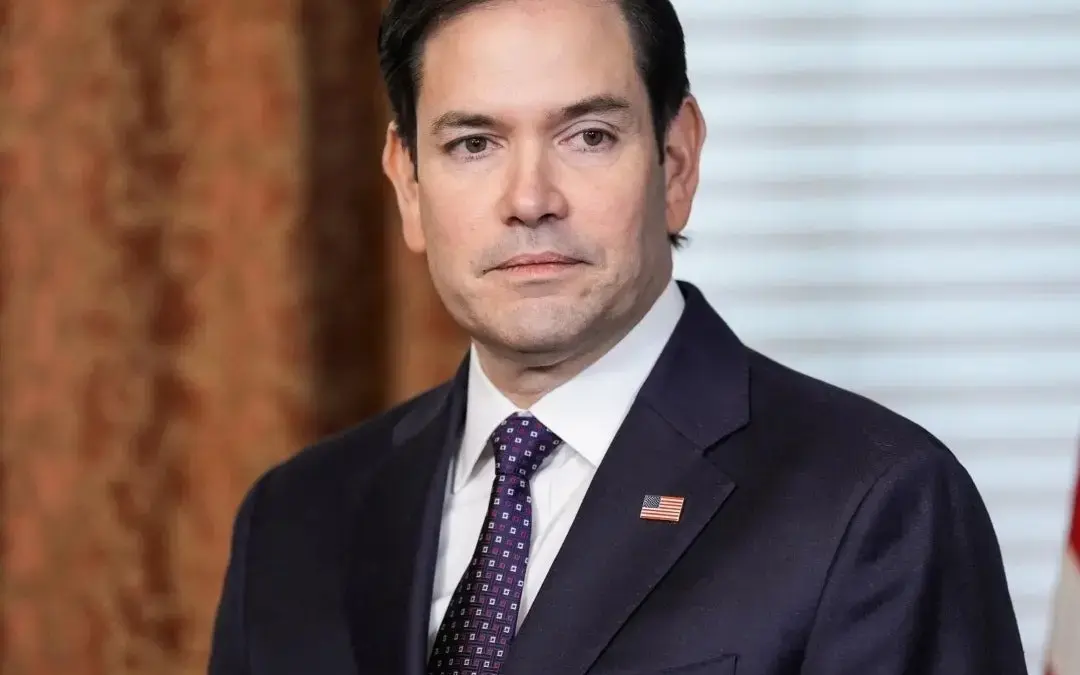
NEW YORK — In a prominent display of institutional engagement between Washington’s executive branch and the epicenter of global capital, United States Secretary of State Marco Rubio stepped onto the balcony of the New York Stock Exchange (NYSE) on Wall Street. Surrounded by senior exchange executives, Rubio performed the historic protocol of ringing the opening bell, signaling the formal commencement of the trading day.
While the ceremony carried significant visual weight—drawing the attention of international media, market analysts, and retail investors alike—insiders and administration officials emphasized that the visit was strictly ceremonial. No new economic policies, regulatory adjustments, or fiscal announcements accompanied the event. Instead, the high-profile appearance underscored the enduring, complex relationship between American foreign policy and the mechanics of the domestic financial sector.
Main Facts
The event unfolded at the iconic Beaux-Arts building at 11 Wall Street, home to the world’s largest stock exchange by market capitalization.
- The Principal Figure: United States Secretary of State Marco Rubio served as the guest of honor, tasked with striking the motorized brass bell that echoes across the trading floor at precisely 9:30 a.m. Eastern Time.
- The Setting: The New York Stock Exchange, a symbol of American capitalism, regularly hosts prominent international leaders, corporate titans, heads of state, and cultural icons for its opening and closing bell ceremonies.
- The Nature of the Event: Despite intense speculation from market watchers looking for macroeconomic clues, the visit was entirely protocol-driven. Administration representatives confirmed prior to the event that no policy pronouncements, sanctions updates, or trade strategy shifts would be unveiled.
- The Outcome: Following the brief ceremony, trading commenced without deviation from standard market operations. Equity futures, electronic order matching, and floor-based open outcry proceeded under normal conditions, unaffected by the diplomatic presence.
Chronology: A Morning on Wall Street
The sequence of events leading up to, during, and immediately following the opening bell reflects the tightly managed nature of high-level state visits to private financial institutions.
Early Morning Arrival (8:15 a.m. – 9:00 a.m.)
Security measures around the Financial District were visibly heightened well before the opening bell. Secret Service personnel, in coordination with the New York City Police Department (NYPD) and NYSE private security teams, secured the perimeter surrounding 11 Wall Street and Broad Street. Secretary Rubio arrived in a motorcade, greeted at the historic entrance by senior NYSE leadership, including exchange executives and board members.
The Green Room and Executive Briefings (9:00 a.m. – 9:25 a.m.)
Prior to stepping onto the podium, the Secretary participated in a brief private reception within the executive suites of the exchange. Discussions during this window typically focus on high-level overviews of global market conditions, international trade flows, and the resilience of the U.S. financial architecture against geopolitical shocks. However, participants noted that the tone was collegial and conversational rather than substantive or negotiating-focused.
The Bell Ringing Ceremony (9:28 a.m. – 9:30 a.m.)
At precisely 9:28 a.m., Secretary Rubio, accompanied by exchange executives, ascended the central podium overlooking the sprawling trading floor. As the digital countdown clock approached zero, the Secretary gripped the wooden mallet attached to the brass bell. At 9:30 a.m., he struck the bell multiple times, officially unleashing a wave of cheers from the floor traders below and marking the beginning of the trading session.
Post-Ceremony Departure and Market Continuation (9:35 a.m. onwards)
Following brief handshakes, photographs, and media pool documentation, Secretary Rubio departed the building to resume his official governmental duties in Washington, D.C. Down on the trading floor, specialists and market makers immediately turned their attention to incoming order books, ignoring the fading echoes of the bell as the day’s economic data began to drive price action.
Supporting Data: The Intersect of Diplomacy and Markets
To understand why a Secretary of State would visit the floor of the NYSE for a non-policy event, it is necessary to examine the deep structural ties between American foreign policy, global trade security, and the valuation of U.S. equities.
The Global Reach of NYSE-Listed Equities
The New York Stock Exchange is not merely a domestic marketplace; it is the financial backbone of the global economy.
- Market Capitalization: As of recent fiscal quarters, the combined market capitalization of companies listed on the NYSE surpasses $25 trillion.
- International Exposure: A substantial portion of the revenue generated by NYSE-listed blue-chip corporations originates outside the borders of the United States. Multinationals in sectors ranging from technology and energy to aerospace and pharmaceuticals depend heavily on stable international relations, favorable trade agreements, and predictable foreign policy execution handled by the Department of State.
Geopolitical Risk and Market Volatility
In an era defined by supply chain vulnerabilities, economic sanctions, and strategic competition between superpowers, the actions of the Department of State directly influence corporate balance sheets.
- Sanctions Enforcement: The State Department, working in tandem with the Department of the Treasury, continuously imposes and oversees sanctions that restrict American firms from doing business with specific foreign entities. These actions immediately affect stock prices, particularly in energy, defense, and high-tech manufacturing.
- Foreign Direct Investment (FDI): Stability fostered by diplomatic channels encourages cross-border investments, bolstering liquidity within U.S. capital markets. Conversely, diplomatic friction often manifests as heightened market volatility and risk aversion among institutional investors.
Official Responses and Institutional Perspectives
While the event itself was brief, reactions from financial analysts, government liaisons, and market participants highlighted the dual nature of such symbolic appearances: appreciation for institutional continuity juxtaposed with pragmatic skepticism regarding market impact.
Department of State Perspective
Spokespersons for the executive branch framed the visit as part of a broader, ongoing effort to maintain open lines of communication between the federal government and the private sector engines that drive American economic power.
"The strength of the United States abroad is inextricably linked to the vitality of our domestic economy," noted an administration official close to the planning of the visit. "Engaging with the institutions that facilitate capital formation and economic growth is a fundamental component of statecraft in the modern globalized era."
NYSE Leadership and Market Analysts
Exchange executives welcomed the visit as a reaffirmation of the historic partnership between American enterprise and public governance. From the perspective of the exchange, hosting cabinet-level officials reinforces the status of New York as the premier financial capital of the world.
However, independent market analysts were quick to temper expectations regarding any hidden economic signals.
- Jane Henderson, Senior Equity Strategist at Horizon Financial Group: "Visits of this nature are largely symbolic. While it’s always noteworthy to see high-ranking members of the foreign policy establishment engaging directly with Wall Street, institutional investors do not trade on photo-ops. The market’s eyes remain firmly fixed on inflation prints, Federal Reserve rate trajectories, and corporate earnings reports."
- Marcus Thorne, Macroeconomic Consultant: "What we are seeing is a visual reminder of the symbiosis between state power and market capitalism. Rubio’s presence underscores that economic security is national security. However, until we see tangible shifts in trade policy or regulatory frameworks, this remains a ceremonial gesture."
Broader Implications
The presence of the nation’s chief diplomat on the floor of the New York Stock Exchange carries several profound implications for the future trajectory of U.S. economic statecraft.
1. The Consolidation of "Economic Security as National Security"
In recent years, the traditional boundaries separating diplomacy, national security, and international commerce have dissolved. Issues once viewed strictly through the lens of foreign policy—such as semiconductor supply chains, critical mineral extraction, and maritime trade routes—are now core drivers of stock market valuations. By visiting Wall Street, leadership from the Department of State signals an awareness that the health of American capital markets depends heavily on robust, proactive international diplomacy.
2. Managing Investor Expectations in a Volatile World
Financial markets thrive on certainty, yet the geopolitical landscape is currently characterized by heightened unpredictability. By executing a strictly ceremonial visit without introducing sudden policy shocks, the administration avoided unsettling algorithmic trading models or triggering reactionary sell-offs. This cautious approach demonstrates a growing sensitivity among political figures to the instantaneous, hyper-sensitive nature of modern electronic markets.
3. The Power of Symbolism in Capital Markets
Symbols matter deeply in finance. The ringing of the bell is a ritual that dates back over a century, designed to project confidence, order, and continuity. Having a high-ranking official charged with international security participate in this ritual projects a unified front between the apparatus of the state and the engines of private enterprise. It serves as a visual reassurance to international investors that the foundational pillars of the American financial system remain secure, resilient, and deeply supported by the federal government.
Conclusion
Secretary of State Marco Rubio’s visit to the New York Stock Exchange concluded quietly, with trading floors returning immediately to their relentless pursuit of algorithmic efficiency and price discovery. No new tariffs were levied, no treaties were signed, and no emergency monetary policy shifts were declared.
Yet, the image of the nation’s chief diplomat standing above the bustling trading floor serves as a potent reminder of the interconnected realities of modern power. In a world where geopolitical conflicts instantly ripple through global supply chains and shift equity valuations within milliseconds, the bridge between Washington’s policy-makers and Wall Street’s capital allocators remains more vital—and more visible—than ever before.



Leave a Reply