


SHANGHAI — In an era defined by rapid technological disruption, the global hospitality industry stands at a critical crossroads. As artificial intelligence (AI), machine learning, and advanced Internet of Things (IoT) ecosystems infiltrate every corner of modern enterprise, hotels are forced to fundamentally rethink their physical and digital foundations.
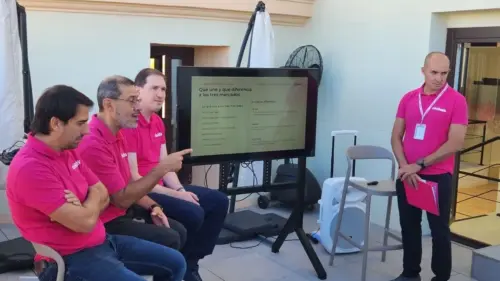
Bridging this gap between legacy infrastructure and futuristic demands, the Hotel Technological Institute (Instituto Tecnológico Hotelero – ITH) and AMETIC (the Multisectoral Association of Information Technology, Communications, and Electronics Companies) recently convened a high-profile international summit in Shanghai.
The summit brought together heavyweights from across the global tourism and technology sectors—including Spanish hospitality giant Meliá Hotels International and international luxury leader Shangri-La Hotels, alongside top-tier systems integrators and specialized tech developers. The core mission: dissecting the primary roadblocks and strategic imperatives of the hotel digital transformation journey.
Discussions centered around four indispensable pillars set to dictate the evolution of hotel infrastructure in the age of artificial intelligence: hyper-connectivity, smart room optimization, radical energy efficiency, and uncompromising guest privacy.
Main Facts
The summit in Shanghai served as more than just a networking forum; it was a strategic alignment of minds addressing the structural demands of next-generation tourism.
- The Conveners: The event was jointly organized by Spain’s ITH and AMETIC, showcasing Spanish technological prowess and strategic vision on an international stage in Shanghai.
- Key Participants: Prominent global hotel chains, notably Meliá Hotels International and Shangri-La, participated alongside technology developers and systems integrators.
- The Core Catalyst: The rapid integration of artificial intelligence, autonomous agents, and smart-room applications is rendering traditional hotel IT and physical infrastructure obsolete.
- The Blueprint: The meeting marked the official presentation of the newly minted sector guidelines titled “Sector Guidelines on Digital Infrastructure and SafeStay in the Hotel Sector,” derived from exhaustive studies of the hospitality ecosystem and direct guest feedback.
- The Three Strategic Priorities:
- Deployment of next-generation wireless connectivity (specifically Wi-Fi 7).
- Evolution of smart rooms into spatial-sensing, energy-efficient operational hubs.
- Enhanced privacy protocols, featuring real-time detection technologies against hidden security threats.
Chronology of the Transformation: From Connectivity to Cognitive Hotels
To understand where the hotel industry is heading, industry analysts at the Shanghai summit mapped out the chronological evolution of hotel technology over the past two decades, leading up to the current paradigm shift.
Phase 1: Basic Internet Access (Late 1990s – 2010s)
In the early days of hospitality digitization, hotels viewed internet connectivity merely as an amenity—an optional utility akin to a mini-bar or cable television. Wired Ethernet ports gave way to basic, low-bandwidth Wi-Fi routers scattered haphazardly across properties. Networks were prone to dropping, bandwidth was heavily restricted, and cybersecurity was rudimentary. The infrastructure was entirely separate from core hotel operations.
Phase 2: The Smart Device Boom & Cloud Transition (2010s – Early 2020s)
As guests began traveling with multiple connected devices (smartphones, tablets, laptops), hotel networks faced unprecedented strain. Hotels scrambled to upgrade bandwidth, introduce cloud-based property management systems (PMS), and offer mobile check-ins. Smart TVs and basic automated lighting started appearing in upscale rooms, but these systems generally operated in silos, disconnected from one another and reliant on extensive, complex physical wiring.
Phase 3: The AI & Spatial Computing Era (Present Day and Beyond)
Today, the paradigm has shifted dramatically. AI agents, real-time data analytics, and automated decision-making engines require a complete overhaul of underlying network architectures. As discussed in Shanghai, connectivity is no longer just a service for guests to stream movies; it is the vital nervous system powering autonomous guest-service agents, energy-saving sensors, predictive maintenance algorithms, and advanced security matrices.
Supporting Data & Strategic Pillars
The newly unveiled “Sector Guidelines on Digital Infrastructure and SafeStay in the Hotel Sector” outline three foundational pillars essential for future-proofing hotel properties.
1. Hyper-Connectivity via Wi-Fi 7 and Beyond
The first major priority identified by ITH and AMETIC is the urgent need to overhaul wireless infrastructure. Traditional networks cannot sustain the data throughput required by modern applications and AI systems.
- The Wi-Fi 7 Standard: The guidelines emphasize the deployment of cutting-edge wireless technologies like Wi-Fi 7. This standard offers unprecedented speeds, ultra-low latency, and the capacity to handle thousands of concurrent connections without performance degradation.
- Seamless Coverage: Modern hospitality demands uninterrupted, high-speed coverage from the underground parking garage to the rooftop pool. Without robust backhaul networks, AI-driven applications—such as real-time language translation tools, augmented reality (AR) concierge services, and IoT device management—will fail to deliver smooth user experiences.
2. The Evolution of Smart Rooms and Spatial Detection
For years, "smart rooms" were marketed as a luxury gimmick—allowing guests to turn off lights or change TV channels via a tablet. The Shanghai summit revealed a much deeper, more functional transformation.
- Spatial Sensing: Future room networks will double as spatial-sensing platforms. Rather than relying on rigid, manual inputs, rooms will intelligently detect occupancy, ambient temperature, and natural light levels.
- Dynamic Adjustments: Based on these real-time environmental insights, the room will autonomously adjust air conditioning, ventilation, and lighting, maximizing comfort while slashing carbon footprints.
- Reducing Infrastructure Weight: By leveraging technologies such as access points compatible with Room Control Units (RCU) and Bluetooth Mesh networking, hotels can drastically reduce traditional copper cable requirements. This not only lowers installation and maintenance costs but also simplifies future technological upgrades.
3. Privacy, Security, and the "SafeStay" Mandate
As hotels become more digitized and data-driven, vulnerabilities multiply. Guest privacy has transitioned from a backend legal concern to a primary value proposition.
- Countering Hidden Threats: Among the most innovative solutions presented at the summit are advanced detection technologies capable of identifying unauthorized surveillance devices, such as hidden cameras, generating instantaneous real-time alerts.
- Data Sovereignty: Protecting guest data from sophisticated cyberattacks is paramount. The SafeStay guidelines advocate for end-to-end encryption, decentralized data storage where applicable, and strict adherence to international privacy standards (such as GDPR).
Official Responses and Industry Perspectives
The collaborative nature of the Shanghai meeting highlighted a shared consensus: digital transformation is no longer a localized IT project; it is an enterprise-wide imperative that requires cross-sector cooperation.
"The hotel of the future will require an infrastructure capable of seamlessly combining high-speed connectivity, environmental spatial detection, artificial intelligence, and rigorous security," noted consensus statements from industry leaders during the plenary sessions.
Representatives from Meliá Hotels International emphasized that guest expectations are evolving faster than physical real estate can traditionally adapt. Today’s travelers—particularly digital nomads, tech-savvy millennials, and Gen-Z consumers—expect the hotel environment to be as intuitive, responsive, and hyper-connected as their own smart homes, if not more so.
Meanwhile, Shangri-La Hotels highlighted the luxury sector’s unique perspective, noting that high-end personalization relies entirely on invisible, frictionless technology. True luxury in the modern age means a room that anticipates a guest’s preferences before they articulate them, backed by an ironclad guarantee of privacy and discretion.
ITH leadership reiterated that the progressive integration of artificial intelligence agents, automated operational tools, and smart devices forces a complete conceptual redesign of traditional architecture. The institute announced its commitment to rolling out these strategic guidelines across international hospitality markets, partnering with technology vendors and hotel chains to ensure widespread adoption.
Implications for the Global Hospitality Industry
The conclusions drawn in Shanghai carry profound implications for hotel owners, investors, operators, and technology providers worldwide.
Capital Expenditure Realignment
Hotel real estate is traditionally viewed as a long-term, stable asset class with slow depreciation cycles. However, the rapid acceleration of AI means that digital infrastructure obsolescence is happening faster than ever before. Investors must now factor ongoing technological upgrades—such as Wi-Fi 7 refreshes, IoT sensor retrofits, and cybersecurity audits—into capital expenditure (CapEx) budgets. Properties failing to adapt risk severe devaluation and a loss of market share among high-yielding corporate and tech-fluent leisure travelers.
Sustainability and Energy Efficiency
With global tourism under increasing pressure to meet net-zero carbon targets, intelligent infrastructure offers a vital lifeline. Smart rooms equipped with spatial detection and AI-driven predictive climate control can drastically reduce energy waste in vacant or partially occupied spaces. Aligning digital transformation with green initiatives is no longer just a PR exercise; it is an economic necessity amidst rising energy costs and stricter environmental regulations.
Redefining Guest Experience and Operations
Ultimately, the shift toward AI-ready infrastructure frees human staff from repetitive administrative tasks, allowing them to focus on high-touch, personalized hospitality. When back-end systems run smoothly and efficiently, the human element of service can truly shine.
As the insights from the Shanghai summit demonstrate, the future belongs to hotels that successfully merge the physical warmth of hospitality with the cognitive power of artificial intelligence—creating spaces that are not merely places to sleep, but intelligent, secure, and responsive ecosystems.



Leave a Reply