

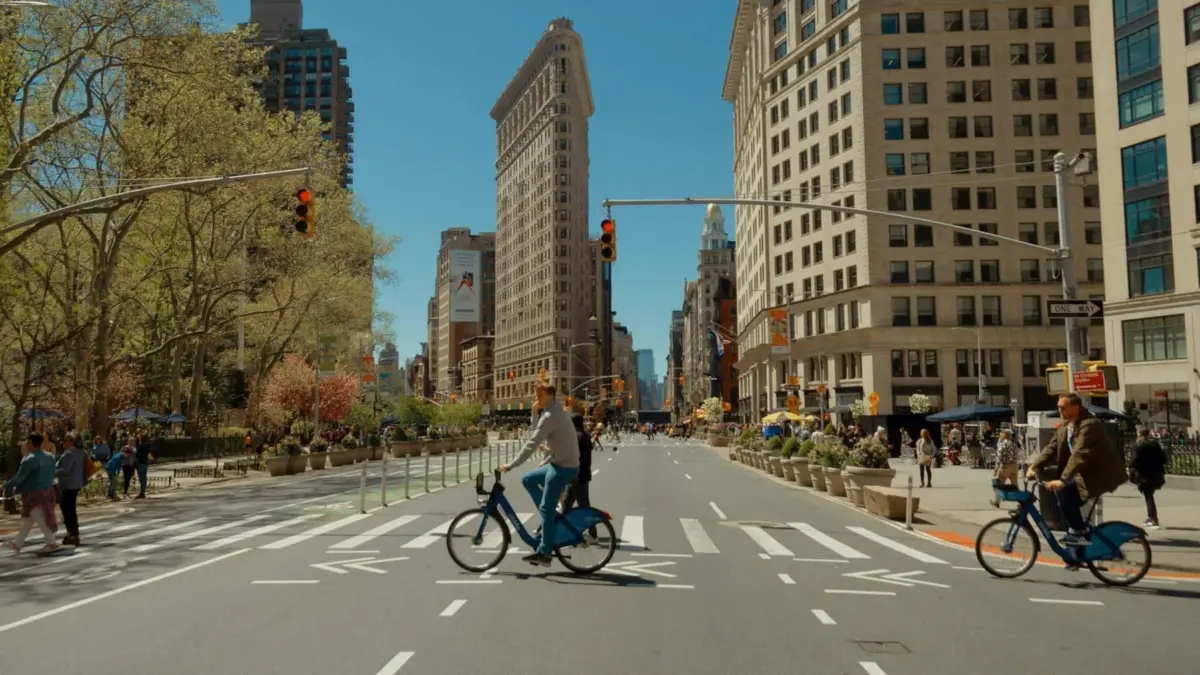
NEW YORK — In a metropolis renowned for its relentless energy, towering skyscrapers, and perpetual motion, the struggle against air pollution and traffic congestion is a daily reality. To combat this environmental strain, the New York State Department of Environmental Conservation (NYSDEC) has launched an ambitious public engagement initiative: “Get There Green!”
Scheduled to take place from September 20 to September 27, 2026, this week-long campaign coincides strategically with the high-level debates of the United Nations General Assembly in New York City, where global leaders converge to address climate change and sustainable development. The initiative challenges residents, commuters, and visitors alike to temporarily set aside fossil-fuel-powered vehicles in favor of sustainable, low-emission transportation alternatives.
By encouraging a collective shift toward greener mobility, local and state authorities hope not only to drastically cut greenhouse gas emissions during a single week, but also to plant the seeds for permanent lifestyle changes that can help New York meet its long-term climate targets.
Main Facts: The "Get There Green!" Initiative
The core premise of "Get There Green!" is straightforward: reduce the reliance on internal combustion engine vehicles that choke the city’s streets and degrade its air quality. The transportation sector remains one of the largest contributors to greenhouse gas emissions in New York State, heavily influencing the individual carbon footprints of millions of residents.
To counteract this, the initiative invites the public to voluntarily alter their daily commuting habits. Participants are encouraged to explore a diverse array of sustainable transit methods, including:
- Active Transportation: Walking or running for short trips, which produces zero emissions and promotes physical well-being.
- Cycling: Utilizing traditional bicycles or embracing the growing fleet of e-bikes for faster urban travel.
- Public Transit: Maximizing the use of New York’s extensive subway, bus, and commuter rail networks.
- Shared Mobility: Utilizing carpooling programs—such as the regional "Capital Moves" service—to maximize vehicle occupancy and reduce the total number of cars on the road.
- Electrification: Transitioning to electric vehicles (EVs) for necessary vehicular travel.
To amplify the message, the campaign leverages digital advocacy. Participants are encouraged to document their sustainable commutes and share photos on social media platforms, creating a grassroots wave of digital encouragement that showcases the viability and ease of green travel in an urban environment.
Chronology: From Climate Commitments to Urban Transformation
The rollout of "Get There Green!" is part of a broader, carefully coordinated timeline of environmental policies and urban redesign projects unfolding across New York.
- Pre-2026 Policy Foundations: For years, New York State and City agencies have worked to reconcile dense urban living with aggressive climate mandates, such as the Climate Leadership and Community Protection Act (CLCPA), which mandates significant economy-wide emission reductions.
- Urban Infrastructure Evolution: Alongside policy frameworks, physical spaces in the city have begun to transform. A notable milestone in this timeline is the ongoing revitalization and pedestrianization of Park Avenue, transforming a historic arterial roadway from a vehicle-choked corridor into a shared space that prioritizes pedestrians and cyclists.
- September 20–27, 2026 (The Campaign Window): Running concurrently with the UN General Assembly—where climate action commands the global stage—the "Get There Green!" week acts as a localized, highly visible manifestation of global climate goals. Citizens put policy into practice on the asphalt.
- Post-2026 Vision: The ultimate goal of the initiative is chronological extension. Authorities hope that the behaviors tested and adopted during this intensive week will transition into permanent daily habits, shifting the baseline of urban mobility for decades to come.
Supporting Data: The Hidden Cost of Urban Commuting
To understand why NYSDEC places such heavy emphasis on transportation reform, one must look closely at the data surrounding urban emissions and individual choices.
The Cumulative Impact of Short Trips
Many urban dwellers view a short drive—a trip of just a few blocks to pick up groceries or run an errand—as inconsequential. However, data compiled by environmental agencies reveals a startling cumulative impact. When multiplied by millions of residents performing similar routine trips daily, these localized tailpipe emissions compound dramatically. They account for a significant percentage of New York’s total urban air pollution, heavily elevating levels of particulate matter ($PM2.5$ and $PM10$) and nitrogen oxides ($NO_x$).
The Carbon Footprint of Transit
According to state environmental assessments, the transportation sector generates the lion’s share of New York’s greenhouse gas emissions. For the average urban resident, personal vehicle usage constitutes the largest component of their overall carbon footprint.
Conversely, scientific studies tracking urban micro-mobility—such as municipal bike-share programs and e-bike integration—consistently demonstrate measurable improvements in public health and air quality. When cities successfully transition even 10% to 15% of short car trips to cycling or walking, emergency room visits related to respiratory distress and cardiovascular ailments drop noticeably.
Official Responses: Government and Environmental Perspectives
State and municipal leaders have been vocal about the necessity of bridging high-level climate diplomacy with grassroots action.
The New York State Department of Environmental Conservation has emphasized that systemic change cannot happen solely through legislative mandates or technological upgrades in public transit fleets; it requires active, daily participation from the populace. In official briefings regarding "Get There Green!", NYSDEC representatives noted that individual choices are the gears that drive municipal transformation.
"The choices we make for a simple trip down the street ripple outward," state environmental officials noted in campaign literature. "When millions of people rethink their commute, the air clears, the streets quiet down, and we take a decisive step toward a net-zero future."
Urban planners and public health advocates have echoed these sentiments, pointing out that sustainable mobility infrastructure—such as protected bike lanes, expanded pedestrian zones, and reliable electric transit—must be matched by a cultural willingness to abandon car-centric dependencies. The convergence of the UN General Assembly in New York provides a symbolic backdrop, reminding citizens that local actions directly support global treaties and planetary health.
Implications: Towards a Net-Zero Urban Future
The implications of initiatives like "Get There Green!" extend far beyond a single week of reduced traffic congestion. They serve as a testing ground for the future of urban living in the 21st century.
1. Environmental and Air Quality Improvements
The immediate, tangible outcome of reduced fossil-fuel vehicle usage is an improvement in ambient air quality. Lower concentrations of pollutants mean fewer asthma flare-ups, reduced risks of chronic cardiovascular disease, and a safer environment for children and the elderly.
2. Economic and Infrastructure Evolution
As more citizens utilize alternative transit, pressure mounts on municipal governments to continuously upgrade and expand green infrastructure. Investments in bicycle lanes, EV charging stations, and robust public transportation networks become economically justified by high utilization rates. Furthermore, moving toward sustainable mobility supports the broader transition to a net-zero emissions economy, aligning New York with international climate benchmarks.
3. Cultural Shift in Urban Identity
Perhaps the most profound implication is psychological. Cities like New York have long been associated with the constant roar of gridlocked traffic and yellow cabs. By intentionally carving out spaces for walking, cycling, and shared electric transit, the city redefines its identity. "Get There Green!" demonstrates that urban density does not have to equal environmental degradation; rather, density can be leveraged as an asset for efficient, sustainable collective living.
Ultimately, while a one-week campaign cannot instantly solve the complexities of modern urban pollution, it provides a vital catalyst. By encouraging residents to experience the city at a human scale—on foot, on a bicycle, or side-by-side on public transit—New York is proving that the path to a sustainable future begins with the very first step out the door.




Leave a Reply