

By Global Energy & Environment Desk
Published: July 2026
Introduction: A Shagged Blade and a Stalled Narrative
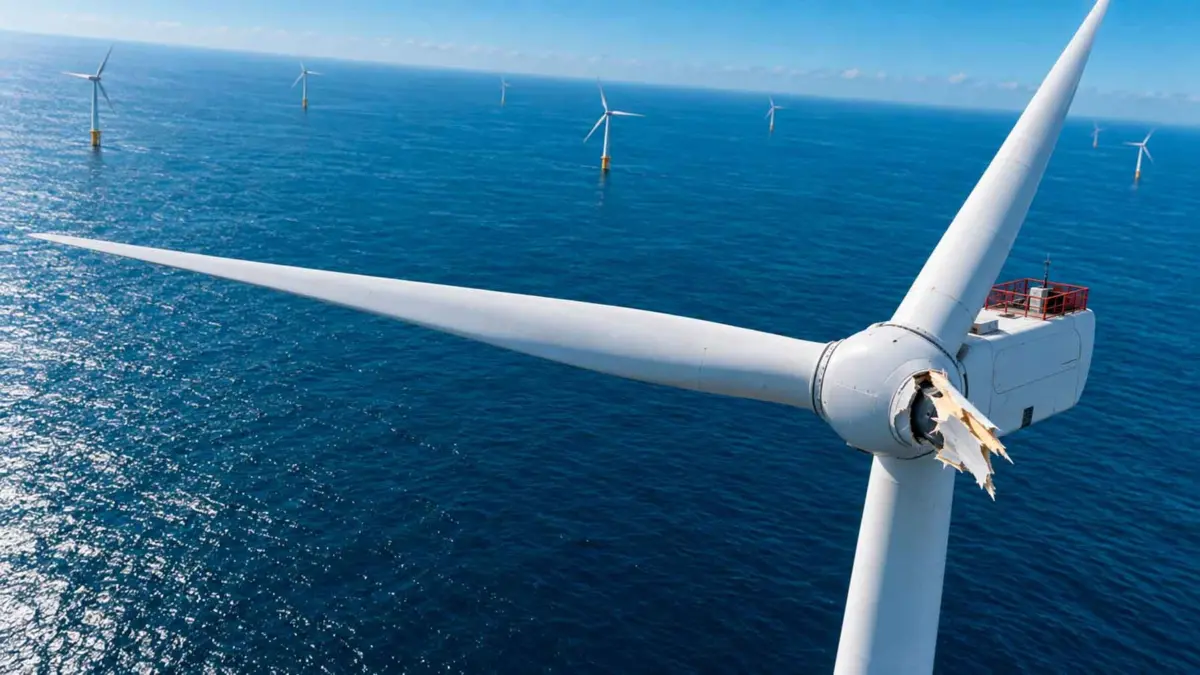
It began with a shattering thud and a plume of fiberglass debris off the pristine coast of Massachusetts. Long before Vineyard Wind 1—the United States’ first utility-scale commercial offshore wind farm—could fully claim its place as the crown jewel of the nation’s renewable energy transition, disaster struck. A massive turbine blade fractured mid-operation, raining down shards of composite materials and industrial foam onto the shores of idyllic Nantucket.
The incident instantly triggered emergency shutdowns, intense localized environmental backlash, and a flurry of corporate damage control. GE Vernova, the manufacturer of the colossal turbine, moved swiftly to diagnose the failure, pointing the finger at an isolated factory production flaw.
Yet, as the calendar rolled over to July 2026—marking two full years since the accident—a glaring question continues to haunt regulators, industry stakeholders, and coastal communities alike: Where is the official federal report?
While corporate assessments were finalized and legal settlements disbursed, the federal government’s independent investigation remains mired in delays, bureaucratic transitions, and unanswered questions. This is the timeline, the controversy, and the lingering mystery behind the Nantucket blade fracture.
1. Main Facts of the Incident
On a summer day that would alter the trajectory of American offshore wind development, a turbine blade at the Vineyard Wind 1 project suffered a catastrophic structural failure. The fragments did not sink quietly into the Atlantic; instead, tidal currents and winds carried pieces of fiberglass, resin, and core foam directly onto the beaches of Nantucket, triggering immediate environmental cleanup efforts and public outcry.
The consequences were immediate and severe:
- Production Halt: Federal regulators ordered a temporary suspension of power generation at the offshore site, halting the injection of clean energy into the New England grid.
- Environmental Impact: Debris retrieval operations lasted months, requiring specialized teams to comb beaches and trawl coastal waters to remove hazardous composite fragments.
- Economic Fallout: Local tourism and fishing interests faced immediate reputational and economic friction, culminating years later in legal reparations.
- Corporate Scrutiny: GE Vernova, facing immense pressure, initiated an unprecedented fleet-wide inspection of roughly 150 similar blades manufactured at the same facility.
Despite the localized nature of the failure, the psychological and economic shockwaves reverberated through Washington, D.C., and across boardrooms of competing developers who viewed Vineyard Wind 1 as a bellwether for the entire U.S. offshore wind sector.
2. Chronology of Events
To understand the current state of uncertainty, it is necessary to retrace the timeline from the initial fracture to the present day:
- July 2024: The blade failure occurs off the coast of Massachusetts. Debris washes ashore on Nantucket. Federal safety authorities order an immediate halt to power generation operations at Vineyard Wind 1.
- Late 2024: GE Vernova concludes its internal review, attributing the failure to an insufficient adhesive bond during manufacturing. The company begins comprehensive inspections of roughly 150 blades and works alongside Vineyard Wind to remove or secure components on up to 22 pre-incident turbines.
- January 2025: Regulatory authorities lift the temporary suspension on power production, allowing Vineyard Wind 1 to resume generating electricity as cleanup and recovery efforts wind down.
- Throughout 2025: Local municipalities seek restitution. The town and county of Nantucket reach a landmark $10.5 million settlement with GE Vernova to resolve claims tied to the economic and environmental fallout of the disaster. Meanwhile, the federal Bureau of Safety and Environmental Enforcement (BSEE) continues its separate, independent technical inquiry.
- Early 2026: In a major bureaucratic reorganization, the BSEE is officially dissolved and integrated into a newly minted federal agency, the Marine Minerals Administration. The transition causes administrative shuffling, but the pending investigation dossier remains open.
- July 2026: Two years after the initial fracture, the federal government has yet to publish a finalized, comprehensive post-mortem report detailing the root cause of the accident.
3. Supporting Data and Technical Findings
While the federal government has kept its final conclusions under wraps, the technical landscape has been heavily shaped by the manufacturer’s disclosures.
The Manufacturer’s Verdict
GE Vernova’s internal investigation was thorough, leveraging non-destructive testing, acoustic monitoring data, and forensic analysis of the fractured composite sections. According to the manufacturer:
- The Root Cause: The failure originated from an insufficient adhesive bond between internal structural elements of the blade.
- Process vs. Design: GE Vernova explicitly stated that the issue was isolated to a manufacturing process error—a step where the bonding agent was improperly applied or cured—rather than a fundamental flaw in the engineering design of the Haliade-X turbine platform.
- Quality Control Lapses: The company acknowledged that the defect should have been intercepted by routine factory quality assurance checks before the blade was ever cleared for transport and offshore installation.
Fleet-Wide Reassurance and Remediation
To restore market confidence, GE Vernova inspected approximately 150 blades produced at the same manufacturing facility. Project developer Vineyard Wind coordinated the remediation of up to 22 pre-incident turbines, retrofitting or removing suspect components.
However, industry analysts point out that while these corrective actions mitigated immediate risks, they were executed based on the manufacturer’s self-diagnosis. Without an independent federal stamp of validation, lingering skepticism persists regarding whether factory quality control issues are isolated or systemic across the booming renewable energy supply chain.
4. Official Responses and Institutional Drag
The stark contrast between the speed of corporate accountability and the lethargy of federal oversight has become a central point of criticism.
The BSEE and Institutional Transitions
Initially, the Bureau of Safety and Environmental Enforcement (BSEE) shouldered the responsibility of conducting an independent federal investigation into the Nantucket incident. The agency was tasked with determining whether regulatory frameworks were sufficient, whether oversight protocols failed, and whether GE Vernova’s fault analysis held water.
However, government bodies are rarely immune to structural evolution. In 2026, the BSEE was absorbed into the newly established Marine Minerals Administration. While government officials maintained that ongoing files and safety investigations would transfer seamlessly into the new administrative framework, the structural overhaul inevitably introduced bureaucratic friction.
The Silence from Washington
Despite inquiries from lawmakers, environmental groups, and industry trade associations, the federal administration has offered little clarity on why the investigation has dragged on for over 24 months, nor has it provided a definitive timeline for publication.
This regulatory silence has created an information vacuum. In the absence of an official government report, the narrative surrounding the Vineyard Wind 1 failure remains largely defined by the party with the most financial skin in the game: the manufacturer itself.
5. Broader Implications for the Offshore Wind Industry
The implications of the Nantucket blade fracture extend far beyond a single broken turbine or a localized legal settlement. As the United States targets ambitious offshore wind deployment goals to combat climate change, the integrity of the supply chain is under a microscope.
Managing Public and Political Perception
Anti-wind advocacy groups and skeptical coastal communities seized upon the 2024 accident as proof that offshore wind technology is rushed, environmentally hazardous, and technologically unreliable. While technical experts emphasize that a manufacturing defect in an adhesive bond is an engineering anomaly rather than an indictment of wind power as a whole, public relations damage is difficult to reverse.
The $10.5 million settlement with Nantucket quieted immediate local litigation, but community trust is fragile. Residents want assurance that the federal watchdog is independently verifying the safety of massive industrial structures operating just miles off their shores.
The Waiting Game for Final Validation
Ultimately, the narrative of the Vineyard Wind 1 incident has evolved. Two years ago, the central question was simple: What caused the blade to break?
Today, the question carries heavier political and institutional weight: Will the federal government’s final investigation independently corroborate GE Vernova’s findings, or will it uncover deeper regulatory and manufacturing vulnerabilities that the industry has yet to address?
Until the Marine Minerals Administration releases its definitive report, the ghost of the Nantucket blade fracture will continue to loom over America’s offshore wind ambitions—a stark reminder that the path to a green energy transition is paved not just with good intentions, but with uncompromising safety standards and transparent accountability.



Leave a Reply