

NEW YORK — In a bold move that positions local governance at the forefront of the American environmental movement, the State of Delaware has unveiled Delaware SHINES—a groundbreaking initiative designed to supercharge solar energy generation and residential battery storage. Announced during the high-profile Climate Week NYC, the program arrives as a direct counter-strategy to a challenging national landscape, signaling that ambitious climate action can thrive even when federal incentives recede.
As coastal and mid-Atlantic states face mounting pressure to decarbonize while safeguarding grid reliability, Delaware’s administration is betting heavily on decentralized, rooftop-based renewables. By bridging the gap between clean technology and economic accessibility, the state aims not only to hit its statutory carbon-reduction targets but also to fundamentally reshape how everyday citizens interact with and pay for electricity.
Main Facts: The Anatomy of Delaware SHINES
Delaware SHINES has been formally billed by state officials as the nation’s most comprehensive combined solar and energy storage initiative tailored specifically for households, small businesses, and non-profit organizations.
At its core, the program seeks to solve the intermittency and storage challenges that have historically bottlenecked the widespread adoption of photovoltaic (PV) systems. By pairing rooftop solar panels with advanced residential and commercial battery storage units, Delaware SHINES transforms ordinary buildings into micro-power plants.
Key Elements of the Initiative:
- Targeted Financial Incentives: The program deploys a robust structure of direct subsidies, cash-back rebates, and specialized financing options. Crucially, these financial cushions are heavily weighted to ensure low- and moderate-income (LMI) families can afford the upfront capital required for solar installations.
- Economic Relief for Consumers: According to state economic projections, an average Delaware household currently paying approximately $200 a month in electricity bills can anticipate annual savings exceeding $300 through self-generation and net metering benefits.
- Grid Resilience and Storage: Moving beyond mere generation, the program incentivizes battery storage systems for both residential and commercial properties. This ensures that excess daytime solar energy is stored locally, protecting communities against grid outages and lessening peak-load stress on traditional utility infrastructure.
- Democratizing Clean Tech: Small- and medium-sized enterprises (SMEs) and community non-profits are included in the incentive frameworks, ensuring that the economic dividends of the green transition are shared broadly across the local economy.
Chronology of a Transition: Delaware’s Path to Renewable Energy
Delaware’s journey toward a low-carbon grid has been steady, methodical, and increasingly urgent. To understand the significance of the Delaware SHINES launch, it is necessary to examine the historical trajectory of the state’s energy sector.
Early Milestones and the Rise of Photovoltaics
For over a decade, renewable energy alternatives have steadily gained ground in the "First State." Solar power quickly emerged as the public favorite, driven by falling hardware costs and early state interventions.
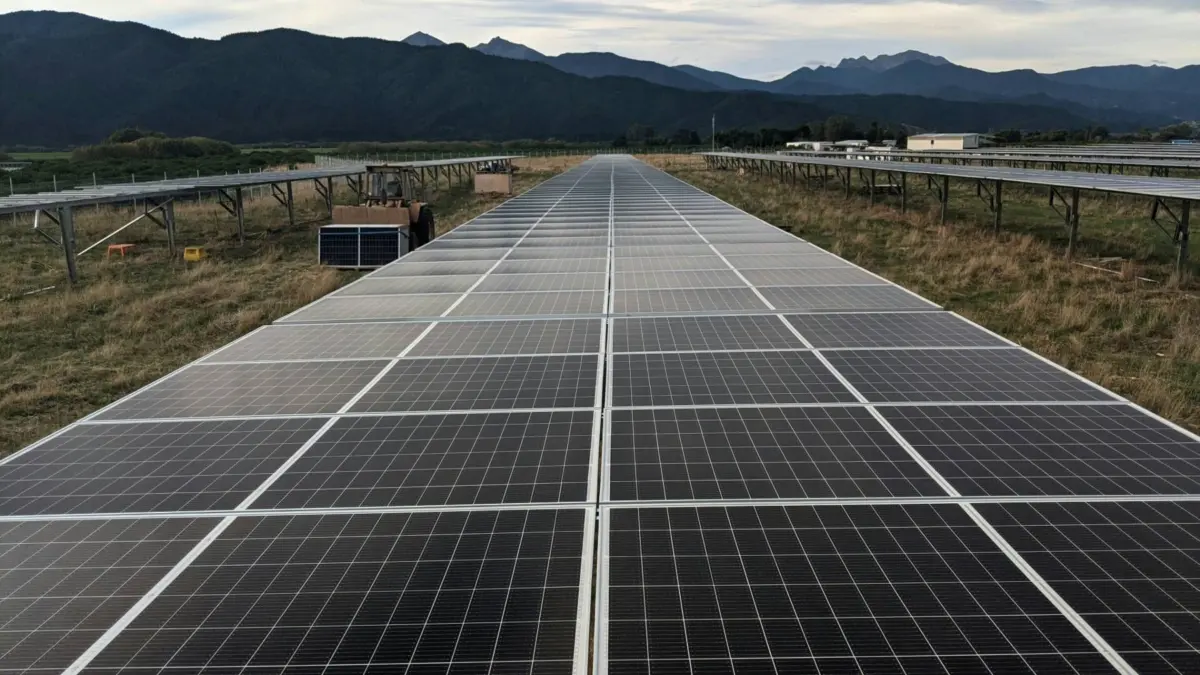
According to a comprehensive 2025 renewable energy report published by Clean Choice Energy, Delaware’s photovoltaic industry had already achieved a milestone of 175 megawatts (MW) of installed solar capacity—a volume sufficient to reliably power approximately 30,000 typical American homes.
Beyond solar arrays, the state’s energy mix began diversifying into other sectors. The deployment of the Spickjack Wind farm introduced utility-scale wind power to the landscape, while two biomass-fueled power plants began converting organic waste into electricity, helping to diversify away from pure fossil fuel dependence.
Legislative Catalysts and Policy Frameworks
This incremental progress was not accidental. It was actively curated by legislative mandates and state-backed funding mechanisms. Programs such as the Green Energy Program and the Solar Renewable Energy Credits (SRECs) market provided early financial lifelines to early adopters, creating a stable local market for green tech installers.
However, the stark reality remains that fossil fuels continue to dominate Delaware’s overall energy portfolio. Natural gas and coal remain the primary workhorses for baseload electricity generation across the state. Recognizing this vulnerability, state lawmakers enacted Senate Bill 33, establishing a firm, legally binding mandate: 40% of all electricity consumed in Delaware must originate from renewable sources by the year 2035.
The Climate Week NYC Unveiling
The rollout of Delaware SHINES at Climate Week NYC in late September represents the logical apex of this evolutionary timeline. By presenting the initiative on an international stage, the state administration signaled its readiness to move past incremental targets and enter an aggressive acceleration phase, utilizing hyper-local production to guarantee long-term electricity affordability.
Supporting Data: The Energy Landscape in Delaware
To contextualize the ambitions of Delaware SHINES, energy analysts point to a complex matrix of current production data, infrastructure realities, and socioeconomic variables.
Current Energy Mix vs. Renewable Targets
- Fossil Fuel Dominance: Despite steady gains in renewables, natural gas and coal continue to account for the vast majority of electricity generation within the state boundaries, leaving Delaware vulnerable to global fossil fuel price volatility.
- Solar Penetration: The 175 MW of installed solar capacity noted in the 2025 Clean Choice Energy report represents a strong foundation, but state planners calculate that capacity must increase exponentially—coupled with corresponding storage infrastructure—to meet the 2035 target of 40% clean energy.
- The Affordability Equation: Electricity rates in the mid-Atlantic region have faced upward pressure, prompting consumer advocacy groups to push for distributed generation. By allowing homeowners to generate and store their own power, the state estimates protection against future utility rate hikes.
Comparative Infrastructure Assets
| Energy Source / Technology | Current Status in Delaware | Primary Impact |
|---|---|---|
| Solar PV Systems | 175 MW+ installed (as of 2025) | Powers ~30,000 homes; rapidly expanding via residential rooftops. |
| Wind Power | Spickjack Wind farm operational | Adds utility-scale geographical diversity to the green portfolio. |
| Biomass | Two active power plants | Converts local organic waste into clean baseload energy. |
| Energy Storage | Expanding via Delaware SHINES | Mitigates solar intermittency; enhances local grid resilience. |
Official Responses and Political Implications
The introduction of Delaware SHINES has triggered widespread discussion regarding federalism, climate leadership, and the shifting responsibilities of state governments in environmental policy.
Defying Federal Rollbacks
In the official policy documents and press releases accompanying the launch, the state administration made a pointed reference to the broader national political climate. With federal funding sources and clean energy incentives facing potential scaling back or legislative friction at the national level, Delaware has chosen to double down on regional autonomy.
“Although resources and supportive signals are being reduced at the federal level, we know precisely what rooftop solar and local energy storage can do for working families,” noted a senior policy document from the state government. “We are bypassing federal gridlock and investing directly in our communities.”
Environmental advocates and local municipal leaders have praised this posture. By treating energy independence as an economic development tool rather than purely an environmental mandate, the state has built a broad coalition of support that transcends traditional partisan divides.
Voices from the Department of Environmental Resources
Representatives from environmental and natural resource divisions emphasized the consumer-centric philosophy driving the initiative.
“Delaware SHINES fundamentally converts ordinary rooftops and household batteries into pillars of energy security and direct financial savings for our citizens,” stated a spokesperson during the Climate Week presentations.
The strategy behind the program is clear: by shifting the burden of generation closer to the point of consumption, the state reduces transmission losses, insulates citizens from macroeconomic shocks, and builds a localized green-collar workforce that cannot be easily outsourced.
Implications: A Blueprint for Regional Decarbonization
The launch of Delaware SHINES carries profound implications not only for the residents of Delaware, but for the broader United States energy market. As states grapple with the dual crises of aging grid infrastructure and accelerating climate change, Delaware offers a compelling case study in sub-national climate leadership.
1. Economic and Consumer Implications
For the average citizen, the promise of saving over $300 annually on electricity bills—while simultaneously gaining insulation from blackouts through battery storage—translates to tangible cost-of-living relief. For small businesses and non-profits, lowered overhead operational costs mean greater resiliency in competitive markets. Furthermore, the localized installation and maintenance requirements of Delaware SHINES will drive sustained job growth in the regional electrical and green technology sectors.
2. Environmental and Climate Impact
While Delaware is a geographically small state, its policy framework directly contributes to regional airshed improvements by displacing fossil-fuel-generated electricity. By actively targeting the 2035 goal of 40% renewable integration, the state is creating a reliable glide path toward deep decarbonization, proving that aggressive climate targets are compatible with economic growth.
3. A Precedent for Federal-State Dynamics
Perhaps the most significant legacy of Delaware SHINES may lie in its political symbolism. By intentionally stepping up where federal support fluctuates, Delaware demonstrates how state-level policy laboratories can sustain momentum for the green transition. If successful, Delaware SHINES could serve as a replicable legislative and financial blueprint for other compact states seeking to achieve energy independence on their own terms.



Leave a Reply