

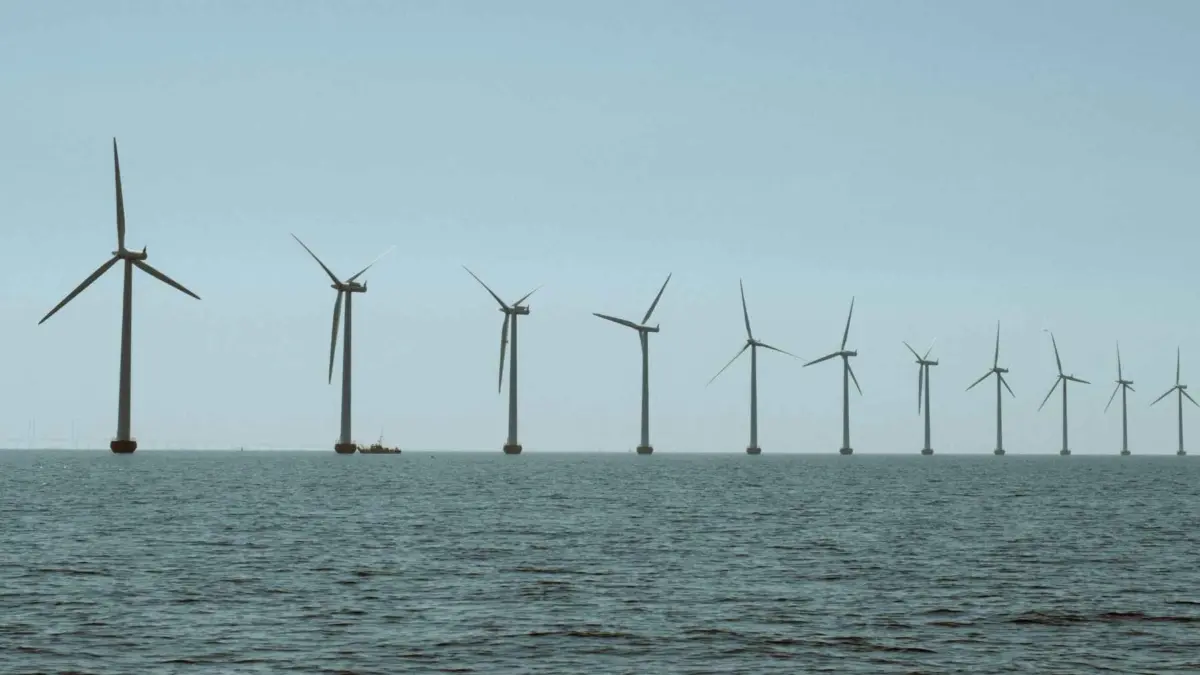
NEW YORK — As the state of New York navigates a complex landscape of shifting federal energy policies and ongoing legal battles over renewable infrastructure, local authorities are doubling down on public education and technical transparency. The New York State Energy Research and Development Authority (NYSERDA) has officially announced a comprehensive virtual seminar scheduled for September 30, focusing on the intricate dynamics between emerging offshore wind generation and the state’s legacy power plants.
The upcoming webinar is a cornerstone of NYSERDA’s ongoing public initiative, "Learning from the Experts," a statewide educational program designed to bridge the knowledge gap between technical energy markets and the general public. While macroeconomic and legal pressures threaten the broader deployment of offshore wind capacity nationwide, New York’s institutional commitment to workforce education, grid reliability, and stakeholder engagement remains steadfast.
Main Facts
The core of the upcoming September 30 event centers on how massive amounts of new, intermittent renewable energy will safely and efficiently integrate into New York’s established electrical grid.
- Event Details: The virtual seminar will take place on September 30, from 11:00 AM to 12:00 PM (Eastern Time). It is entirely free and open to the public, though prior registration is required via NYSERDA’s official website.
- Key Speakers: The presentation will be led by top-tier analysts from the New York Independent System Operator (NYISO). Jason Frasier, a seasoned electrical industry veteran and leader in long-term large-scale transmission system analysis at NYISO, will present alongside Sarah Carkner, who directs NYISO’s Long-Term System Assessments team.
- Core Subject Matter: The experts will discuss the technical and economic models used to evaluate long-term transmission investments, the interplay between offshore wind assets and existing power-generation infrastructure, and how surging electricity demand impacts the state’s transmission architecture.
- Broader Context: The initiative moves forward against a backdrop of national tension. New York, alongside seven other states, is currently embroiled in legal actions against the federal government following the cancellation and stalling of several high-profile offshore wind projects—a friction point that has intensified since the start of the second Donald Trump administration.
- Extended Programming: Beyond the September 30 overview, NYISO has confirmed a complementary series of technical deep-dives. These subsequent sessions will explore heavy engineering components, including subsea cables, towers, turbine blades, and foundational structures, with a dedicated session on offshore foundations slated for October 8.
Chronology of NYSERDA’s Educational Initiative
To understand the weight of the upcoming September seminar, it is necessary to examine how NYSERDA’s "Learning from the Experts" series has evolved into a vital pillar of New York’s clean energy transition.
2022–2023: Establishing the Baseline
When NYSERDA first launched the "Learning from the Experts" initiative, its primary objective was to demystify offshore wind for coastal communities, local municipalities, and regional stakeholders who were confronting rapid industrial changes off the Atlantic seaboard. Over the course of more than 60 webinars hosted since 2022, the program has featured an international roster of speakers. Contributors have included technical authorities from the U.S. Coast Guard, the World Bank, the National Renewable Energy Laboratory (NREL), and the Bureau of Ocean Energy Management (BOEM).
June 2024: International Best Practices
As the state sought to scale up its technical expertise, the program expanded its horizons to include global pioneers in offshore operations. On June 3, Matti Scheu and Annika Mathiasson, prominent representatives from PEAK Wind, delivered a masterclass on the operational maintenance of offshore wind farms. Drawing from their extensive rollout experience in the rigorous marine environments of Germany before expanding their operations to Boston, the duo provided local supply-chain stakeholders with state-of-the-art maintenance methodologies designed to keep offshore turbines running at peak operational capacity.
September–October 2024: Bridging Legacy and Modern Grids
The trajectory of the program now brings it to the intersection of macro-grid planning and offshore generation. With Frasier and Carkner taking the virtual stage on September 30, followed by the deep-dive engineering sessions in October, the initiative shifts focus from how turbines are built to how they fundamentally alter the operational reality of regional power systems.
Supporting Data and Technical Architecture
Integrating offshore wind into a heavily populated, industrialized state like New York is an unprecedented engineering challenge. NYISO brings more than 20 years of experience in regional transmission planning to this transition.
The Role of NYISO in Grid Stabilization
The New York Independent System Operator manages the state’s high-voltage transmission network, ensuring that electricity supply matches demand in real-time across thousands of miles of transmission lines. As thousands of megawatts of offshore wind power are injected off the coast of Long Island and New York City—areas with exceptionally high energy demand—the grid must be reinforced.
According to NYISO’s long-term assessments, modernizing the transmission grid requires a delicate balance:
- Coexistence with Legacy Plants: While New York aims for a zero-emission grid, retiring fossil-fuel plants too quickly risks reliability gaps. The September 30 seminar will explicitly address how new offshore renewable sources will complement, rather than immediately destabilize, legacy generation assets that have operated for decades.
- Economic and Technical Appraisals: Carkner’s team at NYISO uses complex techno-economic modeling to identify where bottlenecks are likely to occur. These assessments dictate where billions of dollars in transmission investments must be directed over the next decade.
- Supply Chain and Component Integrity: The October 8 session on foundations highlights the physical realities of offshore construction. Subsea foundations—whether monopiles, jacket frames, or floating platforms—must withstand severe marine weather, salt-water corrosion, and immense mechanical loads from multi-megawatt turbines.
Official Responses and the Legal Landscape
The push for public transparency occurs amidst significant political turbulence. The renewable energy sector is currently navigating choppy waters due to shifting federal regulatory priorities and legal confrontations.
The Federal-State Friction
Since the commencement of the second Donald Trump administration, the offshore wind industry nationwide has faced headwinds. Federal policy reversals, administrative delays in environmental impact reviews, and the abrupt cancellation of several major lease-ready projects have created market uncertainty. In response, a coalition of eight states, led by New York, has turned to the judicial system, filing lawsuits against the federal government to protect regional clean energy mandates and safeguard investments already made.
Despite these high-stakes legal battles in federal courts, regional grid operators and state agencies like NYSERDA are intentionally separating day-to-day educational outreach from broader political conflicts. By focusing on the pure mechanics of electrical engineering, transmission planning, and asset maintenance, NYISO aims to ensure that the technical workforce, local suppliers, and civil society remain prepared for the inevitable long-term transition toward marine renewables.
Implications for the Future of New York’s Energy Market
The initiatives championed by NYSERDA and NYISO carry profound implications for the future of New York’s economy, environment, and energy security.
1. Workforce Preparedness and Local Supply Chains
For offshore wind to succeed in the Northeast, a robust domestic supply chain is non-negotiable. Sessions covering everything from subsea cables and towers to blade maintenance and foundations (such as those led by PEAK Wind and NYISO) provide local businesses, trade unions, and engineering firms with the actionable knowledge required to bid for and execute specialized industry contracts.
2. Consumer Confidence and Public Literacy
Public pushback has historically been one of the greatest non-technical barriers to offshore wind development. By maintaining a transparent, free, and accessible educational platform ("Learning from the Experts"), NYSERDA demystifies the technology. When citizens understand how offshore wind interacts with their local power bills, grid reliability, and existing power plants, public policy enjoys greater stability regardless of shifting political tides in Washington.
3. A Resilient Blueprint for Other States
As New York continues to archive its webinars—making them freely available via its official YouTube channel alongside comprehensive slide decks—the state is effectively exporting a masterclass in grid modernization. Other coastal regions grappling with similar grid integration issues and federal regulatory hurdles are closely watching New York’s methodical approach.
How to Participate
Individuals, engineers, students, and industry professionals wishing to attend the September 30 session can secure their digital seat by visiting the official NYSERDA Offshore Wind Announcements and Events page to fill out the basic registration form. For those unable to attend the live broadcast, archived recordings and presentation slide decks will be cataloged online for public access, ensuring that the knowledge continues to flow unrestricted across the state and beyond.


Leave a Reply