

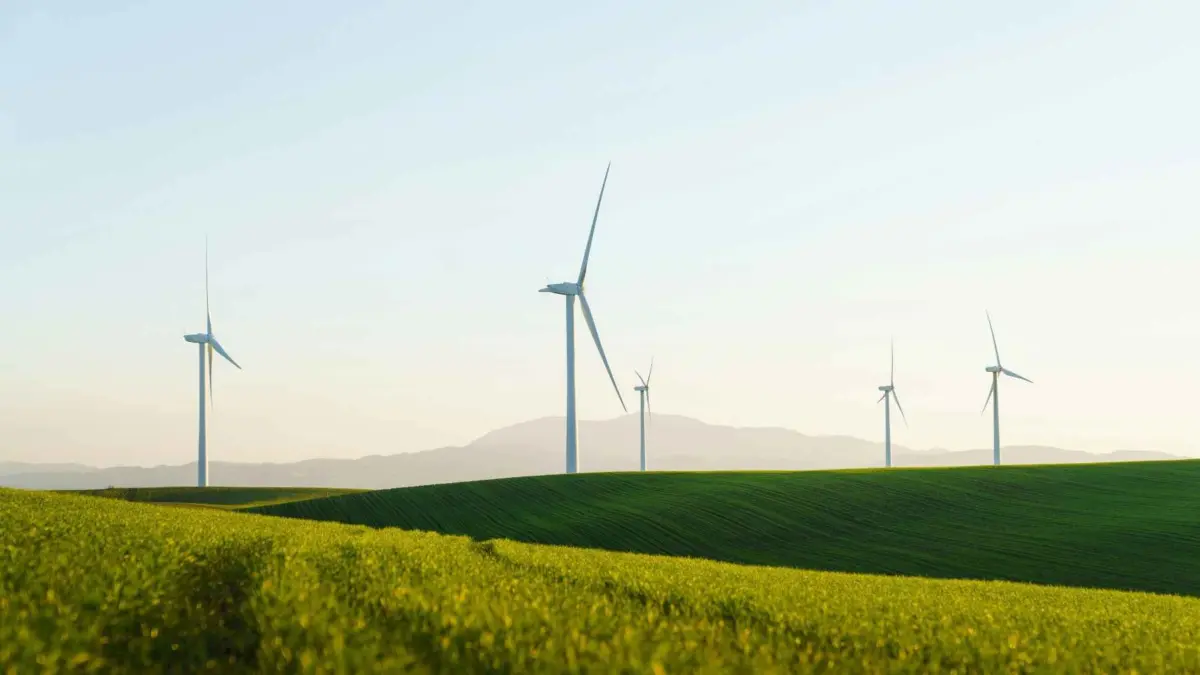
Global — For the better part of this decade, the global environmental agenda has found itself relegated to the political and economic sidelines. Hammered by a relentless succession of international crises—ranging from stubborn inflation and volatile energy markets to profound geopolitical realignments—governments and corporations alike systematically recalibrated their priorities. Climate change mitigation, once hailed as the defining challenge of our generation, was frequently sidelined as a luxury that cash-strapped, crisis-driven administrations could ill afford.
Yet, in a striking twist of technological irony, the very force threatening to push global energy demands to unprecedented heights is now poised to rescue the climate agenda. The explosive rise of artificial intelligence (AI) has fundamentally altered the global strategic calculus. Far from being mutually exclusive, the digital revolution and the green transition are converging, driven by the stark realization that the future of advanced technology is inextricably tethered to the management of our natural resources.
Main Facts: The Intersection of AI and the Green Transition
The modern technological landscape is defined by an insatiable appetite for power. As large language models, machine learning algorithms, and massive data centers proliferate at an exponential rate, they bring with them a monumental physical footprint.
According to insights from the World Economic Forum (WEF), artificial intelligence relies fundamentally on three elemental pillars: land, water, and, above all, energy. Consequently, the expansion of the AI sector can no longer occur in a vacuum; it is restricted by the ecological realities of the regions in which it operates. This physical dependency means that renewable energy and climate resilience are rapidly transitioning from voluntary corporate social responsibility initiatives into core strategic assets. These factors now dictate international competitiveness, corporate valuation, and geopolitical alliances.
Key realities of this new paradigm include:
- The Electricity Squeeze: Global electricity demand from data centers and AI infrastructure is projected to skyrocket, reaching an estimated 945 terawatt-hours (TWh) by 2030.
- Capital Parity: The financial resources currently being poured into the maintenance, cooling, and expansion of digital infrastructure rival the magnitude of global investments in traditional oil and gas exploration and production.
- A Strategic Pivot: Energy security and access to clean, affordable, and continuous power have ceased to be purely environmental concerns. They are now foundational elements of industrial strategy and national security.
Chronology: From Climate Stagnation to the Tech-Driven Green Revival
To understand how artificial intelligence emerged as an unlikely catalyst for sustainability, it is necessary to examine the trajectory of the global climate agenda over the past decade.
2015–2019: The Optimism of the Paris Agreement
Following the landmark adoption of the Paris Agreement in 2015, international momentum for decarbonization reached a fever pitch. Governments established ambitious Nationally Determined Contributions (NDCs), and corporate boardrooms rushed to adopt environmental, social, and governance (ESG) frameworks. The focus was predominantly normative—reducing carbon emissions to meet long-term temperature targets and stave off the worst impacts of global warming.
2020–2023: The Geopolitical and Economic Backlash
The convergence of the COVID-19 pandemic, supply chain disruptions, and the outbreak of war in Eastern Europe dramatically shifted global priorities. Energy security trumped environmental purity as nations scrambled to secure fossil fuels to keep their economies afloat amidst skyrocketing inflation. Climate targets were quietly deferred. International bodies warned that the world was hurtling dangerously close to breaching the critical threshold of 1.5°C (roughly 2.7°F) above pre-industrial levels, yet political will to accelerate green investments remained constrained by immediate economic pain.
2023–Present: The Generative AI Explosion and Strategic Realignment
The commercial explosion of generative AI shattered the status quo. As technology giants raced to build massive data centers capable of training complex neural networks, they hit a hard physical wall: the electrical grid. Power grids in developed nations, particularly the United States and parts of Europe, began to groan under the sheer weight of demand. Rather than scaling back their technological ambitions, tech conglomerates realized that securing long-term, stable, and zero-emission power was the only way to survive the AI race. The narrative shifted overnight: going green was no longer about altruism; it was about market dominance.
Supporting Data: The Numbers Behind the AI Power Surge
The sheer scale of the technological infrastructure underpinning the AI boom is staggering, and the data underscores why energy systems must evolve rapidly to keep pace.
| Metric | Projection / Value | Strategic Implication |
|---|---|---|
| Projected Data Center Electricity Demand | 945 TWh by 2030 | Equivalent to the total annual electricity consumption of several mid-sized industrial nations. |
| Infrastructure Investment | Tens of billions annually | Capital expenditure by tech giants mirrors traditional fossil fuel exploration budgets. |
| Global Temperature Trajectory | Approaching 2.7°F limit | Highlights the narrow window remaining to avoid irreversible climate tipping points. |
Analysts point out that the dependency between AI and sustainability is asymmetrical: artificial intelligence needs sustainability far more than sustainability needs artificial intelligence. Because AI operations generate massive heat loads and require uninterrupted, round-the-clock power supplies, tech companies are uniquely vulnerable to climate risks, water shortages for cooling systems, and grid instability.
As a result, access to cheap, clean, and reliable energy has become the ultimate competitive moat. Firms that can secure Power Purchase Agreements (PPAs) with renewable energy providers—such as wind, solar, and advanced nuclear energy—will thrive. Those reliant on aging, fossil-fuel-dependent grids face mounting operational costs, regulatory penalties, and energy rationing risks.
Official Responses and Expert Analysis
International organizations, economic forums, and industry leaders have been forced to reevaluate the relationship between technological innovation and ecological preservation.
The World Economic Forum (WEF) Perspective
The WEF has highlighted that the clean energy transition is entering a completely new phase. In this era, renewable energy and climate resilience are evaluated as strategic commodities rather than optional externalities. According to WEF analyses, the integration of AI into the energy sector can optimize smart grids, predict weather patterns for wind and solar generation, and drastically reduce energy waste in industrial processes.
The Corporate Strategic Shift
Corporate executives are no longer framing the energy transition through the lens of carbon accounting alone. The conversation has decisively shifted toward terms like resilience, independence, and redundancy.
"The supply of stable, affordable, and clean electricity is no longer just an environmental checkbox. It is the lifeblood of the modern industrial economy and the primary determinant of who wins the artificial intelligence race," notes a recent industry synthesis on energy infrastructure.
This mindset transformation effectively turns former adversaries—energy-hungry tech conglomerates and environmental advocates—into unexpected allies. The immense capital wielded by big tech is now being directly funneled into clean energy projects, effectively subsidizing the expansion and modernization of global renewable infrastructure at a scale that governments alone struggled to achieve.
Implications: A New Era for Climate and Technology
The convergence of artificial intelligence and environmental sustainability carries profound implications for governments, industries, and global society at large.
1. From Compliance to Core Business Strategy
For decades, corporate sustainability was largely treated as a compliance exercise—a matter of filing reports, meeting minimum regulatory standards, and purchasing carbon offsets. The AI revolution changes this dynamic fundamentally. Because energy constraints directly threaten business continuity and expansion, sustainability has graduated to a C-suite priority. Companies must actively redesign their supply chains, invest in green energy generation, and pioneer advanced cooling and efficiency technologies to remain viable.
2. Modernization of Global Electrical Grids
The localized strain placed on power grids by data centers is accelerating the modernization of national electricity networks. To accommodate the massive influx of intermittent renewable energy paired with constant-load data centers, countries are investing heavily in smart grid technologies, energy storage solutions (such as grid-scale batteries), and next-generation transmission lines. This systemic overhaul benefits the entire economy, paving the way for broader electrification in transport and manufacturing.
3. A Catalyst for Climate Progress
While the immediate footprint of the AI boom presents significant environmental challenges, its long-term structural effect is expected to be profoundly positive. By shifting the financial incentives of the world’s most powerful corporations toward renewable energy investments, the tech industry is inadvertently laying the groundwork for a broader global transition away from fossil fuels.
Conclusion
The narrative that humanity must choose between technological progress and environmental preservation is proving to be a false dichotomy. As the artificial intelligence era matures, it is exposing the fragile physical limits of our current infrastructure, compelling a pragmatic realignment of global priorities. By reframing renewable energy as a strategic imperative for digital survival, the AI boom may well provide the vital momentum needed to pull the global climate agenda back from the brink and steer the planet toward a more resilient future.



Leave a Reply