

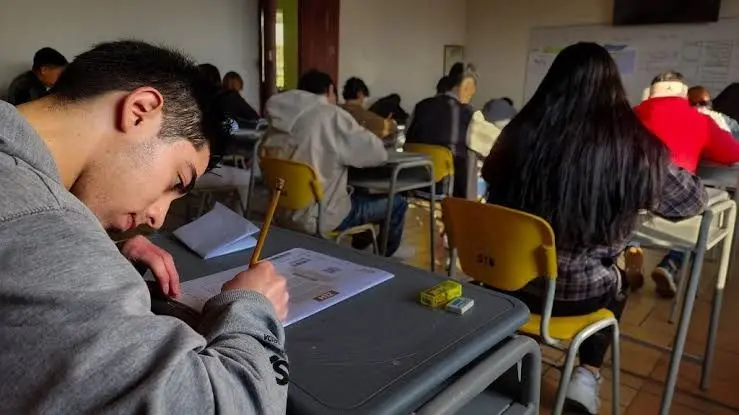
BOGOTÁ, Colombia — The Colombian Institute for the Evaluation of Education (ICFES) officially released the individual score reports for the ICFES 2026 Saber 11 (Calendar A) examinations. More than 500,000 students across the nation who sat for the standardized test on July 26 can now check their results online.
The release marks a crucial milestone in the academic calendars of hundreds of thousands of young Colombians who are finishing their secondary education and preparing to transition into higher education, vocational training, or the workforce.
Main Facts
- Official Release Date: Friday, September 25, 2026.
- Target Population: Over 500,000 students who took the Saber 11 Calendar A exam on July 26, 2026.
- Exam Scope: Standardized evaluation covering five core areas: Critical Reading, Mathematics, Social and Ciudadanas Studies, Natural Sciences, and English.
- Primary Utility: Serves as a vital prerequisite for university admissions, institutional scholarships, and academic benchmarking across Colombia.
- Scoring Nature: The exam is not pass-or-fail; instead, it provides a comprehensive metric of student competencies and areas for improvement.
Chronology of the 2026 Saber 11 Process
To fully understand the weight of this milestone, it is helpful to trace the timeline leading up to the September score release:
- Early 2026: Educational institutions and individual candidates register for the Calendar A examination cycle, navigating digital enrollment portals established by the ICFES.
- July 26, 2026: National Examination Day. Over half a million students nationwide report to designated testing centers to complete the rigorous, multi-hour evaluation. Logistical coordination involves thousands of proctors, security personnel, and regional education secretariats.
- Late July – August 2026: The ICFES initiates the massive data-processing phase, scanning millions of answer sheets, utilizing psychometric modeling to ensure equity and standardization, and reviewing security protocols to guarantee the integrity of the results.
- September 25, 2026: Official publication of results. The digital portal goes live, allowing students, parents, and school administrators to access individual performance reports, global scores, and detailed competency breakdowns.
Supporting Data and Evaluation Structure
The Saber 11 exam is much more than a single numerical grade; it is a complex psychometric instrument designed to gauge readiness for higher education.
The Five Evaluated Areas
- Critical Reading (Lectura Crítica): Evaluates the student’s ability to comprehend, interpret, and evaluate texts that are typically found in academic and everyday discourse.
- Mathematics (Matemáticas): Measures quantitative reasoning, problem-solving skills, and the capacity to interpret mathematical models across various contexts (statisticians, geometry, algebra, and calculus foundations).
- Social and Ciudadanas Studies (Sociales y Ciudadanas): Assesses the student’s understanding of social, political, and economic events, constitutional principles, and the democratic framework of Colombia.
- Natural Sciences (Ciencias Naturales): Covers biology, chemistry, physics, and earth sciences, testing scientific literacy, inquiry methods, and the ability to explain phenomena.
- English (Inglés): Evaluates communicative competence in a foreign language aligned with the Common European Framework of Reference for Languages (CEFR).
Why the ICFES Metric Matters
While some critics view standardized testing with skepticism, the ICFES framework remains the bedrock of Colombia’s educational assessment policy. The data generated provides a panoramic view of the nation’s human capital development. For policymakers, aggregated institutional scores reveal systemic gaps between urban and rural education, resource allocation discrepancies, and regional disparities.
Official Responses and Institutional Perspectives
In statements accompanying the release of the 2026 results, ICFES leadership reiterated that the primary goal of the Saber 11 test is diagnostic rather than punitive.
"Saber 11 is not an examination that can be ‘passed’ or ‘failed,’" an ICFES spokesperson emphasized. "It is a diagnostic mirror that reflects the competencies, strengths, and developmental gaps of each student after over a decade of formal schooling."
Education authorities have stressed that schools and regional secretariats must utilize these results not for superficial ranking systems, but for targeted pedagogical intervention. By analyzing sub-scores in areas like Critical Reading or Mathematics, institutions can adjust their curricula, implement remedial programs, and better prepare upcoming cohorts.
Furthermore, the Ministry of Education has highlighted the intersection between ICFES scores and national financial aid programs. Although credit and subsidy entities—such as ICETEX—and higher education institutions maintain independent admission and financial aid criteria, a competitive Saber 11 score consistently remains a foundational asset for applicants seeking state-backed educational credits and university tuition relief.
Implications for Students, Families, and the Educational System
The release of the September 25 score reports triggers a wave of strategic decision-making across Colombia.
1. Higher Education Access
For students, the scores are immediately deployed in university admission processes. Many premier public and private universities in Colombia either use the Saber 11 score as a strict cutoff filter or weight it heavily alongside their own internal entrance exams. A high percentile ranking can open doors to prestigious professional programs that are otherwise highly competitive.
2. Scholarship and Financial Aid Opportunities
While securing admission to a university is the first hurdle, financing higher education is often the most significant barrier for Colombian families. Strong ICFES results enhance a student’s profile when applying for merit-based scholarships offered by local governments, private foundations, and institutional endowments. (In tandem with related national educational policies, such as targeted ICETEX interest-rate subsidies for vulnerable student populations, academic performance remains a core pillar of educational mobility).
3. Personal Growth and Vocational Orientation
Beyond institutional admissions, the detailed score breakdown aids students in self-reflection. Recognizing specific academic strengths can guide career choices—helping a student realize, for instance, a natural aptitude for quantitative sciences versus the humanities. Conversely, identifying weak areas allows young adults to proactively bridge knowledge gaps before beginning university-level coursework.
4. Systemic Accountability
On a macroeconomic and institutional level, the 2026 results provide school principals and municipal education secretariats with empirical data. Schools that demonstrate year-over-year improvement can serve as pedagogical models, while underperforming institutions can be targeted for specialized instructional support and state intervention.
How to Check Your ICFES 2026 Results
Students eager to review their performance metrics can access their reports through official digital channels.
- Visit the Official Portal: Navigate to the official ICFES website (
www.icfes.gov.co). - Select the Examination: Locate the section dedicated to Pruebas Saber 11 and choose the 2026 Calendar A results link.
- Provide Identification Credentials: Enter your identification type (TI, CC, Foreign ID, etc.) and document number, along with the unique serial number (citación) assigned to you prior to the July 26 exam.
- Download and Review: Once authenticated, your individual report will display detailed global scores, percentile rankings, and competency levels across all five evaluated subjects. It is recommended to download and save a digital copy for your university application dossiers.
As the Class of 2026 digests these results, the nation takes another step forward in evaluating, understanding, and continuously striving to improve the quality of education delivered to its future generations.


Leave a Reply