

By Global Investigative Desk
Updated: May 2026
Main Facts
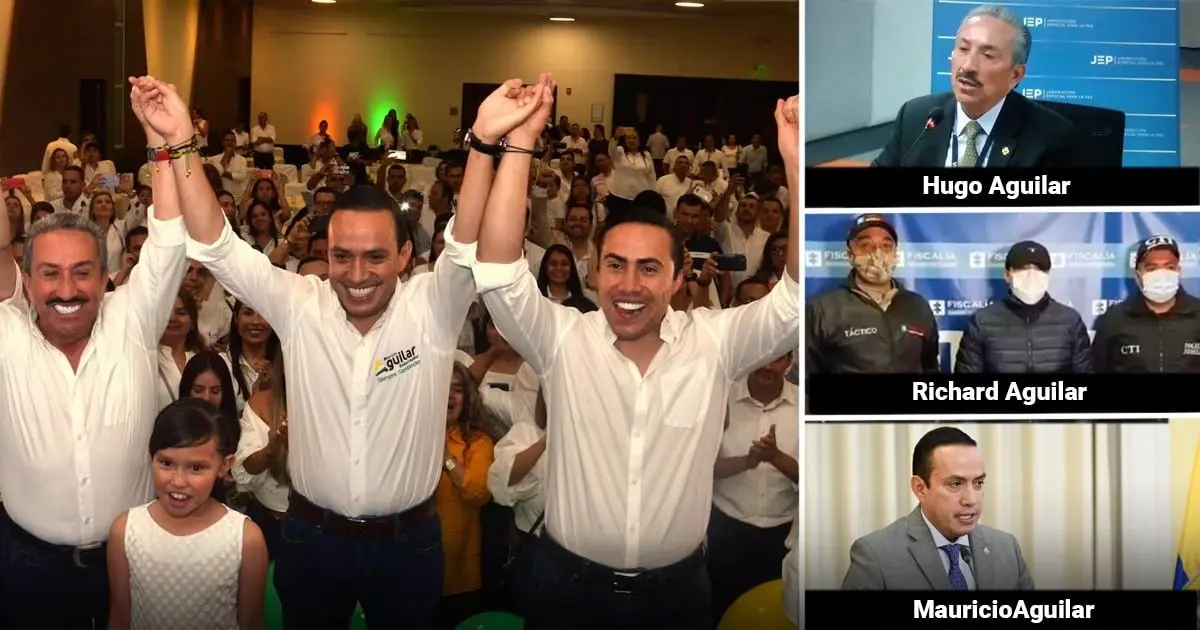
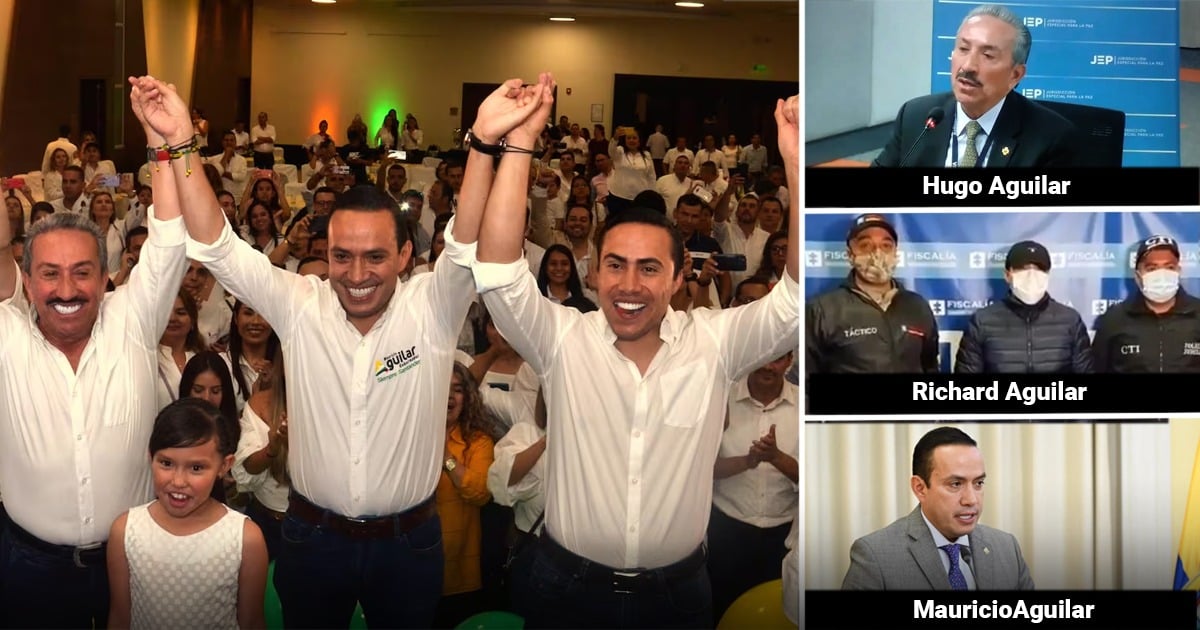
The collapse of one of Colombia’s most formidable political dynasties is now complete. Mauricio Aguilar, the youngest son of the notorious political boss Hugo Aguilar, has been formally indicted by the Prosecutor General’s Office. His indictment marks the final chapter in a two-decade-long political monopoly in the department of Santander.
The charges against Mauricio—contracts without legal requirements, and embezzlement in favor of third parties—center on a glaring symbol of administrative failure: the Lucas Caballero school in Bucaramanga. Despite a budget of 15.280 billion pesos and a contract signed on December 7, 2022, the school never progressed past the blueprint stage. Not a single wall was ever erected.
Mauricio’s legal troubles mirror those of his father and older brother, Richard. All three men managed to capture the highest political office in Santander—the governorship—and all three ultimately fell to the corrosive forces of corruption and illegal alliances.
This latest indictment is not an isolated incident; it is the culmination of a family enterprise that transitioned from national heroism in the ashes of the drug war to systematic embezzlement and collusion with paramilitary death squads. For twenty years, the Aguilar clan treated the governance of Santander as a personal fiefdom, utilizing public contracting as an ATM to fund their political machinery while leaving behind a trail of ghost projects, unfinished infrastructure, and institutional decay.
Chronology of a Dynasty
1. The Genesis: December 2, 1993 – The Rooftops of Medellín
The saga of the Aguilar family begins in the dramatic final moments of the world’s most notorious drug lord. On December 2, 1993, a specialized police operation cornered Pablo Escobar as he attempted to flee through a window of a safe house in a working-class neighborhood of Medellín.
Among the officers present on the roof was Hugo Aguilar Naranjo, a police colonel who had joined the institution in 1975. The killing of Escobar catapulted the participating officers into national heroes. Capitalizing on this immense public visibility, Aguilar retired from the force shortly thereafter and set his sights on the political arena in his home department of Santander.
2. The Rise: 2000–2007 – Paramilitaries and the Governor’s Palace
Seeking political patrons, Aguilar aligned himself with Luis Alberto Gil (known as "El Tuerto Gil"), a Santander politician with a background in the M-19 guerrilla movement who later founded the Convergencia Ciudadana party—a political vehicle that would eventually implode due to criminal investigations.
Aguilar was elected to the Santander Assembly in 2000, using his newfound platform to launch a bid for the governorship. He won the 2004–2007 term, but his victory was far from a triumph of grassroots democracy. Behind his campaign operated the Central Bolívar Bloc of the United Self-Defense Forces of Colombia (AUC), led by paramilitary commanders such as Ernesto Báez and alias "Camilo Morantes." Years later, before the Special Jurisdiction for Peace (JEP), Aguilar confessed that he had knowingly accepted this illegal armed backing and failed to report it while serving as governor.
3. The First Fall: 2008–2013 – Parapolitics and the First Conviction
The shadow of these illegal alliances caught up with him as the Supreme Court of Justice launched its landmark investigation into the parapolitics scandal. Gil was arrested first, followed by Hugo Aguilar. In August 2013, the patriarch was sentenced to nine years in prison for aggravated conspiracy to commit a crime.
Compounding his legal woes, Aguilar faced a separate corruption case regarding a 2007 contract intended to purchase and distribute Christmas toys for vulnerable children. Prosecutors proved the contract lacked competitive bidding, delivered only a fraction of the promised goods, and resulted in the systematic embezzlement of public funds.
Despite a prison sentence and a lifetime ban from holding public office imposed by the Inspector General’s Office, Aguilar’s political project did not die. Instead, he successfully transferred his electoral machinery to his eldest son, Richard.

4. The Second Generation: 2012–2021 – Richard Aguilar’s Rise and Fall
Backed by the Santander en Serio movement, Richard Aguilar won the governorship for the 2012–2015 term. He subsequently aligned himself with the Cambio Radical party, securing a seat in the Colombian Senate in the 2018 legislative elections.
However, the family’s old habits persisted. In July 2021, while Richard was serving as a senator, the Supreme Court ordered his arrest. To avoid the full weight of the legislative trial, Richard resigned his senate seat to place his case under the jurisdiction of the ordinary courts. He was charged with criminal conspiracy, undue interest in the execution of contracts, contracts without legal requirements, and embezzlement.
The prosecution’s case relied heavily on insider testimony from his former infrastructure secretary, Claudia Toledo, and her husband, contractor Lenin Pardo. They detailed a sophisticated scheme of kickbacks and rigged biddings for high-profile projects, including the remodeling of the Alfonso López stadium in Bucaramanga, the San Gil–Charalá–Duitama highway corridor, and multiple school infrastructure projects. Although Richard was released from prison in November 2022 due to procedural delays (expiration of terms), his political career was effectively incinerated.
5. The Final Act: 2020–2026 – Mauricio Aguilar and the Collapse of the Clan
Following in the footsteps of his father and brother, Mauricio Aguilar served in Congress (elected in 2010 and re-elected in 2018) before capturing the Santander governorship for the 2020–2023 term.
As his mandate drew to a close, red flags multiplied. The Supreme Court formally accused Mauricio of contracting without legal requirements, undue interest in public bidding, and embezzlement. His administration was plagued by phantom projects: an over-8,000-million-peso cooperation agreement with a regional television channel, an unfinished agricultural school in Suaita financed through royalty funds that suffered massive cost overruns, and the infamous Lucas Caballero school fiasco.
Supporting Data
The financial and political footprint of the Aguilar clan’s two decades of dominance underscores the scale of their operations:

- 3 Governors: Hugo Aguilar (2004–2007), Richard Aguilar (2012–2015), and Mauricio Aguilar (2020–2023) held consecutive or intermittent control of the department’s top executive office.
- 2 Senators: Richard and Mauricio both successfully transitioned from local executives to national lawmakers within the Colombian Congress.
- 15.280 Billion Pesos: The allocated budget for the Lucas Caballero school in Bucaramanga—a project that remained entirely on paper.
- 8,000+ Million Pesos: The value of a questioned cooperation agreement between Mauricio Aguilar’s administration and a regional TV channel.
- 9 Years: The prison sentence handed down to patriarch Hugo Aguilar in 2013 for his ties to paramilitary organizations.
Official Responses and Judicial Actions
The Prosecutor General’s Office and the Supreme Court of Justice have framed the systematic prosecution of the Aguilar family as a watershed moment in the fight against regional corruption in Colombia.
Judicial authorities have emphasized that the investigations into Mauricio Aguilar represent a transition from politically motivated impunity to rigorous institutional accountability. Prosecutors handling the case have utilized turning-point testimonies, financial forensics, and administrative audits to trace how public resources intended for education and regional development were systematically diverted into private coffers or used to sustain political networks.
Lawmakers and civil society watchdogs in Santander have welcomed the indictments, though they lament the devastating cost to public infrastructure. Local transparency organizations have repeatedly pointed out that while judicial actions against the family are robust, the recovery of stolen public assets remains an uphill battle, leaving schools unbuilt, roads unfinished, and communities underserved.
Implications
The unravelling of the Aguilar family dynasty carries profound implications for the political landscape of Santander and Colombia at large:
- The Erosion of Clan Politics: For decades, regional politics in Colombia has been dominated by family-based political machines ("clanes políticos") that leverage state contracting and illicit alliances to perpetuate power. The simultaneous legal ruin of the Aguilar patriarch and his two sons sends a chilling message to similar dynasties across the country, signaling that dynastic control does not confer permanent immunity.
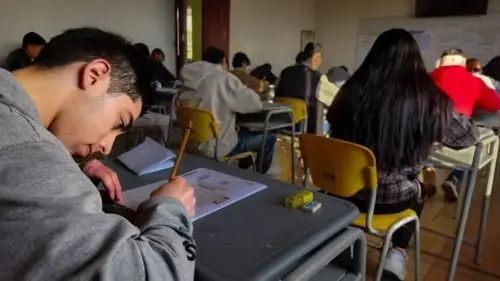
- The Cost of Compromised Education: The specific focus of the charges against Mauricio Aguilar—ghost schools and abandoned educational infrastructure like the Lucas Caballero project—highlights how corruption directly steals the future of vulnerable youth. The inability to deliver basic scholastic infrastructure perpetuates regional inequality and drains public trust in democratic institutions.
- Reforming Regional Contracting: The evidence brought to light by whistleblowers and prosecutors in the Aguilar cases exposes severe vulnerabilities in how regional infrastructure projects are bidded, monitored, and executed. Strengthening oversight mechanisms over royalties and local public procurement will be the ultimate test for regional governance in Santander as the department attempts to turn the page on two decades of Aguilar hegemony.


Leave a Reply