

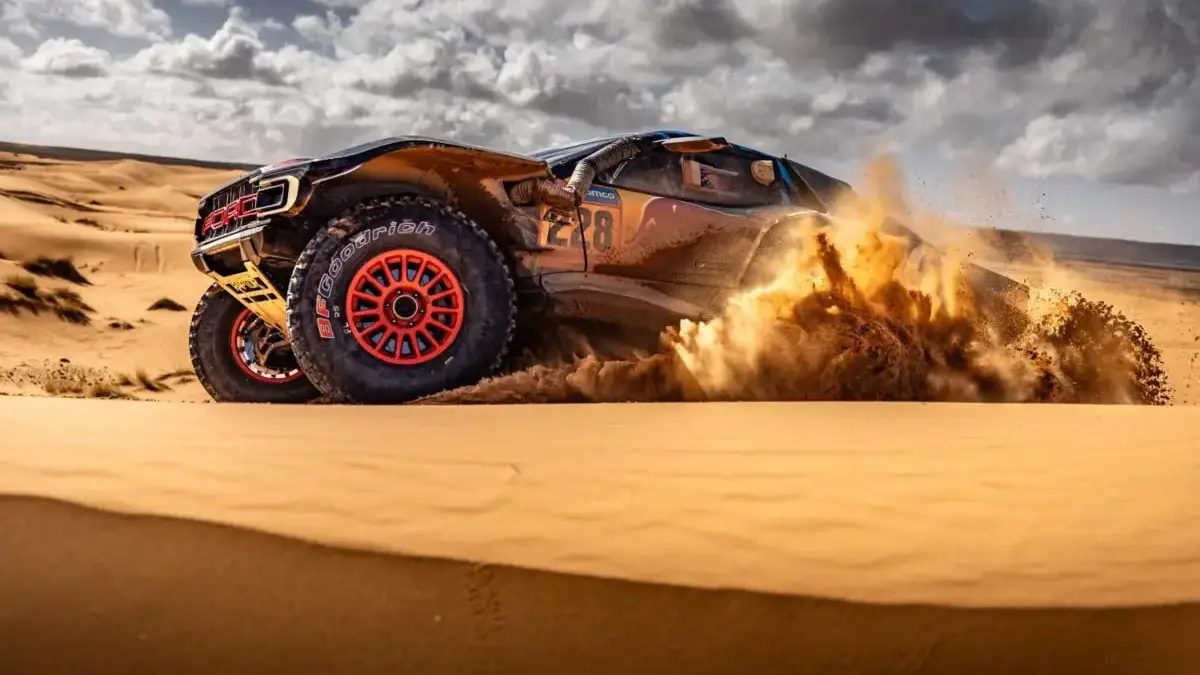
AGADIR, Morocco — As the global motorsport community sets its sights on the shifting sands of North Africa, the 2026 Rally of Morocco looms large as the ultimate proving ground. Serving as the fourth and penultimate round of the prestigious World Rally-Raid Championship (W2RC), this grueling desert classic has cemented its reputation as a mandatory stop for elite teams and privateers alike. With the legendary Dakar Rally waiting on the horizon, the Moroccan dunes offer an uncompromising testing lab where mechanical resilience, navigation mastery, and physical endurance are pushed to their absolute limits.
Kicking off with administrative and technical checks followed by the opening prologue in the coastal hub of Agadir, the event transitions into five high-stakes competitive stages before culminating in the desert sanctuary of Zagora. Competitors face a punishing 2,524-kilometer itinerary, of which 1,575 kilometers will be raced entirely against the clock. For the Spanish contingent and international stars alike, this is where championship aspirations are validated and Dakar dreams are put into their final focus.
Main Facts: The Anatomy of the 2026 Rally of Morocco
The sheer scale of the 2026 edition underscores its status as the premier fixture on the cross-country rallying calendar outside of the Dakar itself. The entry list boasts an impressive assembly of heavyweight machinery, featuring 104 cars and 8 trucks.
At the sharp end of the field lies the ultra-competitive Ultimate category, fielding 56 vehicles—an astonishing 48 of which are top-tier T1+ prototypes. This guarantees a relentless, high-speed battle across unforgiving terrain where aerodynamic development, suspension travel, and tire durability will dictate the hierarchy.
- Event Status: Round 4 of the World Rally-Raid Championship (W2RC)
- Total Distance: 2,524 kilometers
- Timed Special Stages: 1,575 kilometers
- Key Locations: Start in Agadir; centralized bivouac and finish in Zagora
- Featured Obstacles: Erg Chegaga and Erg Chebbi sand dunes, high-speed gravel tracks, and technical wadis
- Championship Stakes: A razor-thin three-point margin separates championship leader Sébastien Loeb and challenger Nasser Al-Attiyah in the W2RC standings.
Chronology: The Road to Zagora
The journey to the 2026 Rally of Morocco is a carefully orchestrated timeline of logistics, testing, and psychological preparation.
Pre-Event Testing and Setup (August – September)
Months ahead of the green flag, top-tier squads descended upon private test facilities in France, Spain, and the rocky expanses of North Africa. The Repsol Toyota Rally Team, anchored by veteran Isidre Esteve and co-driver Txema Villalobos, maximized this window. Following the competitive debut of their updated Hilux T1+ at the previous Dakar, the engineering crew undertook extensive developmental work. Two intensive test blocks in Morocco were dedicated entirely to mapping out suspension geometries and adapting engine maps to high ambient temperatures and fine, powdery sand.
Day 0: Administrative and Technical Checks (September 28)
Teams converge on Agadir for rigorous scrutineering. Every roll cage, fuel cell, and telemetry system is meticulously inspected by FIA officials. Concurrently, crews receive their roadbooks—traditionally distributed shortly before the start in modern cross-country events to neutralize pre-mapping advantages—turning the evening hours into a frenzy of strategic review and navigation planning.
The Prologue & Stages 1 to 5 (September 29 – October 3)
- The Prologue: A short, sharp sprint near Agadir that establishes the starting order for the opening desert stage, dictating tactical road positions for the elite drivers.
- Stages 1 through 4: The rally shifts inward, establishing its operational heart in the oasis town of Zagora. Crews will navigate the daunting dunes of Erg Chegaga and Erg Chebbi. These stages test cooling systems to the max as engines scream through soft sand bowls under a punishing sun.
- Stage 5 (The Grand Finale): The final charge back toward Zagora, where surviving teams cross the ultimate finish line, checking off their final data points before packing containers for the voyage to Saudi Arabia.
Supporting Data: The Spanish Contingent and Technical Evolution
Spain’s presence at the top tier of cross-country rallying has never been stronger. Led by seasoned veterans and innovative technical programs, Spanish entries are utilizing every kilometer in Morocco to validate hardware updates slated for the upcoming international season.
The Repsol Toyota Rally Team Strategy
For Isidre Esteve, the 2026 Rally of Morocco represents the culmination of a rigorous physical and technical program. Having spent the year refining his specialized hand-control systems and working closely with Toyota Gazoo Racing engineers, Esteve enters the race with optimal rhythm.

Furthermore, the team continues its pioneering work with sustainable mobility. The Repsol Toyota Hilux relies heavily on advanced renewable fuels and cutting-edge lubricants designed to drastically lower carbon footprints without sacrificing the ferocious output required by a T1+ prototype.
A Multifaceted Spanish Grid
Beyond Esteve, the Spanish representation is rich in diversity and ambition:
- Carlos Sainz: The multi-time Dakar champion continues his high-profile development work with Ford, pushing the limits of the new Ford Raptor V8 T1+ in real-world racing conditions.
- Nani Roma: Bringing decades of tactical nous to the dunes, Roma uses the Moroccan tracks to fine-tune vehicle setups and team chemistry.
- Privateer Resilience: Entries like Peñarrubia highlight the grit of the category by competing without mechanical assistance, deliberately forcing themselves to manage repairs and logistics independently to simulate worst-case scenarios in the marathon blocks.
Official Responses and Perspectives
The psychological weight of the Rally of Morocco cannot be overstated, as reflected in the statements released by leading competitors and race officials ahead of the start.
"We arrive in Morocco with an excellent rhythm and complete confidence in the work we have done over the past few months," noted Isidre Esteve during the team’s final technical briefing. "We have accumulated crucial mileage, and the support from our engineering crew has allowed us to understand every nuance of the Hilux. However, this terrain demands absolute respect. The navigation will be a minefield, and maintaining razor-sharp concentration from the first kilometer to the last is the only way to succeed here."
Sporting director and legendary cross-country navigator Marc Coma has curated a route explicitly designed to challenge the W2RC elite. Speaking on the integration of classic Saharan elements with modern navigational challenges, Coma emphasized the strategic nature of the terrain:
"We wanted to design a race that leaves no room for complacency. The combination of high-speed tracks with the complexity of ergs like Chegaga means that raw engine power alone will not win this rally. Drivers and co-drivers must operate as a singular, harmonious unit. Those who master the roadbook here will hold the psychological advantage when January arrives."
Implications: The Gateway to the Dakar
While the immediate victors in Morocco will claim vital championship points in the fiercely contested W2RC—where Sébastien Loeb currently defends a precarious three-point lead over Nasser Al-Attiyah—the broader implications extend far beyond the podium celebrations in Zagora.
For the factory outfits, the privateer stables, and the myriad engineering departments stationed in the bivouac, the Rally of Morocco is the final official audit before the racing world relocates to the Middle East. Any mechanical fragility exposed by the Saharan heat, any suspension geometry that fails to cope with cross-ruts in the wadis, and any navigational blind spot encountered in the towering dunes can be addressed, redesigned, and rectified in the weeks before the flag drops on the Dakar.
As the sun sets over the palm groves of Zagora on October 3, the final standings will not merely reflect who conquered the Moroccan desert; they will write the opening chapter of the 2027 Dakar Rally narrative. For Spain’s elite competitors, the crucible of North Africa is ready to reveal who truly has what it takes to conquer the ultimate motorsport marathon.

Leave a Reply