

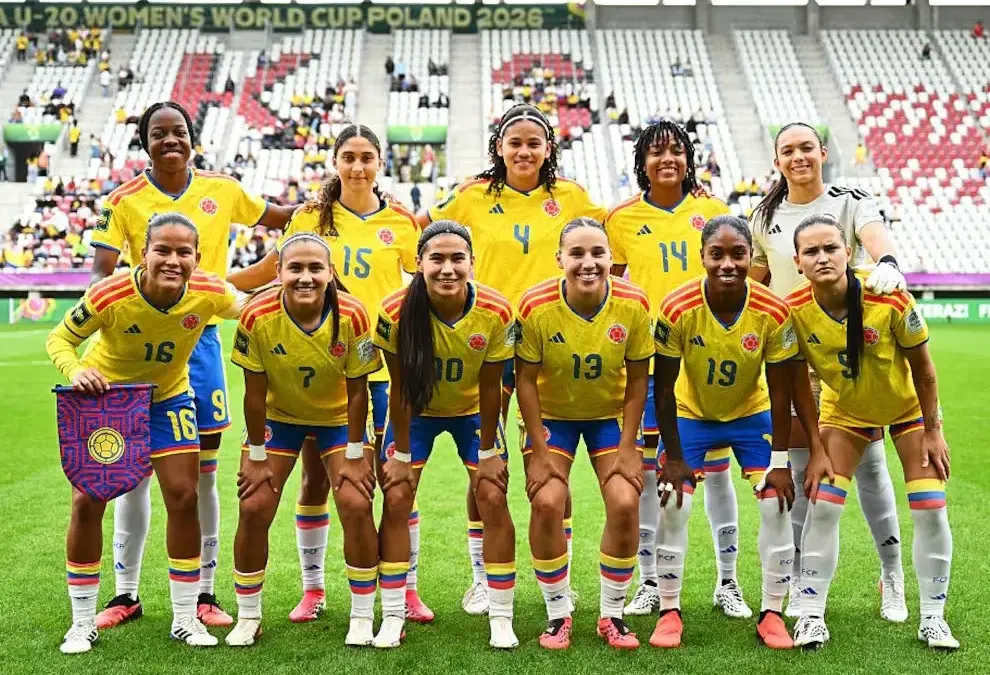
By Global Sports Desk
Published: October 2023
Main Facts: The Battle for the Podium
The stage is set for a historic showdown at the FIFA U-20 Women’s World Cup. Following a grueling and emotional tournament campaign, the Colombia Women’s Under-20 National Team—affectionately known as La Tricolor—is set to take the pitch for one final, momentous fixture. Having suffered a heartbreaking defeat at the hands of a disciplined and clinical North Korea side in the semi-finals, the South American sensation must quickly dust themselves off. Their final assignment of the tournament: a high-stakes, high-reward battle against Italy for the coveted bronze medal.
This encounter carries immense weight for both nations. For Colombia, a victory would mean breaking through the ultimate glass ceiling. No Colombian national football team across this specific youth category has ever secured a podium finish at a FIFA World Cup. The closest the country ever came was back in 2010, during the tournament hosted in Germany, when a legendary generation spearheaded by the mercurial playmaker Yoreli Rincón finished in a respectable yet agonizing fourth place.
Across the pitch stands an equally hungry Italian side. The Azzurrine arrive at this third-place playoff having defied pre-tournament expectations, carving out a remarkable narrative of their own. Having returned to the U-20 World Cup stage for the first time since their last appearance in 2012, the Italians shattered historical barriers by advancing past the group stage for the very first time in their footballing history. Despite falling 2-0 to European powerhouses and tournament favorites Spain in the semi-finals, Italy enters this fixture with a chance to cement an already stellar campaign with silverware.
As both nations step onto the turf, the equation is simple yet profoundly heavy: win, and etch your names into the annals of national sporting history; lose, and walk away wondering what might have been.
Chronology: The Road to the Bronze Medal Match
To truly understand the magnitude of this impending clash, one must retrace the footsteps of both teams as they navigated the treacherous waters of the global tournament.
Colombia’s Journey: Grit, Passion, and Heartbreak
La Tricolor entered the tournament with immense optimism, backed by a rapidly growing infrastructure in South American women’s football and a generation of players possessing elite technical skills and unyielding mental resilience.
- The Group Stage Brilliance: Colombia kicked off their campaign by setting a fierce tempo. Displaying a blend of South American flair and tactical discipline, they managed to outmaneuver their group opponents, displaying a suffocating defensive block coupled with lightning-fast transitions in attack.
- The Knockout Breakthrough: Moving into the elimination rounds, Colombia faced mounting pressure. Every match was a physical and psychological chess match. With stellar individual performances carrying them through the quarter-finals, the team captured the imagination of millions back home, who tuned in across time zones to watch the rising stars of Colombian football.
- The Semi-Final Heartbreak: The momentum finally hit a brick wall in the semi-finals against North Korea. Facing one of the most organized and relentlessly fit teams in youth football, Colombia fought tooth and nail. However, North Korea’s tactical rigor proved too difficult to dismantle, resulting in a painful defeat that shattered dreams of lifting the ultimate trophy, but left the door open for a podium finish.
Italy’s Resurgence: Breaking Barriers
Italy’s path to this match is a testament to long-term youth development and tactical evolution within the Italian Football Federation (FIGC).
- Overcoming the Group Stage Curse: Historically, the Italian U-20 women’s setup struggled to make waves on the global stage, with their last appearance dating back more than a decade to 2012. Coming into this tournament, the primary objective was simply to break the group-stage hoodoo. They did much more than that, grinding out three impressive victories through tactical pragmatism and clinical finishing.
- The Knockout Surge: Having broken new ground by reaching the knockout rounds, the Azzurrine played with a sense of freedom and tactical sophistication that caught several traditional powerhouses off guard. Their defensive stability became their calling card.
- The Spanish Wall: The dream of a miraculous run to the final crashed against the formidable barrier of Spain in the semi-finals. A 2-0 defeat exposed the subtle gaps between Italy and the absolute elite of global women’s football, yet it did nothing to diminish the monumental strides made by the squad over the past month.
Supporting Data: Statistical Breakdown of the Contenders
Numbers rarely lie, and a deep dive into the statistics of both Colombia and Italy reveals fascinating insights into how this third-place playoff might unfold tactically.
Colombia U-20: Key Metrics
- Tournament Wins: 3 (excluding penalty shootouts, if applicable)
- Offensive Output: Averaging 1.6 goals per match, driven by rapid wide-play and high-intensity pressing in the opposition half.
- Defensive Resilience: Conceded an average of less than one goal per match prior to the semi-final against North Korea, anchored by a fiercely vocal and athletic backline.
- Historical Benchmark: Trying to surpass the 4th-place finish of the 2010 squad led by Yoreli Rincón.
Italy U-20: Key Metrics
- Tournament Wins: 3 regulation victories, marking their most successful campaign in history.
- Tactical Identity: Built upon a sturdy 4-3-3 or compact 5-3-2 defensive block, allowing opponents minimal space between the lines.
- Semi-Final Reality Check: The 2-0 loss to Spain highlighted a drop-off in possession metrics, though Italy managed to stifle Spanish attacks for large stretches of the first half.
- Pioneering Milestone: First time in history reaching the tournament’s semi-finals.
| Metric | Colombia U-20 | Italy U-20 |
|---|---|---|
| Group Stage Performance | Dominant, high possession | Pragmatic, highly efficient |
| Key Strength | Individual brilliance & transition speed | Defensive organization & discipline |
| Primary Weakness | Susceptible to deep, highly structured blocks | Creative output against elite pressing |
| World Cup Best Finish | 4th Place (2010) | Group Stage (Historically) / Semi-Finals (Current) |
Official Responses and Perspectives from the Camps
The psychological toll of losing a semi-final is immense, but elite athletes are conditioned to pivot instantly toward the remaining prize. Coaches and players from both camps have spoken candidly about the gravity of the upcoming fixture.
The Colombian Camp: Healing and Focusing on History
Speaking to the press following the emotional loss to North Korea, the Colombian head coach emphasized the need for emotional recovery before tackling the tactical blueprint for Italy.
"It hurts deeply to be this close to the ultimate dream and watch it slip away through our fingers," the coach expressed during the post-match press conference. "These girls have poured their sweat, tears, and soul into this tournament. But history is calling us. We did not come all this way to leave empty-handed. Finishing on the podium would change the trajectory of women’s football in our country forever. We owe it to our fans, and we owe it to ourselves."
Team leaders echoed this sentiment, noting that the disappointment of the semi-final must be channeled into raw motivation. The collective mindset within the Colombian dressing room has shifted from mourning a lost final to aggressively seizing a historic bronze.
The Italian Camp: Pride and Unfinished Business
In the Italian quarters, the mood is one of immense pride mixed with a lingering hunger for closure. Speaking from the team’s training base, the Italian manager highlighted the unprecedented nature of their run.
"Nobody outside of our technical staff and these players believed we could reach this stage," the Italian tactician stated. "We broke a barrier that had stood for over a decade. Reaching the semi-finals was an incredible achievement, but when you are this close to a medal, human nature takes over—you want it all. We respect Colombia immensely; they are dynamic, passionate, and technically gifted. It will be a battle of styles, and we intend to leave everything on the pitch."
Captains from the Italian squad have similarly emphasized that wearing the Azzurri crest on the global stage is a privilege that demands a 100% commitment, especially when a historic podium finish is up for grabs.
Implications: What a Bronze Medal Means for the Future
Beyond the gleaming medals and the immediate post-match celebrations, the outcome of this fixture will send massive shockwaves through the structural landscapes of both nations’ football federations.
For Colombia: Fueling the Boom of South American Women’s Football
Colombia has experienced a meteoric rise in the women’s game over recent years. From the senior team’s inspiring runs in international tournaments to the successful hosting and competitive performances in youth categories, the nation is quickly establishing itself as a powerhouse of the Americas.
Securing a bronze medal at the U-20 level would provide undeniable validation for the Colombian Football Federation’s (FCF) ongoing investments in youth academies, domestic league structures (Liga Femenina), and grassroots scouting networks. Furthermore, it serves as a powerful psychological milestone. It proves to the next generation of young girls lacing up their boots across Medellín, Bogotá, Cali, and beyond that reaching the absolute summit of global football is not an impossible dream, but an achievable reality. Sponsorship investments, media coverage, and institutional backing are projected to surge following a podium finish, cementing women’s football as a crown jewel of Colombian sport.
For Italy: Revitalizing the Azzurrine Pathway
For Italy, a country with an immensely rich footballing heritage, the men’s game has historically dominated cultural mindshare and resource allocation. However, the remarkable run of the U-20 women’s team serves as a clarion call to the FIGC that heavy investment in the women’s pathway is yielding exponential dividends.
A third-place finish would act as a massive catalyst for Serie A Femminile clubs to integrate more young prospects into senior matchday squads. It signals that Italian youth coaching methodologies are producing players capable of competing physically and tactically with the best athletic specimens from South America, Asia, and Iberia. By anchoring this generation with a historic international medal, Italy can build a sustainable pipeline that feeds directly into the senior national team, ensuring future qualifications for major tournaments like the FIFA Women’s World Cup and the UEFA European Women’s Championship.
Conclusion: A Legacy Awaiting its Authors
As the final whistle approaches in this captivating tournament, the narratives converge into a single, high-intensity 90 minutes of football. Colombia brings its unmatched passion, structural flair, and the weight of a nation desperate for a historic breakthrough. Italy counters with tactical astuteness, defensive steel, and the fierce pride of a rediscovered footballing identity.
The bronze medal may not possess the blinding gold luster of the championship trophy, but for the players of Colombia and Italy, it represents something infinitely more valuable: the foundational cornerstone of a new era. Whoever finds the net, whoever makes the crucial defensive block, and whoever manages their emotions best under the crushing weight of expectation will write their names into the history books forever. The world watches on as two giants of grit and determination prepare to battle for eternity.



Leave a Reply