

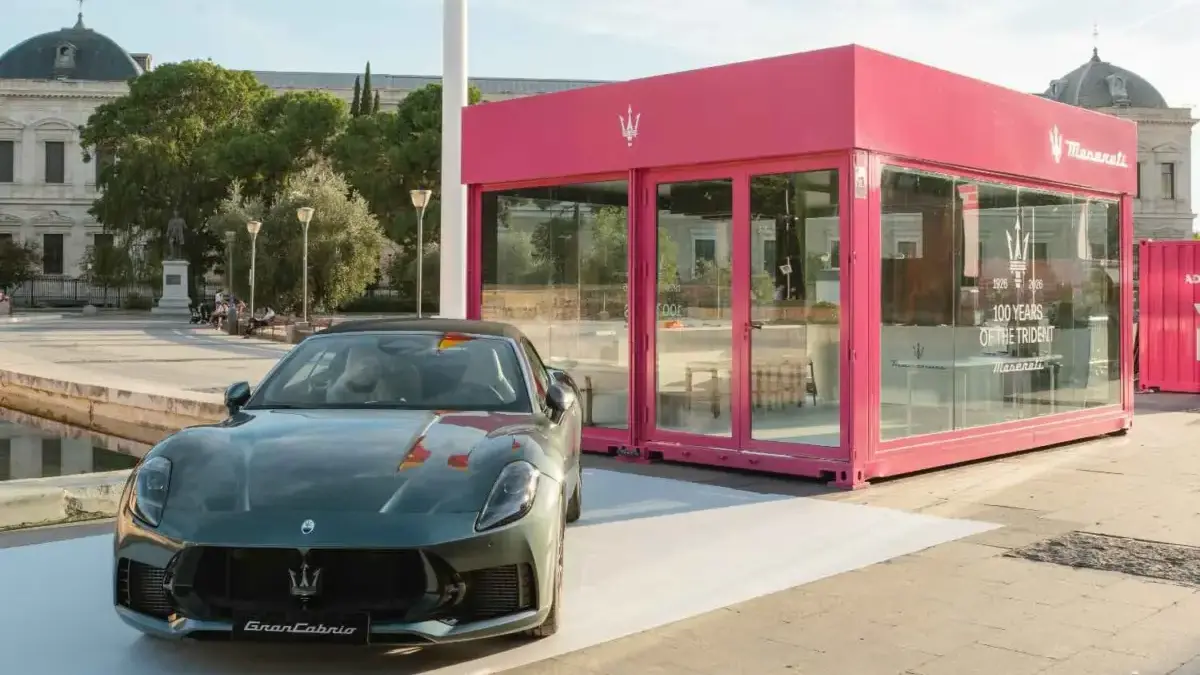
MADRID — For four days, the beating heart of the Spanish capital transformed into a high-octane gallery of Italian craftsmanship, design, and heritage. Maserati claimed the prestigious Plaza de Colón—a landmark gateway to Madrid’s renowned Golden Mile—to serve as the main partner for the fourth edition of ADN FÓRUM.
Running from September 24 to 27, the event served as a multifaceted cultural experience bridging the gap between automotive excellence, contemporary art, and urban innovation. More importantly, it marked a decisive moment for the House of the Trident on the Iberian Peninsula: a high-profile showcase of its fully renewed product lineup, framed by the looming celebrations of the brand’s upcoming global centenary.
1. Main Facts: The Trident Lands in the Capital
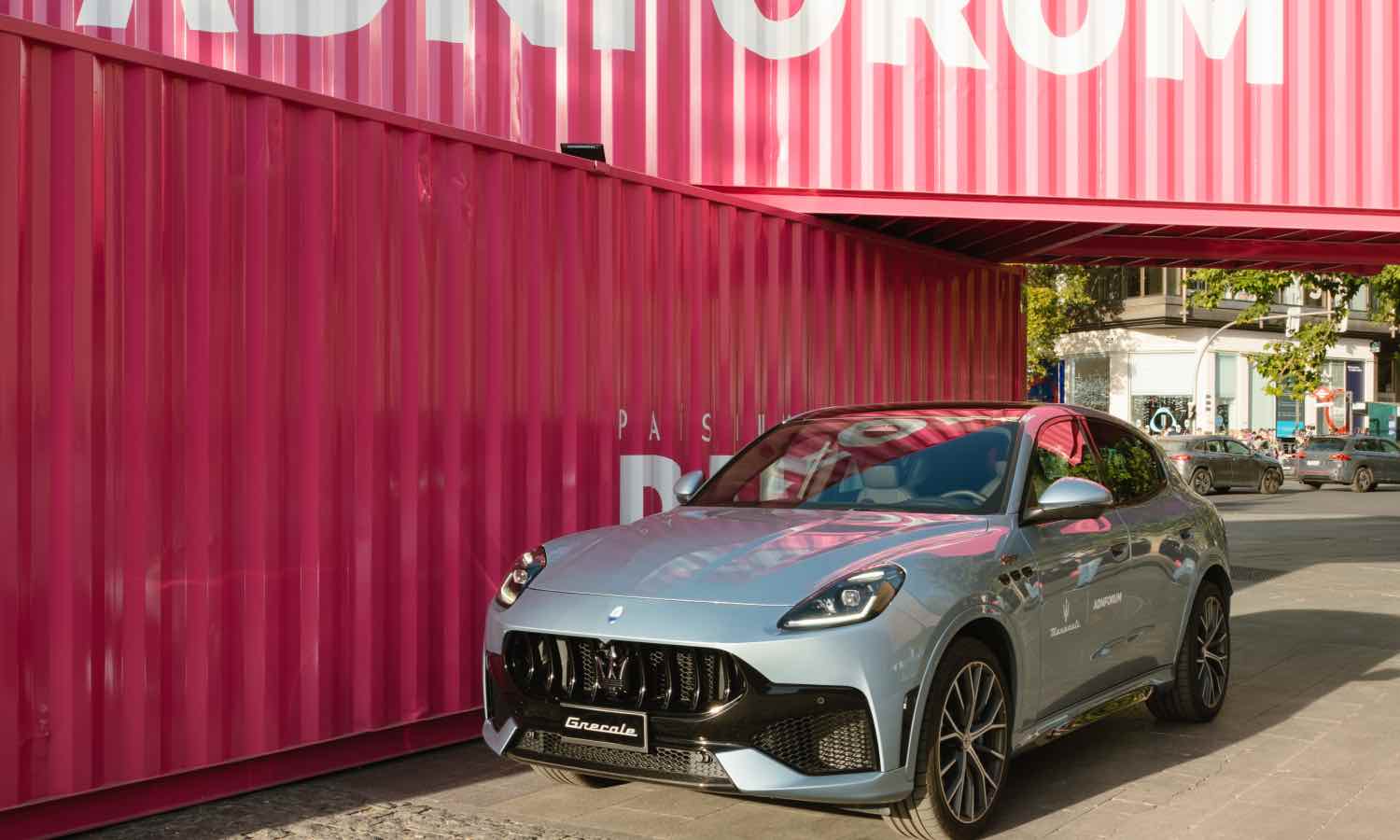
Maserati’s takeover of the Plaza de Colón was neither a standard dealership launch nor a typical static auto show. As the premier partner of ADN FÓRUM, the Italian marque curated an immersive environment that highlighted three distinct pillars of its modern portfolio: the versatile Grecale SUV, alongside the high-performance GranTurismo and GranCabrio sports cars.
The timing of the exhibition is strategic. Maserati is currently gearing up for a monumental milestone: the 100th anniversary of its iconic emblem, the Trident. First appearing on the legendary Tipo 26 in 1926, the symbol has come to represent decades of racing pedigree, Italian elegance, and uncompromising engineering.
By bringing its refreshed lineup to Madrid, Maserati underscored its renewed global strategy, which seeks to prove that high-performance luxury and everyday usability are not mutually exclusive.
2. Chronology of the Event: From the Streets of Madrid to the Cosmos
The four-day residency at ADN FÓRUM followed a carefully choreographed timeline, merging physical automotive displays with avant-garde artistic performances.
- September 24 (Opening Day): Maserati officially inaugurated its presence in the Plaza de Colón. VIP guests, media representatives, and design enthusiasts gathered to witness the unveiling of the updated Grecale and the powerful Trofeo iterations of the GranTurismo and GranCabrio.
- September 25–26 (Cultural & Artistic Interventions): Mid-week activities focused heavily on the intersection of design and fine art. Spanish artist George Parra unveiled a site-specific performance piece inspired directly by the Trident. The artwork served as a terrestrial bridge to Trident Stars, a celestial project in which Maserati officially mapped a real constellation of 100 stars to honor the upcoming centenary.
- September 27 (Public Engagement & Closing): The final days opened the experience to the broader public, allowing thousands of visitors to interact with the vehicles, engage with the brand’s new global marketing philosophy, and experience Italian luxury up close in the heart of Madrid.
3. Supporting Data: The Renewed Maserati Lineup
Maserati’s exhibition in Madrid provided the public and automotive press with a comprehensive look at the technological and mechanical updates implemented across its core models.
The Maserati Grecale: Redefining the Luxury SUV
The Grecale continues to serve as a high-volume entry point into the brand’s ecosystem, but its recent updates elevate its competitive edge:
- Entry-Level Micro-Hybrid: A new four-cylinder micro-hybrid powertrain producing 250 horsepower. This variant secures the coveted DGT ECO label in Spain, making it exceptionally attractive for urban driving. Pricing starts at €89,500.
- Modena V6: For drivers seeking traditional Maserati grit, the Modena V6 variant utilizes the potent Nettuno-derived engine to churn out 390 horsepower, paired with sharper exterior styling cues and advanced digital cabin architecture.
- Folgore EV: The fully electric variant of the SUV, the Grecale Folgore, boasts improved performance metrics, most notably an extended driving range of up to 580 kilometers on a single charge.
GranTurismo and GranCabrio: The Pinnacle of Italian Grand Touring
Both the coupe (GranTurismo) and convertible (GranCabrio) variants received sweeping aesthetic and ergonomic refreshes, balancing long-distance comfort with track-ready capabilities.
- The Trofeo Versions: The crown jewels of the sports car range are the Trofeo trims. Powered by a potent 3.0-liter twin-turbo V6 Nettuno engine, these models push out an astounding 590 horsepower and 650 Nm of torque.
- Performance Metrics: The GranTurismo Trofeo effortlessly clears a top speed of over 320 km/h, cementing Maserati’s reputation for building uncompromising grand tourers.
4. Official Responses and Brand Philosophy: "Luxury, Every Day"
Maserati’s leadership used the Madrid platform to formally introduce and contextualize their latest international marketing campaign: "Luxury, Every Day" (Lujo, todos los días).
Company spokespersons emphasized that the core philosophy behind the campaign is a direct challenge to outdated perceptions of ultra-luxury. For decades, exotic sports cars and high-end vehicles were routinely relegated to weekend-only use, kept in climate-controlled garages, or treated as garage queens reserved strictly for special occasions. Maserati aims to flip this narrative entirely.
"Luxury should not be an ephemeral moment locked away for exceptional milestones," noted brand representatives during the forum. "True modern luxury is seamless, intuitive, and designed to elevate the mundane commute into an extraordinary sensory experience. Our vehicles are engineered to be driven, enjoyed, and lived in every single day, without ever compromising on comfort, elegance, or raw emotion."
This ethos is visibly translated into their lineup: the everyday practicality and ECO-label accessibility of the Grecale sit comfortably alongside the continental-crossing capabilities of the GranTurismo.
5. Broader Implications: Art, Heritage, and Market Positioning
Maserati’s high-profile activation in Madrid is much more than a localized product showcase; it represents a calculated maneuver in the fiercely competitive European luxury automotive sector.
Cultural Integration
By embedding itself within ADN FÓRUM—an event dedicated to the intersection of design, architecture, and contemporary thought—Maserati successfully positioned itself as a lifestyle brand rather than a mere manufacturer of engines and chassis. The collaboration with Spanish artist George Parra and the poetic ambition of the Trident Stars project reinforce the brand’s deep connection to aesthetics and Italian artistic heritage. The Trident itself, originally conceived by Mario Maserati in 1926 and inspired by the Fountain of Neptune in Bologna, was celebrated not just as a corporate logo, but as a cultural artifact bridging a century of history.
Market Positioning in Southern Europe
Spain remains a vital market for high-end European automakers, and Madrid serves as the financial and cultural nexus of the country. By planting its flag in the Plaza de Colón—literally at the foot of the capital’s most exclusive commercial district—Maserati is aggressively staking its claim among affluent buyers looking for alternatives to traditional German and British luxury stables.
With the 2026 centenary rapidly approaching, Maserati is actively laying the groundwork for its next hundred years. The transition toward electrification via the Folgore range, paired with the internal combustion mastery of the Nettuno V6 engines, proves that the House of the Trident is successfully navigating the industry’s seismic shifts.
As the lights in the Plaza de Colón dimmed at the close of ADN FÓRUM, Maserati left a lasting impression on the Spanish capital: a powerful reminder that when century-old heritage meets forward-thinking innovation, luxury ceases to be a distant dream—it becomes an everyday reality.


Leave a Reply