

By Global Aviation Correspondent
September 2026
Main Facts: The Historic Milestone That Redefined Global Aviation
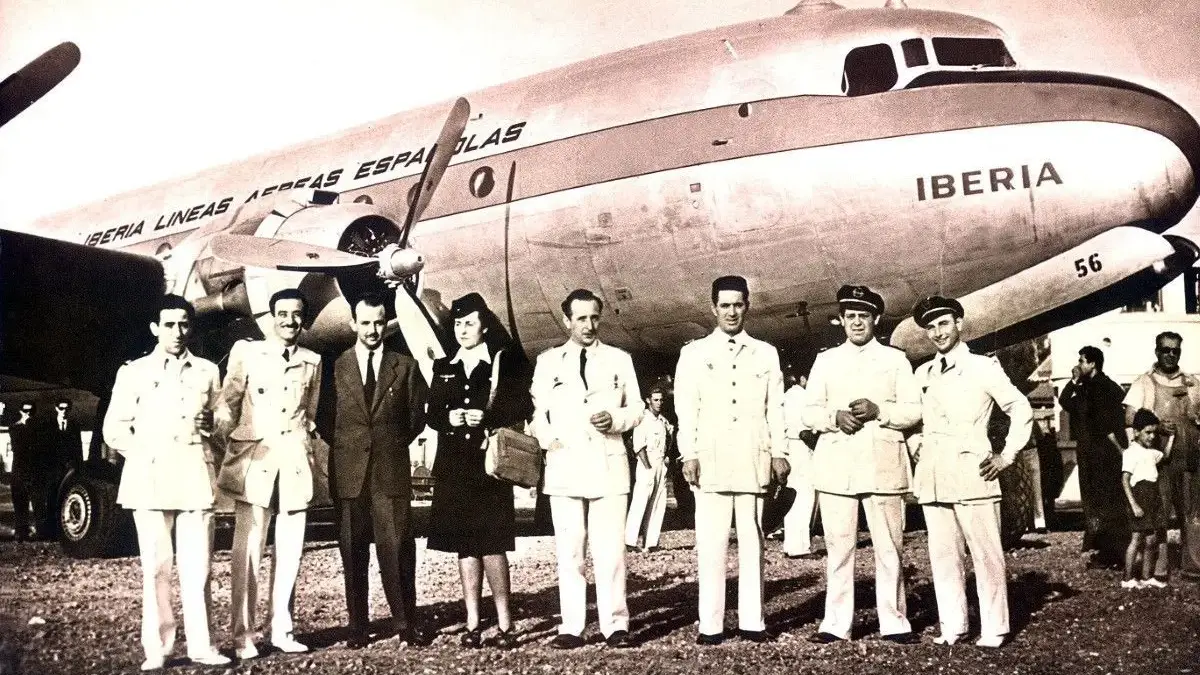
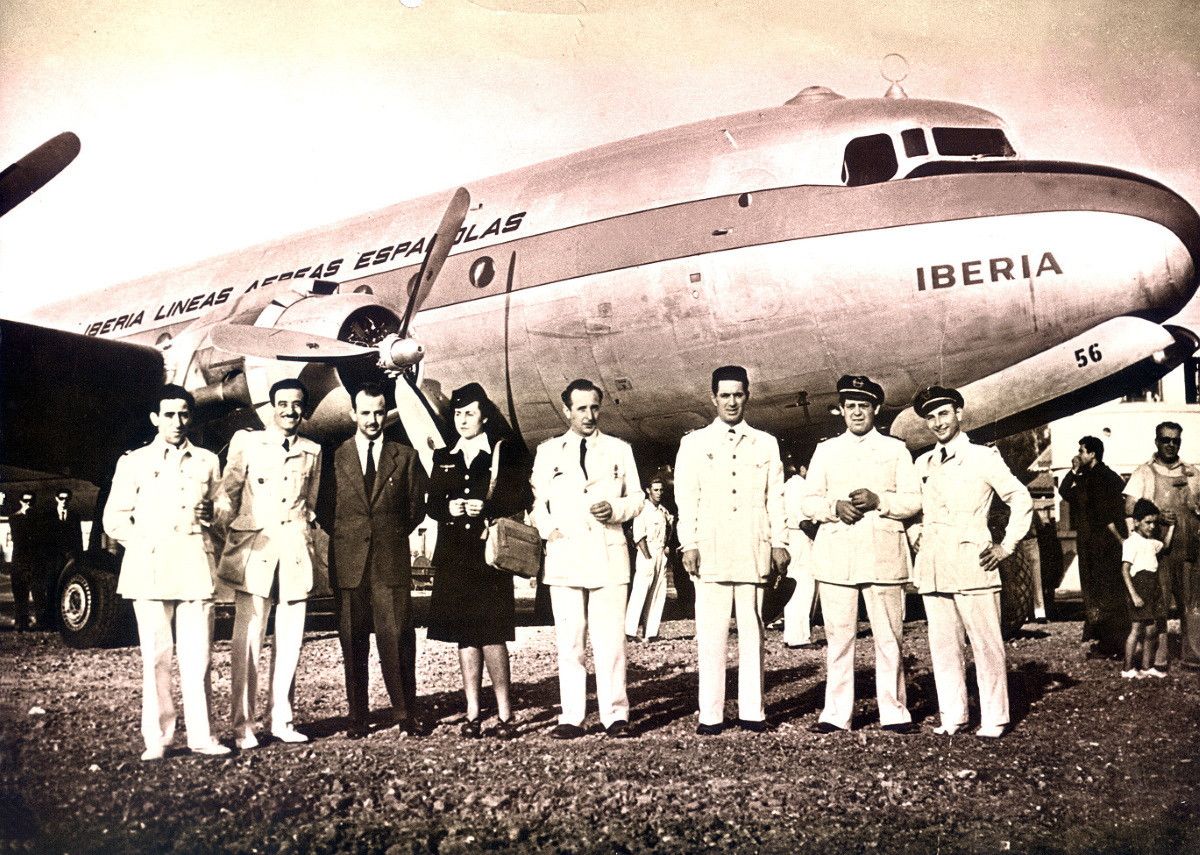
Eighty years ago, a historic aviation milestone forever altered the geopolitical, cultural, and commercial landscape between the Old World and the Americas. On September 22, 1946, Spanish flag carrier Iberia inaugurated the Madrid–Buenos Aires route, officially making history as the very first commercial airline to establish a regular passenger connection between Europe and Latin America.
In an era when international flight was still in its relative infancy—and long before the democratization of mass global tourism—this inaugural voyage represented a monumental technological and logistical achievement. Operated by a Douglas DC-4 aircraft, the pioneering journey required approximately 36 hours of continuous travel time to bridge the vast expanse of the Atlantic Ocean. Unlike modern non-stop widebody operations that slice through the stratosphere in roughly 12 hours, the 1946 journey demanded patience and resilience, requiring three mandatory technical stops along the way: Villa Cisneros in the Spanish Sahara, followed by Natal and Rio de Janeiro in Brazil, before finally touching down in the vibrant capital of Argentina.
The economic cost of this unprecedented journey was substantial, reflecting both the scarcity of the technology and the exclusivity of long-haul travel at the time. Historical records from Iberia show that a one-way ticket cost 11,435 pesetas, while a round-trip fare was priced at 20,583 pesetas—a small fortune in post-war Europe that restricted travel to diplomats, high-ranking executives, and the ultra-wealthy.
Fast forward eight decades, and the landscape is unrecognizable. Today, the Madrid–Buenos Aires corridor stands as one of the most vital, high-frequency, and fiercely contested intercontinental routes in global civil aviation. Iberia currently operates up to three daily flights between the two capitals during standard operating periods, scaling up to an astonishing four daily frequencies during the peak Northern Hemisphere summer months (June, July, and August) to satisfy surging seasonal demand. The prop-driven, multi-stop Douglas DC-4 of 1946 has been replaced by the state-of-the-art Airbus A350—the largest aircraft in Iberia’s fleet—offering unprecedented passenger comfort, advanced fuel efficiency, and a significantly reduced environmental footprint.
Chronology: The Evolution of the Transatlantic Air Bridge
To fully understand the magnitude of Iberia’s achievement, it is necessary to trace the technological and operational evolution that transformed a grueling 36-hour multi-stop expedition into a seamless, modern commercial air bridge.
The Post-War Preamble (1945–1946)
In the immediate aftermath of the Second World War, the global aviation industry was eager to reconnect fractured continents. While North Atlantic routes between the United States and Europe were beginning to take shape, South Atlantic connectivity remained an untamed frontier. Iberia, recognizing Spain’s unique linguistic, cultural, and historical ties to Spanish-speaking Latin America, took a calculated gamble. The airline secured the necessary diplomatic clearances, acquired robust long-range piston-engine aircraft, and laid the groundwork for what would become its crown jewel route.
The Inaugural Flight (September 22, 1946)
The departure of the Douglas DC-4 from Madrid on September 22, 1946, marked the birth of transatlantic commercial aviation. The flight plan was an exercise in extreme endurance. Crew members and passengers alike faced an arduous 36-hour itinerary. The stopover in Villa Cisneros allowed for refueling and maintenance in the arid North African desert, while the South American legs through Natal and Rio de Janeiro served as vital stepping stones before the final descent into Buenos Aires. Despite the discomforts of early post-war aviation—unpressurized cabins, loud engines, and rudimentary navigation systems—the flight proved that regular commercial passenger service between Europe and South America was not only possible, but commercially viable.
The Jet Age Transformation (1950s–1970s)
The introduction of jet engines in the late 1950s and 1960s revolutionized the route. Aircraft such as the Douglas DC-8 and later the Boeing 747 drastically reduced travel times, bypassing intermediate technical stops and enabling much faster travel across the Atlantic. Buenos Aires became significantly closer to Madrid, fueling a boom in business travel, cultural exchange, and migration between Spain and Argentina.
The Widebody Era and Deregulation (1980s–2000s)
As airspace became increasingly deregulated and globalized economies demanded faster communication, Iberia continually updated its fleet. The introduction of twin-engine, highly efficient widebody aircraft allowed airlines to optimize capacity. The Madrid hub (Adolfo Suárez Madrid-Barajas Airport) blossomed into the premier gateway connecting Europe with Central and South America, with Iberia positioning itself as the undisputed market leader in the Europe–Latin America corridor.
The Modern Benchmark (2010s–Present)
Today, the route utilizes cutting-edge aircraft like the Airbus A350. What once took 36 hours and multiple refueling stops is now completed in roughly 12 to 13 hours of continuous, non-stop luxury. The historical route has evolved from a pioneering geopolitical statement into a hyper-efficient, high-capacity commercial expressway carrying hundreds of thousands of passengers annually.
Supporting Data: Statistics, Fleet Modernization, and Market Dominance
The numbers behind the Madrid–Buenos Aires route tell a compelling story of sustained growth, corporate strategy, and macroeconomic importance.
- Frequency and Capacity: During peak operational periods, particularly the European summer months of June, July, and August, Iberia operates up to four flights per day between Madrid and Buenos Aires. Standard operations maintain a steady baseline of three daily flights, making Argentina one of the densest and most lucrative long-haul markets in the airline’s global network.
- Fleet Flagship: The vast majority of these high-capacity frequencies are serviced by the Airbus A350, the crown jewel of Iberia’s long-haul fleet. The A350 offers advanced aerodynamics, lower cabin altitude pressures, enhanced ambient LED lighting, and superior fuel efficiency, cutting carbon emissions significantly compared to older generation aircraft.
- Strategic Alignment: Argentina occupies a central pillar within Iberia’s long-term corporate vision. The country is officially designated as a priority market under Iberia’s Flight Plan 2030—the comprehensive strategic roadmap launched by the airline to guarantee sustainable business development, network expansion, and fleet optimization through the end of the decade.
- Historical Contrast:
- 1946: 36 hours total duration, 3 technical stops (Villa Cisneros, Natal, Rio de Janeiro), operated by a Douglas DC-4, one-way fare of 11,435 pesetas.
- 2026: ~12 hours non-stop duration, 0 technical stops, operated primarily by an Airbus A350, serving thousands of passengers daily across multiple frequencies.
Official Responses: Celebrating Eight Decades of Intercontinental Partnership
The 80th anniversary of this historic route has elicited warm reflections from airline executives, who emphasize that the corridor’s success transcends mere balance sheets and passenger manifests.
In an official statement commemorating the milestone, Marina Colunga, Chief Commercial Officer of Iberia for Latin America, underscored the profound human and cultural dimension of the air bridge:
"With the opening of this route, a rich history began that has connected both countries ever since. It has allowed us to create not only a physical bridge between Madrid and Buenos Aires, but also to connect people, cultures, hobbies, sports, families, and a profound friendship between the two peoples on both sides of the Atlantic."
Colunga’s remarks encapsulate the dual nature of commercial aviation: while driven by economic metrics and logistical precision, routes like Madrid–Buenos Aires serve as vital social infrastructure. For millions of families separated by an ocean, first-generation immigrants establishing new lives, and business leaders forging cross-border alliances, Iberia’s persistent dedication to the South Atlantic market has provided a dependable lifeline across eight tumultuous decades.
Implications: The Future of the Madrid–Buenos Aires Corridor and Iberia’s Flight Plan 2030
As Iberia looks back on eighty years of transatlantic operations, the airline is simultaneously looking forward, anchoring its future to the economic vitality of Argentina and the broader Latin American region.
Economic and Trade Implications
The robust frequency of flights between Madrid and Buenos Aires acts as an economic catalyst. Spain remains one of the largest foreign direct investors in Argentina, and the capital-to-capital air corridor facilitates seamless corporate mobility, legal transactions, energy sector partnerships, and agricultural trade. By maintaining up to four daily flights during peak seasons, Iberia ensures that commercial friction between the European Union and the Southern Common Market (Mercosur) is minimized.
Strategic Vision: Flight Plan 2030
Under Iberia’s newly minted Flight Plan 2030, Argentina and the Latin American division are slated to receive preferential capital allocation. This strategic framework focuses on three core pillars:
- Fleet Sustainability: Further reducing carbon intensity through the integration of next-generation aircraft like the Airbus A350 and A321XLR, aligning with global net-zero aviation targets.
- Network Density: Strengthening Madrid-Barajas as the undisputed global connecting hub between Europe and the Americas, optimizing schedule banks to offer seamless connections from secondary European cities to major South American hubs.
- Customer Experience Digitization: Upgrading cabin interiors, expanding inflight connectivity, and streamlining digital touchpoints for passengers traveling on ultra-long-haul routes.
Cultural and Geopolitical Soft Power
Beyond commerce, the longevity of the Madrid–Buenos Aires air bridge reinforces the unique cultural kinship shared by Spain and Argentina. In an era marked by shifting geopolitical alliances and global fragmentation, deep-rooted historical connections require physical maintenance. By keeping the skies open, frequent, and accessible, Iberia ensures that the human bridge built by a 36-hour propeller flight in 1946 remains stronger, faster, and more resilient than ever as it enters its ninth decade.




Leave a Reply