

BALCARCE, Argentina — The motorsport world is in mourning following the death of Tulio Crespi, one of the most revered and beloved figures in Latin American racing history. Passing away at the age of 88 in the Buenos Aires province city of Balcarce, Crespi leaves behind a career that spanned more than six decades. He was more than a mechanic; he was an innovator, an artist of the chassis, a competitive driver, and the patriarch of a family business that helped shape the DNA of Argentine and international racing.
As news of his death broke, tributes flooded in from across the globe. Prominent figures from Argentina’s racing royalty—including Norberto Fontana, Juan María “Cocho” López, Omar “Pato” Silva, and Aníbal Colapinto (father of Formula 1 driver Franco Colapinto)—shared heartfelt farewells. Yet, it was Crespi’s own final message, a poignant letter penned before his passing and released by his family, that captured the essence of a man who spent his life chasing speed, innovation, and perfection in the metal workshop.
Main Facts
Tulio Crespi’s impact on motorsport is defined by a rare combination of engineering genius and raw track-side grit. Operating primarily as an independent constructor, Crespi designed and built chassis that dominated foundational and regional racing categories in South America for decades, including Formula Renault, Turismo Carretera (TC), and TC2000.
Operating out of humble beginnings in Buenos Aires before moving his operations to Balcarce, Crespi’s workshops produced more than 2,000 vehicles over his lifetime. His creations were never mere copies of European trends; they were uniquely Argentine solutions born of resourcefulness, grit, and visionary design.
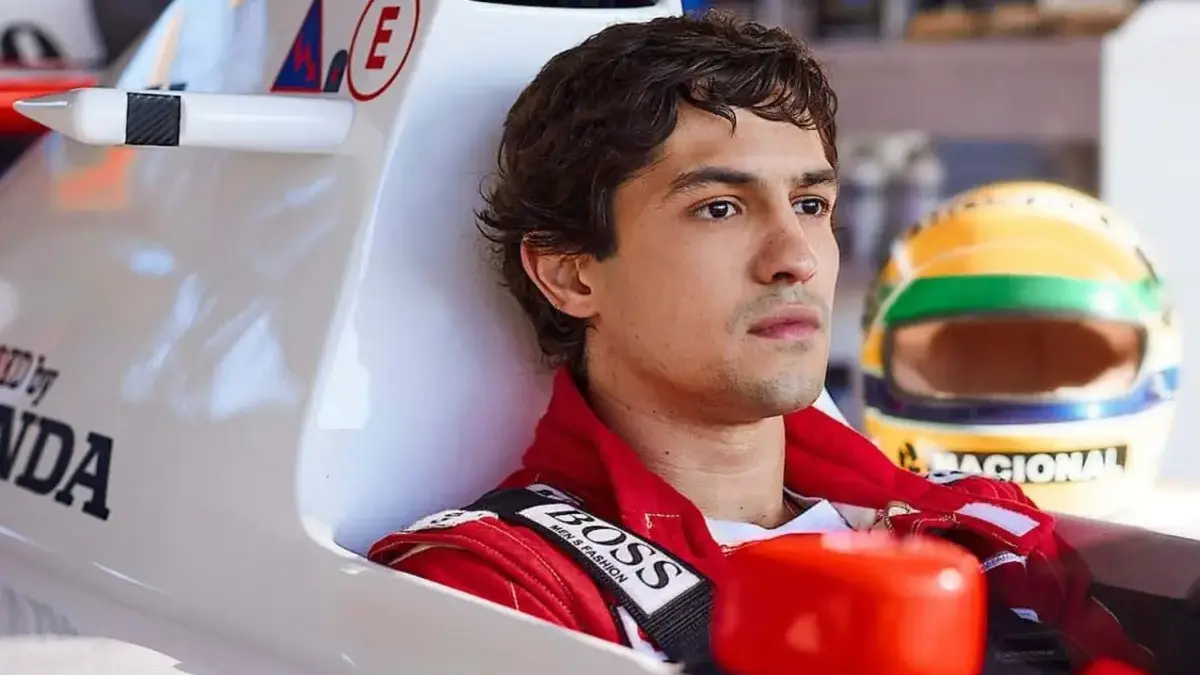
Beyond his local dominance, Crespi achieved international recognition late in his career when his family-run enterprise was entrusted with a major Hollywood-style production: building 22 replica Formula 1 cars for Netflix’s biographical drama series Senna, meticulously recreating the legendary vehicles raced by Ayrton Senna and his rivals.
Chronology: The Road from Palermo Viejo to Balcarce
The Early Years and the Genesis of "Tulia"
Born in the working-class Buenos Aires neighborhood of Chacarita, Crespi’s mechanical awakening was nurtured alongside his brother Humberto, affectionately known as "Nenín." Surrounded by the sights and sounds of post-war Argentine industry, Tulio developed an innate intuition for metalwork and internal combustion engines.
In 1961, Crespi opened his first workshop in the vibrant Palermo Viejo district of Buenos Aires. What began as a modest repair shop quickly evolved into a crucible of racing innovation. Inspired by the compact mechanics of the German NSU, Crespi set out to build his own single-seater racing car.
The Sweet Taste of Debut Victory: March 22, 1963
The culmination of his early workshop efforts materialized as the Tulia 1. Remarkably, Crespi did not just build the car—he drove it. On March 22, 1963, at the Autódromo General San Martín, Crespi lined up on the grid in a machine built with his own hands.
When the checkered flag dropped, Crespi crossed the finish line first. That maiden victory fused his dual identities as a constructor and a driver, establishing a reputation that would make the "Tulia" name a permanent fixture on Latin American racing grids.
The Legend of the "Petiso-Torino" (1967)
As Argentine Turismo Carretera grew into a national obsession, Crespi’s talent for creative problem-solving was put to the ultimate test in 1967. Following a devastating crash that nearly destroyed the Torino race car driven by star pilot Nasif Estéfano, most mechanics would have written the chassis off as scrap metal.
Crespi saw potential where others saw ruin. He radically redesigned the silhouette of the car, lowering its roofline and shortening the body. The resulting machine became affectionately known as the Petiso-Torino (The Short Torino)—an aesthetic and aerodynamic triumph that immediately cemented itself as an icon of Argentine motorsports culture.
European Ambitions: The Paris Motor Show (1976)
Crespi’s ambition was never confined strictly to racing circuits. His design prowess extended to street-legal sports cars that captured the imagination of the public. Models such as the Tulia GT and the Tulieta GT showcased his flair for coachbuilding. His work gained international acclaim when his designs were officially exhibited at the prestigious Paris Motor Show in 1976, proving that an Argentine artisan could stand shoulder-to-shoulder with European design houses.
The Move to Balcarce and the Netflix Connection
In the 1980s, acting on the direct recommendation of five-time Formula 1 World Champion Juan Manuel Fangio—Argentina’s ultimate motorsport ambassador—Crespi relocated his expanding manufacturing operations to Balcarce. Situated strategically along Route 226, the new facility allowed him to scale up production.
As his sons joined the business, the Crespi name transitioned smoothly into the modern era. Their crowning international achievement arrived in the 2020s when they were contracted to build 22 period-accurate Formula 1 chassis for Netflix’s Senna series. Replicating the ground-effect and turbo-era machines driven by Ayrton Senna required meticulous historical research and uncompromising craftsmanship—a task for which only the Crespi workshop was deemed truly qualified.
Supporting Data and Production Milestones
To understand the scale of Tulio Crespi’s industrial footprint, one must look at the numbers behind the legend:
- 88 Years: A life fully dedicated to the pursuit of speed, engineering, and craftsmanship.
- 6+ Decades: The span of his active career in designing, building, and racing automobiles.
- 2,000+ Vehicles: The estimated total number of racing and specialty chassis produced under the Crespi name throughout his lifetime.
- 22 F1 Replicas: The precise number of historical Grand Prix cars engineered and built by the Crespi family for the Netflix series Senna.
- Multiple Racing Categories: His footprint spanned Formula Renault, Turismo Carretera, TC2000, Mecánica Argentina Super Fórmula, and various sports car divisions.
Official Responses and Tributes
The death of Tulio Crespi elicited a wave of grief and reverence across the Argentine sporting landscape. Figures from multiple generations of motorsport stepped forward to honor his legacy.
Norberto Fontana, former Formula 1 test driver and Touring Car champion, posted:
"We have lost a true titan of our tracks. Tulio wasn’t just a builder; he was an artist who gave us the tools to fulfill our dreams. Every time I sat in a Crespi chassis, I knew I was driving a piece of Argentine history."
Juan María “Cocho” López, legendary Argentine touring car driver, remarked:
"Tulio understood the soul of a race car better than almost anyone. He built cars with love, precision, and an intuitive understanding of physics. The Argentine motorsport community will never be the same without him."
Aníbal Colapinto, father of current F1 rising star Franco Colapinto, also extended his condolences, highlighting how deeply embedded Crespi’s legacy is in the foundational training of every young driver rising through the Argentine single-seater ranks.
Implications for the Future of Argentine Motorsport
The passing of Tulio Crespi marks the end of an era—the twilight of the romantic age of automotive craftsmanship in South America, where a talented artisan with a welder, a hammer, and a dream could build a car in a small shed and beat the factory-backed giants on Sunday.
However, the legacy of Tulio Crespi is far from extinguished. The Balcarce facility remains operational under the stewardship of his sons, who have absorbed his meticulous work ethic and dedication to quality.
Furthermore, Crespi left behind a parting manifesto—a final letter published by his family that serves as both an obituary and a call to arms for future engineers:
"I was just a working-class iron man, an artisan who had the immense luck of turning his passion into his daily labor," Crespi wrote. "Do not remember me for my final days, but for how I lived. To the new generations: keep making noise. Keep building cars in small workshops, believing you can beat the big guys. Because I could, and I did it. I lived 88 years doing precisely what I loved."
Tulio Crespi proved that true greatness does not always require massive corporate budgets or high-tech automated assembly lines. Often, it requires something much rarer: ingenuity, unwavering perseverance, and an unconditional love for the craft. While the tracks of Argentina are quieter today, the roar of the engines built by his hands will echo through motorsport history forever.

Leave a Reply