


The global aviation network operates on a scale of unprecedented complexity, relying on a delicate, highly synchronized choreography between aircraft, flight crews, airports, and air navigation service providers (ANSPs). However, the foundational infrastructure underpinning this vast network faced an extraordinary stress test during a tumultuous September. A series of critical technological failures, software anomalies, and infrastructural vulnerabilities across the United Kingdom and the United States grounded thousands of flights, displaced tens of thousands of passengers, and exposed deep-seated weaknesses in aging air traffic control (ATC) systems.
This cascading series of disruptions has reignited urgent debates surrounding the modernization, resilience, and redundancy of global airspace management. As airlines demand accountability and regulators launch independent inquiries, the events of this past month serve as a stark reminder that even a momentary glitch in the digital architecture of flight control can trigger shockwaves felt across continents.
1. Main Facts: Anatomy of a Global Disruption
The month of September will long be remembered by aviation authorities, carriers, and frustrated travelers alike as a period of exceptional instability. The core of the crisis comprised three major, distinct system failures occurring within a harrowing two-week window on both sides of the Atlantic.
In the United Kingdom, National Air Traffic Services (NATS) suffered two separate, high-impact technical malfunctions—one on September 8 and another on September 21. These incidents forced immediate restrictions on British airspace, compelling air traffic managers to curtail capacity drastically to maintain baseline safety margins. The resulting backlog rippled through European networks, affecting major carriers such as British Airways, easyJet, Ryanair, and Iberia.
Concurrently, the United States faced its own infrastructure nightmare on September 21. A critical communications circuit failure at the Philadelphia terminal radar approach control (TRACON) facility—compounded by a severed fiber-optic backup line—crippled air traffic management across the high-density Northeast corridor.
Unlike localized weather delays, these incidents targeted the invisible digital and physical nerves of aviation. When ATC computers stumble, the downstream effects are non-linear: a six-hour technological blackout can easily translate into a 48-to-72-hour operational recovery cycle.
2. Chronology of Events: From the UK to the US
The UK Shakes: September 8
The most severe episode began on the morning of September 8 in the United Kingdom. A critical fault emerged within the data processing architecture of NATS. According to preliminary findings released by the navigation provider on September 18, the crisis stemmed from a discrete software defect tucked away within a minor subsystem of the national airspace network.
The sequence of events unfolded in milliseconds: a manual code request intended to identify a specific aircraft was abruptly interrupted by a higher-priority background operation. When the system attempted to resume the request, it generated and propagated corrupted flight data.
To prevent catastrophic misunderstandings in the skies, NATS was forced to impose sweeping capacity restrictions for approximately six hours while technicians manually rebooted the architecture and reloaded flight databases.
Though the software was isolated and rectified swiftly, the human and operational toll was severe. Flightradar24 data revealed that more than 625 flights were cancelled at UK airports by late afternoon on the first day alone. Across the subsequent recovery days, the total cancellations surpassed 2,000. Airlines scrambled to rebook passengers, while European networks absorbed the knock-on delays. Iberia, for instance, had to implement emergency operational flexibility for passengers traveling to London Heathrow, Gatwick, and London City airports.
Scotland’s Turn: September 21
Just as the industry was regaining its footing, lightning struck twice. On September 21, NATS was forced to implement emergency traffic regulations once more, this time originating from a technical failure at its Prestwick control center in Scotland.
NATS clarified that this incident involved a localized connectivity failure within a specific segment of its network architecture and bore no technical relation to the software glitch experienced two weeks prior. Nevertheless, the consequences were immediate. By late afternoon, regional media and tracking platforms logged 227 cancelled flights, dealing a heavy blow to operations at Edinburgh, Manchester, and various Belfast airports.
The US Northeast Meltdown: September 21
As if to underscore the fragility of global airspace systems, the United States suffered a catastrophic systems failure on that exact same day, September 21. A primary communications circuit failed at the Philadelphia TRACON facility. In standard operational protocol, critical systems rely on automated redundancies to seamlessly switch to backup pathways.
However, in a catastrophic display of infrastructural vulnerability, the backup fiber-optic line had been accidentally severed days or hours prior during unrelated railway construction work.
With both the primary circuit and its failsafe offline, the Federal Aviation Administration (FAA) was forced to slap emergency ground stops and flow-control restrictions across vital Northeast hubs, including Philadelphia, Newark Liberty International, JFK, LaGuardia, Teterboro, and Boston Logan.
The international ramifications were swift. Newark Liberty, a major gateway for transatlantic aviation, bore the brunt of the chaos. According to CNBC reporting, at least 67 flights were violently diverted mid-air as inbound services from Iceland, France, Spain, and Greece suddenly found their destinations locked down. Nationally, the US system accumulated an estimated 9,500 delayed or cancelled flights over the course of Monday, with residual schedule disruptions bleeding well into Tuesday.
3. Supporting Data and Technical Insights
To truly grasp the magnitude of these events, aviation analysts emphasize the concept of the "network multiplier effect." John Strickland, a renowned aviation analyst, succinctly captured the dynamic during the height of the crisis:
“A few hours may seem limited, but the impact is enormous when numerous airports are affected.”
In modern commercial aviation, aircraft and flight crews operate on tight, continuous multi-leg rotations. When a primary hub is blocked for even a few hours, the inbound aircraft never arrives to operate its subsequent outbound leg. Crews time out of legal duty hours, and airplanes are left stranded at out-station airports. This explains why NATS required more than 48 hours to fully absorb the backlog generated by a six-hour software glitch on September 8.
The data metrics from both sides of the Atlantic illustrate the sheer scale of the disruption:
- September 8 (UK – NATS Software Glitch): Over 2,000 total cancellations recorded during the multi-day recovery phase. EasyJet alone accounted for 218 cancellations, British Airways for 132, Ryanair for 41, KLM for 37, and Eurowings for 22 on the initial day.
- September 21 (UK – Prestwick Connectivity Fault): 227 flights cancelled by late afternoon, severely impacting Scottish and Northern Irish hubs.
- September 21 (US – Philadelphia TRACON & Severed Fiber): Approximately 9,500 total US flight delays and cancellations on a single Monday. Boston Logan alone absorbed nearly 500 delays and 80 cancellations due to cascading inbound flight diversions. Newark saw at least 67 international and domestic flights diverted.
Seth Miller, an aviation journalist with PaxEx.Aero, summarized the human and logistical absurdity of the US breakdown for NBC10 Boston:
“There are flights that should salir [depart] and don’t, and others have appeared where they shouldn’t have.”
Furthermore, the structural backdrop of these failures was highlighted by a stark warning from the US Government Accountability Office (GAO). In a report issued on September 14, the GAO revealed that more than 75% of the FAA’s 138 critical air traffic control facilities and automation systems are currently classified as "unsustainable or potentially unsustainable" due to advancing age and deferred modernization.
4. Official Responses and Industry Accountability
The recurrence of major system failures has catalyzed intense friction between commercial airlines and air navigation service providers. The pressure on leadership has rarely been higher.
Following the twin UK failures, low-cost carrier giant Ryanair openly demanded the resignation of NATS Chief Executive Martin Rolfe, pointing to systemic incompetence and unacceptable economic damage. Meanwhile, easyJet issued formal statements demanding immediate, structural interventions to bolster the intrinsic resilience of the UK’s airspace management network.
In response to the September 8 crisis, the British Government swiftly directed the UK Civil Aviation Authority (CAA) to launch an independent, comprehensive review of NATS’ operational resilience, software update protocols, and risk management procedures. Following the subsequent Prestwick incident, the regulator reiterated that despite the extraordinary nature of the failures, airlines remain strictly bound by regulatory frameworks (such as UK/EU 261) to provide affected passengers with comprehensive care, financial compensation, hotel accommodations, and alternative transportation.
In the United States, the FAA faced renewed congressional scrutiny over its physical infrastructure management. The accidental severing of a fiber-optic backup line during routine railway construction laid bare a shocking lack of physical redundancy and inter-agency communication regarding critical utility pathways. Lawmakers have demanded answers as to why a single physical cut could effectively blind a major regional approach control center without an isolated, independent satellite or microwave backup link immediately taking over.
5. Implications and the Road Ahead: Modernizing the Skies
Are these abnormal anomalies, or are they symptoms of a deeper, systemic rot within global aviation infrastructure?
While minor technical glitches are an inevitable reality of managing millions of cubic miles of dynamic airspace, the depth of degradation witnessed this September—capable of unilaterally paralyzing entire national networks—cannot be normalized. These events join a troubled historical lineage that includes the catastrophic NATS system collapse of August 2023 (which impacted over 700,000 passengers at an estimated cost of £75 to £100 million) and another notable technical disruption in July 2025.
The underlying causes vary case-by-case: a software code defect on September 8, a network connectivity fault on September 21 in Scotland, and a combination of aging circuit hardware and severed physical fiber in Philadelphia. Yet, the common denominator is an overburdened, aging infrastructure struggling to keep pace with soaring post-pandemic travel demand.
The Path to Resilience
As NATS implements temporary mitigations while rigorously testing permanent software patches, and as the FAA accelerates its long-term modernization blueprints to phase out legacy hardware, the global aviation community is looking toward next-generation solutions.
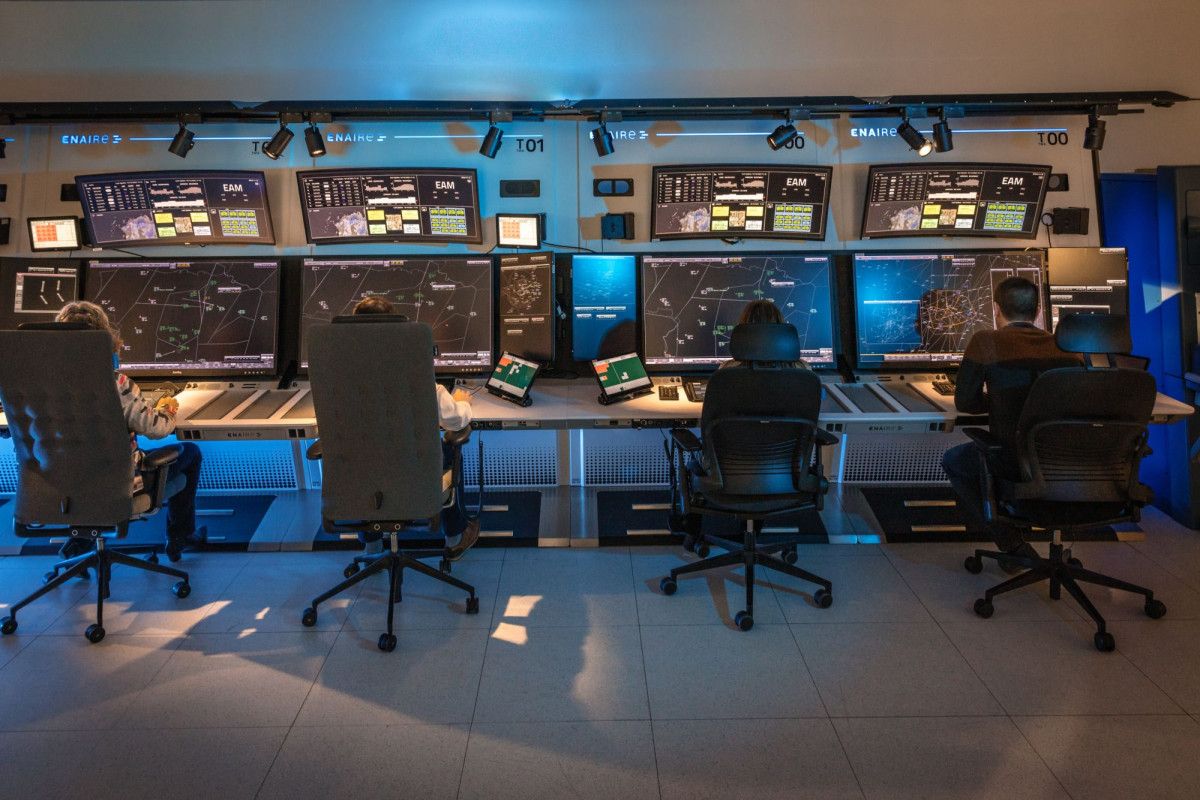
In Europe, collaborative multi-national initiatives such as iTEC SkyNex—a project boasting active participation from Spanish navigation provider Enaire and the UK’s NATS—aim to build vastly more interoperable, predictive, and resilient digital architectures. These systems are designed to share data seamlessly across borders and isolate localized anomalies before they can cascade into continental crises.
However, technologists issue a sobering caveat: no software architecture or digital overhaul can completely eliminate the risk of failure in ultra-complex, high-throughput networks. As long as millions of passengers take to the skies daily, maintaining the safety and fluidity of global traffic will require sustained, aggressive capital investment, rigorous software auditing, and robust physical redundancies that leave zero room for single points of failure. Until those standards are universally enforced, the ghost of September’s disruptions will continue to loom large over every flight plan filed worldwide.




Leave a Reply