

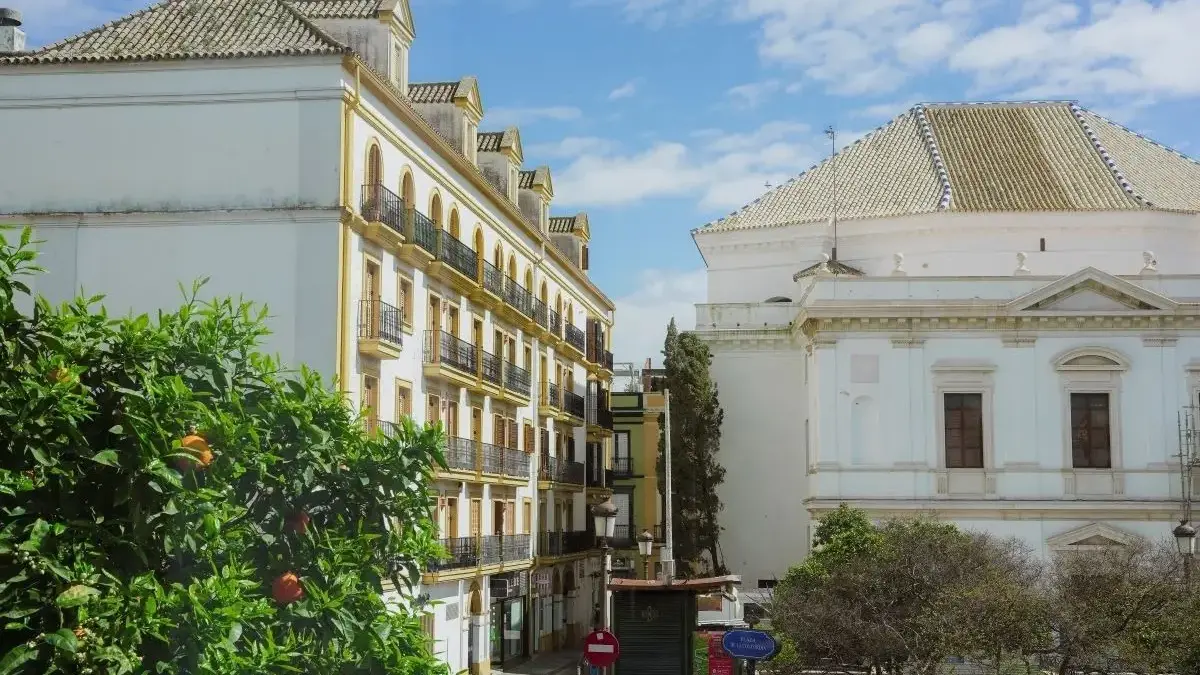
SEVILLE — In a striking urban metamorphosis that bridges the city’s complex past with its vibrant contemporary future, the international luxury lifestyle brand Thompson Hotels—a proud member of Hyatt’s expansive portfolio—officially opened its doors in Seville this Tuesday.
The launch marks a dual celebration for the hospitality brand: not only does it establish Thompson’s premiere footprint in the autonomous community of Andalusia, but it also coincides with the global brand’s milestone 25th anniversary. Furthermore, this newly minted establishment holds the distinction of being only the second Thompson property in both Spain and Europe, signaling a strategic and prestigious expansion for Hyatt in the region.
Boasting 101 meticulously designed rooms and suites, the hotel breathes new life into the historic Plaza de la Concordia. More remarkably, it occupies the landmark former central police station of the Andalusian capital—the historical building of La Gavidia—transforming a space once defined by confinement and authority into an open, luminous nexus of high-end hospitality, design, and local culture.
1. Main Facts: The Architecture of Transformation
The unveiling of Thompson Sevilla is much more than the addition of a luxury hotel to southern Spain’s booming tourism market; it is an architectural triumph of urban regeneration. Developed through a contemporary lens that seamlessly marries high-end architecture, bespoke interior design, and a deep-rooted connection to its local surroundings, the property aims to redefine luxury in Seville.
- Location: Plaza de la Concordia, historic center of Seville.
- Capacity: 101 luxurious rooms and suites.
- Property Ownership: Backed by Mexican investor Alonso Díez, with architectural direction spearheaded by Carlos Ansa.
- Culinary Partner: The ground-floor restaurant is operated by Casa Mayo, a renowned local Sevillian family business with roots tracing back to a 1960s roadside tavern in the nearby town of Los Palacios.
- Brand Significance: The second Thompson property in Spain and Europe, coinciding with the brand’s 25th anniversary.
The structural makeup of the building is as unique as its history. Divided into three distinct blocks spanning two, five, and seven storeys respectively, the restoration project carefully respected the skeleton of the former police headquarters. While the upper floors—housing the guest rooms—retain much of the original layout, including the positioning of the stairwells, the ground floor has undergone a staggering, light-filled revolution.
Areas that were once windowless, dark, and utilitarian—specifically the vehicle intake zones and the historical holding cells where detainees were once processed—have been masterfully re-engineered. Today, these spaces form a brilliant, light-drenched ground floor featuring an expansive lobby, elegant ballrooms, and the aforementioned gastronomic anchor, Casa Mayo.
2. Chronology: From Police Bastion to Luxury Icon
The journey of turning a rigid, institutional law enforcement headquarters into a sanctuary of international luxury was neither quick nor simple. It required a delicate balance of historic preservation and radical structural innovation.
- The Institutional Era: For decades, the building at Plaza de la Concordia served as the central police station (Comisaría de Policía) for Seville. It was a place of heavy bureaucracy, guarded entrances, and restricted public access—a stark contrast to the welcoming atmosphere it projects today.
- The Acquisition and Vision: Recognizing the architectural potential and prime location of the historic La Gavidia building, Mexican investor Alonso Díez acquired the property with a grand vision: to convert it into a world-class luxury landmark. Architect Carlos Ansa was brought on board to lead the complex structural redesign.
- Late 2024 Previews: Anticipation reached a fever pitch late last year when architectural and hospitality details were leaked to specialized trade media like Hosteltur, teasing the public with promises of a late-year opening that would blend gritty local history with uncompromised five-star luxury.
- September 2026 Grand Opening: Following meticulous interior fit-outs and historic preservation approvals, the hotel officially opened its doors on a Tuesday in September 2026, welcoming its very first guests and aligning with Thompson Hotels’ silver jubilee.
3. Supporting Data: The Anatomy of the Project
To fully comprehend the magnitude of Thompson Sevilla, one must examine the data driving its design, ownership, and operational framework.
Architectural Layout and Restoration
The property’s unique division into three heights (2, 5, and 7 storeys) presented a complex jigsaw puzzle for interior designers. Rather than erasing the past, the design team opted for an industrial-chic aesthetic that honors the building’s administrative heritage while injecting modern luxury.
| Metric / Feature | Detail |
|---|---|
| Total Keys | 101 rooms and suites |
| Height Distribution | 3 blocks (2, 5, and 7 storeys) |
| Key Stakeholders | Alonso Díez (Investor), Carlos Ansa (Architect) |
| Food & Beverage Partner | Casa Mayo (Sevillian family enterprise) |
| European Footprint | 2nd Thompson property in Europe / Spain |
The Culinary Narrative: Casa Mayo
One of the most praised elements of the hotel’s launch is its commitment to local authenticity through gastronomy. Instead of outsourcing to an anonymous international dining conglomerate, the property partnered with Casa Mayo. Originating in the 1960s as a humble roadside eatery (venta) in Los Palacios—a town famed for its agricultural produce—Casa Mayo represents the heart and soul of Sevillian culinary tradition. Bringing this family-run enterprise into a global luxury hotel creates an authentic bridge between international travelers and local food culture.
4. Official Responses and Leadership Perspectives
The inauguration event brought together key executives, investors, and local figures to celebrate the realization of years of planning.
Olivier Rust, General Manager of the newly opened establishment, could not hide his enthusiasm during the ribbon-cutting ceremony. Addressing attendees within the historic walls of the Plaza de la Concordia, Rust emphasized the emotional and strategic weight of the opening:
"This year Thompson Hotels celebrates its 25th anniversary, and we feel immensely proud that this is the second Thompson hotel in both Spain and Europe, marking a very important milestone for the brand," stated Olivier Rust.
Rust further elaborated on the brand’s philosophy regarding urban integration, noting that a luxury hotel should never feel isolated from its host city:
"Developed from a contemporary perspective that combines architecture, design, and a connection with the environment, this project was born with the vocation of integrating into the life of the city and becoming a new meeting point for both locals and visitors."
Architect and ownership representative Carlos Ansa previously highlighted the structural paradox of the building—how a space once synonymous with restriction was deliberately inverted into a palace of light, openness, and freedom. By radically transforming the dark, subterranean-feeling logistics zone into soaring, sunlit social areas, the design team successfully altered the psychological footprint of the location.
5. Implications: Redefining Seville’s Luxury Tourism Landscape
The arrival of Thompson Sevilla carries profound implications for the local tourism sector, the Hyatt brand, and the urban fabric of the Andalusian capital.
Boosting Seville’s Luxury Tier
While Seville has long been a global tourism heavyweight—drawing millions of visitors annually to marvel at its cathedral, the Real Alcázar, and its vibrant neighborhoods like Triana and Santa Cruz—its luxury hotel portfolio has historically lagged behind cities like Madrid, Barcelona, or coastal destinations like Marbella. The opening of a high-profile lifestyle brand like Thompson firmly places Seville on the radar of ultra-high-net-worth travelers seeking modern, design-forward accommodations rather than strictly traditional historic hotels.
The Rise of Adaptive Reuse in Real Estate
The successful conversion of a former central police station into a five-star hotel sets a powerful precedent for urban real estate development in historic European cities. Across the continent, municipalities are grappling with how to repurpose obsolete institutional, governmental, and industrial buildings without destroying their architectural heritage. Thompson Sevilla proves that adaptive reuse, when executed with architectural sensitivity and visionary investment, can revitalize entire public squares—such as the Plaza de la Concordia—while generating high-value economic activity.
A Community-Centric Luxury Model
Modern luxury travelers no longer wish to reside in hermetically sealed bubbles; they demand immersion, authenticity, and local connectivity. By embedding local institutions like Casa Mayo into its core operations, Thompson Sevilla avoids the trap of generic globalization. The hotel is engineered not merely as a lodging option for tourists, but as a living room for Sevillians themselves—a dynamic space where neighborhood life converges with international sophistication.
As Thompson Hotels marks a quarter-century of global operations, its bold bet on Seville ensures that the next chapter of its history will be deeply intertwined with the passion, history, and unmistakable light of southern Spain.


Leave a Reply