

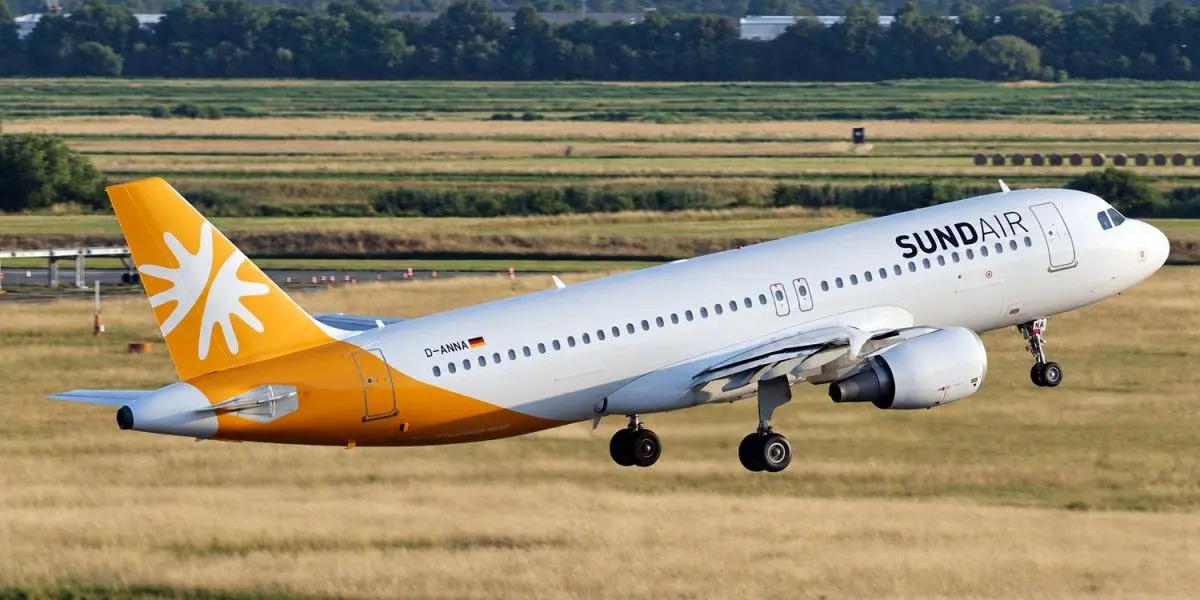
BERLIN — In what could mark one of the most significant strategic realignments in the German tourism landscape in recent years, German travel titan Schauinsland-Reisen is reportedly evaluating the divestment of its majority stakes in Sundair and Fly Air 41. The two leisure carriers were brought under the group’s corporate umbrella in 2023 to secure proprietary air capacity and consolidate a robust vertical integration strategy.
Despite the looming uncertainty regarding the future ownership of its aviation assets, Sundair’s flight schedules remain entirely unaffected. The airline continues to roll out comprehensive seasonal operations connecting key German regional airports with premier Spanish holiday hotspots, including the Canary Islands and Mallorca. Meanwhile, Schauinsland-Reisen presses forward with the expansion of its core portfolio, which spans specialized tour operations, hospitality assets, and extensive retail travel agency networks.
1. Main Facts: The Proposed Divestment and Corporate Footprint
The prospective transaction targets a relatively recent addition to the Schauinsland universe. The German travel group closed the 2024/25 financial year with an impressive 2.05 million customers and a consolidated turnover of €2.9 billion. Its commercial footprint touches nearly every critical link in the tourism value chain: traditional tour operating, hotel accommodation, retail distribution, travel agency networks, long-haul travel, and dedicated air transport.
At the heart of the current discussions is a potential corporate unbundling of its aviation portfolio. Schauinsland currently holds an 85% stake in Sundair and a 51% majority share in Fly Air 41. The remaining equity in both carriers is held by Marcos Rossello, the founder and general director of the airlines, who retains 15% of Sundair and 49% of Fly Air 41, respectively.
According to industry reports originating from FVW, a specialized mergers and acquisitions (M&A) advisory firm has been actively engaged for months to evaluate market interest, structure potential deals, and facilitate the corporate exit.
2. Chronology: From Minority Partner to Majority Owner, and Now the Crossroad
To fully understand the weight of this potential sale, one must examine the evolution of the relationship between Schauinsland-Reisen and Sundair, a partnership defined by strategic adaptation, crisis management, and ambitious expansion.
- Pre-Pandemic Ties: Schauinsland’s historical relationship with Sundair predates its current majority ownership. The tour operator had previously acquired a significant minority stake of roughly 49% in the carrier, serving as a reliable anchor customer and financial backer.
- Pandemic Restructuring: As the COVID-19 pandemic paralyzed global aviation, Sundair underwent severe financial restructuring. During this turbulent period, Schauinsland temporarily divested its equity, leaving the airline to navigate the industry-wide downturn independently.
- The 2023 Reacquisition: Seeking to inoculate its tour operating business against chronic capacity shortages and volatile charter prices across Europe, Schauinsland re-entered the capital structure in May 2023. By taking majority control of both Sundair and its sister airline Fly Air 41, the group successfully forged a direct pipeline of guaranteed airlift. This strategic move optimized flight scheduling and vacation planning, particularly out of secondary and regional German airports that are often overlooked by major flag carriers.
- Brand Convergence (2024): The synergy between the tour operator and the airline was visibly cemented in 2024, when Sundair unveiled a freshly updated corporate livery. The redesign incorporated key visual elements from Schauinsland-Reisen’s brand identity—a change widely heralded at the time as a permanent symbol of deep integration and a shared future.
- The 2025/2026 Strategic Review: With the aviation market stabilizing, albeit facing persistent cost pressures, supply chain bottlenecks, and rising operational expenses, Schauinsland has initiated a comprehensive strategic review. The group is now weighing whether owning capital-intensive airline assets remains core to its long-term financial health or if capital is better deployed in its high-performing hotel and distribution sectors.
3. Official Responses: Prudence, Openness, and No Immediate Pressure
As news of the M&A advisory process circulates through European tourism circles, leadership from both Schauinsland-Reisen and the airlines has moved quickly to manage expectations and calm market jitters.
Management at Schauinsland-Reisen has confirmed that group shareholders are entirely open to exploring diverse strategic options regarding their airline holdings. However, corporate representatives have emphasized that these internal discussions remain in a nascent stage. As of publication, no formal binding offers have been tabled, and no definitive agreements have been signed.
Echoing this measured sentiment, Marcos Rossello addressed the market speculation by noting that while the airline’s ownership group has historically maintained an open door to constructive proposals and strategic partnerships, there is zero existential or financial necessity to sell. Rossello underscored that both Sundair and Fly Air 41 are operating on stable financial footings and continue to deliver dependable service to their tour-operating partners.
Industry analysts suggest that this openness to evaluation reflects a pragmatic corporate philosophy: in an era of unpredictable fuel costs, tightening environmental regulations, and fluctuating passenger demand, separating the heavy asset risks of aviation from the consumer-facing rewards of tour operating may offer a more resilient balance sheet.
4. Supporting Data: Unwavering Commitment to Spain (Canaries and Mallorca)
Regardless of whether the ownership of Sundair and Fly Air 41 shifts in the coming months, the airlines’ flight planning demonstrates an unwavering, aggressive commitment to the Spanish leisure market. Spain remains the cornerstone of Sundair’s warm-weather programming, particularly during the winter sun and peak summer holiday periods.
Winter 2026/27 Season: Focus on the Canary Islands
For the upcoming winter season, Sundair’s flight schedules highlight the enduring appeal of the Canaries to German travelers seeking reliable sun and sand during northern Europe’s colder months:
- Berlin-Brandenburg (BER): The airline maintains steady, high-demand routes connecting the German capital directly to Gran Canaria and Tenerife, cementing access to two of the archipelago’s most robust tourism markets.
- Bremen (BRE): Sundair’s operational footprint is even broader from northern Germany. The carrier has scheduled robust rotations to Fuerteventura, Gran Canaria, and Tenerife across staggered periods throughout the winter season, ensuring a heavy concentration of Spanish capacity originating from regional hubs.
Summer 2027 Season: The Mallorca Surge
Looking further ahead to the summer 2027 schedule, Sundair’s network expands its Balearic footprint while retaining strong Canarian links:
- Berlin Operations: Travelers departing from Berlin will benefit from dedicated seasonal connections to Gran Canaria alongside prime leisure routes to Palma de Mallorca.
- Bremen Deployments: Bremen will witness some of Sundair’s most intensive Spanish programming. The carrier has scheduled consistent flights to Fuerteventura for a significant portion of the summer, paired with an exceptionally dense operation to Mallorca. Flights between Bremen and Palma are slated to run on a near-daily basis from late April through early November.
- Dresden Hub: Palma de Mallorca will also capture increased capacity out of Dresden, with multiple weekly frequencies scheduled throughout the peak summer months.
This forward-looking schedule confirms that Sundair’s strategic value lies precisely in its established, highly profitable routes to Spain—a factor that will undoubtedly serve as a major selling point for any prospective investor evaluating the airline group.
5. Implications: How Schauinsland-Reisen Reconstructs Its Ecosystem
If Schauinsland-Reisen ultimately proceeds with the divestment of Sundair and Fly Air 41, the overarching corporate structure of the group will not crumble; rather, it will pivot back to its historical identity as a hyper-efficient, asset-light (in terms of aviation) tour operator backed by powerful retail and hospitality pillars.
The Core Tour Operator and Retail Expansion
At its core, Schauinsland-Reisen will remain one of Germany’s premier, independent traditional tour operators. Specializing in high-value vacation packages, the company services millions of clients by leveraging deep partnerships with thousands of hotel properties worldwide.
Crucially, the group has aggressively fortified its distribution capabilities in recent years. In 2023, Schauinsland executed a vital vertical integration play by acquiring 100% of the Alpha travel agency cooperative, a move that absorbed the shared participations of the prominent Holiday Land franchised network. Building on this momentum, the group steadily expanded its directly owned retail footprint, pushing past the milestone of 70 proprietary high-street travel agencies. This robust brick-and-mortar presence guarantees a captive audience for its holiday products, independent of third-party digital intermediaries.
Hospitality and Long-Haul Diversification
Beyond air transport and retail, Schauinsland has systematically diversified into direct accommodation ownership and management. The group maintains strategic hotel stakes and enjoys a close operational alignment with R2 Hotels, boasting flagship properties strategically positioned across Fuerteventura, Lanzarote, and Mallorca.
This multidimensional strategy was further augmented in 2024 when Schauinsland secured a majority stake in Explorer, a renowned German specialist in tailor-made itineraries and long-haul travel. This acquisition allowed the tour operator to successfully capture affluent segments of the market looking beyond traditional short- and medium-haul European beach packages.
Conclusion
The potential sale of Sundair and Fly Air 41 should not be viewed as a retreat from the travel sector, but rather as a calculated financial maneuver. By shedding the capital expenditures and operational volatility inherent in running modern airlines, Schauinsland-Reisen could unlock substantial liquidity. This capital could then be reinvested into expanding its dominant retail agency networks, acquiring high-margin hotel assets, and digitizing its tour-operating platform.
For travelers, travel agents, and Spanish tourism authorities in the Canaries and Balearics, the immediate operational reality remains unchanged: Sundair flies on, Spain remains essential to its DNA, and Schauinsland-Reisen continues to steer its formidable tourism empire with calculated, long-term vision.



Leave a Reply