

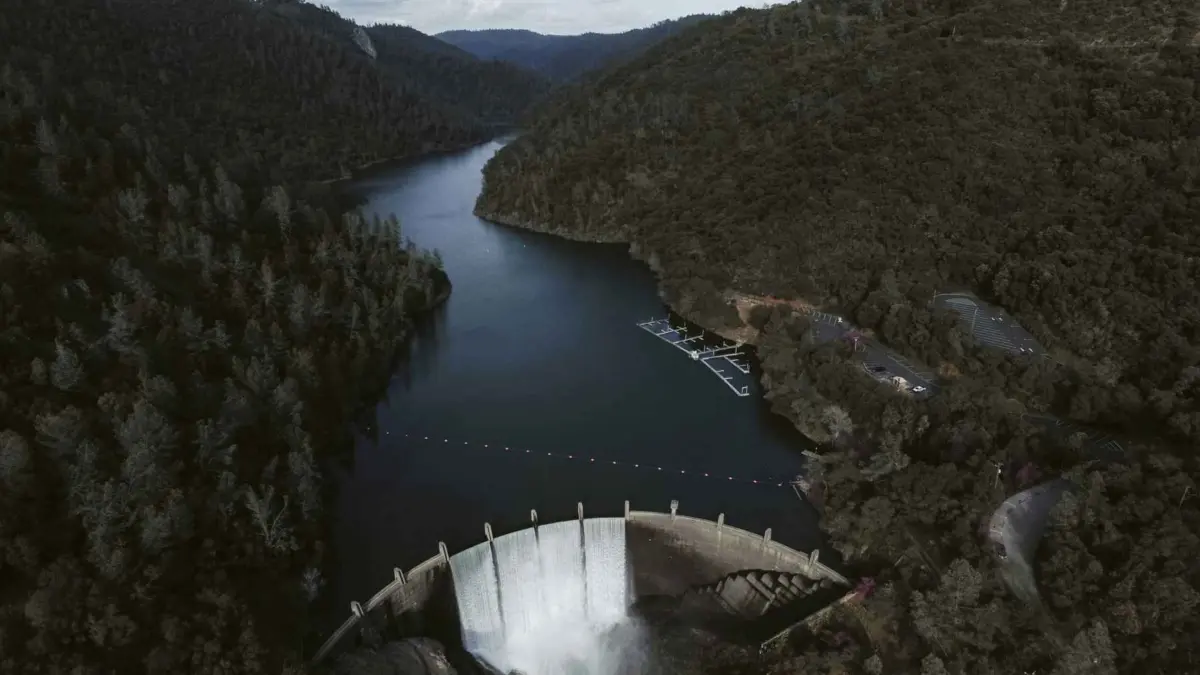
SACRAMENTO, Calif. — In a landmark achievement for Western water management, the State of California has officially concluded a massive, highly complex infrastructure overhaul aimed at safeguarding its most critical liquid asset. Backed by a robust $235 million investment, the Department of Water Resources (DWR) announced the successful completion of the major rehabilitation of the Oroville Dam’s river valve outlet system.
This monumental engineering feat ensures the continuous, resilient operation of a cornerstone in California’s water delivery network for the next decade. As the Golden State grapples with the converging pressures of intensifying climate change, prolonged droughts, extreme heatwaves, and soaring technological demands, this project marks a pivotal turning point in the region’s battle for water security.
Main Facts: The Oroville Dam Overhaul and State Water Project
At the heart of California’s water storage and distribution apparatus lies the State Water Project (SWP), a state-managed water storage and delivery system that supplies water to 27 million Californians and 750,000 acres of agricultural land. Within this vast network, the Oroville Dam stands as the tallest dam in the United States and serves as its crown jewel—providing vital flood protection, clean hydroelectric power, and municipal water supplies.
The recently completed rehabilitation project focused specifically on the dam’s river valve outlet system, an intricate network responsible for releasing controlled flows of water downstream into the Feather River. According to the DWR, the $235 million project delivers three direct, transformative benefits to the region:
- Enhanced Operational Reliability: Modernized mechanical valves and upgraded control systems ensure that water can be released safely and precisely under varying hydrological conditions.
- Ecosystem and Wildlife Protection: The modernized system allows for more nuanced flow controls that protect sensitive local aquatic life, most notably endangered and threatened native fish populations in the Feather River, including Chinook salmon and steelhead.
- Maximized SWP Capacity: By optimizing the outlet infrastructure, the State Water Project gains greater flexibility and capacity to capture, store, and distribute water resources during erratic weather cycles.
Chronology: A Decade of Resilience and Recovery
To understand the magnitude of the recent completion, one must view it within the broader timeline of California’s modern water infrastructure challenges:
- The Historical Baseline: Constructed in the 1960s as part of the initial phase of the State Water Project, the Oroville Dam complex was designed to tame seasonal flooding and store melting Sierra Nevada snowpack for distribution down to the arid Central Valley and Southern California.
- The 2017 Crisis: The urgency for comprehensive infrastructure modernization was tragically underscored in February 2017, when heavy rainfall exposed structural vulnerabilities in both the primary and emergency spillways, leading to the emergency evacuation of nearly 200,000 residents downstream. Though distinct from the river valve outlet system, the crisis triggered a systemic re-evaluation of all major components at Oroville.
- Planning and Execution: Recognizing the accelerating impacts of climate change, the DWR initiated comprehensive planning for the river valve outlet system overhaul. Engineering teams faced the daunting task of modernizing deep-infrastructure components built more than half a century ago without disrupting ongoing water deliveries.
- The Milestone Completion: Following years of rigorous engineering work, specialized technical phases, and multi-million-dollar allocations, the DWR officially announced the successful completion of the river valve rehabilitation, securing the dam’s operational integrity well into the 2030s.
Supporting Data: Climate Pressures and Technological Demands
California’s multi-million-dollar investment is not an isolated luxury; it is an urgent necessity born from a convergence of severe environmental and anthropogenic pressures.
The Accelerating Climate Crisis
Decade-long megadroughts interspersed with violent, atmospheric river-driven winters have shattered historical weather patterns in the Golden State. Traditional reliance on the Sierra Nevada snowpack—historically California’s natural reservoir—has become increasingly unreliable as rising global temperatures cause precipitation to fall more frequently as rain rather than snow, melting earlier in the year and catching traditional reservoir systems off guard.
The Rise of Data Centers and Industrial Water Consumption
Compounding these natural stressors is the explosive growth of the digital economy. California—particularly the Silicon Valley region and burgeoning tech hubs across the state—hosts a vast concentration of data centers. These high-performance computing facilities require immense volumes of water for evaporative cooling systems to prevent server overheating.
The invisible thirst of artificial intelligence and cloud computing has placed an unprecedented strain on local municipal water grids and regional infrastructure. In response, state regulators and regional water boards have begun drafting strict compliance guidelines and encouraging closed-loop cooling technologies, yet the baseline pressure on overall water availability remains high.
El Niño and Weather Volatility
The transition of meteorological conditions driven by oceanic phenomena like El Niño has further destabilized precipitation forecasts. Instead of steady, manageable wet seasons, California faces "whiplash" weather: catastrophic flooding followed by sudden, punishing heatwaves that rapidly evaporate surface water supplies.
Official Responses: Voices from the Department of Water Resources
State officials have been vocal about the strategic necessity of proactive infrastructure investments. The successful completion of the Oroville project represents a triumph of engineering and public administration.
"This investment in the infrastructure of the Oroville Dam guarantees the reliable and safe operation of the greatest flood protection and water supply asset of our project," stated John Yabrough, Deputy Director of the State Water Project at the DWR. Yabrough emphasized that the state cannot afford to maintain a passive posture toward aging infrastructure in an era of rapid climate destabilization.
Furthermore, Yabrough underscored the agency’s broader commitment to systemic modernization:
"Part of the mission of the DWR is to operate the facilities of the State Water Project to protect, restore, and enhance the natural environment. Today, we conclude one of the most complex and necessary recovery operations to face California’s current challenges—one that required a million-dollar investment and a highly skilled technical corps to execute across every phase."
State water managers have signaled that Oroville is merely the vanguard. Similar engineering audits and modernization initiatives are currently being planned or executed across other key facilities within the Oroville-Thermalito Complex, aiming to fortify the entire Central Valley against future climate shocks.
Implications: What This Means for California’s Future
The successful modernization of the Oroville Dam’s river valve outlet system carries profound implications for the economic, environmental, and social fabric of California.
1. Agricultural Stability in the Central Valley
The Central Valley produces a massive share of the nation’s fruits, vegetables, and nuts. By securing the operational integrity of the State Water Project, farmers gain a more predictable baseline for irrigation planning. Mitigating water delivery curtailments during drought years directly protects agricultural yields, prevents soaring food prices nationally, and supports rural economies dependent on crop production.
2. Urban Resilience and Municipal Supplies
For millions of urban residents in the San Francisco Bay Area, the Central Valley, and Southern California, the upgrade reduces the immediate threat of severe water rationing. While conservation remains a permanent fixture of California culture, having a structurally sound upper watershed management system ensures that taps will not run dry during extended summer heatwaves.
3. Environmental Stewardship and Endangered Species
Perhaps one of the most progressive aspects of the $235 million project is its integration of ecological safeguards. Historically, large-scale water management projects frequently came at the expense of native ecosystems. By specifically engineering the new river valves to regulate water temperatures and flow rates in the Feather River, the DWR is actively aiding the recovery of threatened chinook salmon and steelhead trout populations, proving that modern infrastructure can harmonize human necessity with ecological preservation.
4. A Blueprint for Future Infrastructure Investments
As sea levels rise, glaciers melt, and extreme weather events become the global norm, California’s approach serves as a case study for climate adaptation. The successful execution of a complex, multi-year engineering project amidst active climate volatility demonstrates that proactive, well-funded public investment can successfully outpace environmental degradation.
As the state looks toward the coming decades, the fortified Oroville Dam stands as both a physical barrier against natural disasters and a symbol of human resilience in the face of an uncertain climate future.


Leave a Reply