

By Global Environmental Desk
Published: October 2026
Main Facts
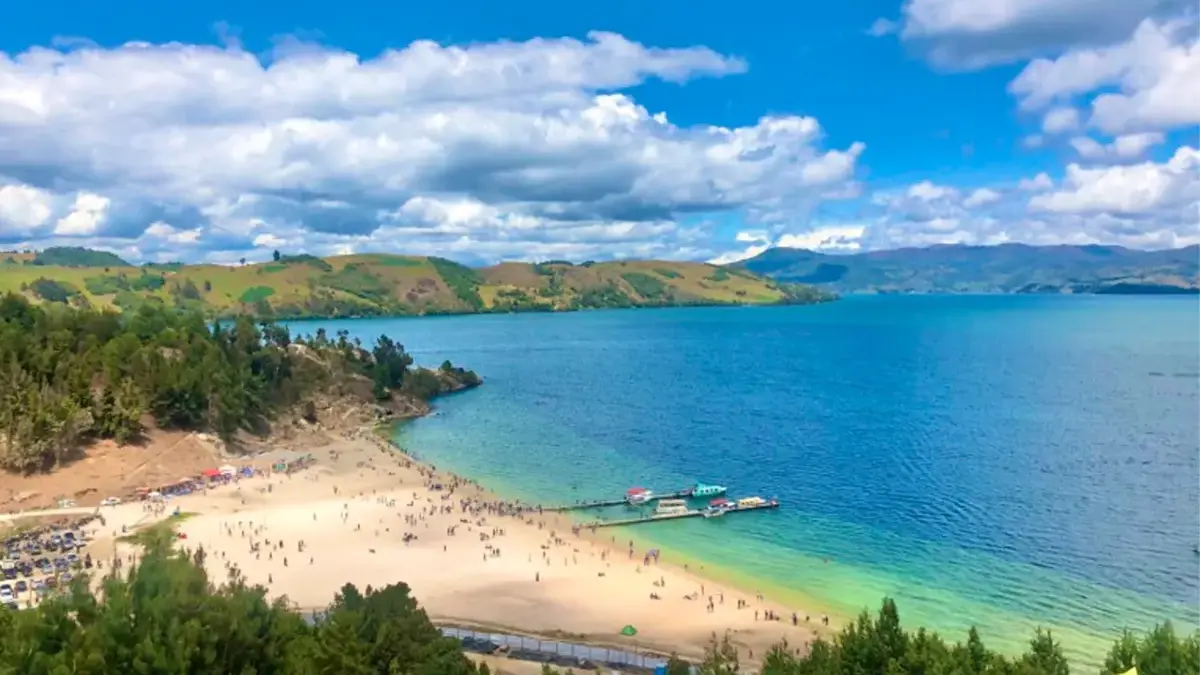
The legislative future of one of Colombia’s most vital and picturesque high-mountain ecosystems is currently being forged on the ground, far from the sterile marble halls of Bogotá. The Lake Tota (Lago de Tota), a magnificent glacial body of water perched high in the Andes of the Boyacá department, stands at the center of a groundbreaking legislative push. Bill 082 of 2026, officially registered in the House of Representatives on July 22, seeks an unprecedented paradigm shift: to recognize Lake Tota as an independent subject of rights.
Rather than treating the lake merely as an economic resource, a tourist attraction, or a municipal water reservoir to be managed and exploited, this visionary bill aims to grant the ecosystem its own distinct legal personhood. Under this legal framework, the lake would hold inherent rights to protection, conservation, maintenance, and ecological restoration. Crucially, it establishes binding legal mechanisms that empower both the Colombian State and the local communities living along its shores to act as legal guardians and authentic representatives of the ecosystem’s best interests.
Before the legislation enters its formal debate phase in congressional committees, the sponsors of the bill have prioritized a robust, decentralized participatory process. Three extensive public hearings have been mapped out across the municipalities directly linked to the lake’s watershed. This territorial outreach is designed to weave the voices, concerns, and traditional knowledge of farmers, indigenous-descendant communities, local producers, and environmental organizations directly into the text of the law.
The initiative is championed by prominent lawmakers, including Boyacá Representative José Luis Bohórquez, alongside a coalition of cross-party congressmen from both the House of Representatives and the Senate. If successful, Lake Tota will join a select, pioneering group of Colombian natural landmarks—such as the Atrato River and the Amazon rainforest—that have transcended traditional property and environmental law to become legal entities in their own right, fundamentally rewriting the relationship between human society and the natural world in South America.
Chronology of a Legislative Milestone
To understand the momentum behind Bill 082 of 2026, it is essential to trace the precise timeline of events that brought Lake Tota to this critical juncture in Colombia’s legislative history.
- July 22, 2026: Bill 082 of 2026 is officially filed in the Chamber of Representatives. Authored by a collective of parliamentarians led by Representative José Luis Bohórquez, the bill outlines the legal mechanisms necessary to designate Lake Tota as a subject of rights, detailing mandatory conservation duties and state-community co-administration structures.
- Early September 2026: Congressional committees and local authorities finalize the logistics for a mandatory pre-legislative participatory phase. Recognizing the failures of past top-down environmental decrees, organizers mandate that local stakeholders must directly shape the bill’s wording before it faces its first official congressional debate.
- September 18, 2026: The First Public Hearing takes place in the municipality of Aquitania, situated directly on the shores of Lake Tota. The session draws hundreds of local residents, cebollero (onion) farmers, fishermen, and environmental activists. Debates center on balancing agricultural productivity—particularly intensive onion farming—with urgent ecological conservation needs.
- September 24, 2026: The Second Public Hearing is held in Sogamoso, the major urban hub economically and culturally tied to the lake. Discussions broaden to regional impacts, industrial pressures, tourism management, and the hydro-electric and municipal water demands placed upon the watershed.
- Late September – October 2026 (Ongoing): Preparations intensify for the Third Public Hearing in the municipality of Tota. Simultaneously, legislative legal teams begin collating, analyzing, and synthesizing the thousands of proposals gathered during the territorial sessions to integrate them into the definitive draft of Bill 082.
- Late 2026 (Projected): Following the conclusion of the public hearings and the integration of community feedback, Bill 082 is scheduled to face its first formal debate in the congressional committee, marking the true beginning of its arduous journey toward becoming the law of the land.
Supporting Data and Ecological Context
To grasp why Lake Tota warrants the extraordinary legal protection of personhood, one must examine its staggering ecological significance, as well as the mounting pressures threatening its survival.
The Crown Jewel of Boyacá
Nestled at an altitude of approximately 3,015 meters (9,892 feet) above sea level in the Eastern Cordillera of the Colombian Andes, Lake Tota is the largest natural lake in Colombia and the second-highest navigable lake in South America. Covering a surface area of roughly 55 square kilometers, it holds an immense volume of fresh water that acts as the ecological heartbeat of the region.
The lake is not merely a scenic wonder; it is a life-sustaining powerhouse. It serves as the primary water source for municipal aqueducts, massive agricultural irrigation systems, and regional energy generation. Furthermore, Lake Tota is a globally recognized biodiversity hotspot. It hosts endemic species of flora and fauna, including unique aquatic plants and native fish populations that exist nowhere else on Earth. It is also a crucial sanctuary for migratory and resident bird species, acting as an irreplaceable wetland ecosystem within the high-altitude páramo and Andean forest transition zones.
The Anatomy of Crisis
Despite its majestic appearance, Lake Tota has suffered decades of severe environmental degradation. The ecosystem is currently besieged by multiple compounding threats:
- Agricultural Runoff: The shores of the lake, particularly around Aquitania, are renowned for intensive, large-scale onion cultivation. The heavy application of chemical fertilizers, pesticides, and herbicides has led to severe eutrophication—a process where excess nutrients trigger massive algal blooms that suffocate aquatic life and deplete dissolved oxygen levels.
- Deforestation and Soil Erosion: The stripping of native riparian forests around the lake’s perimeter has accelerated soil erosion, washing sediment directly into the lake bed and progressively shallowing its waters.
- Climate Change: Rising global temperatures and shifting weather patterns have altered the hydrological cycle of the surrounding mountains, diminishing glacial runoff and reducing water recharge rates for the basin.
- Pollution and Wastewater: Unregulated tourism, municipal sewage discharge, and solid waste accumulation have continuously degraded water quality, endangering public health and the economic activities tied to the lake.
These interconnected crises exposed the inadequacy of traditional environmental management tools, such as standard zoning laws or fines issued by regional autonomous corporations. This stark reality catalyzed the push for a radical legal remedy: giving the lake the constitutional right to defend itself.
Official Responses and Stakeholder Perspectives
The journey of Bill 082 has ignited intense dialogue among a diverse array of actors, ranging from high-ranking government officials to grassroots peasant organizations.
Congressional and Regional Leadership
Representative José Luis Bohórquez, one of the principal architects of the bill, has consistently emphasized that granting rights to the lake is not an act of economic sabotage against local farmers, but rather a long-term guarantee of their survival.
"We are not here to wage war against the hardworking people of Boyacá who draw their livelihoods from the land and water," Bohórquez stated during the Aquitania hearing. "On the contrary, this bill recognizes that if Lake Tota dies, the people of Aquitania, Sogamoso, and the entire province die with it. Giving rights to the lake means ensuring water security for generations to come, balancing human prosperity with ecological preservation."
Local governance bodies, including the regional environmental authority Corpoboyacá and the Governorate of Boyacá, have engaged constructively with the legislative process. While acknowledging the immense logistical and administrative challenges of implementing a rights-of-nature framework, official spokespersons have welcomed the collaborative spirit of the public hearings. Corpoboyacá representatives noted that institutional frameworks must evolve to incorporate binding community oversight, bridging the historical gap between state-led conservation policies and rural realities.
The Voices of the Communities
The public hearings in Aquitania and Sogamoso provided a platform for the true stakeholders of the watershed: the local inhabitants.
- The Farming Community: Many cebollero farmers expressed initial anxiety regarding how the bill might affect their daily agricultural practices. However, through open dialogue, discussions pivoted toward state-supported ecological transitions—such as subsidized bio-fertilizers, improved wastewater management infrastructure, and technical assistance for sustainable farming—rather than outright prohibitions.
- Environmental and Indigenous-Descendant Groups: Civil society organizations praised the bill for democratizing environmental stewardship. For grassroots activists, the inclusion of local communities as co-guardians of the lake represents a vital decentralization of power, moving away from centralized technocratic management that has historically failed to halt ecological decline.
- Fishermen and Tourism Operators: Local tourism and fishing cooperatives strongly endorsed the initiative, pointing out that years of environmental degradation, foul odors from algal blooms, and diminishing fish stocks have directly threatened their economic viability. For them, restoring the lake is an urgent economic imperative disguised as an environmental crusade.
Implications of the Rights of Nature in Colombia
To fully understand the weight of the Lake Tota initiative, one must look at the broader legal landscape of Colombia, a global pioneer in the Rights of Nature movement.
The Precedent: The Atrato River and Beyond
In 2016, the Colombian Constitutional Court issued the landmark Ruling T-622, declaring the Atrato River basin to be a subject of rights. Prompted by rampant, destructive illegal gold mining, toxic mercury contamination, and decades of armed conflict that devastated local Afro-descendant and indigenous communities, the Court mandated that the river possesses fundamental rights to protection, conservation, maintenance, and restoration.
Crucially, the Court established a novel governance model: a joint guardianship consisting of government ministries and local ethnic communities tasked with representing the river’s voice in legal and administrative matters. Following the Atrato ruling, other landmark ecosystems in Colombia—including the Colombian Amazon rainforest, the Pisba Páramo, and several other rivers—have achieved similar legal designations through judicial activism.
However, the journey of the Atrato River also serves as a sobering cautionary tale. Eight years after the historic ruling, the Atrato continues to suffer from illegal mining, environmental degradation, and institutional abandonment. Critics point out that declaring an ecosystem a subject of rights is merely the first step; without rigorous enforcement, robust state funding, political will, and genuine security guarantees, judicial victories risk remaining mere words on paper.
What Lake Tota’s Designation Changes
If Bill 082 of 2026 successfully passes through Congress and is signed into law, it will mark a historic milestone: the first time a major high-mountain lake in Colombia achieves legal personhood through an act of the legislature, rather than a judicial ruling by the Constitutional Court. This represents a mature evolution in Colombia’s legal architecture, demonstrating that the legislative branch is actively adopting the jurisprudence of nature’s rights.
The implications for Lake Tota are profound:
- Legal Standing: The lake will possess its own legal standing in Colombian courts. Any citizen, community group, or designated guardian will be able to file legal actions (Acciones de Tutela or Acciones Populares) directly on behalf of the lake to halt harmful projects, pollution, or administrative negligence.
- Mandatory Restoration Plans: The state will be legally compelled to draft, fund, and execute comprehensive, long-term ecological restoration and preservation plans for the entire watershed, subject to strict judicial oversight.
- Binding Co-Governance: By embedding community participation directly into the governance structure, the law will bridge the divide between local populations and state agencies, ensuring that those who live closest to the ecosystem hold real power in its protection.
- A National Blueprint: The success or failure of Lake Tota’s legal personhood will set a critical precedent for dozens of other imperiled lakes, lagoons, and water bodies across the Colombian Andes.
As the legislative process advances toward its first committee debate, all eyes are on Boyacá. The struggle for Lake Tota is far more than a regional legal battle; it is a profound test of humanity’s ability to evolve its legal systems, stepping away from the exploitation of nature and toward an era of constitutional harmony with the living Earth.




Leave a Reply