

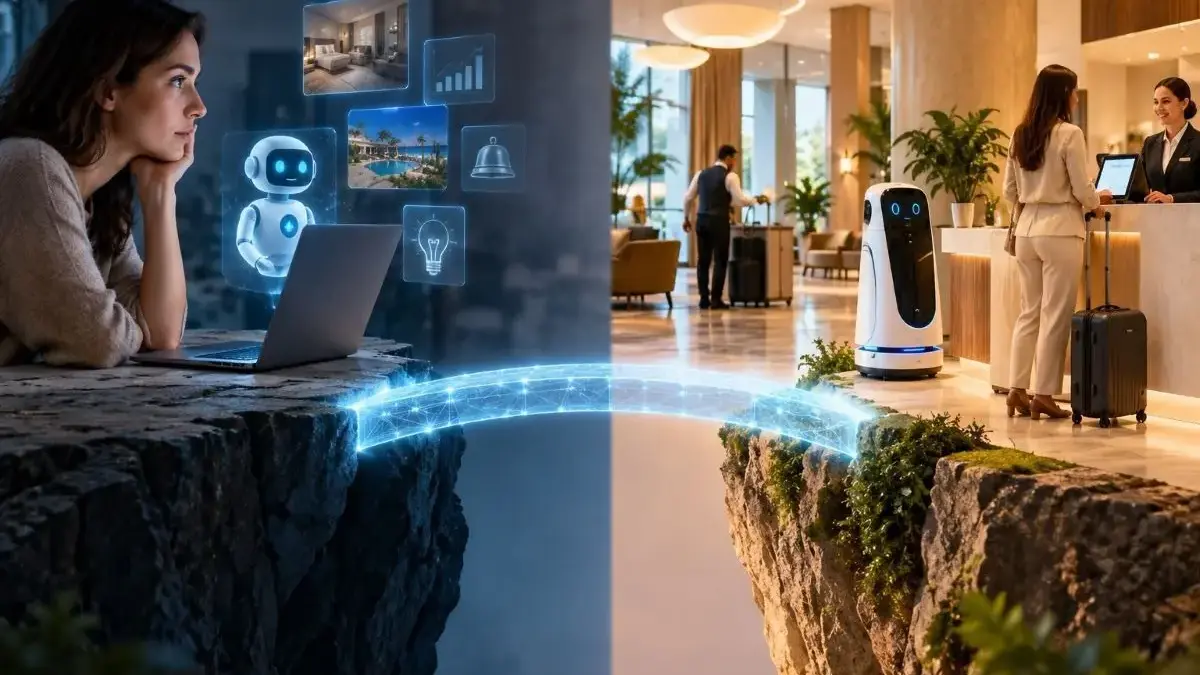
The travel distribution landscape is undergoing its most profound structural shift since the advent of online travel agencies (OTAs). As artificial intelligence redefines how consumers discover information, Spanish hospitality tech innovators Neobookings and Mirai are bypassing traditional web browsers entirely, enabling travelers to search, customize, and fully complete hotel reservations using natural language directly inside platforms like ChatGPT and Claude.
Main Facts: The End-to-End AI Reservation Era
The traditional hotel booking paradigm—where users scour search engines, land on hotel websites, navigate multi-step booking engines, and input payment details manually—is facing disruption. Two prominent Spanish hospitality tech providers, Neobookings and Mirai, have introduced groundbreaking integrations that allow travelers to execute complex transactions entirely within conversational AI interfaces.
Rather than merely acting as informational bridges or referral links—the current strategy employed by multinational hospitality giants like Hilton, Marriott, Accor, and Radisson—these new developments integrate the full transactional capabilities of a hotel’s direct channel into conversational models.
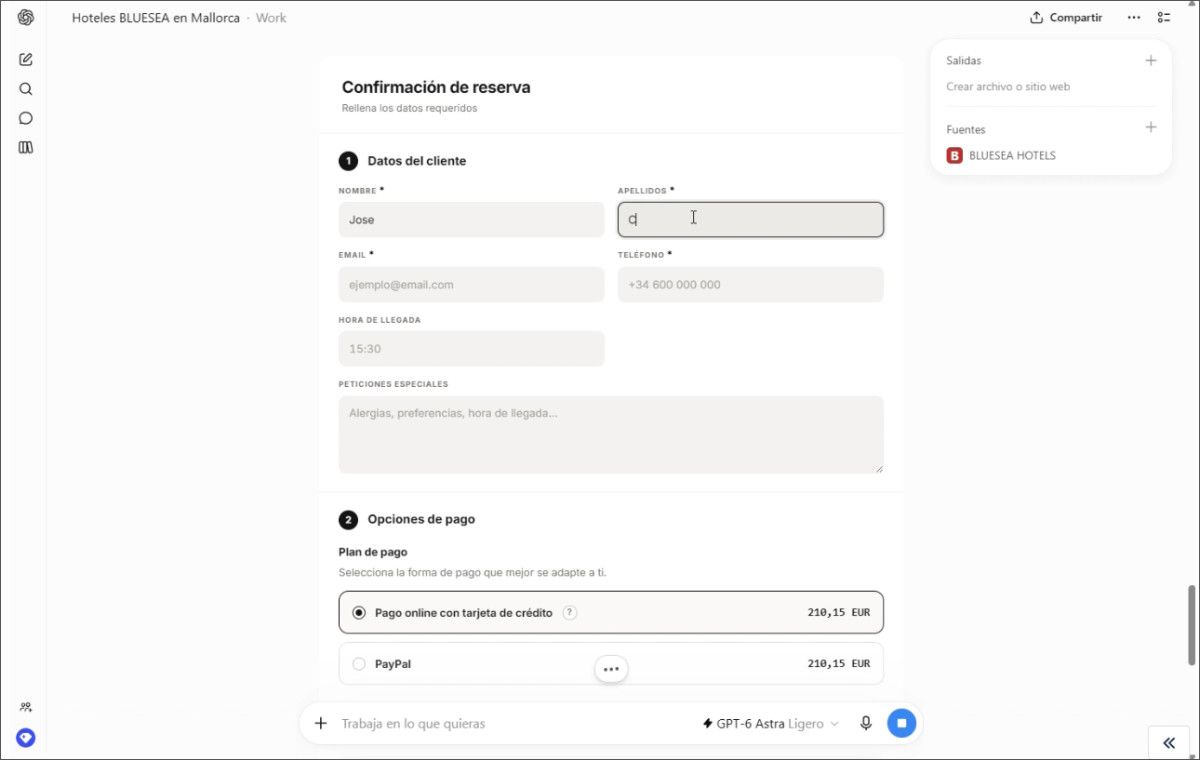
- Neobookings has launched NeoGPT, replicating a hotel’s complete booking engine interface—including interactive maps, room photo galleries, pricing calendars, add-ons, and secure payment gateways—inside ChatGPT and Claude.
- Mirai has rolled out specialized plugins for clients such as Madrid’s Hotel Emperador and Hotel Moderno, Porcel Hoteles in Granada, and Gloria Thalasso & Hotels in the Canary Islands. These plugins allow users to check real-time availability, apply multi-currency filters, manage promotions, and complete, modify, or cancel bookings natively via natural language.
- Both technological approaches rely on the Model Context Protocol (MCP), a standardized architecture that unifies hotel data into a clean, curated, and singular "source of truth" accessible by multiple AI agents and large language models (LLMs).
This transition moves the hospitality sector from a web-centric commerce model to an "agentic" ecosystem, where AI tools do not just recommend hotels, but transact on behalf of the consumer.
Chronology: From Static AI Prompts to Transacting Agents
The integration of artificial intelligence into hospitality distribution has evolved rapidly over the past few years, shifting from basic search visibility to full transactional integration.
Phase 1: Informational Visibility (2023–2024)
Initially, hospitality brands viewed AI primarily as an SEO challenge. Major hotel chains focused on feeding rich descriptive content to OpenAI, Google AI Mode, and other LLMs to ensure their properties appeared favorably when users asked for travel recommendations. During this phase, AI acted as a digital concierge or travel agent that could suggest a hotel, but inevitably redirected the user via an outbound link to complete the purchase on the brand’s proprietary web domain.
Phase 2: The Architectural Foundations (Late 2024–Early 2025)
Tech providers recognized that forcing a user to abandon a chat interface to complete a purchase created a point of friction. Behind the scenes, innovators like Neobookings and Mirai began laying down robust infrastructural layers, adopting frameworks like the Model Context Protocol (MCP) to normalize fragmented hotel databases, inventory systems, and pricing rules into a format that AI agents could query natively without data degradation.
Phase 3: The Conversational Breakthrough (Late 2025–2026)
The paradigm shifted decisively as AI developers opened up APIs and plugin support for advanced multi-modal capabilities.
- Neobookings began developing NeoGPT roughly a year and a half prior to its public deployment, focusing heavily on rendering rich UI elements (such as maps, calendars, and image carousels) inside chat environments.
- Mirai successfully launched its transaction-ready plugins, allowing selected hotel clients to process live bookings, modifications, and cancellations natively within ChatGPT.
Today, the industry stands at the threshold of the voice-first era, where text prompts are rapidly giving way to spoken interactions that execute complex multi-room reservations autonomously.
Supporting Data & Technological Architecture
The success of these conversational booking systems relies on sophisticated backend engineering capable of bridging legacy hospitality software with cutting-edge generative AI.
Neobookings and NeoGPT: 18 Interactive Elements
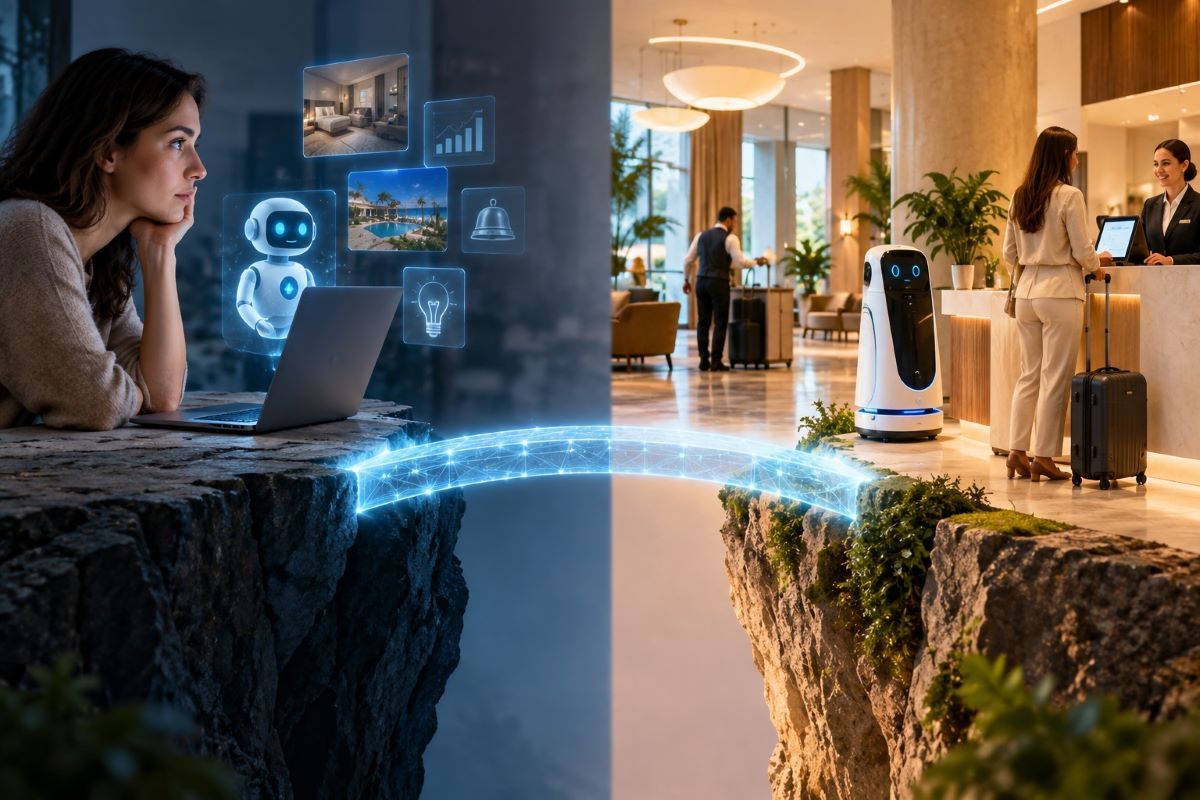
Neobookings’ approach is rooted in the philosophy that visual stimuli—such as high-resolution photography, room layouts, and precise dates—are critical to consumer decision-making, often preceding price comparisons.
To achieve this within a text-centric chat environment, NeoGPT incorporates at least 18 distinct types of interactive user interface elements directly inside ChatGPT and Claude. These include:
- Dynamic location maps displaying surrounding hotel properties.
- Region, zone, and amenity filters.
- Comprehensive hotel profiles containing contact details, address data, and terms of service.
- Real-time pricing calendars and multi-tier rate displays.
- Adult and child occupancy selectors.
- Room visualization galleries detailing specific board types (e.g., room-only, half-board, all-inclusive).
- Ancillary service upsells, such as breakfasts, parking reservations, and late check-outs.
- Integrated secure form fields and checkout summaries complete with booking locators.
Mirai’s Plugin Ecosystem and Real-Time Capabilities
Mirai approaches the challenge through a network of specialized plugins. Rather than attempting to render a complete browser-like user interface inside the chat window, Mirai exposes the deep transactional engine of the hotel’s direct channel.
Operating in real-time, Mirai’s system handles:
- Live synchronization of room inventory and dynamic pricing.
- Multi-currency conversion for international travelers.
- Automated application of promotional codes and special member discounts.
- Post-booking lifecycle management, including reservation modifications and cancellations.
The Unified Backbone: Model Context Protocol (MCP)
Underpinning both technologies is the Model Context Protocol (MCP). This architecture allows tech providers to process, normalize, and curate disparate hotel databases into a unified knowledge repository.
According to technical leads, this ensures that whether a consumer interacts with a specialized ChatGPT application, an on-site website chatbot, or an advanced in-car voice assistant, every AI agent queries the exact same "source of truth." This eliminates pricing discrepancies, inventory sync errors, and outdated facility information across distribution channels.
Official Responses and Industry Perspectives
The introduction of fully transactional AI channels has elicited strong reactions from industry leaders, highlighting both the immense opportunities and the operational hurdles ahead.
The Frictionless Conversion Argument: Neobookings
For Raúl Blanco, Head of AI at Neobookings, forcing a consumer out of a conversational environment during the final stages of a purchase is a critical design flaw.
"Each jump outside of the conversation increases the risk of losing the sale," Blanco warns.
After decades of meticulous user-experience (UX) optimization designed to reduce friction in traditional web-based booking engines, Blanco argues that dragging a traveler back to a traditional landing page just as they are ready to buy is counterproductive. By packing the chat interface with rich media, interactive maps, and complete checkout paths, Neobookings aims to protect conversion rates. Looking forward, Blanco notes that voice integration will make spoken bookings commonplace, with the ultimate milestone arriving when AI agents can execute entire travel itineraries autonomously without active human intervention.
The Operable Channel Strategy: Mirai
For Mirai, the strategic imperative centers on transforming the direct channel from a static destination into an active participant in conversational networks. Pablo Delgado, Executive Partner and CEO for the Americas at Mirai, underscores the urgency of this transition:
"The challenge for hotels is no longer solely about being discoverable by AI, but ensuring their direct channel is also operable by it—meaning an agent can understand the hotel, check availability and prices, and drive the reservation to completion."
Delgado points out that major Online Travel Agencies (OTAs) are aggressively adapting their infrastructure to dominate this new agentic environment. Consequently, independent hotels and direct distribution channels must match that agility.
"Being discoverable will allow a hotel to be part of the conversation; being operable will allow it to compete for the reservation," Delgado concludes.
Industry Implications: The Shift Toward Agentic Commerce
The deployment of NeoGPT and Mirai’s plugins carries profound implications for the global travel distribution ecosystem.
1. The Marginalization of Traditional Landing Pages
As consumers grow accustomed to conversing with AI agents to plan complex trips, the traditional browser journey—where users visit multiple individual hotel websites to compare prices and amenities—will likely decline. If an AI can query inventory, compare room views, apply discount codes, and process payments natively within a single prompt thread, the hotel’s homepage risks becoming an invisible backend database rather than a primary storefront.
2. Direct Channel Versus OTA Dominance
Historically, OTAs like Booking.com and Expedia have dominated digital acquisition by offering frictionless, aggregated shopping experiences. By equipping the hotel’s direct channel with native AI transactional capabilities, tech providers like Mirai and Neobookings arm independent hotels with the tools to fight back. Instead of losing high-margin direct bookings to third-party intermediaries who control the customer interface, hotels can now meet consumers directly inside the world’s most popular AI platforms.
3. The Unresolved Discoverability Dilemma
Despite the technological triumphs, significant hurdles remain. Industry analysts note that the current plugin and custom app ecosystems are fragmented. Consumers do not necessarily know which individual hotel plugins exist within platforms like ChatGPT or Claude, nor do they want to manually install dozens of disparate tools for every brand they consider. The future success of these tools will depend heavily on how AI platforms choose to surface, recommend, and index these transactional capabilities during the initial inspiration and discovery phases of travel planning.
4. Preparing for the Voice-First Future
Both Neobookings and Mirai are deliberately building their infrastructures with voice activation in mind. As smart speakers, wearable devices, and in-car assistants become primary computing interfaces, consumers will no longer look at screens to book rooms. They will speak conversational commands: "Book a sea-view room in Gran Canaria for under €200 a night next weekend."
Technologies built on standardized protocols like MCP ensure that hotels are not merely ready for the text-based chat windows of today, but are fully equipped to capture the autonomous, voice-driven commerce of tomorrow.



Leave a Reply