

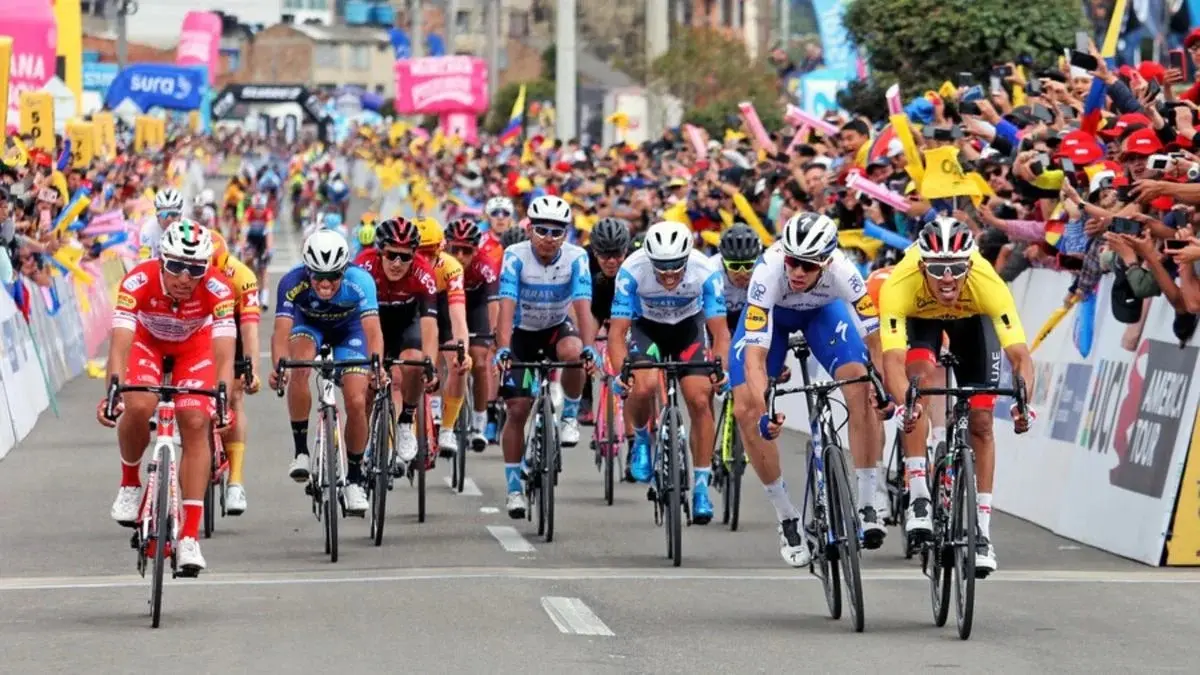
BOGOTÁ, Colombia — In what is being hailed as the most significant boost to Latin American cycling in half a decade, the Colombian Cycling Federation (FCC) has officially announced the resurrection of the Tour Colombia. After a multi-year hiatus driven by financial constraints and infrastructural hurdles, the UCI 2.1-categorized race is slated to make its triumphant return to the international calendar. Scheduled to run from January 26 to January 31, 2027, the event promises to inject the early-season UCI WorldTour with the unmatched passion, grueling terrain, and festive atmosphere that only Colombian fans can provide.
For a nation that breathes cycling, the news remedies a glaring void in the global racing ecosystem. The race, which historically draws some of the biggest names in the sport—including past participants like Egan Bernal, Rigoberto Urán, Nairo Quintana, and multiple Tour de France champions—will once again serve as an explosive early-season testing ground.
Main Facts: The 2027 Tour Colombia at a Glance
The resurrection of the Tour Colombia is not merely a local sporting event; it is a major logistical and strategic milestone for international cycling.
- Dates: January 26 – January 31, 2027.
- UCI Classification: UCI 2.1, attracting UCI WorldTour, ProTeam, and Continental squads.
- Strategic Placement: It will take place during the opening weeks of the international cycling calendar, positioning itself just three days after the inaugural Tour of Mexico and exactly one week before the Colombian National Road Championships.
- Host Region (Pending Finalization): The Department of Antioquia has emerged as the frontrunner to host the entirety of the competition, leveraging its iconic mountain passes and cycling-obsessed culture.
- Historical Context: The race was last held in February 2024 (won by Alejandro Osorio, with Egan Bernal and Iván Sosa rounding out the podium) before financial shortages forced another suspension. Prior to that, the race suffered a pandemic- and funding-induced drought following its 2020 edition.
Chronology of a Comeback: How the 2027 Edition Was Forged
To understand the magnitude of the 2027 return, one must look at the turbulent timeline that brought the race to its knees and the diplomatic efforts required to bring it back to life.
2018–2020: The Golden Era
When the race debuted in 2018 under the banner of Colombia Oro y Paz, it was an instant success. European WorldTour teams eagerly traveled to South America, enticed by ideal weather, thousands of fanatical spectators lining the roads, and brutally steep climbs. Riders like Egan Bernal, Chris Froome, and Julian Alaphilippe treated global audiences to breathless racing at high altitudes. Subsequent editions in 2019 and 2020 cemented the race as a prestigious fixture on the early-season calendar.
2021–2023: The Financial Winter
Following the onset of the global COVID-19 pandemic, economic instability and a lack of institutional backing crippled the event. Despite repeated efforts by the Colombian Cycling Federation to secure private sponsorships and regional government funding, the race remained sidelined for three consecutive years, leaving a gaping hole in the preparation schedules of South America’s elite climbers.
February 2024: A Brief Respite
In early 2024, a monumental financial and logistical effort brought the Tour Colombia back. Held across Boyacá and Cundinamarca, the race was a resounding sporting success. However, structural financial insecurity threatened its immediate continuation, leading to another period of silence through 2025 and 2026.
Late 2026 (Current Context): The UCI Leak and Official Confirmation
Rumors began swirling through international cycling media outlets weeks prior to the official announcement, as analysts combed through newly minted UCI calendar drafts. The leaks were confirmed by the Colombian Cycling Federation in mid-November: the Tour Colombia 2.1 is officially locked in for late January 2027.
Supporting Data and the Latin American Early-Season Circuit
The 2027 edition will not exist in a vacuum; its placement on the calendar establishes a brand-new, lucrative, and logistically efficient Latin American racing block.
The New Pan-American January Axis
- Mid-January 2027: The debut of the Tour of Mexico, a newly minted UCI-ranked race designed to capture the attention of teams heading to the Americas.
- Late January 2027 (Jan 26–31): The Tour Colombia 2.1, offering WorldTour squads a high-altitude crucible to test their climbers’ early-season form.
- Early February 2027 (First week): The Colombian National Road Championships, giving domestic and international riders a seamless transition into national pride battles.
Altitude and Geography: The Ultimate Physiological Test
For European teams, racing in Colombia offers a distinct physiological advantage: altitude training combined with race intensity. Most stages of the Tour Colombia sit comfortably above 2,500 meters (over 8,200 feet) above sea level, pushing cardiovascular systems to their absolute limits. The data collected by team coaches during these six days often dictates Grand Tour rosters for the remainder of the season.
Official Responses and Regional Leadership: Antioquia Steps Up
The revival of the race triggered an immediate scramble among regional governments eager to showcase their territories to a global television audience. While initial exploratory meetings involved several political capitals across the country, the Department of Antioquia has seized the initiative.
The Antioquian Bid
Antioquia, historically the heartland of Colombian cycling and the birthplace of legends like Rigoberto Urán, Sergio Henao, and Fernando Gaviria, has positioned itself as the definitive home for the 2027 edition.
High-level negotiations have been spearheaded by key regional figures:
- Andrés Julián Rendón, Governor of Antioquia: Rendón has publicly championed the event as a catalyst for regional tourism, economic stimulation, and athletic inspiration. Speaking to local press, the Governor emphasized that Antioquia possesses the hotel infrastructure, security framework, and world-class mountain roads required to host an event of UCI 2.1 magnitude.
- Federico Gutiérrez, Mayor of Medellín: Medellín’s mayor has echoed the Governor’s enthusiasm, highlighting the city’s capacity to host massive sporting spectacles. Discussions are already underway regarding potential stage routes that would wind through the Aburrá Valley before ascending into the brutal Andean peaks that flank the region.
Resilience in the Face of Adversity
The commitment of Antioquia’s leadership carries deep emotional and symbolic weight for local sports fans. Earlier in the year, the region was slated to host the dramatic final stages of the prestigious Vuelta a Colombia—including a high-profile finale in the upscale El Poblado district of Medellín. However, a major seismic event on August 10 forced the emergency cancellation of those stages to prioritize public safety and disaster relief.
The successful bid for the 2027 Tour Colombia serves as a sporting redemption for the region, transforming past heartbreak into a future celebration of resilience and athletic glory.
Implications for the World of Cycling
The return of the Tour Colombia carries profound implications for the global cycling economy, talent development pipelines, and fan engagement.
1. A Lifeline for Domestic Teams
While WorldTour squads benefit from early-season sunshine and altitude, continental and national Colombian teams stand to gain the most. For young riders plying their trade in domestic circuits, the Tour Colombia is a golden ticket. It is a rare opportunity to race shoulder-to-shoulder with Grand Tour winners, catch the eye of European talent scouts, and secure professional contracts abroad.
2. Global Broadcast and Tourism Impact
Cycling tourism is a booming industry, and showcasing Colombia’s breathtaking Andean landscapes to millions of viewers across Eurosport, GCN/Max, and global networks generates unprecedented visibility. Local hoteliers, restaurateurs, and tour operators anticipate a massive influx of international cycling tourists eager to ride the exact same mountain passes conquered by the professionals.
3. Strengthening the Sport’s Global Footprint
As the UCI continues to push for globalization—expanding calendars into Asia, the Middle East, and the Americas—the integration of the Tour of Mexico and the Tour Colombia creates a robust, sustainable early-season block. It reduces travel friction for teams willing to cross the Atlantic, making a multi-week South and North American racing bloc economically and logistically viable.
Conclusion: A Nation Prepares for the Roar of the Peloton
As January 2027 approaches, anticipation in Colombia is reaching a fever pitch. The restoration of the Tour Colombia is more than just the filling of a calendar slot; it is the restoration of national sporting pride.
From the steep, winding switchbacks of Antioquia to the millions of fans massed along the roadside waving the yellow, blue, and red flag, the message is clear: Colombian cycling is back, and it is ready to conquer the world once again.

Leave a Reply