

BARCELONA — In an era where artificial intelligence promises instantaneous, clinical responses to our most complex travel aspirations, the traditional travel agency stands at a defining crossroads. Far from the doomsday predictions that once forecasted their complete extinction—frequently compared to the fate of woolly mammoths—travel intermediaries are proving remarkably resilient. Yet, as the industry gazes toward 2026, it must urgently recalibrate.
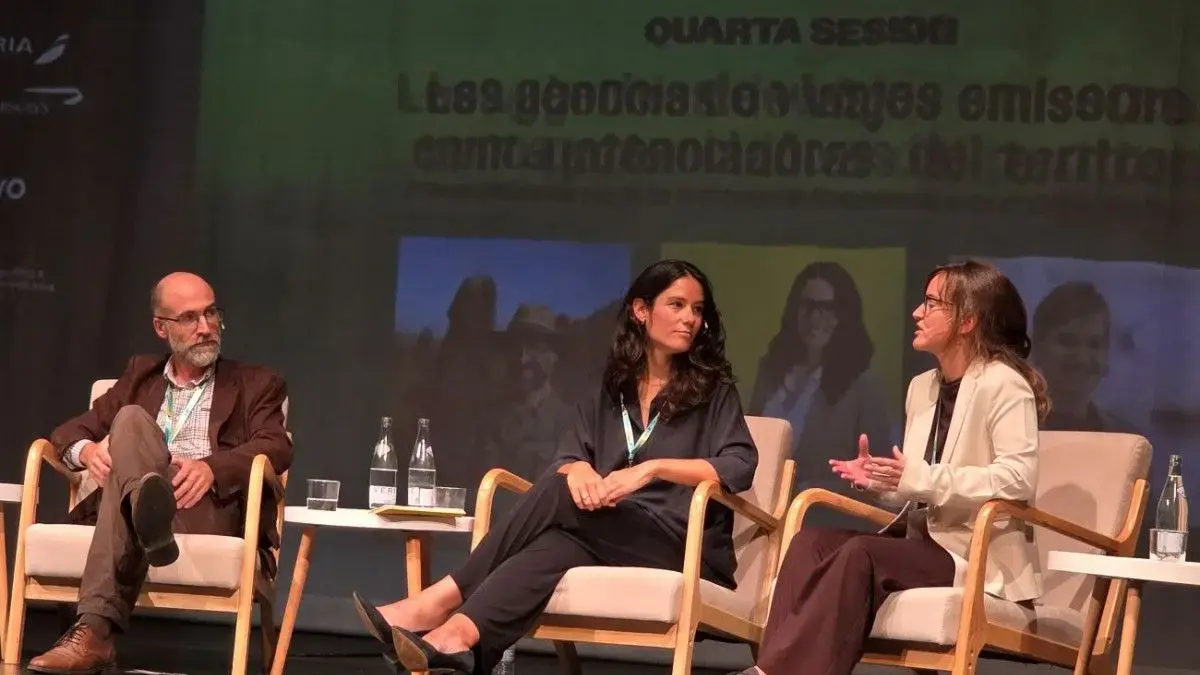
How can travel agencies meaningfully connect with a polyhedral, hyper-segmented, and hyper-connected traveler? This central question dominated the recent ACAVE (Asociación Corporativa de Agencias de Viajes Especializadas) Forum in Barcelona, where industry leaders converged to debate the survival, adaptation, and ultimate reinvention of the outbound travel sector.
Rather than succumbing to automated algorithms, the consensus emerging from the forum points to a definitive truth: human prescription, professional criteria, and the expert management of complexity are the ultimate competitive advantages in modern tourism.
1. Main Facts: The Structural Realities Facing the Outbound Channel
The landscape of outbound travel is undergoing a profound structural transformation. While Spain proudly maintains its position as the ninth-largest outbound tourism market in the world—having recently surpassed Italy and South Korea—the ecosystem supporting this market faces severe systemic pressures.
Opening the ACAVE Forum, Rosó Morlà, First Vice President of the association, tackled the historical myth of the profession’s extinction. She reminded attendees that despite years of technological disruption predicting the death of the travel agent, the sector has repeatedly adapted. However, Morlà emphasized that the road to 2026 is lined with four distinct structural tensions:
- The Generational Relaying Crisis: The sector faces an alarming talent gap, evidenced by a staggering 50% drop in enrollments across university tourism faculties and vocational schools over the past four years.
- The Technological Disruption of AI: The rapid, ubiquitous penetration of generative AI forces agencies to redefine their value proposition beyond mere itinerary planning.
- Social and Political Friction: A growing social pushback against mass tourism in various public and municipal debates creates an unpredictable operational backdrop.
- The Visibility Deficit: Despite Spain’s weight as a global tourism emitter, the specific value of the outbound travel market remains persistently underappreciated in broader economic narratives.
Compounding these challenges is a fundamental shift in consumer behavior. As Laura Cardona, Director of the B-Travel fair, pointed out, today’s consumer is "polyhedral." A single individual cycles through entirely different phases, budgets, and motivations depending on the moment, rendering old demographic generalizations obsolete.
Illustrating this fluidity, Marta Puigví, an executive at Vueling, noted that roughly 20% of the airline’s ticket sales correspond to corporate business travel. Yet, that exact same professional—flying on a Tuesday for a corporate meeting—pivots seamlessly into a leisure tourist come the weekend. This hyper-segmentation demands a natural, hyper-niche specialization from travel agencies.
However, this specialization crashes directly into a persistent psychological barrier among younger demographics. Consumers under the age of 30 frequently perceive traditional travel agencies as rigid gatekeepers offering static, closed-off "package products" with zero room for personalization. To dismantle this prejudice, agencies are actively pivoting their commercial narratives away from mere product sales toward concepts rooted in immersive experiences, personal transformation, and digital-era community building.
2. Chronology: The Evolution of the Tourism Debate
To understand how travel agencies arrived at this juncture, it is vital to trace the evolution of how tourism is conceptualized, sold, and consumed. During the ACAVE Forum, renowned geographer Jordi Canal-Soler, representing the Geographical Society of Catalonia, outlined a fascinating three-stage historical chronology in the marketing of tourism products:
Phase 1: The Era of Geography and Logistics (The 20th Century)
For decades, the primary role of the travel agent was logistical and geographical. In a world before widespread internet access, low-cost carriers, and digital mapping, the agency’s core function was to bridge physical distances. Agents sold tickets, secured physical hotel vouchers, and connected travelers to faraway maps. The value was transactional: getting the client from Point A to Point B safely.
Phase 2: The Era of Commodification and Information Abundance (Late 1990s – 2010s)
With the advent of the digital revolution, online travel agencies (OTAs), and metasearch engines, raw geographical information became commodified. Suddenly, anyone with an internet connection could book their own flights and hotels. The traditional travel agency faced its first existential panic. In response, many pivoted toward curating bundled packages, competing largely on price and destination catalogs.
Phase 3: The Era of Transformation and Experience (The AI Era & Beyond)
Today, we have entered a third paradigm. As Canal-Soler argued during the forum, information is no longer scarce; it is overwhelming. Consequently, the contemporary journey must deliver a deeper purpose.
"If there is no internal transformation within the person, the trip runs the risk of remaining empty," Canal-Soler asserted.
In this current stage, travel is no longer about checking monuments off a list. It is about personal growth, emotional resonance, and curated human experiences. This deep psychological learning and transformation represent the ultimate value proposition that modern agencies must project to the public.
3. Supporting Data & Insights: The Paradox of the Digital Traveler
The friction between high-tech automation and human desire was a recurring theme among the experts gathered in Barcelona. Data and qualitative observations reveal a fascinating paradox: the more digitized travelers become, the more they crave human reassurance.
- The 50% Talent Decline: The drop in tourism school enrollments highlights an urgent need for the industry to brand itself as a dynamic, technologically advanced career path rather than a legacy administrative sector.
- The 20% Business-Leisure Overlap: Vueling’s data showing that a fifth of business flyers are simultaneous leisure travelers underscores the fragmentation of modern travel patterns, requiring agile booking and counseling channels.
- The AI "Pause": According to insights shared by Laura Cardona, even tech-savvy digital natives who meticulously map out their itineraries using generative AI algorithms routinely execute a psychological "pause" just before confirming their bookings. At this critical juncture, they step away from the screen to seek validation, human contact, and peace of mind from a trusted advisor—whether that is a family member or a professional travel agent.
This behavioral quirk exposes the industry’s greatest communication failure: while the human "sanity check" is immensely valuable, agencies have historically done a poor job marketing this specific safety net to consumers who assume algorithms can handle everything.
4. Official Responses and Expert Perspectives
The ACAVE Forum brought together municipal leaders, airline executives, fair directors, and cultural geographers to dissect these trends. Their official responses paint a comprehensive picture of an industry striving for balance.
José Antonio Donaire: The Commissioner for Sustainable Tourism
José Antonio Donaire, Commissioner for the Barcelona City Council for the Sustainable Management of Tourism, offered a philosophical yet pragmatic defense of the travel profession.
Donaire emphasized that tourism is structurally immune to permanent decline because the urge to explore is hardwired into human biology. "We are nomads by nature, and tourism embodies the desire to discover what lies beyond the horizon," he noted.
Addressing the modern deluge of data, Donaire argued that the greatest challenge for the contemporary traveler is no longer finding information, but making a choice. In a saturated market, professional criteria serve as the ultimate navigational compass. Furthermore, Donaire positioned travel agencies as crucial allies for public administrations. By working closely with local governments, agencies can help drive "good tourism"—a model that successfully redistributes and diversifies tourist flows across both geographic territory and seasonal calendars, alleviating pressure on congested hotspots.
Marta Puigví: The Reality of Crisis Management
Speaking from the perspective of aviation logistics, Vueling’s Marta Puigví stressed that an agent’s true worth is tested not when things go according to plan, but when they catastrophically fail.
While AI can draft a lovely itinerary on a sunny afternoon, it cannot physically rebook a stranded family when a volcanic ash cloud grounds flights, a geopolitical conflict erupts, or extreme weather paralyzes a hub. Puigví underscored that professional prescription at the booking stage is only half the battle; the true differentiating value of an agency lies in its real-time operational response and crisis management during disruptions. To maintain this edge, she warned that agencies must aggressively update their technological back-ends to match the speed of modern aviation.
5. Implications: What Lies Ahead for Travel Agencies in 2026 and Beyond
As the tourism sector looks squarely toward 2026, the implications of the ACAVE Forum are stark, actionable, and transformative. Agencies can no longer survive as mere ticket-sellers or passive intermediaries of pre-packaged goods. To thrive in the age of artificial intelligence, they must evolve across several strategic fronts:
Embracing the "Exception as the Norm"
As José Antonio Donaire astutely noted, the global geopolitical and environmental landscape is entering a permanent state of volatility. Climate extremes, sudden regulatory shifts, and regional conflicts mean that unexpected crises will no longer be rare anomalies; "the exception will be the norm." Algorithms are notoriously brittle when confronted with unprecedented black-swan events. Human resilience, creative problem-solving, and professional empathy will remain entirely outside the reach of machine learning.
Bridging the Communication Gap
Agencies must overhaul how they market themselves to younger generations. Overcoming the outdated perception of offering rigid, "closed products" requires transparent storytelling centered on co-creation, bespoke tailoring, and experiential depth. Agencies must explicitly market the "human pause"—the reassurance, security, and emotional intelligence that no chatbot can replicate.
Rebuilding the Talent Pipeline
The structural decline in tourism education enrollment is an existential threat that the private sector and industry associations must tackle head-on. Elevating the profile of the modern travel advisor—equipping them with cutting-edge data tools while emphasizing human emotional intelligence—will be critical to attracting the next generation of creative minds.
Conclusion
Ultimately, the rise of artificial intelligence does not spell the end of the travel agent; rather, it acts as a great filter. By stripping away routine administrative tasks, AI frees human agents to focus on what they do best: understanding the complex, polyhedral desires of the modern traveler, crafting transformative journeys, and standing as a reliable anchor when the unexpected occurs. In a world drowning in synthetic answers, the human touch is no longer just a luxury—it is the ultimate destination.


Leave a Reply