

Executive Summary
Colombia’s agricultural landscape is undergoing a profound transformation, anchored by one of the most successful agro-industrial ventures of the decade: the Hass avocado. According to official data from the Colombian Agricultural Institute (ICA) and sectoral projections, registered Hass avocado acreage in Colombia reached 39,474 hectares in 2026, marking a 6% expansion compared to the previous year.
This steady, strategic growth reinforces the economic dominance of the "green gold" industry across several mountainous regions of the country. Yet, alongside this territorial expansion comes a critical paradigm shift. Industry leaders, producers, and trade associations are no longer measuring success solely by the number of newly planted hectares. Instead, the overriding strategic imperative for 2027 and beyond is to dramatically elevate the productivity, agronomic management, and yield efficiency of existing farms.
Backed by robust export performance—recording 88,194 exported tons valued at approximately US$168.9 million during the first half of 2026 alone—and a formidable socio-economic footprint that sustains upwards of 240,000 rural livelihoods, the Colombian Hass avocado sector stands at a crossroads. This in-depth report examines the geographic distribution, macroeconomic impact, export dynamics, environmental advantages, and future trajectory of Colombia’s flagship agricultural export.
1. Main Facts and Geographic Distribution
The steady climb of the Hass avocado in Colombia is not a random phenomenon; it is the result of favorable agro-climatic conditions, targeted sanitary controls, and rigorous institutional oversight. The ICA serves as the primary guardian of this expansion, ensuring that registered orchards meet the strict phytosanitary standards demanded by international buyers.
Territorial Concentration by Department
While avocado cultivation occurs across multiple departments, production is heavily concentrated in the Andean region, where altitude, microclimates, and rich volcanic soils create an ideal habitat for Persea americana. According to figures compiled by Corpohass, the national corporation of Hass avocado producers and exporters, the territorial breakdown paints a clear picture of regional leadership:
- Antioquia: Standing as the undisputed powerhouse of the national industry, Antioquia commands the lion’s share of production with 14,258 registered hectares. Its municipalities boast advanced logistical networks, experienced labor pools, and sophisticated packing facilities.
- Caldas: Securing second place, Caldas accounts for 9,495 hectares, leveraging its steep slopes and favorable thermal floors to produce high-quality fruit with excellent oil content.
- Valle del Cauca: Registering 5,753 hectares, Valle del Cauca plays a crucial bridging role, connecting Andean growing conditions with efficient transit corridors toward Pacific ports.
- Quindío: Famed for its coffee-growing heritage, Quindío has successfully diversified into avocado cultivation, housing 3,221 hectares dedicated to the Hass variety.
- Risaralda: With 2,172 hectares, Risaralda contributes significantly to the Coffee Cultural Landscape’s agro-export portfolio.
- Tolima: Rounding out the primary producing departments, Tolima accounts for 2,110 hectares, capitalizing on its diverse topography and expanding infrastructure.
The remaining acreage is distributed across other departments where emerging producers are adopting modern agricultural technologies to enter the global supply chain.
2. Chronology of a Agro-Industrial Phenomenon
To understand how Colombia transformed from a domestic consumer market into a major global supplier of Hass avocados, it is necessary to trace the historical milestones that shaped the industry over the past two decades.
Phase I: The Awakening (Early 2000s – 2010)
For decades, avocados consumed in Colombia were predominantly native, thick-skinned, tropical varieties grown in backyards or mixed agroforestry plots. The commercial potential of the Hass variety—prized internationally for its rich flavor and post-harvest resilience—was recognized by pioneering entrepreneurs and agricultural researchers in the mid-2000s. Early investments were risky, hampered by a lack of specialized technical assistance and rudimentary supply chains.
Phase II: Institutional Alignment and Phytosanitary Certification (2011 – 2018)
Recognizing the export potential, the Colombian government, through the Ministry of Agriculture and the ICA, began formalizing the sector. Protocols were established to guarantee pest-free zones (particularly against fruit flies and Stenoma catenifer). The foundation of Corpohass in this era unified producers, establishing traceability systems that satisfied stringent European Union phytosanitary requirements. During this window, foreign direct investment began flowing into land acquisition and state-of-the-art packing plants.
Phase III: The Export Boom and Market Diversification (2019 – 2024)
Armed with official protocols and year-round production capabilities—courtesy of Colombia’s equatorial location, which allows for multiple harvest windows—Colombian Hass broke into premium international markets. Trade agreements and diplomatic efforts opened the doors to the United States, European Union member states, and eventually Asian markets. Despite global supply chain disruptions during the pandemic, the sector displayed remarkable resilience, registering double-digit annual growth in acreage and export volume.
Phase IV: Consolidation and the Productivity Imperative (2025 – Present)
By 2026, with registered acreage touching 39,474 hectares (a 6% year-over-year increase), the industry realized that unbridled territorial expansion was reaching physical and environmental limits. Leaders pivoted toward intensification. The focus for 2027 shifted decisively from planting more land to extracting more value, consistency, and yield per hectare through precision agriculture, soil health management, and advanced genetics.
3. Supporting Data: Socio-Economic Impact and Export Metrics
The macroeconomic footprint of the Hass avocado extends far beyond farm gate revenues. It represents a vital engine of rural development, formal employment, and foreign exchange generation.
Employment and Social Fabric
Agriculture in Colombia has historically suffered from informality and underemployment. The Hass avocado value chain, however, operates under stringent international standards that demand structured labor practices.
- Direct Employment: The industry currently generates more than 82,000 direct jobs. These positions span highly specialized agricultural roles—such as pruning, fertilization, and integrated pest management—as well as labor-intensive harvesting, rigorous sorting, packing plant operations, and cold-chain logistics.
- Indirect Livelihoods: Beyond the farm gates, an estimated 235,000 to 240,000 people depend directly or indirectly on the avocado economy. This includes input suppliers, transport companies, box manufacturers, financial service providers, and local commercial establishments in rural towns that experience economic revitalization.
Foreign Trade Performance
According to data from the National Administrative Department of Statistics (DANE) and the National Directorate of Taxes and Customs (DIAN), the export performance of Colombian Hass avocado remains remarkably robust.
- First Semester 2026 Metrics: During the first six months of 2026, Colombia exported 88,194 metric tons of Hass avocados, generating foreign sales totaling approximately US$168.9 million.
- Destination Markets: Approximately 76% of Colombia’s export volume is absorbed by two major economic blocs: the European Union (led by the Netherlands, the United Kingdom, Spain, and Germany) and the United States.
- Diversification Efforts: While North America and Europe remain the primary anchors, exporters are actively expanding their footprints into emerging markets in South America, the Middle East, and Asia, seeking to insulate the sector from localized market shocks or oversupply cycles.
4. Official Responses and Industry Leadership
As the sector navigates its transition from rapid expansion to qualitative consolidation, industry executives and agricultural authorities have articulated clear strategic visions for the coming years.
The Voice of Corpohass
Katheryn Mejía, Executive President of Corpohass, underscored the urgency of the new strategic phase during a recent sectoral briefing.
"The industry of the Hass avocado in Colombia has achieved an important scale, and now we must ensure that this growth translates into a greater productivity," Mejía stated.
Her remarks encapsulate the core challenge facing the guild. Expanding the agricultural frontier indefinitely is neither ecologically sustainable nor economically efficient. Instead, achieving higher international competitiveness requires closing the yield gap between top-performing estates and smaller, less technically equipped farms. This involves widespread technical training, adoption of digital agriculture tools, optimized fertigation systems, and rigorous adherence to global quality certifications (such as GlobalG.A.P. and Rainforest Alliance).
Institutional Backing and Rural Infrastructure
The Ministry of Agriculture, in coordination with the ICA and rural development agencies, continues to prioritize rural infrastructure. The improvement of secondary and tertiary roads—often cited by producers as the primary bottleneck in moving highly perishable fruit from remote Andean farms to urban packing facilities—remains a central point of public-private dialogue.
Furthermore, complementary data from DANE highlights that Colombia’s rural population reached 11 million people, emphasizing the critical need to retain younger generations in the countryside through formal, well-paying agricultural employment like that offered by the modern fruit export industry.
5. Consumer Appeal and Environmental Advantages
Why has the Hass avocado captured the global palate with such unstoppable momentum? The answer lies in both its culinary profile and Colombia’s unique natural endowments.
Culinary and Nutritional Attributes
The Hass variety possesses distinct physiological traits that separate it from other avocados:
- Texture and Flavor: It is universally celebrated for its rich, buttery pulp, smooth consistency, and a delicate, nutty flavor profile.
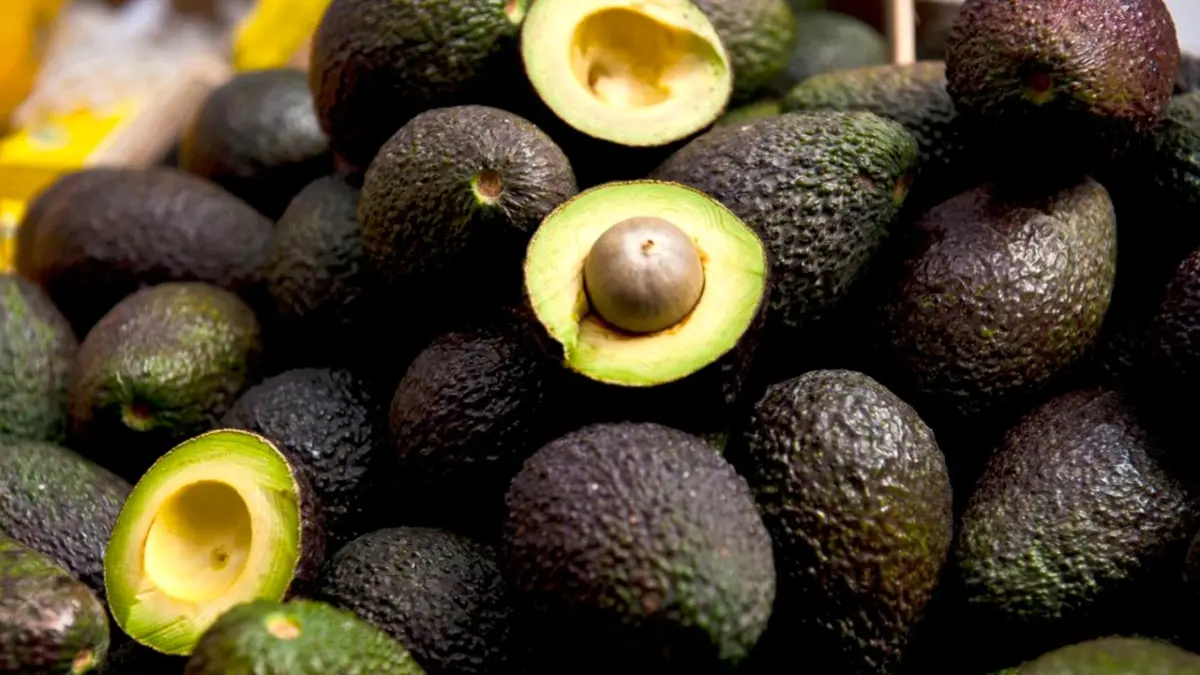
- The Ripening Indicator: Unlike green-skinned tropical avocados that remain green when ripe, the Hass skin undergoes a dramatic color transformation, shifting from vibrant green to deep purple-black as it reaches optimal maturity. This visual cue helps consumers and chefs identify the exact point of consumption.
- Versatility: Its high oil content and creamy texture make it exceptionally versatile, serving as the base for guacamole, a spread for toast, a staple in salads, or a nutrient-dense component in contemporary gastronomy.
The Colombian Climate Advantage
Beyond agronomic care, the natural environment plays a decisive role in the superior quality of Colombian fruit.
- Hydrological Abundance: Colombia registers annual rainfall levels significantly superior to the global agricultural average. Crucially, natural precipitation plays a major, reliable role in the water supply of the crops, reducing the absolute dependence on artificial irrigation systems seen in more arid avocado-producing nations like Chile, Peru, or parts of California.
- Equatorial Advantage: Because Colombia sits on the equator, it does not experience the harsh seasonal temperature swings found in higher-latitude countries. This allows for flowering and harvesting windows that span multiple seasons, enabling Colombian exporters to supply European and North American markets during periods when traditional suppliers face production troughs.
6. Implications and Outlook for 2027
As the Colombian agro-industry looks ahead to 2027, the roadmap is clear. The challenges are no longer about proving whether Colombia can grow and export world-class Hass avocados—that battle has been decisively won. The challenge now is structural, qualitative, and long-term.
1. Elevating Agronomic Yields
With 39,474 hectares registered, the priority is to increase the average yield per hectare. Many small and medium producers operate below optimal productivity levels due to variations in soil nutrition, sub-optimal pruning techniques, and uneven pest management. Bridging this internal productivity gap will boost aggregate national output without requiring the conversion of additional forested or native land.
2. Deepening Sustainability Standards
International consumers in Europe and North America are increasingly demanding proof of environmental stewardship. Certifications regarding carbon footprint reduction, zero deforestation, water stewardship, and fair labor practices are non-negotiable. The Colombian Hass sector must institutionalize sustainable practices across all 39,474 hectares to protect its brand image abroad.
3. Logistical Resilience
Expanding export volumes from nearly 90,000 tons semiannually requires flawless coordination among cold-chain providers, inland transport fleets, customs authorities, and maritime shipping lines. Mitigating port congestion and maritime freight volatility will be essential to ensuring fruit arrives at destination markets in pristine condition.
Conclusion
The story of the Colombian Hass avocado is a testament to what can be achieved when public institutions, private enterprise, and dedicated rural workers align around a shared vision. From the mist-shrouded slopes of Antioquia and Caldas to supermarket shelves in London, Madrid, and Los Angeles, the "green gold" of Colombia has secured its place as a pillar of the national economy. As the industry steps into 2027, its ability to master the productivity challenge will determine whether this remarkable agro-industrial success story evolves into an enduring, generational legacy of rural prosperity and global excellence.




Leave a Reply