

WASHINGTON — As the United States navigates a complex and shifting energy landscape, the Solar Energy Industries Association (SEIA) has released a comprehensive retrospective examining the remarkable, century-long evolution of photovoltaic technology. Despite the contemporary reality in which global manufacturing and supply chains are heavily concentrated in China, the historical roots of solar energy run deep through American soil.
Today, as solar power achieves unprecedented milestones—including outproducing coal for the first time in the nation’s history—industry analysts and historians are looking back at the improbable journey of the solar panel. From its humble and experimental origins in mid-20th-century laboratories to utility-scale installations capable of powering entire cities, the American solar story is one of scientific persistence, shifting political winds, and an unstoppable march toward renewable dominance.
Main Facts: A Historic Turning Point for American Energy
The modern American energy matrix is undergoing a seismic shift. According to recent data highlighted by the SEIA, solar power is no longer merely an alternative or niche energy source; it has firmly established itself as a foundational pillar of the United States power grid.
In a watershed moment that would have seemed visionary to the engineers of the 1950s, solar energy officially generated more electricity in the United States than coal for the first time. This milestone marks the definitive crossing of a threshold in America’s long transition away from a fossil-fuel-dominated economy. Furthermore, the integration of advanced battery storage systems has solved one of the primary historical criticisms of renewables—intermittency—by supplying an impressive 4.5 terawatt-hours (TWh) of electricity to the national grid during the second quarter alone.
Looking forward, the growth trajectory shows no signs of slowing down. Industry forecasts project that solar installations will continue to multiply exponentially, representing the lion’s share of all new electricity generation capacity additions through 2060 and well beyond. Despite ongoing political debates and fluctuating federal policy support, the economics of solar power, combined with strict corporate and municipal sustainability goals, have created an irreversible market momentum.
Chronology: The Evolution of Photovoltaic Technology
To understand where the American solar industry is heading, it is essential to trace the milestones of how it began. While geopolitical discussions today often focus on foreign manufacturing dominance, the photovoltaic cell is an undeniably American invention.
1954: The Birth of Silicon at Bell Labs
The story of modern solar energy began in Murray Hill, New Jersey. In 1954, researchers at Bell Laboratories—Gerald Pearson, Calvin Fuller, and Daryl Chapin—publicly unveiled the world’s first practical silicon solar cell. Unlike previous selenium-based experiments, which offered extremely low conversion rates, the Bell Labs silicon cell was a breakthrough in efficiency. It was capable of converting sunlight into electricity at a rate that produced five times more power than any previous solar device.
The invention captured the imagination of the public and the press. Newspapers of the era boldly proclaimed that humanity was witnessing "the beginning of a new era," predicting a future where limitless energy could be harvested directly from the sun.
The 1960s: Pushing the Limits of Efficiency
Throughout the 1960s, American researchers and private enterprises continued to refine the technology, driven largely by the demands of the burgeoning space program and specialized terrestrial applications. Companies like Hoffman Electronics invested heavily in photovoltaic research. Through rigorous experimentation, Hoffman engineers successfully developed solar cells boasting a 14% energy conversion efficiency—more than double the efficiency of the original Bell Labs silicon models. This period proved that photovoltaic technology was not a static scientific curiosity, but a rapidly improving engineering platform.
The 1970s: Entering the Domestic Sphere and Government Backing
As manufacturing techniques improved and costs slowly began to normalize, researchers started looking at applications closer to home. In the 1970s, engineers and scientists at the University of Delaware achieved a major architectural milestone by constructing "Solar One," widely recognized as the world’s first residential building with integrated photovoltaic solar panels. Solar One served as a functional blueprint for futuristic, energy-independent housing, demonstrating that solar power could successfully sustain a domestic household.
Simultaneously, the geopolitical energy crises of the 1970s forced governments to reevaluate their reliance on foreign oil. In 1978, the U.S. Congress passed the Public Utility Regulatory Policies Act (PURPA), a landmark piece of legislation designed to encourage energy conservation and promote the integration of alternative, renewable energy sources into the traditional grid.
The political embrace of solar reached its symbolic peak in 1979 when President Jimmy Carter ordered the installation of solar thermal panels on the roof of the White House. Though the panels were later removed by a subsequent administration, Carter’s gesture sent an unmistakable message to the nation and the world regarding the critical importance of transitioning toward clean, domestic energy sources in the face of emerging climate awareness.
1982: The Dawn of Utility-Scale Solar
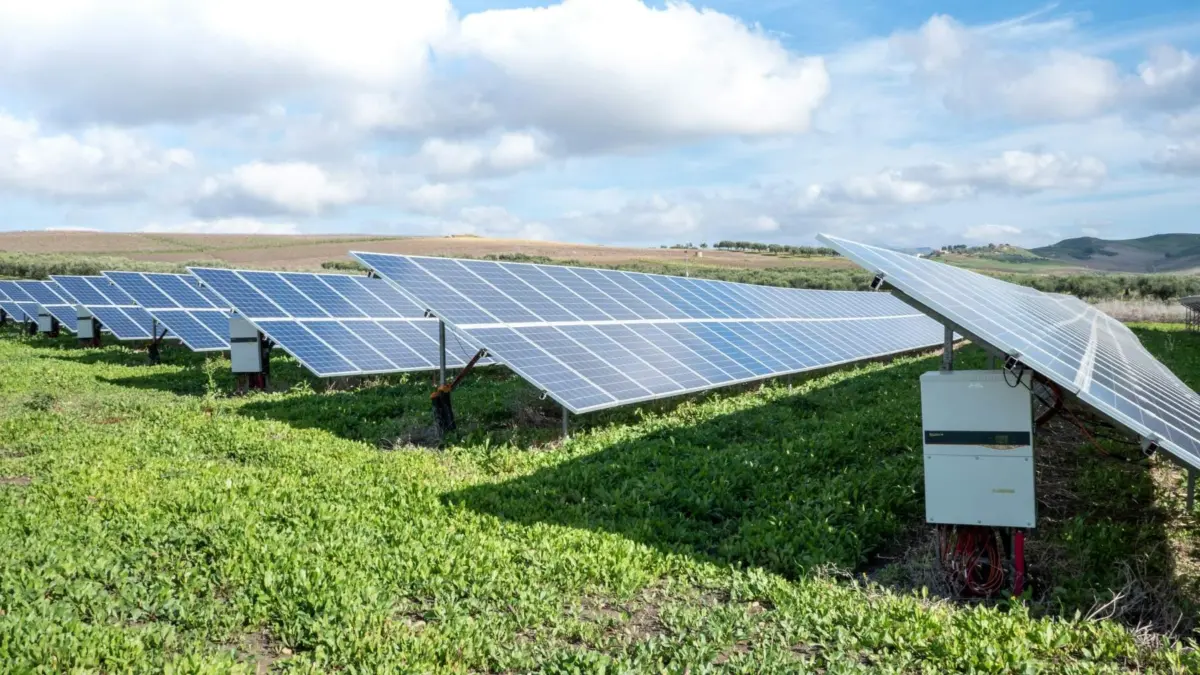
The transition from experimental rooftops to massive industrial generation occurred in 1982 with the commissioning of the world’s first utility-scale solar farm. Built by the Atlantic Richfield Company (ARCO) in California’s Mojave Desert, the installation boasted a capacity of 1.1 megawatts (MW). While modest by today’s multi-gigawatt standards, this pioneering project proved that photovoltaic technology could be scaled up to industrial levels, paving the way for the massive solar parks that define the American Southwest today.
Supporting Data and Economic Realities
The transition of solar energy from a laboratory novelty to a dominant economic force is backed by compelling data regarding cost reductions, capacity growth, and grid integration.
Over the past decade alone, the levelized cost of energy (LCOE) for utility-scale solar photovoltaics has plummeted by more than 80%, making it consistently cheaper than new fossil-fuel generation in the vast majority of U.S. markets. This dramatic price deflation has driven record-breaking deployment rates.
- Generation Milestones: The milestone of outproducing coal in mid-2024 represents a tectonic shift in the American energy mix. For over a century, coal was the bedrock of U.S. industrialization and baseload power; its displacement by an intermittent renewable source underscores the profound velocity of the energy transition.
- Storage Integration: The deployment of 4.5 TWh of grid-stored solar energy in Q2 highlights the maturation of lithium-ion and alternative battery technologies. Storage is no longer an ancillary feature but an integrated component ensuring grid stability.
- Long-Term Projections: According to long-term economic models cited by the SEIA, solar power is projected to maintain its status as the single largest contributor to new U.S. electricity generation capacity for the next four decades, potentially supplying upwards of 40% to 50% of total American electricity by 2050.
Official Responses and Political Dynamics
The relationship between federal governance, political administrations, and the renewable energy sector has historically been complex. In periods of political administration change—such as the tensions observed during the Donald Trump presidencies—the renewable energy sector has faced periods of regulatory uncertainty, tariff debates, and shifts in federal funding priorities.
Despite these political headwinds, industry advocates emphasize that the foundation of the American solar industry is resilient, anchored by state-level mandates, corporate sustainability commitments, and undeniable market economics.
The SEIA has consistently reminded policymakers of the historical lessons of the 20th century: government foresight, regulatory encouragement (such as PURPA), and public-private partnerships are what originally allowed the U.S. to pioneer solar technology. Industry leaders argue that maintaining a supportive regulatory framework is essential to ensuring that the United States does not merely invent foundational green technologies, but retains a competitive edge in their deployment, deployment infrastructure, and grid integration against global competitors.
Implications for the Future
The implications of America’s rising solar dominance extend far beyond environmental metrics; they touch upon national security, economic competitiveness, and the future of urban and rural infrastructure.
Grid Resilience and Decentralization
The rapid expansion of distributed solar—rooftop panels on residential homes, commercial warehouses, and community solar gardens—is fundamentally altering the structure of the American power grid. By decentralizing energy production, communities are becoming more resilient to extreme weather events, transmission line failures, and physical disruptions to centralized fossil-fuel plants.
Artificial Intelligence and High-Tech Power Demands
The tech sector’s explosive growth, driven largely by the massive energy demands of artificial intelligence data centers, has created an unprecedented hunger for clean, scalable electricity. Major technology corporations are increasingly turning to utility-scale solar and advanced storage developers to power their facilities, creating a symbiotic relationship between the digital economy and the renewable energy sector.
A Century-Long Vision Realized
From the cleanrooms of Bell Labs in 1954 to the sprawling solar arrays of the Mojave Desert and the rooftops of modern American homes, solar energy has traversed an extraordinary path. As the industry looks toward 2060 and beyond, the message from energy analysts is clear: the technology invented in New Jersey nearly a century ago is no longer just an alternative choice—it is the undeniable anchor of America’s energy future.


Leave a Reply