

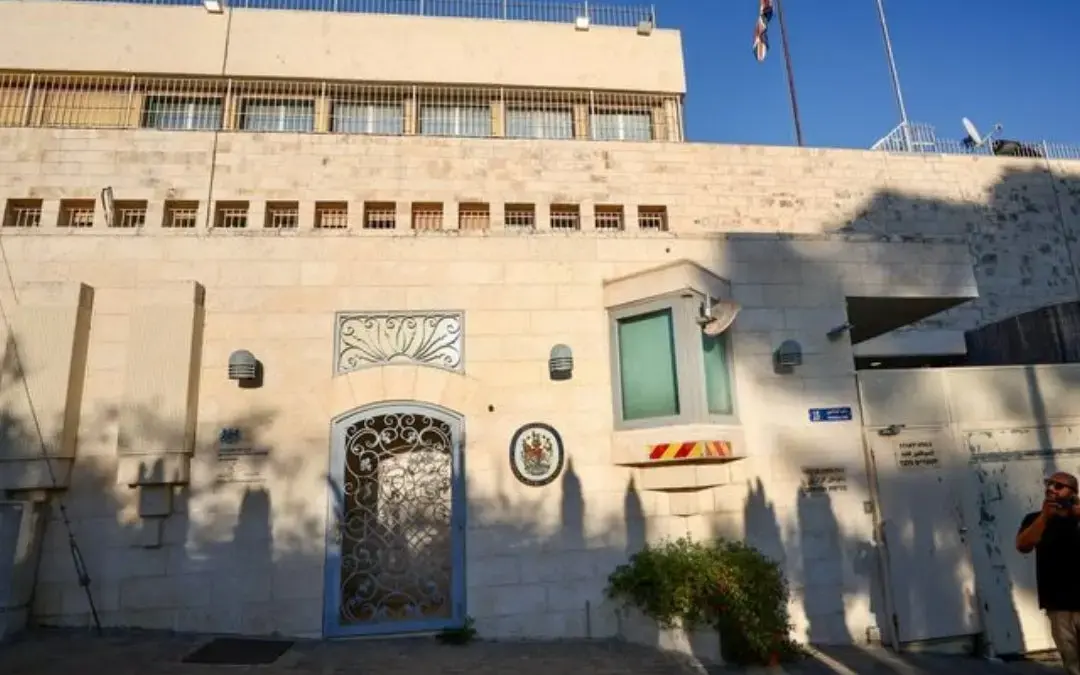
LONDON/JERUSALEM — A profound diplomatic rift has opened between London and Jerusalem, threatening to shatter decades of close strategic, economic, and intelligence cooperation. According to multiple high-level sources speaking on condition of anonymity, the United Kingdom is actively considering the expulsion of Israeli diplomats from London should Israel enforce an impending order to shutter the British consulate in Jerusalem.
The escalating feud, born out of a dispute over British sanctions targeting products originating from Israeli settlements in the occupied West Bank, brings relations between the two traditional allies to their lowest ebb in decades. With a 30-day ultimatum rapidly expiring, the international community watches nervously as both governments weigh measures that could irreversibly alter diplomatic norms between Western allies.
Main Facts of the Crisis
At the heart of the current crisis is a retaliatory tit-for-tat measure involving sovereignty, international law, and regional trade.
- The British Sanctions: The friction began when the United Kingdom announced a comprehensive ban on commercial trade involving goods produced in Israeli settlements located across the occupied West Bank. London framed the policy as a measure consistent with international law regarding occupied territories.
- The Israeli Ultimatum: In swift retaliation, the Israeli government issued an order on September 8 demanding that Great Britain close its consulate general in East Jerusalem within 30 days and withdraw all diplomatic personnel stationed there.
- The Scale of the Impact: The impending deadline affects approximately 30 British diplomats and their families who live and work at the Jerusalem facility.
- The British Counter-Response: Four distinct sources have confirmed that British authorities are weighing reciprocal moves, chief among them the expulsion of diplomats from the Embassy of Israel in London. Such an action between two historic allies is historically unprecedented.
- Political Context: The diplomatic showdown coincides with a heated Israeli electoral cycle, with the general election scheduled for October 27. Israeli Foreign Minister Gideon Saar has openly accused the UK of attempting to interfere in domestic Israeli politics through its timing of the sanctions.
Chronology of Events
To understand how a longstanding partnership reached this precarious juncture, it is vital to trace the rapid escalation of events over recent weeks.
Phase 1: The Trade Prohibition
In early September, the Foreign, Commonwealth & Development Office (FCDO) in London finalized and announced its policy prohibiting trade with Israeli settlements in the West Bank. The move was met with immediate fury in Jerusalem, where officials viewed the policy not merely as an economic restriction, but as a hostile political maneuver designed to delegitimize Israeli presence in the territories.
Phase 2: The September 8 Ultimatum
Responding directly to the trade ban, Israel issued a formal diplomatic directive on September 8. The order gave the United Kingdom precisely 30 days to close its consulate in East Jerusalem—a diplomatic mission that has long served as a key hub for British engagement with the Palestinian Authority and local civil society. Alongside the closure, the directive demanded the complete withdrawal of all British diplomatic personnel from the facility.
Phase 3: The 30-Day Countdown
The 30-day timeline places the final deadline on Thursday. As the clock ticks down, diplomatic channels have been working feverishly behind the scenes to find a face-saving compromise. However, public positions have hardened significantly.
Phase 4: The Threat of Expulsions in London
As it became clear that Israel intended to enforce the consulate closure, British officials began contingency planning. Reports emerged that London is prepared to retaliatory measures, specifically targeting Israeli diplomatic representation in the UK by expelling personnel from the Israeli Embassy in London.
Phase 5: The Upcoming October 27 Elections
While the immediate deadline falls on Thursday, a fifth confidential source indicated that London remains hopeful a last-minute understanding might avert the closure. Crucially, even if the consulate is shuttered, sources suggest the UK may delay any retaliatory expulsions until after the Israeli general elections on October 27, avoiding the appearance of direct interference in the electoral process.
Supporting Data and Context
The gravity of this diplomatic crisis cannot be overstated, particularly when viewed against the backdrop of the deep, multifaceted relationship shared by the United Kingdom and Israel.
A Robust Partnership Under Strain
Historically, the UK and Israel have maintained deep-rooted ties spanning multiple sectors:
- Economic Cooperation: Bilateral trade between the two nations stands in the billions of pounds, encompassing technology, pharmaceuticals, life sciences, and consumer goods.
- Security and Intelligence: Both countries share extensive intelligence-gathering frameworks, particularly regarding counter-terrorism and regional security in the Middle East. Security services have routinely collaborated to thwart threats affecting both British and Israeli citizens.
The Status of Jerusalem and Consular Norms
The diplomatic battleground is further complicated by the sensitive geopolitical status of Jerusalem. While Israel considers the entirety of Jerusalem its undivided capital, much of the international community—including the UK—views East Jerusalem as occupied territory under international law. Consulates operating in Jerusalem have historically held a unique status, separate from embassies located in Tel Aviv, making the current dispute over the British facility an exceptionally sensitive precedent.
Official Responses and Diplomatic Posturing
Official channels have largely adopted a posture of guarded silence, punctuated by sharp warnings from political figures.
- UK Foreign, Commonwealth & Development Office (FCDO): The FCDO has consistently declined to make official public comments regarding the contingency plans for expelling Israeli diplomats, reflecting the delicate nature of ongoing backchannel negotiations.
- Israeli Ministry of Foreign Affairs: The Israeli Foreign Ministry has similarly declined formal comment on the specifics of the retaliation threats. However, a senior Israeli official issued a stern warning, stating unequivocally that any hostile action taken against Israel by the UK would be met with an immediate and proportional response.
- Foreign Minister Gideon Saar: Following the initial announcement of British trade restrictions, Israeli Foreign Minister Gideon Saar launched a sharp public critique. Saar accused London of deliberate meddling in Israeli domestic affairs ahead of the upcoming elections. A spokesperson for Saar confirmed to Reuters on Monday that the Israeli government’s stance remains firm: the British consulate in Jerusalem must close its doors by Thursday.
Implications of the Crisis
If diplomacy fails and the UK proceeds with retaliatory expulsions, the ramifications will extend far beyond London and Jerusalem.
1. Precedent for Western Allies
It is extraordinarily rare for Western democracies and close strategic partners to expel each other’s diplomatic personnel. Such an escalation would signal a breakdown in traditional diplomatic protocols, potentially encouraging other European nations with similar stances on West Bank settlements to reevaluate their own diplomatic engagements with Israel.
2. Disruption to Intelligence and Security Sharing
While economic ties might weather short-term political storms, the expulsion of intelligence liaisons and diplomatic personnel could tangibly degrade the operational efficiency of counter-terrorism and intelligence-sharing networks between the UK and Israel. Both nations rely heavily on mutual trust and uninterrupted communication channels to manage regional threats.
3. The Future of the Palestinian Territories
For the United Kingdom, the closure of its Jerusalem consulate would represent a severe blow to its diplomatic footprint in the Palestinian territories. The mission has historically served as the primary base for diplomatic reporting, humanitarian oversight, and political dialogue with Palestinian leaders. Losing this foothold would severely restrict London’s ability to act as an effective diplomatic player in the peace process.
4. Domestic Political Fallout
With the Israeli elections looming on October 27, the crisis plays directly into domestic political narratives. Hardline factions within Israel may leverage the confrontation with London to demonstrate strength against international pressure, while moderate elements will likely push for a diplomatic off-ramp to preserve vital Western alliances.
As Thursday’s deadline approaches, the international diplomatic community holds its breath. Whether cooler heads can prevail through backchannel negotiations—or whether this historic partnership will cross an unprecedented threshold of diplomatic warfare—remains one of the most critical geopolitical questions of the season.



Leave a Reply