

By Global Environmental Desk
Published: October 2023
Main Facts
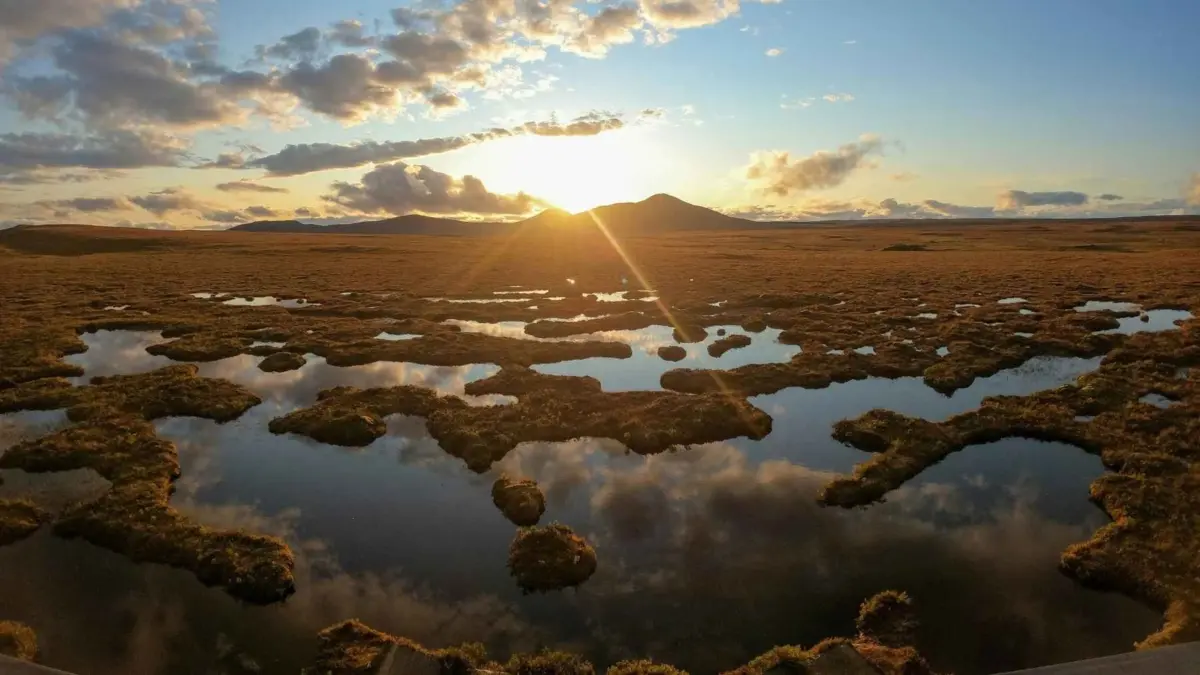
The global fight against climate change has a quiet, overlooked front line: the world’s peatlands, mangroves, and freshwater wetlands. According to a landmark data release by the Systems Change Lab—an initiative hosted by the World Resources Institute (WRI)—these vital ecosystems are among the most potent carbon sinks on Earth, yet they are disappearing at an alarming rate.
While peatlands cover a mere 4% of the planet’s terrestrial surface, they store an astounding 33% of all global soil carbon. Together with other critical freshwater wetlands and coastal marshes, these environments lock away carbon at rates up to three times higher than tropical, boreal, or temperate forests.
Despite their monumental ecological value, the Systems Change Lab’s recent assessment reveals a sobering reality: none of the 37 global indicators tracking freshwater and wetland protection are currently on track to meet international climate and biodiversity goals. Since 1970, the world has lost a staggering one-third of its freshwater ecosystems—equivalent to more than 988 million acres. Furthermore, at least 12% of existing peatlands have already suffered significant degradation due to human activity, transforming these natural carbon vaults into active sources of greenhouse gas emissions.
To combat this escalating crisis, international organizations, led by the WRI and the United Nations Environment Programme (PNUMPA), are deploying new monitoring applications and pushing for immediate, coordinated global action to protect, restore, and sustainably manage the planet’s remaining wetlands before irreversible tipping points are reached.
Chronology of a Crisis: How We Got Here
The systematic degradation of the world’s wetlands is not a recent phenomenon, but the pace of destruction has accelerated dramatically over the past half-century. A historical look at the intersection of climate change, policy, and ecological collapse reveals the compounding pressures facing these environments:
- Pre-1970s (The Era of Drainage): For centuries, peatlands and wetlands were widely viewed by industrialized nations as "wastelands" ripe for conversion. Millions of acres across Europe, North America, and parts of Asia were systematically drained, ditched, and filled for agriculture, infrastructure, and urban expansion. Little was understood about the ecological services these systems provided.
- 1970 (The Baseline Turning Point): According to metrics established by the Systems Change Lab and supported by international conservation bodies, 1970 serves as the baseline year for modern wetland loss. Since this date, the world has hemorrhaged one-third of its freshwater ecosystems—a loss of nearly one billion acres of biodiverse, water-filtering terrain.
- 2022 (The PNUMA Awakening): A series of comprehensive scientific reports published by the United Nations Environment Programme (PNUMPA) in 2022 brought unprecedented clarity to the role of peatlands in the global carbon cycle. The findings confirmed that despite occupying only 4% of global land, peatlands held one-third of the world’s soil carbon. The reports warned that damaging these ecosystems releases centuries of accumulated carbon back into the atmosphere.
- The Present Day (The Systems Change Lab Intervention): The WRI integrated these findings into the Systems Change Lab application, providing real-time data tracking on freshwater ecosystems across all seven continents. The current dashboard exposes a grim policy landscape, showing that out of 37 critical indicators, the vast majority are either failing, moving in reverse, or completely lacking data—prompting an urgent international push for cross-border conservation frameworks.
Supporting Data and Ecological Metrics
To understand the scale of the threat, environmental scientists rely on rigorous quantitative data regarding carbon storage, biodiversity loss, and geographic distribution. The metrics compiled by the WRI, PNUMA, and the Systems Change Lab paint a precise picture of the stakes involved:
Carbon Storage Capacity
- The 4-to-33 Ratio: Peatlands cover roughly 4% of the Earth’s land surface, yet they store approximately 33% of the world’s soil carbon.
- The Forest Comparison: Mangroves and peatlands capture and concentrate up to three times more carbon than traditional tropical, boreal, or temperate forests.
- Global Footprint: Combined, these crucial water-logged ecosystems span approximately 1.24 billion acres (1,240 million acres) across all seven continents.
The Cost of Degradation
- Emissions Impact: At least 12% of the world’s current peatlands have suffered human-induced degradation. This damage alone accounts for roughly 4% of all human-caused annual greenhouse gas emissions.
- Area Lost: Since 1970, the planet has lost over 988 million acres of freshwater ecosystems.
- Biodiversity Toll: Freshwater biodiversity is collapsing faster than terrestrial or marine life, with one in every five freshwater species currently facing the threat of extinction due to habitat loss, pollution, and climate change.
Systems Change Lab Indicator Breakdown
An audit of the 37 indicators tracking the health and protection of freshwater and wetland systems reveals widespread failure across global policy frameworks:
- 4 Indicators are progressing, but moving far too slowly to meet established climate and conservation targets.
- 4 Indicators are advancing, but currently operate without any defined or measurable goals.
- 11 Indicators are moving in the reverse direction, signaling increasing vulnerability to extreme droughts, water stress, and catastrophic flooding.
- 18 Indicators suffer from a critical lack of data, highlighting a massive blind spot in global environmental monitoring.
Official Responses and Expert Warnings
The alarming data released by the WRI and Systems Change Lab has triggered urgent warnings from international environmental leaders, who emphasize that protecting wetlands is no longer just a conservation issue, but a matter of planetary survival.
Inger Andersen, Executive Director of the United Nations Environment Programme (PNUMPA), has been vocal about the long-term consequences of inaction. Andersen warned that when peatlands and marshes are drained, damaged, or burned, the stored carbon is not merely released in a single event; instead, these compromised ecosystems continue to spew greenhouse gases into the atmosphere for decades.
"We must urgently halt the destruction and degradation of these high-carbon ecosystems," Andersen stated during recent environmental briefings. "If we fail to protect them, the atmospheric debt we incur will destabilize our climate goals for generations to come."
Spokespersons and researchers from the World Resources Institute (WRI) echoed these sentiments, emphasizing that peatlands function as natural safety nets for both humanity and wildlife. They noted that the destruction of these areas strips local populations of natural buffers against extreme weather events, rising sea levels, and severe inland flooding.
Furthermore, policy experts at the Systems Change Lab stress that traditional, localized conservation efforts are no longer sufficient. Because 60% of the world’s freshwater flows cross international borders, fragmented management policies leave vast river basins vulnerable to exploitation. Institutional authorities are calling for unprecedented cross-border cooperation, arguing that upstream management directly dictates downstream survival.
Implications for the Future: Policy, Restoration, and Indigenous Stewardship
The revelations brought to light by the Systems Change Lab application outline a clear, albeit challenging, roadmap for the future. Turning the tide on wetland degradation requires a fundamental shift in how governments, corporations, and local populations interact with freshwater ecosystems.
1. Halting Degradation and Scaling Up Restoration
The primary objective of the new WRI-backed initiative is to halt all further conversion of intact peatlands, mangroves, and marshes. Where damage has already occurred, massive ecological restoration projects must be prioritized. Restoring a peatland—often achieved by blocking drainage ditches, re-wetting dried soils, and reintroducing native vegetation—can effectively re-establish its capacity as a carbon sink and reduce runaway methane and carbon dioxide emissions.
2. Transboundary Water Management
With over half of the world’s freshwater flows crossing geopolitical boundaries, isolated national policies are obsolete. Effective governance demands legally binding, multinational treaties to manage river basins, shared wetlands, and delta systems. Coordinated management ensures that upstream agricultural runoff or industrial water extraction does not compromise the ecological integrity of downstream wetlands.
3. Empowering Indigenous Peoples and Local Communities
Perhaps the most critical implication moving forward is the recognition of Indigenous and local communities as the rightful stewards of these lands. Historically, many of the world’s best-preserved peatlands and freshwater systems have survived precisely because Indigenous populations managed them sustainably for generations.
The Systems Change Lab emphasizes that future conservation frameworks must actively partner with and empower these communities. Indigenous populations are frequently the first to suffer the devastating socio-economic consequences of degraded ecosystems, including loss of fisheries, contaminated water supplies, and increased exposure to natural disasters. By placing land rights and resource management back into the hands of local guardians, global climate initiatives stand a far greater chance of achieving long-term success.
Conclusion
The data is unequivocal: the Earth cannot win the war against climate change while its most efficient carbon vaults are burning, draining, and disappearing. The deployment of the Systems Change Lab application provides the necessary transparency to expose regulatory failures, but data alone will not save the wetlands. Only immediate, aggressive, and unified global action—grounded in rigorous science, transboundary cooperation, and respect for local stewardship—can secure the future of the world’s peatlands before their ancient carbon is unleashed upon a warming world.

Leave a Reply