

Main Facts
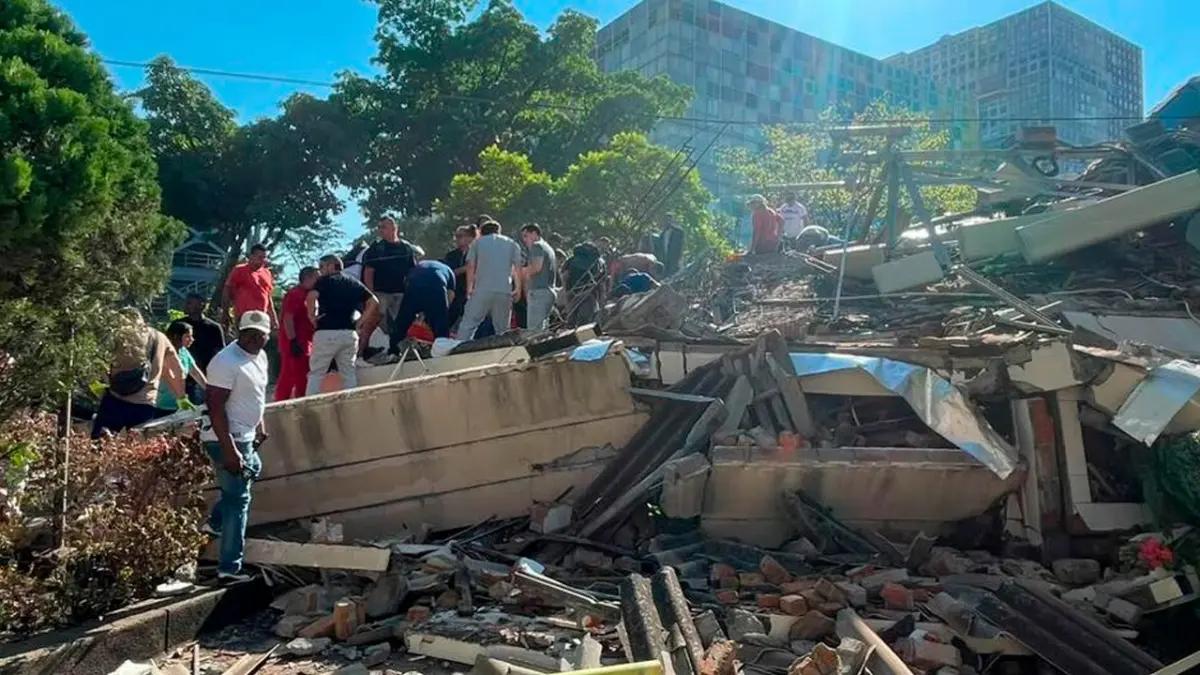
The Gobernación del Valle del Cauca has officially opened a specialized relief and economic reactivation initiative aimed at supporting entrepreneurs and business owners whose livelihoods were severely disrupted by the major earthquake that struck the region on August 10, 2026. This comprehensive program, operating under the financial umbrella of Fonder Valle (Fondo para el Desarrollo del Valle del Cauca), specifically targets productive units located in the hardest-hit municipalities: Cali, Cartago, Buenaventura, Zarzal, La Unión, Sevilla, and Roldanillo.
At the core of this initiative is a massive injection of non-repayable financial assistance designed to replace lost or damaged capital assets. Jerson Valencia, the Secretary of Economic Development, Competitiveness, and Employment for the Gobernación del Valle del Cauca, announced that the administration will distribute 1,800 forgivable loans of up to 5 million Colombian Pesos (COP) each. These funds are explicitly designated for entrepreneurs who suffered structural, material, or equipment damage to their machinery, raw materials, commercial inventory, tools, or any other fundamental element required to keep their businesses operational.
To qualify for this financial lifeline, applicants must navigate a mandatory two-step verification process. First, they must be formally registered in the Registro Unifamiliar de Emergencias (RUFE), which is the official national tool used by the Colombian government to census and characterize families and commercial entities impacted by natural disasters or emergencies. Second, applicants must complete their submission through the official Fonder Valle digital platform (https://sigesi.valledelcauca.gov.co/fonder-valle-2026).
The deadline for this urgent call to action is set for tomorrow, October 8. Following the digital submission window, regional technical teams will conduct on-site physical inspections of the registered commercial establishments. These evaluations are critical to verify the authenticity of the earthquake-related damages, assess the true scale of economic need, and determine the exact allocation required for reconstruction, raw material acquisition, and equipment replacement.
Crucially, the financial aid functions as a conditional or forgivable credit. Beneficiaries will initially receive the requested value through a credit mechanism, but they will not be required to repay the loan provided they can legally demonstrate—via valid purchase invoices and receipts—that the disbursed funds were used strictly to replace the specific inputs, machinery, and commercial equipment that were destroyed or rendered useless by the seismic event.
Chronology of Events
The unfolding crisis and the subsequent institutional response trace back to a definitive timeline that highlights both the sudden devastation of the natural disaster and the rapid mobilization of regional governance and administrative mechanisms.
August 10, 2026: The Seismic Shock
At a critical juncture in the afternoon, a powerful earthquake struck southwestern Colombia, with its epicenter and secondary fault lines severely shaking the department of Valle del Cauca. The tremor caused widespread panic, structural collapses, infrastructure damage, and an immediate halt to commercial activities across dozens of municipalities. While emergency response teams prioritized search-and-rescue operations and human safety, the economic fallout immediately became apparent as small businesses, local markets, and industrial units sustained heavy losses.
Mid-August to September 2026: Damage Assessment and Census Phase
In the immediate aftermath of the disaster, municipal and departmental agencies swung into action to quantify the human and economic toll. The Instituto Financiero del Valle del Cauca, alongside local chambers of commerce, established specialized hotlines—such as the Línea de Afectación Empresarial—to map the destruction. Entrepreneurs across the 42 municipalities of Valle del Cauca began reporting structural cracks, ruined merchandise, and destroyed equipment. Concurrently, the national and departmental disaster registry, RUFE, was deployed to register affected households and commercial units, laying the bureaucratic groundwork for future targeted interventions.
Late September to October 7, 2026: Opening of the Fonder Valle Portal
Recognizing the desperate need for liquidity among micro-entrepreneurs who risked permanent bankruptcy, the Gobernación del Valle del Cauca finalized the structuring of the Fonder Valle 2026 recovery package. The administration officially launched the digital registration portal, opening the application window for entrepreneurs in Cali, Cartago, Buenaventura, Zarzal, La Unión, Sevilla, and Roldanillo. Public announcements were disseminated across regional media channels to urge business owners to register before the imminent cutoff date.
October 8, 2026: The Application Deadline
The final window for entrepreneurs to submit their documentation and register on the platform closes today. This deadline marks the transition from the intake phase to the evaluation phase, where thousands of dossiers will be processed for technical verification.
Post-October 8, 2026: Technical Inspections and Fund Disbursal
Following the closure of the digital portal, departmental technical teams will initiate a rigorous schedule of site visits. Inspectors will cross-reference digital declarations with physical realities on the ground, validating property damage and inventory losses. Once verifications are complete, successful applicants will be formally notified, receive their allocated funds, and begin the process of purchasing replacement machinery and inputs under the watchful eye of the Secretariat of Economic Development, ultimately setting the stage for regional economic recovery.
Supporting Data and Statistical Analysis
The justification for the intervention by the Gobernación del Valle del Cauca is grounded in sobering statistical data compiled by regional financial institutions, chambers of commerce, and disaster response agencies. The August 10 earthquake was not merely a localized inconvenience; it was a systemic economic shock that rattled the foundational spine of Valle del Cauca’s entrepreneurial ecosystem.
According to official figures released by the Instituto Financiero del Valle del Cauca, a staggering 10,694 entrepreneurs formally registered structural and economic damages directly attributable to the earthquake across the department’s 42 municipalities. While the seismic waves were felt broadly, the geographic concentration of severe damage was heavily skewed toward specific urban centers and agricultural hubs. The municipal zones reporting the highest concentration of devastated productive units include:
- Cali: The departmental capital, housing the densest concentration of commercial establishments and small-to-medium enterprises (SMEs).
- Roldanillo: A vital northern hub for local commerce and tourism.
- Buenaventura: Colombia’s primary maritime gateway, where commercial logistics and port-adjacent enterprises suffered significant disruptions.
- La Unión: A critical agricultural and trading center in the heart of the department.
- Sevilla: A mountainous coffee-growing and commercial municipality vulnerable to seismic shifts.
Complementing these figures, the Chamber of Commerce of Cali (Cámara de Comercio de Cali) released data detailing the overwhelming volume of distress calls received through its dedicated Línea de Afectación Empresarial. The chamber reported that 16,132 individual business establishments reached out to report varying degrees of emergency impact. Most alarming is the finding that at least 94% of these communicating establishments explicitly reported suffering some form of material, structural, or operational damage.
These figures illustrate a profound structural vulnerability within the regional economy. The vast majority of these 16,000-plus businesses operate as micro-enterprises or family-run units that lack deep financial reserves, robust business interruption insurance, or access to traditional commercial banking credit lines. Consequently, the loss of basic inventory, a single commercial vehicle, or foundational machinery threatens to wipe out years of labor and investment, transforming a temporary natural disaster into a permanent economic displacement event.
Official Responses and Institutional Strategy
The design and execution of the Fonder Valle program reflect a coordinated, multi-layered institutional response aimed at mitigating economic collapse. Regional leaders have framed the initiative not merely as charity, but as a strategic investment in the macroeconomic stability of Valle del Cauca.
Jerson Valencia, Secretary of Economic Development, Competitiveness, and Employment, emphasized the urgency and pragmatism driving the administration’s policy. In his public statements regarding the 1,800 forgivable loans of up to 5 million pesos, Valencia underscored that the government understands the debilitating cash-flow crunch facing local business owners. By removing the burden of debt repayment—provided the funds are accounted for through legitimate purchase invoices for lost equipment and raw materials—the administration is effectively subsidizing the re-equipping of the department’s small business sector.
"We are moving swiftly to ensure that our productive units do not die a slow death in the aftermath of the seismic emergency," Valencia noted, pointing to the collaborative framework built between the Gobernación, the Instituto Financiero del Valle, and local trade chambers.
Furthermore, municipal authorities in heavily impacted zones like Buenaventura and Roldanillo have mobilized local secretariats of social welfare and economic development to assist vulnerable entrepreneurs in navigating the digital registration process. Because many micro-entrepreneurs in informal or semi-formal sectors lack digital literacy or consistent internet access, local authorities have set up physical assistance kiosks. These desks help applicants complete their RUFE registry and upload the necessary documentation to the Fonder Valle portal before the October 8 deadline.
This institutional strategy represents a departure from traditional bureaucratic lending models. By tying loan forgiveness directly to verifiable receipts of reconstruction and asset replacement, the Gobernación ensures fiscal transparency while injecting vital demand back into regional supply chains, as beneficiaries must purchase replacement goods locally.
Broader Implications for the Region
The unfolding crisis and the deployment of the Fonder Valle recovery package carry profound short-term and long-term implications for Valle del Cauca, touching upon socio-economic stability, institutional trust, and future disaster preparedness.
1. Short-Term Economic Stabilization and Employment Preservation
In the immediate term, the injection of 1,800 targeted financial packages acts as a crucial macroeconomic stabilizer. Small businesses and micro-entrepreneurs are the primary engine of local employment in Valle del Cauca, absorbing a vast percentage of the departmental workforce. By enabling these units to replace lost machinery and raw materials quickly, the program prevents secondary waves of mass layoffs. If thousands of small shops, workshops, and commercial outlets had been forced to liquidate permanently, regional unemployment rates would have spiked dramatically, compounding the human misery already caused by the earthquake.
2. Trust in Regional Governance and Administrative Efficiency
The speed and transparency with which the Gobernación del Valle del Cauca has rolled out this initiative serve as a critical test of public administration credibility. Natural disasters frequently expose administrative bottlenecks, corruption, and bureaucratic sluggishness. By leveraging centralized digital tools like the RUFE census and the Fonder Valle portal, the departmental administration is attempting to demonstrate a modern, data-driven approach to crisis management. Fulfilling the promise of rapid technical verification and streamlined fund disbursal will reinforce public trust in regional institutions, while any failure to reach the thousands of excluded applicants could spark widespread social discontent.
3. The Structural Challenge of Informality and Underinsurance
The earthquake and its aftermath have laid bare a persistent structural weakness in the Colombian economy: the high rate of business informality and the near-total absence of disaster insurance among micro-enterprises. With over 16,000 businesses reporting damage and more than 10,600 formally registering their losses, it is evident that standard commercial safety nets failed or never existed for the average corner store, artisan workshop, or family-run restaurant. While government programs like Fonder Valle provide essential emergency life support, economists point out that fiscal budgets cannot indefinitely subsidize natural disaster recoveries for uninsured private entities. Moving forward, regional policymakers will need to explore public-private partnerships aimed at subsidizing micro-insurance products tailored to seismic and climate-related risks.
4. Supply Chain Resilience and Long-Term Urban Planning
Finally, the concentration of damage in strategic nodes like Cali and Buenaventura highlights the vulnerability of regional supply chains. Buenaventura, as a critical import-export hub, and Cali, as a manufacturing and distribution center, must integrate stricter seismic resilience standards into municipal zoning and commercial licensing. The rebuilding process funded by Fonder Valle offers a unique opportunity not just to replace what was lost, but to upgrade electrical, structural, and mechanical assets to higher engineering standards.
As the October 8 deadline passes, all eyes in Valle del Cauca will turn to the implementation phase: ensuring that technical inspections are conducted fairly, funds are disbursed transparently, and thousands of battered entrepreneurs are successfully brought back from the brink of economic ruin to rebuild the vibrant commercial heartbeat of the department.



Leave a Reply