

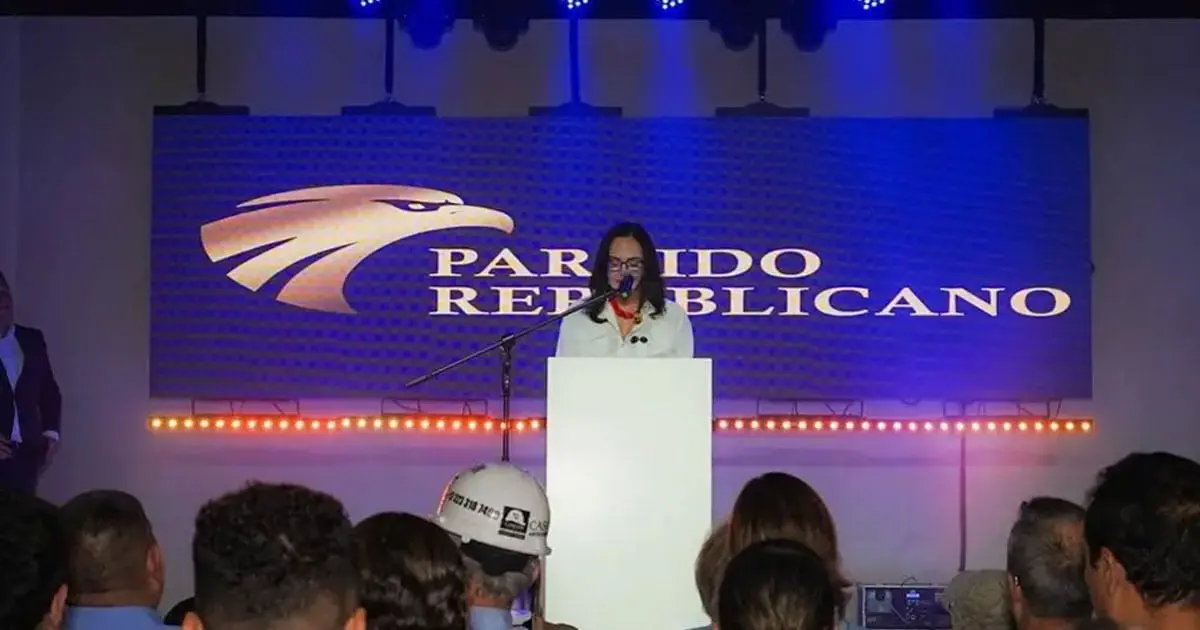
BOGOTÁ — In a political earthquake that is set to reshape the landscape of Colombia’s conservative movement, former senator María Fernanda Cabal has officially severed ties with the Democratic Center (Centro Democrático). After 13 foundational years within the party created by former President Álvaro Uribe, Cabal has taken the helm of the newly rebranded Republican Party (formerly known as the Liga de Gobernantes Anticorrupción).
With her sights firmly set on the 2027 regional elections and a subsequent presidential run in 2030, Cabal’s transition introduces a sharp, fiercely conservative force into the national political arena—one openly inspired by international right-wing movements, including Donald Trump’s Republican Party in the United States and Santiago Abascal’s Vox in Spain.
Main Facts
The political realignment is marked by several pivotal developments:
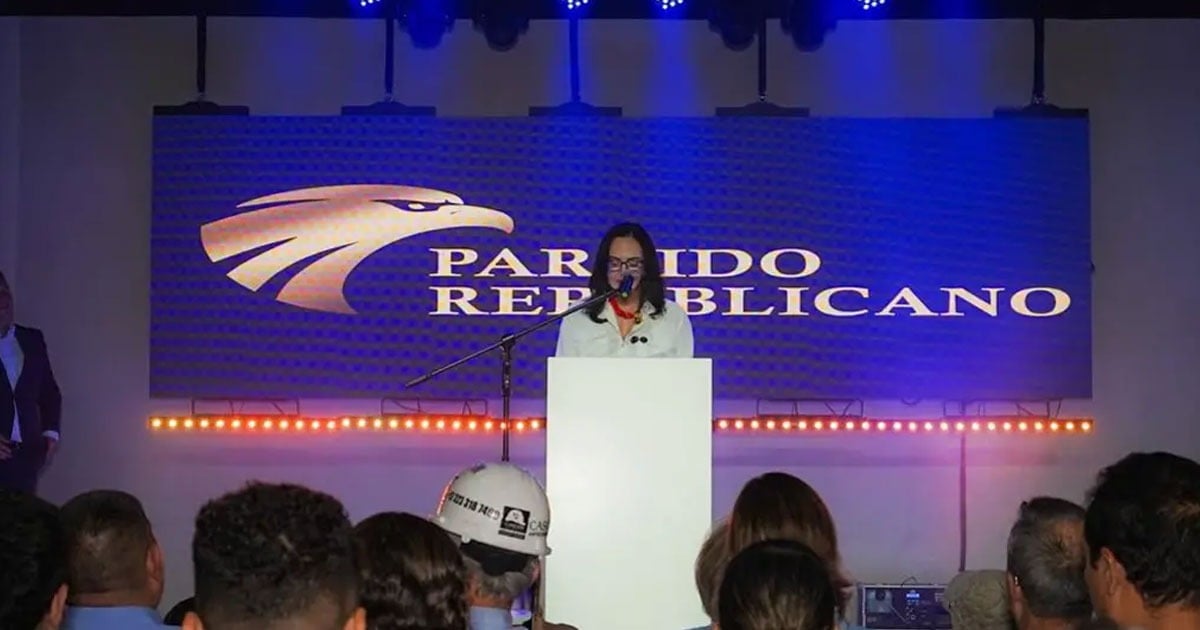
- The Defection: María Fernanda Cabal formally left the Democratic Center in late 2025 after leadership ignored her requests for a formal split (escisión) from the collective.
- The New Platform: Cabal has become the premier figure of the Partido Republicano (Republican Party). The party originated from the anti-corruption political platform founded by the late presidential candidate Rodolfo Hernández ahead of the 2002 election cycle.
- Rebranding and Identity: Approved by the National Electoral Council (CNE) in October 2026, the party formally dropped its previous identity. It now features a gold eagle over a dark blue background, explicitly adopting the name and ideological framework of the U.S. Republican Party.
- Strategic Horizon: The newly minted party aims to build a powerful coalition for the October 2027 regional elections—where Colombians will elect 32 governors, over 1,100 mayors, and numerous local assembly and council members—while laying the groundwork for the 2030 presidential race.
Chronology of a Fracture: From Uribism to Independence
2012–2025: The Foundation and Rise within the Democratic Center
María Fernanda Cabal was a foundational member of the Democratic Center (Centro Democrático), established under the leadership of former President Álvaro Uribe to oppose the policies of the Juan Manuel Santos administration. Over 13 years, Cabal served two consecutive terms as a senator (8 years total). Known for her uncompromising, combative rhetoric and direct communication style, she established herself as one of the most influential and polarizing figures on the Colombian right. Her legislative success peaked when she became the most-voted congresswoman in the history of the Colombian legislature, directly netting the Democratic Center two additional legislative seats.
Late 2025: The Internal Schism and Departure
The seeds of Cabal’s departure were sown during the contentious internal party processes to select the Democratic Center’s presidential candidate. The party apparatus ultimately favored Senator Paloma Valencia. Cabal publicly expressed deep disillusionment, asserting that she was never truly favored by Uribe, who she claims continually sidelined her historical electoral achievements. Following her unheeded requests for a formal party split, Cabal formally walked away from the political home she helped build.
October 2026: The Birth of the Republican Party
Seizing control of the legal personhood of the Liga de Gobernantes Anticorrupción—the vehicle originally built by the late Bucaramanga populist Rodolfo Hernández—Cabal engineered a radical structural overhaul. With the approval of the National Electoral Council, the movement was rechristened the Republican Party. The shift was not merely cosmetic; it signaled a deliberate pivot away from traditional Colombian clientelism toward a structured, ideological "New Right."

Supporting Data and Ideological Alignment
The transformation of Hernández’s former anti-corruption vehicle into a bastion of conservative thought is underpinned by a distinct set of global political alliances and core tenets:
- Core Tenets: The party’s platform centers on the unyielding defense of individual liberty, the right to life, private property, free-market economics, and the establishment of a lean, efficient state.
- The U.S. Republican Connection: Choosing the name Partido Republicano is a direct homage to the United States Republican Party, signaling Cabal’s undisguised admiration for Donald Trump and his brand of populist conservatism.
- The Transatlantic Axis with Vox: Cabal has long maintained close ties with Spain’s far-right party, Vox, led by Santiago Abascal. She has been a regular attendee at international conservative gatherings, including the Madrid Summits (2021–2022). In these forums, Cabal, Abascal, and other transatlantic leaders have openly strategized to build a unified international network of conservative parties to counter global leftist movements like the São Paulo Forum.
-
Electoral Footprint for 2027: The upcoming October 2027 local elections represent a massive logistical challenge. Colombia will elect:
- 32 Governors
- Over 1,100 Mayors
- Hundreds of departmental deputies and municipal council members
Cabal intends to use the Republican Party as an electoral lifeboat for conservative politicians, regional leaders, and voters who feel disenfranchised by legacy political machines.
Official Responses and Reactions
Álvaro Uribe’s Measured Farewell
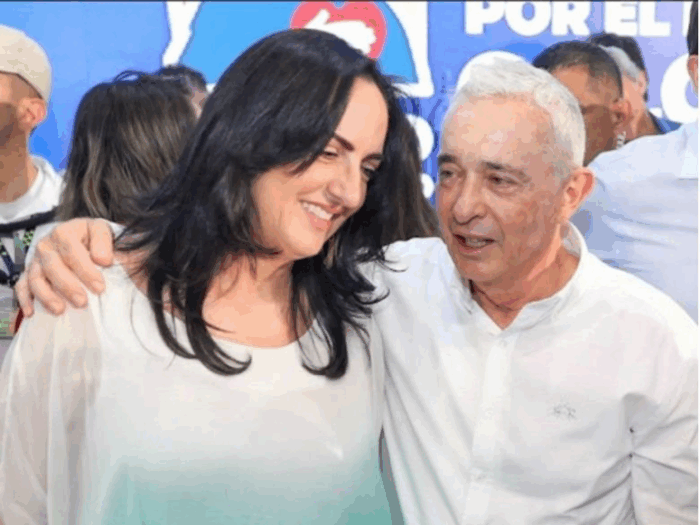
Recognizing Cabal’s heavy weight within conservative ranks, former President Álvaro Uribe addressed her departure with characteristic brevity. Through a short message posted on his official X (formerly Twitter) account, Uribe stated:
"For Dr. María Fernanda Cabal, always respect."
Despite the respectful public sign-off, political analysts note that the split highlights a generational and ideological divergence within the Colombian right, separating traditional Uribism from an emerging, more assertive, and internationally networked conservative faction.

The Jota Pe Hernández Controversy
The party’s early expansion efforts have not been without friction. Senator Jonathan Ferney Pulido Hernández—popularly known as Jota Pe Hernández—signaled political alignment with Cabal’s new movement. However, legal experts immediately pointed out that an immediate switch would leave him legally vulnerable to charges of dual militancy (doble militancy), which could strip him of his current congressional seat, given that he remains formally tied to the Green Alliance (Alianza Verde). The incident underscores the administrative hurdles Cabal faces as she attempts to poach sitting lawmakers.
Implications for the Colombian Political Landscape
María Fernanda Cabal’s migration to the Republican Party carries profound implications for the future of Colombian politics, particularly heading into the pivotal electoral cycles of 2027 and 2030.
1. Fracturing the Right-Wing Monolith
For two decades, Álvaro Uribe and the Democratic Center held an effective monopoly over the Colombian right. Cabal’s departure breaks this hegemony. The Republican Party establishes a competing pole on the right, forcing conservative voters and regional power-brokers to choose between traditional Uribism, Cabal’s "New Right," and other emerging conservative heavyweights such as attorney Abelardo de la Espriella.
2. A Testing Ground for 2027 and Beyond
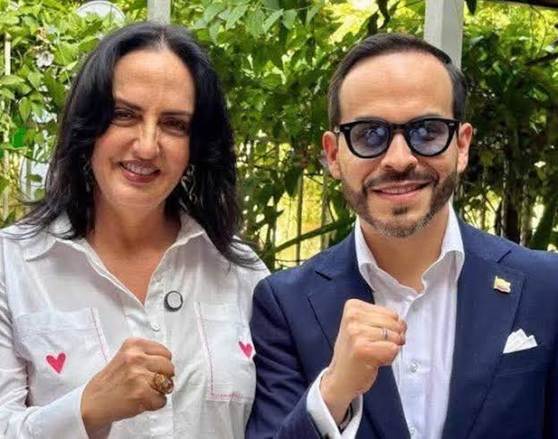
The 2027 regional elections will serve as the ultimate stress test for the newly branded party. By running candidates for governors, mayors, and assemblies across the country, Cabal is not merely preparing for local governance; she is building the foundational territorial machinery necessary for a viable presidential bid in 2030.
3. Institutionalizing the "New Right" in Latin America
By explicitly modeling her party after the U.S. Republicans and aligning closely with European movements like Vox, Cabal is attempting to institutionalize a distinct ideological current in Colombia. Rather than relying solely on the charismatic pull of a single leader—the historical model for Colombian political vehicles—the Republican Party seeks to anchor itself in global conservative orthodoxy: staunch anti-socialism, aggressive national security frameworks, and unbridled free-market capitalism.
As Colombia marches toward the ballot boxes of 2027, María Fernanda Cabal has positioned herself not just as an opposition voice against the administration of Gustavo Petro, but as the chief architect of a redesigned, aggressive, and globally connected right-wing opposition.


Leave a Reply