

By Environmental Science Desk
Updated October 2026
Main Facts
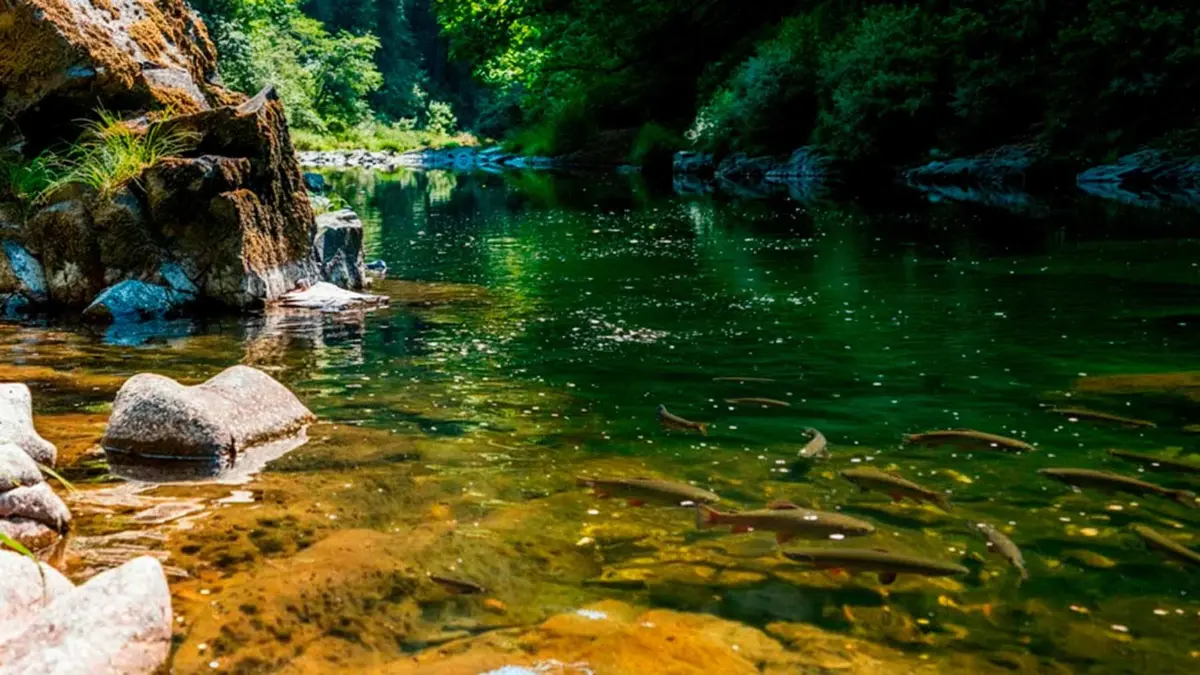
Decades after capturing global attention as an emblem of industrial pollution so severe that its waters literally caught fire, Ohio’s Cuyahoga River is telling a radically different story—one written in scales, fins, and ecological resilience.
Recent scientific findings published in the journal Restoration Ecology reveal that the removal of the Brecksville Dam in 2020 has triggered a remarkable biological rebound. By dismantling this historic barrier, conservationists successfully restored a continuous aquatic pathway connecting nearly 24 miles of the river directly to Lake Erie.
The consequences for local aquatic life have been immediate and measurable. Researchers tracking fish populations across a 40-year historical dataset detected 15 fish species that were entirely absent from previous records in the newly reconnected segments. Of these newcomers, 12 are native species that migrated upstream from Lake Erie to reclaim historical habitats once blocked by concrete and steel.
The study, titled "Beyond barriers: Fish assemblage recovery following dam removal on the Cuyahoga River, a Lake Erie tributary" (Acre et al., 2026), underscores a vital lesson in modern river restoration: cleaning the water column is only half the battle. To truly heal an aquatic ecosystem, rivers must also be allowed to flow freely.
Chronology of Recovery: From Industrial Inferno to Ecological Laboratory
The transformation of the Cuyahoga River represents one of the most compelling arcs in the history of American environmentalism. To understand the significance of the 2020 dam removal, one must look back at the century of degradation that preceded it.
The Era of Industrial Collapse (Pre-1970s)
Flowing northward from its headwaters into Lake Erie, the Cuyahoga River became the lifeblood of the industrial Midwest, particularly around Akron and Cleveland. However, unchecked industrial dumping turned the river into an open sewer. Oil slicks, chemical solvents, and heavy municipal waste choked the channel.
Though the river caught fire at least a dozen times starting in 1868, it was the June 22, 1969, fire—captured in a striking photograph published by Time magazine—that shocked the national consciousness. The disaster became a catalyst for the passage of the Clean Water Act of 1972 and the creation of the U.S. Environmental Protection Agency (EPA).
Decades of Water Quality Scrubbing (1970s–2010s)
For the next forty years, millions of federal, state, and local dollars were poured into upgrading wastewater treatment facilities, regulating industrial discharge, and dredging toxic sediments. Slowly, the water cleared. Dissolved oxygen levels rose, and macroinvertebrate populations began to stabilize. Yet, aquatic biologists realized that a silent obstacle remained: concrete dams and historical mill structures built across the channel continued to fragment the river, cutting off fish migrations and isolating populations.
The Brecksville Dam Removal (2020)
As part of an ongoing regional initiative to restore natural river morphology, natural resource managers targeted the Brecksville Dam, along with the remnants of the adjacent Pinery Feeder Dam. Built originally to supply water to the historic Ohio & Erie Canal, these structures had long outlived their economic utility.
In 2020, heavy machinery moved in to breach the structures. The removal instantly eliminated a major hydraulic bottleneck, restoring roughly 24 miles of uninterrupted river connectivity with Lake Erie and more than doubling the unimpounded reach situated below the massive Gorge Dam further upstream.
Supporting Data: What Four Decades of Records Reveal
Evaluating the success of a river restoration project is notoriously difficult without baseline data. Fortunately, the researchers behind the 2026 study benefited from an extraordinary trove of historical information. By examining standardized fish surveys spanning from 1984 through 2024, scientists could conduct a robust Before-After Control-Impact (BACI) analysis.
The Power of Comparative Sampling
The presence of the upstream Gorge Dam—a towering 59-foot structure—provided a natural control group for the study.
- The Reconnected Zone: Below the former Brecksville Dam site, where the path to Lake Erie was opened, the fish community shifted dramatically. Fifteen "new" species—fish that had never been documented in decades of prior monitoring—suddenly appeared in sampling nets.
- The Impounded Zone: Conversely, in the reaches above the Gorge Dam, which remained isolated from Lake Erie, ecological changes were muted. Species compositions in these upper segments shifted very little, mostly reflecting localized movements of resident fish rather than an influx of migratory lake species.
Native vs. Non-Native Dynamics
Of the 15 newly recorded species in the lower river, 12 were indigenous to the Lake Erie basin. These included migratory species that rely on free-flowing tributary streams for spawning, nursery habitats, and seasonal thermal refuge.
The remaining three species detected were non-native. While biologists monitor all shifts in community structure for signs of invasive species dominance, the prominent return of native taxa indicates that the primary driver of change was the restoration of natural longitudinal connectivity rather than an invasion of opportunistic pests.
Official Responses and Expert Perspectives
The findings have drawn widespread praise from state and federal wildlife agencies, academic institutions, and watershed groups who view the Cuyahoga’s recovery as a blueprint for post-industrial river restoration across the Rust Belt and beyond.
"Removing the Brecksville Dam didn’t just alter a stretch of water; it fundamentally healed a severed ecological corridor," notes Dr. M. R. Acre, lead author of the 2026 study. "For decades, we asked fish to survive in cleaner water while trapping them behind concrete walls. This study proves that when you give migratory species their pathways back, they will use them."
Local conservation groups have echoed these sentiments, emphasizing that the recovery of the Cuyahoga River is a triumph of cooperative governance. State environmental protection agencies, local park districts, and non-profit watershed stewardship groups spent years coordinating the engineering, funding, and ecological monitoring necessary to make the dam removal a reality.
Furthermore, regional economists and outdoor recreation advocates point out that a healthier, fish-rich Cuyahoga River has revitalized local ecotourism. Kayaking, sportfishing, and riverside recreation—once unthinkable activities along the burning river of 1969—now drive millions of dollars into local communities throughout Northeast Ohio.
Broader Implications for Global River Restoration
The transformation of the Cuyahoga River carries profound implications for watershed management worldwide. For over a century, river engineering focused heavily on impoundment—building dams for flood control, hydropower, and navigation. Today, a growing paradigm shift recognizes that the world’s rivers are living, dynamic arteries that require longitudinal connectivity to maintain biodiversity and water quality.
1. Moving Beyond "Water Quality" Alone
The Cuyahoga case study highlights a critical lesson for environmental managers: water quality improvements alone are insufficient to restore biological integrity. A river must be structurally whole. Without the removal of physical barriers, native migratory species remain trapped in isolated pockets, vulnerable to localized extirpations, genetic bottlenecks, and climate stressors.
2. The Multiplier Effect of Dam Removals
The success of the Brecksville Dam removal also underscores the importance of cumulative barrier mitigation. While the Gorge Dam still blocks the upper reaches of the Cuyahoga, ongoing discussions and planning for its potential future removal promise even greater ecological dividends. Each dam removed acts as a multiplier, opening exponential miles of habitat and allowing resilient ecosystems to self-heal.
3. A Beacon of Hope for Industrial Waterways
Ultimately, the Cuyahoga River stands as a global symbol of redemption. If a waterway once so toxic that it caught fire can evolve into a thriving ecosystem capable of welcoming back dozens of native fish species, hope exists for degraded industrial rivers across the globe. From the Penobscot River in Maine to European waterways shedding obsolete hydropower dams, the Cuyahoga’s lesson is clear: nature is remarkably resilient if we simply give it back its path.
For those interested in reading the full scientific evaluation, the complete research paper is accessible via Restoration Ecology (DOI: 10.1111/rec.70436).



Leave a Reply