

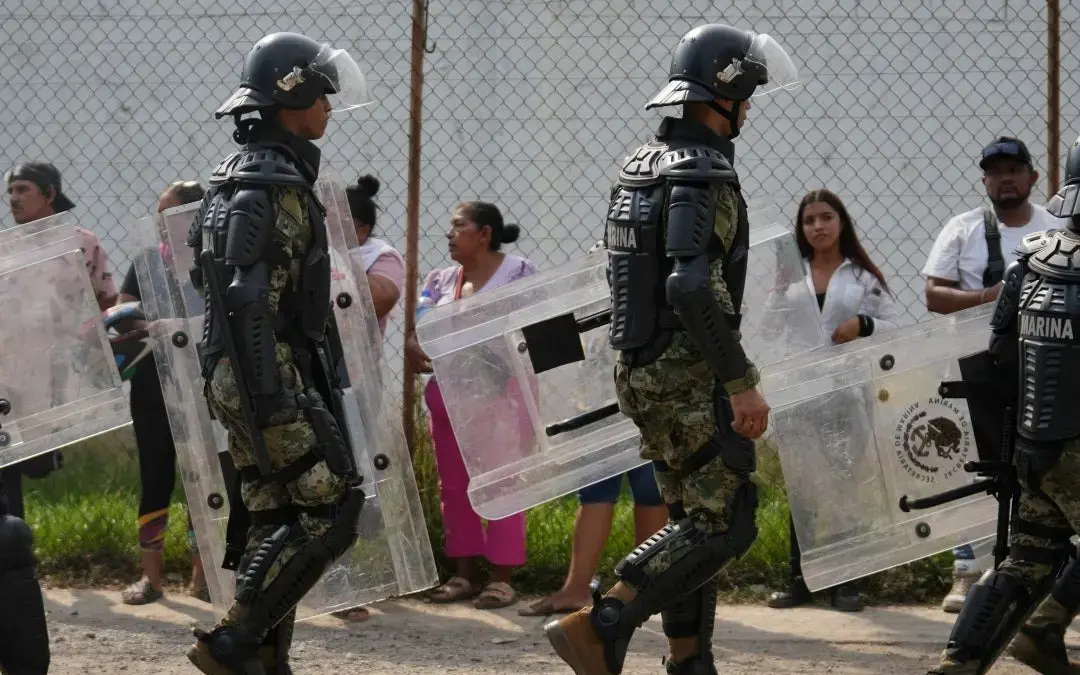
MAZATLÁN, SINALOA — A violent confrontation inside the El Castillo Penitentiary in the western state of Sinaloa, Mexico, has left at least ten people dead—including nine inmates and one civilian visitor—and 16 others injured. The outbreak of violence has once again cast a harsh light on the systemic crises plaguing Mexico’s penitentiary system, where overcrowding, cartel influence, and administrative complicity often create highly volatile environments.
According to official statements released by the Sinaloa State Secretariat of Public Security (Secretaría de Seguridad Pública), the riot began as an internal clash between rival inmate factions before rapidly escalating. Emergency protocols were activated, prompting a massive joint intervention by state, federal, and military forces to regain control of the facility.
The State Attorney General’s Office (Fiscalía General del Estado) has launched a comprehensive investigation to clarify the circumstances surrounding the violence, identify the weapons used, and determine criminal and administrative responsibilities.
Executive Summary of the Incident
The riot occurred in the El Castillo Penitentiary, located in the coastal municipality of Mazatlán, Sinaloa—a state historically recognized as the cradle of some of Mexico’s most powerful transnational organized crime syndicates.
The casualties of the confrontation have been confirmed as follows:
- Fatalities: 10 individuals (9 inmates serving sentences or awaiting trial, and 1 civilian family member who was inside the facility for a scheduled visitation).
- Injured: 16 inmates, who sustained injuries of varying severity and received immediate medical attention from emergency response teams inside the prison, with some transferred to external hospitals under heavy armed escort.
- Security Response: The situation was brought under control following the deployment of the Grupo Interinstitucional (Inter-Institutional Group), which comprises State Preventive Police, the National Guard, and the Mexican Army.
Chronology of the Violence
The events at El Castillo unfolded rapidly, transforming a routine visitation day into a scene of chaos and tragedy.
Phase 1: The Outbreak
The initial altercation began in one of the prison’s communal courtyards. What started as a verbal dispute between members of opposing prison factions quickly degenerated into physical violence. According to preliminary reports from prison guards, the confrontation escalated within minutes as inmates produced makeshift weapons, blunt instruments, and potentially smuggled firearms.
Phase 2: Escalation and Civilian Entrapment
The violence spread to adjacent modules of the facility, coinciding with scheduled family visitation hours. This timing proved catastrophic. Amidst the chaos, a family member visiting an inmate was caught in the crossfire. Despite attempts by some prison staff to evacuate civilians, the speed of the escalation left several visitors trapped in high-risk zones of the penitentiary.
Phase 3: Tactical Intervention
As internal security guards found themselves outnumbered and outgunned, the prison administration issued an urgent distress call. This triggered the activation of the Grupo Interinstitucional.
A heavily armed contingent of state police officers, backed by National Guard units and federal military personnel, breached the facility. They deployed riot control measures, including tear gas and non-lethal deterrents, to isolate the rioting factions and secure the perimeter to prevent any escape attempts.
Phase 4: Containment and Medical Triage
By late afternoon, authorities declared the facility under complete operational control. Paramedics and forensic teams were permitted entry to assess the casualties. The 16 injured inmates were triaged; those with life-threatening wounds were stabilized and transported to local public hospitals under strict security protocols to prevent potential rescue or assassination attempts by cartel affiliates. The remaining prisoners were locked down in their cells as authorities initiated a ward-by-ward sweep for contraband, weapons, and narcotics.
Systemic Context: The Crisis in Mexican Penitentiaries
To understand the tragedy at El Castillo, it is necessary to examine the structural deficiencies that characterize the Mexican prison system, particularly in states with a heavy presence of organized crime.
+-------------------------------------------------------------------------+
|                      KEY SYSTEMIC CHALLENGES                            |
+------------------------------------+------------------------------------+
| 1. Inmate Self-Rule (Autogobierno) | Cartels control internal economy,  |
|                                    | security, and cell assignments.    |
+------------------------------------+------------------------------------+
| 2. Severe Overcrowding             | Facilities operate far beyond      |
|                                    | design capacity, fueling tension.  |
+------------------------------------+------------------------------------+
| 3. Contraband and Weapons          | Corrupt staff facilitate flow of   |
|                                    | firearms, drugs, and cell phones.  |
+------------------------------------+------------------------------------+
| 4. Insufficient Guard Personnel    | Low pay and high risk lead to      |
|                                    | severe understaffing.              |
+------------------------------------+------------------------------------+
The Phenomenon of Autogobierno (Self-Rule)
The National Human Rights Commission (Comisión Nacional de los Derechos Humanos – CNDH) has repeatedly warned in its annual National Penitentiary Evaluation reports about the pervasive issue of autogobierno—a state of affairs where prison authorities yield actual day-to-day control of the facilities to powerful inmate leaders.
In prisons like El Castillo, cartel hierarchy is often replicated behind bars. Inmates affiliated with dominant syndicates run extortion rackets, manage the distribution of drugs and cell phones, and even decide cell allocations. When tensions rise between rival factions or within a single cartel’s leadership, these disputes inevitably manifest as bloody prison riots.
The Tragedy of Civilian Visitors
The death of a family visitor in the El Castillo riot underscores a growing and deeply concerning trend in Mexican prison violence: the vulnerability of the public. Prison visitation is a legally protected right aimed at fostering social rehabilitation. However, without strict security screening, separated visitation infrastructure, and rapid-response evacuation protocols, civilians are frequently exposed to extreme danger.
Official Responses and Investigative Mandates
Following the containment of the riot, state officials moved quickly to address the public and outline their immediate course of action.
The Secretariat of Public Security (SSP)
The SSP of Sinaloa issued a formal statement confirming the death toll and emphasizing that order had been restored:
"The Administration of the El Castillo Penitentiary reported a riot within the facility, in which nine deprived-of-liberty individuals and one family visitor unfortunately lost their lives. Following these events, the Inter-Institutional Group acted swiftly to control the situation. Currently, the penitentiary is under control, and authorities maintain a strong presence to guarantee security."
The State Attorney General’s Office (Fiscalía)
The Fiscalía General del Estado de Sinaloa has deployed a specialized team of forensic experts, homicide detectives, and investigators to the prison. Their mandate is broad and includes:
- Forensic Analysis: Conducting autopsies to determine the exact cause of death for the ten victims and identifying the caliber of any bullets recovered to trace the weapons used.
- Ballistic and Contraband Sweeps: Determining how firearms and sharp instruments were smuggled into the secure facility.
- Investigation of Staff Complicity: Questioning prison guards, administrative staff, and the warden to establish whether there was active complicity or criminal negligence that allowed the riot to occur.
Broader Implications for Public Security and Prison Reform
The riot at El Castillo is not an isolated incident; it is symptomatic of a broader security challenge facing Mexico. The state of Sinaloa has long been a battleground for cartel dominance, and its penitentiaries act as micro-ecosystems reflecting the violence occurring on the streets.
The "Command Center" Phenomenon
Security experts have long pointed out that Mexican prisons often serve as operational command centers for organized crime. Using smuggled mobile phones and encrypted messaging applications, incarcerated cartel leaders continue to direct drug trafficking operations, order kidnappings, and coordinate hits outside the prison walls. When the state fails to isolate high-profile criminals, the security of the entire region is compromised.
The Need for Structural Reform
Human rights organizations and security analysts argue that resolving the prison crisis requires a multi-faceted approach that goes beyond temporary tactical interventions:
- Professionalization of Guard Staff: Prison guards in Mexico are notoriously underpaid, undertrained, and highly susceptible to threats and bribery from cartel members. Increasing salaries, providing rigorous training, and implementing strict confidence testing (exámenes de control de confianza) are critical.
- Infrastructure Upgrades: Many of Mexico’s state prisons are outdated, lacking modern security scanners, automated locking systems, and signal-jamming technology to block cellular communications.
- Decongestion of the Penal System: Utilizing alternative sentencing for non-violent offenders could alleviate the severe overcrowding that acts as a powder keg in facilities like El Castillo.
As the Fiscalía proceeds with its investigation, the families of the victims—particularly of the civilian visitor who lost their life—demand justice and answers. For Sinaloa, the tragedy at El Castillo serves as a grim reminder that without deep, structural reforms to the penitentiary system, the walls of its prisons will continue to fail to contain the violence of the drug war.



Leave a Reply