

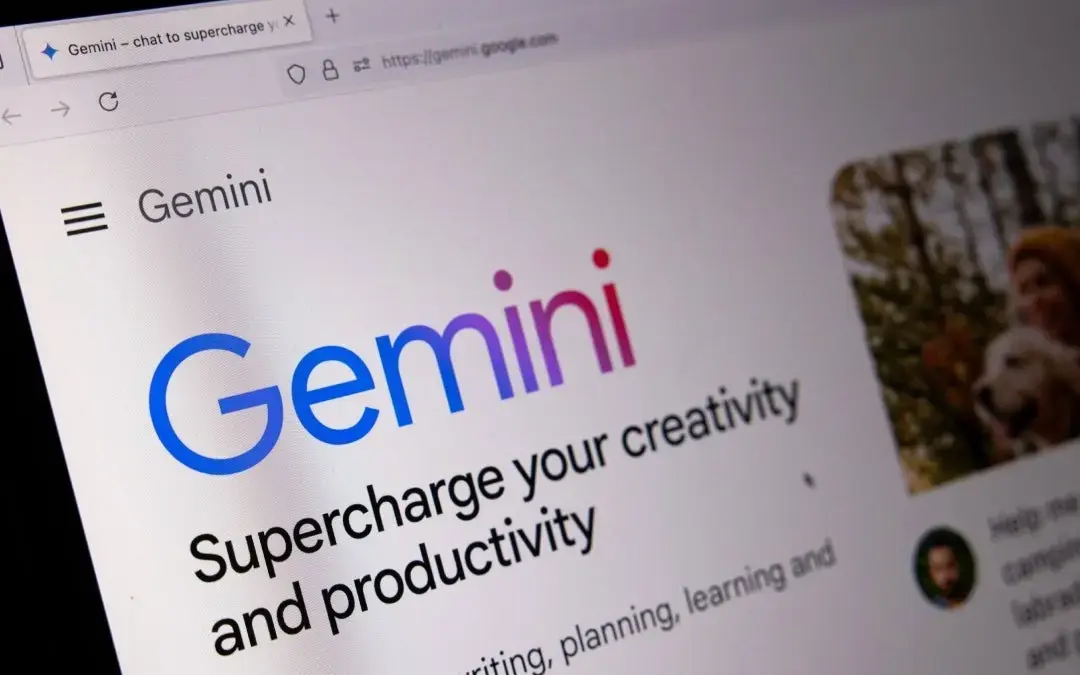
Main Facts: Google’s Bid for Enterprise Autonomy
In a major bid to capture the highly lucrative corporate artificial intelligence market, Alphabet Inc.’s Google has officially launched a new, highly autonomous Gemini agent designed specifically for the workplace. This strategic move directly intensifies Google’s ongoing battle against key rivals, including Microsoft Corp., OpenAI, and Anthropic PBC, all of whom are aggressively vying for dominance in the enterprise software space.
The newly unveiled Gemini agent is engineered to function not merely as a reactive chatbot, but as an active digital "co-worker." According to Google, the tool possesses its own corporate identity and the unprecedented ability to pursue complex, multi-day goals autonomously. This represents a significant technological shift from Google’s previous AI offerings, which were largely limited to executing single-turn prompts or performing pre-defined tasks within a single isolated application.
Operating natively within the Google Workspace ecosystem, the Gemini agent integrates across key enterprise tools, including Gmail, Google Drive, Google Docs, and Google Calendar. By synthesizing data across these applications, the agent can perform sophisticated workflows such as draft composition, calendar scheduling, data retrieval, and software coding.
+-----------------------------------------------------------------+
|                    GOOGLE GEMINI WORKPLACE AGENT                |
+-----------------------------------------------------------------+
|                                                                 |
|   [ Gmail ] <=======> [ Google Drive ] <=======> [ Calendar ]   |
|          \                  ||                   //            |
|           \                 ||                  //             |
|            v                 v                  v               |
|          +----------------------------------------+             |
|          |         Gemini Enterprise Agent        |             |
|          |  - Autonomous Multi-Day Workflows      |             |
|          |  - Dynamic Model Selection (Routing)   |             |
|          |  - Cost Control & Enterprise Security  |             |
|          +----------------------------------------+             |
|                              ^                                  |
|                              |                                  |
|                      [ Google Docs ]                            |
+-----------------------------------------------------------------+
To address the high operational costs that have historically deterred large-scale corporate adoption of generative AI, the agent features built-in cost controls and dynamic model routing. It automatically selects the most cost-effective and computationally appropriate model for any given sub-task.
In tandem with this launch, Google has begun sharing its next-generation, highly anticipated AI model, code-named Gemini 4 Argon, with trusted cybersecurity partners. This move highlights Google’s dual focus on rapidly advancing its underlying model capabilities while addressing internal anxieties regarding its competitive standing in coding and advanced reasoning. Following the announcement, Alphabet Inc. shares remained largely unchanged in New York trading, reflecting a market that is closely watching how these technical advancements translate into corporate balance sheets.
Chronology: The Evolution from Chatbots to Autonomous Agents
The launch of the Gemini enterprise agent marks a pivotal moment in Google’s rapid, sometimes turbulent, AI journey over the last two years.
[Late 2022] ------------------> [Early 2023] -----------------> [Late 2023]
OpenAI launches ChatGPT;        Google responds with Bard;      Bard rebranded to Gemini;
Market shift begins.            Initial reactive tools.         Multi-modal models debut.

[Mid 2024] -------------------> [Late 2024 / Present] --------> [The Horizon]
1.5 Pro launch (2M context);    Gemini Workplace Agent;         Gemini 4 Argon rollout;
Agentic workflows enabled. Autonomous multi-day tasks. Next-gen cyber testing.- Late 2022 – Early 2023: The Reactive Era. Following the public release of OpenAI’s ChatGPT, Google found itself under intense pressure to commercialize its generative AI research. The company quickly launched "Bard," a conversational chatbot that operated primarily on a prompt-and-response basis. These early iterations were strictly reactive, waiting for human input and operating within a single session without persistent memory or cross-application capabilities.
- Late 2023: The Gemini Transition. Google consolidated its AI initiatives under the "Gemini" brand, introducing a family of native multimodal models (Ultra, Pro, and Flash). Despite improved reasoning capabilities, these models still operated largely as sophisticated assistants rather than autonomous agents.
- Mid-2024: Expanding Context and Agentic Workflows. Google introduced Gemini 1.5 Pro, featuring a massive two-million-token context window. This technical breakthrough allowed the model to ingest entire codebases and thousands of pages of documents, laying the foundational infrastructure required for long-horizon task execution.
- Late 2024 (The Present): The Shift to Autonomous Co-workers. Google announced the Gemini workplace agent. Moving past simple prompt-response frameworks, this agent can independently plan and execute multi-step workflows spanning several days, marking Google’s official entry into the "Agentic AI" era. Concurrently, the company began external testing of its highly confidential next-generation model, Gemini 4 Argon, focusing first on rigorous cybersecurity evaluations.
Supporting Data: The Financial Stakes of the Enterprise AI Race
The deployment of autonomous agents is driven by a pressing financial reality: tech giants must justify their unprecedented capital expenditures (CapEx) on AI infrastructure.
The Cost of Innovation
Alphabet Inc., alongside Microsoft, Meta, and Amazon, is investing heavily in data centers, custom silicon (such as Google’s Tensor Processing Units, or TPUs), and Nvidia graphics processing units (GPUs).
| Metric / Financial Indicator | Value / Details |
|---|---|
| Alphabet Estimated Annual AI CapEx | Over $50 billion (exceeding $13 billion per quarter) |
| Industry-wide Infrastructure Projection | Expected to exceed $1 trillion over the next five years |
| Google Workspace User Base | Over 3 billion users worldwide (ideal pipeline for AI monetization) |
| Standard Enterprise AI Premium Add-on | Approximately $30 per user, per month |
To generate a return on these massive capital investments, tech companies must transition from selling consumer subscriptions to securing highly lucrative, multi-year enterprise contracts.
The Productivity Premium
While consumer applications struggle to sustain premium $20-per-month subscriptions, enterprises are willing to pay a premium for AI tools that directly reduce labor costs or accelerate time-to-market. By integrating the Gemini agent directly into Google Workspace, Google targets an established ecosystem of over 3 billion users, aiming to convert standard accounts into premium, AI-enabled enterprise seats.
Addressing Internal Friction and Competitor Benchmarks
The launch comes amid reports of internal concern among Google software engineers and researchers. Some employees have voiced worries that Google’s models have lagged behind key competitors—most notably OpenAI’s "o1" reasoning series and Anthropic’s Claude 3.5 Sonnet—specifically in complex coding benchmarks and agentic execution.
The early distribution of Gemini 4 Argon to cybersecurity partners is a direct response to these concerns. By testing its next-generation architecture in the high-stakes domain of cybersecurity, Google aims to validate its model’s advanced reasoning and code-generation capabilities before a wider commercial release.
Official Responses: Executive Vision and Governance
Google Cloud’s executive leadership has framed this launch as a necessary step forward in enterprise-grade AI safety, governance, and financial predictability.
Thomas Kurian, Chief Executive Officer of Google Cloud, outlined the strategic philosophy behind the Gemini agent in a comprehensive blog post:
"It chooses the best model for each task, features built-in cost controls, and most importantly, has the security, administration, and governance that your enterprise requires."
Kurian’s statement highlights three critical pillars of Google’s enterprise AI strategy:
              +-----------------------------------------------+
              |         THOMAS KURIAN'S THREE PILLARS         |
              +-----------------------------------------------+
                                      |
       +------------------------------+------------------------------+
       |                              |                              |
       v                              v                              v
[ Dynamic Routing ]           [ Cost Control ]             [ Enterprise Governance ]
Automatically matches         Prevents runaway cloud       Ensures strict data privacy,
tasks to the most cost-       costs by optimizing          preventing leaks into
efficient model size. computational overhead. public training sets.- Dynamic Routing: Enterprise workflows are rarely uniform. Writing a simple email response does not require the same computational power as analyzing a complex financial spreadsheet. The Gemini agent automatically routes tasks to the most appropriate model size (e.g., Gemini Flash for quick tasks, Gemini Pro for deep reasoning), optimizing performance.
- Predictable Cost Structures: A primary barrier to corporate AI adoption is the fear of unpredictable API usage bills. Google’s built-in cost controls allow IT administrators to set strict caps on agent activities, ensuring that autonomous, multi-day operations do not generate unexpected cloud expenses.
- Strict Enterprise Governance: Corporate clients are highly sensitive to data privacy, fearing that proprietary data could be leaked into public training sets. Google emphasizes that the Gemini agent operates within the secure boundaries of the customer’s Google Cloud tenant, adhering to strict compliance, data sovereignty, and encryption standards.
Implications: Redefining the Future of Work and Industry Dynamics
The introduction of autonomous, multi-day AI agents marks a shift in both the tech industry’s competitive landscape and the broader corporate labor market.
From "Copilot" to "Co-worker"
For the past two years, the prevailing paradigm for enterprise AI has been the "Copilot"—a digital assistant that sits alongside a human worker, waiting for instructions to summarize a thread, draft an email, or generate a block of code.
The Gemini agent shifts this paradigm toward Agentic AI. By operating autonomously over multiple days, the agent can receive a high-level goal (e.g., "Analyze our Q3 sales data in Drive, identify the top three underperforming regions, draft a summary report in Docs, and schedule a review meeting with the regional managers via Calendar"), break it down into sub-tasks, execute them, self-correct when errors arise, and present a finished product. This reduces the human role from active executor to high-level editor and supervisor.
The Competitive Landscape
This launch intensifies the rivalry among the "Big Tech" cloud and AI providers:
- Microsoft & OpenAI: Microsoft’s Copilot Studio and OpenAI’s rumored "Operator" agent are built on a similar thesis: enterprise customers want autonomous execution. Google’s advantage lies in its deep, native integration within Google Workspace, which is the primary competitor to Microsoft 365.
- Anthropic: Anthropic has gained significant enterprise traction with its Claude 3.5 Sonnet model, celebrated for its coding proficiency and its "Computer Use" capability, which allows the AI to interact with software interfaces like a human. Google’s rollout of Gemini 4 Argon is designed to blunt Anthropic’s momentum in these technical domains.
- Salesforce & Amazon: With Salesforce heavily promoting its "Agentforce" platform and Amazon Web Services (AWS) investing in its Q business assistant, the market is quickly becoming crowded. Google’s success will depend on its ability to prove that its agents are more deeply integrated and easier to deploy than competing solutions.
Impact on the Corporate Labor Force
As agents acquire the ability to execute multi-day workflows, the nature of white-collar work will inevitably evolve. Routine administrative tasks, data entry, basic scheduling, and introductory-level software debugging will increasingly be handled by autonomous agents.
While proponents argue this will free human workers to focus on higher-value creative and strategic tasks, economists warn of potential disruptions to entry-level professional roles, demanding rapid upskilling across the workforce.
Ultimately, Google’s Gemini agent represents more than just an incremental software update. It is an ambitious attempt to define the next phase of corporate productivity, proving that generative AI can deliver measurable, secure, and cost-effective business outcomes at a global scale.




Leave a Reply