

PARIS — In the shifting landscape of modern automotive design, few brands possess the audacious design heritage of Fiat. True to form, the storied Italian manufacturer has once again chosen the global stage of the Paris Motor Show to challenge conventional wisdom. Unveiled during Stellantis’s exclusive pre-show briefing, the Fiat Multiplay Concept is not merely a styling exercise aimed at teasing a near-future production vehicle; it is a profound philosophical statement.
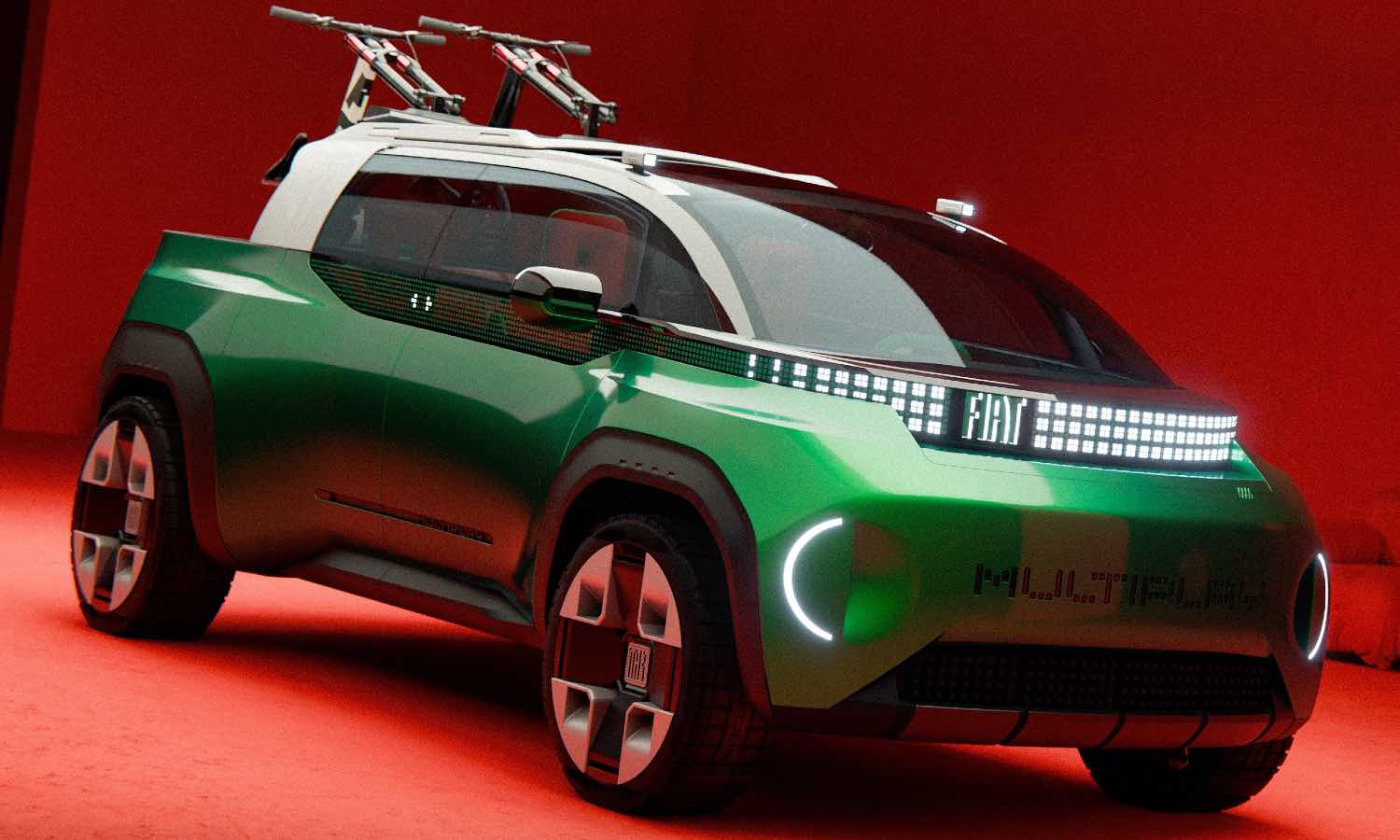
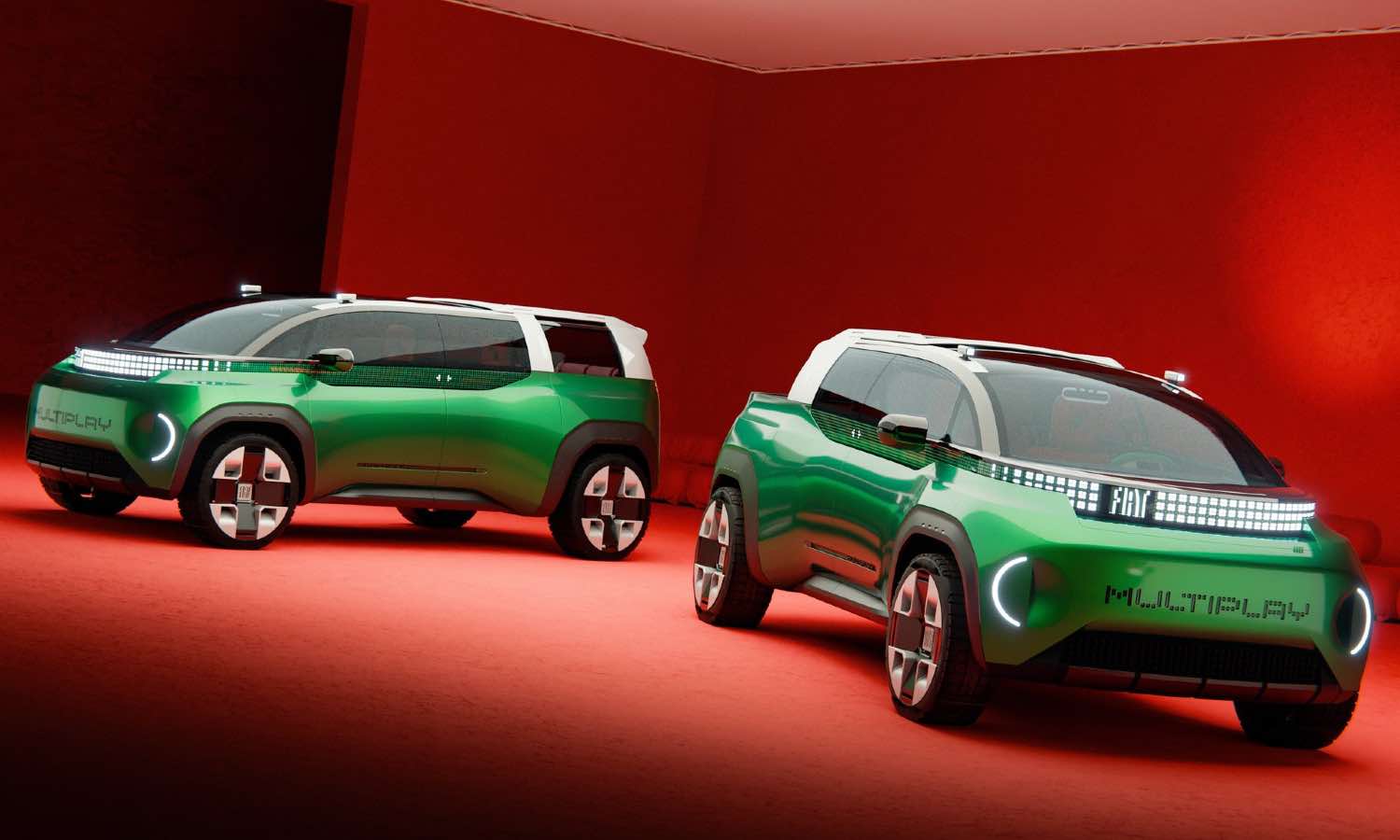
Measuring 4.45 meters in length, the Multiplay is an architectural chameleon. It seamlessly blurs the blurred lines of the modern automotive market by fusing the high-riding stance of an SUV, the cavernous interior volume of a traditional MPV, and the open-air utility of a pickup truck into a single, cohesive chassis. In doing so, Fiat has summoned the irrepressible, highly practical spirit of the legendary Multipla—substituting its polarizing aesthetics with forward-thinking structural ingenuity.
Main Facts: Deconstructing the Fiat Multiplay Concept
The Fiat Multiplay Concept is built around a singular premise: modern families do not live static lives, so why should their vehicles? Rather than forcing consumers to compromise between urban manageability, passenger capacity, and cargo utility, the Multiplay redefines spatial architecture through clever modularity.
- Vehicle Dimensions and Segment Blending: At 4.45 meters long, the Multiplay occupies the core C-segment footprint, yet it manages to package the utility of three distinct vehicle classes (MPV, SUV, and pickup) into one unified silhouette.
- The "Metamorfosi" System: The defining technological and structural feature of the concept is the Metamorfosi system, integrated into the C-pillar. A movable rear module travels along external guide rails, allowing the vehicle’s rear architecture to physically transform on demand.
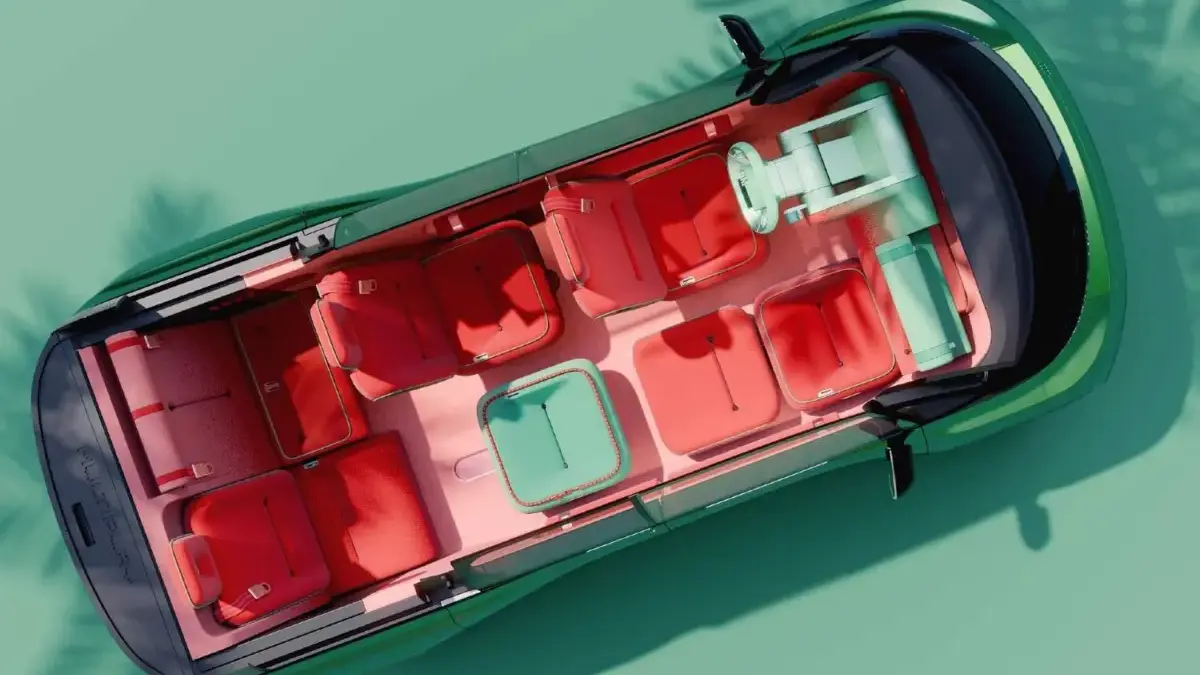
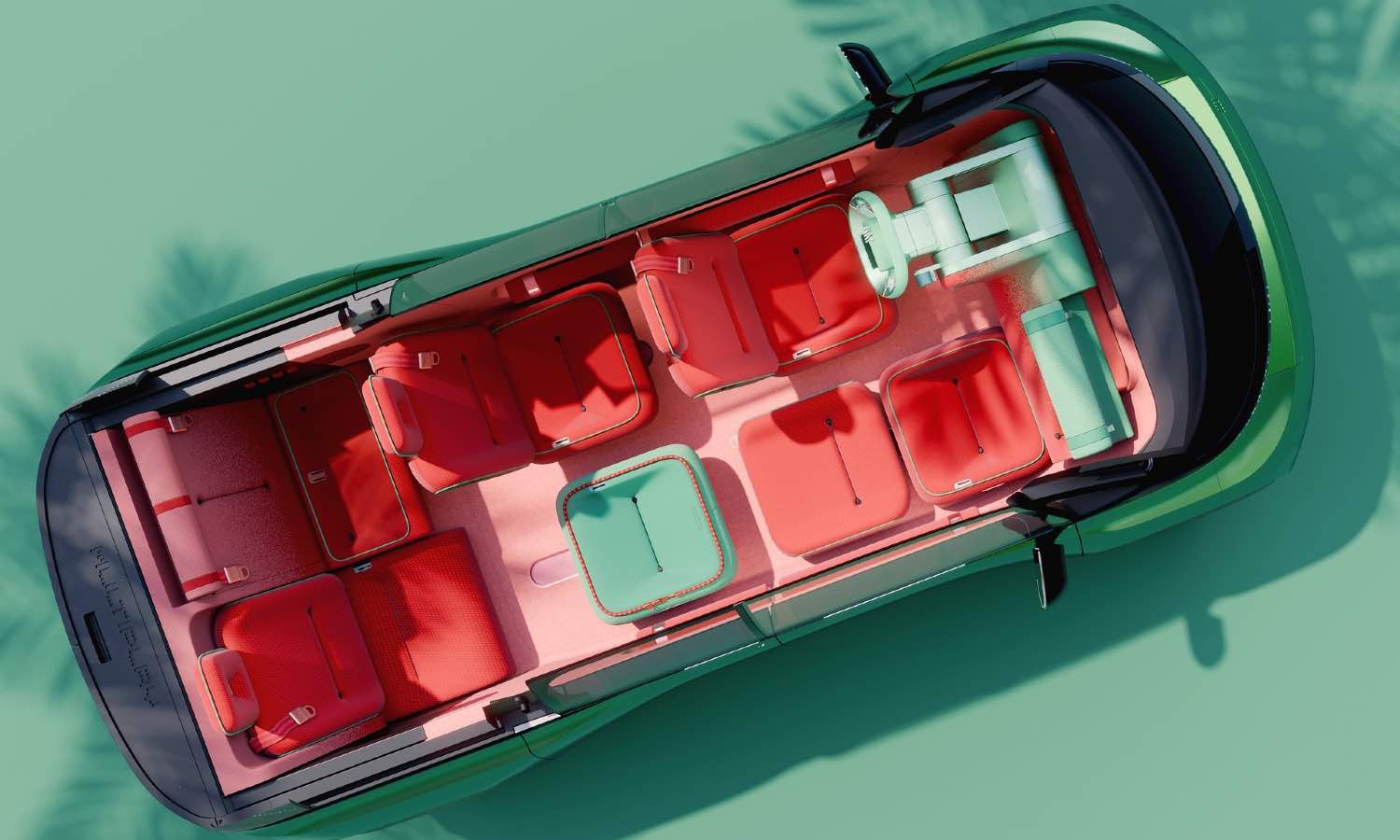
- Seating Configurations: In its primary family-oriented layout, the Multiplay adopts an innovative 6+1 seating matrix. When shifted into its cargo-heavy pickup configuration, the cabin condenses into a four-seater layout backed by an open-air bed capable of hauling bulky recreational gear, including up to two bicycles.
- Interior Innovations: The cabin introduces context-specific elements such as the Petsenger seat—a multi-functional forward passenger seat capable of housing a child safety seat, a pet, a storage compartment, or a picnic table—and the Sunseat, which transforms the front passenger area into a reclined lounge when the vehicle is parked.
- Design and Sustainability: Drawing aesthetic inspiration from a watermelon (featuring vibrant green exterior paint contrasted against rich pulp-inspired reds, pinks, and turquoise inside), the concept champions sustainable production. It utilizes monomaterial 3D-knitted fabrics without seams to drastically reduce manufacturing waste, alongside waterproof, heavy-duty surfaces in child and pet zones.
Chronology: A History of Spatial Defiance
To fully grasp the significance of the Multiplay Concept, one must retrace Fiat’s historic obsession with maximizing interior volume within minimal external footprints. The Italian marque has spent nearly seven decades pioneering space-saving vehicle design.
1956: The Genesis of Utility — The Fiat 600 Multipla
Long before the term "minivan" entered the automotive lexicon, Fiat introduced the 600 Multipla at the 1956 Brussels Motor Show. Based on the mechanical underpinnings of the rear-engine Fiat 600, the original Multipla managed to squeeze up to six occupants into a vehicle measuring just 3.5 meters in length. It was an engineering marvel that instantly captured the imagination of taxi drivers and large Italian families alike, proving that big utility could come in very small packages.
1998: The Ultimate Iconoclast — The Modern Multipla
Perhaps no vehicle polarizes automotive historians quite like the Fiat Multipla launched in 1998. With its distinctive, tiered beltline, flying-bridge dashboard, and unprecedented three-abreast seating layout across two rows (yielding six total seats in a car under four meters long), the Multipla became a cultural touchstone. Hailed by the Museum of Modern Art (MoMA) in New York for its revolutionary packaging efficiency, it remains a textbook example of function dictating form—even if its unorthodox styling alienated conservative buyers.
2026: The Paris Motor Show Revelation
Fast forward to the 2026 Paris Motor Show ecosystem. Following a closed-door preview by parent company Stellantis, Fiat pulled the covers off the Multiplay Concept. Rather than creating a direct stylistic retro-tribute to the 1998 icon, the design team focused entirely on the spirit of the original vehicle: solving spatial dilemmas through radical, unconventional thinking. The Multiplay debuted alongside more conventional family-haulers like the upcoming Grizzly and Grizzly Fastback SUVs, highlighting its role as an experimental outlier in the brand’s portfolio.
Supporting Data: Modular Architecture and Material Science
The engineering philosophy underpinning the Multiplay Concept relies heavily on advanced flexibility, both mechanically and materially.
Dynamic Rear Architecture (Metamorfosi)
The mechanical heart of the Multiplay lies in its sliding C-pillar module. Traditional crossovers force owners to choose between passenger comfort and cargo capacity via folding seats. The Multiplay circumvents this limitation by physically altering its rear overhang.
- Family Mode: The module extends backward, locking into a multi-row configuration capable of comfortably seating up to seven occupants (6+1 layout).
- Utility Mode: The module slides forward and transforms the rear into an open-air cargo bed. Integrated directly into the vehicle’s active aerodynamics, the rear spoiler can rotate outward to function as a built-in bicycle rack, securing up to two bikes without requiring aftermarket hitch attachments.
Cabin Ergonomics and Pet-Centric Design
Recognizing that modern households frequently include pets as core family members, Fiat integrated the Petsenger system. The seat cushion incorporates a detachable segment that instantly doubles as an integrated dog leash, while dedicated door panels conceal fold-out water and food bowls.
Furthermore, when the vehicle is parked, the Sunseat mode engages. The front passenger seat folds flat into the dashboard architecture, aligning with the expansive panoramic glass roof to create a sun-lounging area for rest stops during long road trips.
Sustainable Textiles
Environmental consciousness is woven literally and figuratively into the Multiplay’s interior. Fiat abandoned traditional multi-layer, glued, and stitched upholstery in favor of 3D-knitted monomaterials. Because these fabrics are woven to shape without cutting, manufacturing waste is reduced to near zero. High-stress zones dedicated to children and pets utilize wipe-clean, waterproof membranes designed to withstand the rigors of heavy, daily use.
Official Responses: What the Leadership is Saying
During the high-profile unveiling in Paris, top Stellantis and Fiat executives addressed the press to contextualize the Multiplay Concept, emphasizing that while the vehicle is currently a design study, its underlying philosophies represent the brand’s trajectory.
Arnaud Belloni, global head of Fiat, Lancia, and Abarth, underscored the brand’s commitment to practical innovation during his keynote address:
"The automotive industry often loses sight of what daily life actually demands from a family vehicle. The Multiplay is our way of asking: What if a car could morph to match the unpredictable rhythm of your week? We are not here to build a museum piece; we are studying how real families live, work, and play, ensuring that future Fiat models remain unpretentiously useful and undeniably clever."
Echoing these sentiments, Olivier François, strategic advisor for Stellantis, emphasized the importance of safeguarding Fiat’s uniquely Italian identity within the massive multinational automotive conglomerate:
"Fiat has always been the brand of the people—accessible, intelligent, and brimming with character. The Multiplay concept channels the rebellious, problem-solving genius of the 1956 and 1998 Multipla models. It proves that electric and modular mobility platforms do not have to be sterile. They can be warm, dynamic, and deeply human."
Implications: Where Does the Multiplay Fit in the Future of Mobility?
As the automotive industry pivots heavily toward electrification and standardized platform sharing across automotive giants like Stellantis, the Fiat Multiplay Concept serves as a vital exploratory sandbox.
1. Re-evaluating Platform Flexibility
While Stellantis has not announced plans to put the Multiplay into immediate production, the underlying engineering concepts—particularly mechanical modules that alter vehicle length and cargo profiles—offer a glimpse into how future flexible platforms (such as the STLA architectures) might evolve. As urban density increases and private parking spaces shrink, vehicles that can expand their utility only when needed represent a compelling solution to urban sprawl.
2. The Return of Emotional Practicality
For decades, the standard family car has been constrained to rigid body styles: the hatchback, the station wagon, the SUV, or the crossover. By aggressively cross-pollinating these segments, Fiat is testing consumer appetite for multi-functional tools. If reactions in Paris are any indication, buyers are hungry for vehicles that reject corporate homogeny in favor of genuine utility.
3. Bridging the Gap Between Concept and Reality
Though the Multiplay itself will likely remain a concept car, elements of its interior modularity—such as the sustainable 3D-knitted textiles, pet-friendly cabin features, and the versatile front passenger seating arrangements—are prime candidates to filter down into upcoming production vehicles. Paired with more traditional offerings like the upcoming Grizzly seven-seat SUV, Fiat is building a multi-pronged offensive to dominate the affordable family market.
In the end, the Fiat Multiplay Concept proves that even in a heavily regulated, hyper-rational automotive future, there is still ample room for a little Italian flair, a lot of practicality, and the courage to think completely outside the box.

Leave a Reply