

By Jhoan Sebastián Salazar (Adapted and Expanded)
International Sports Desk
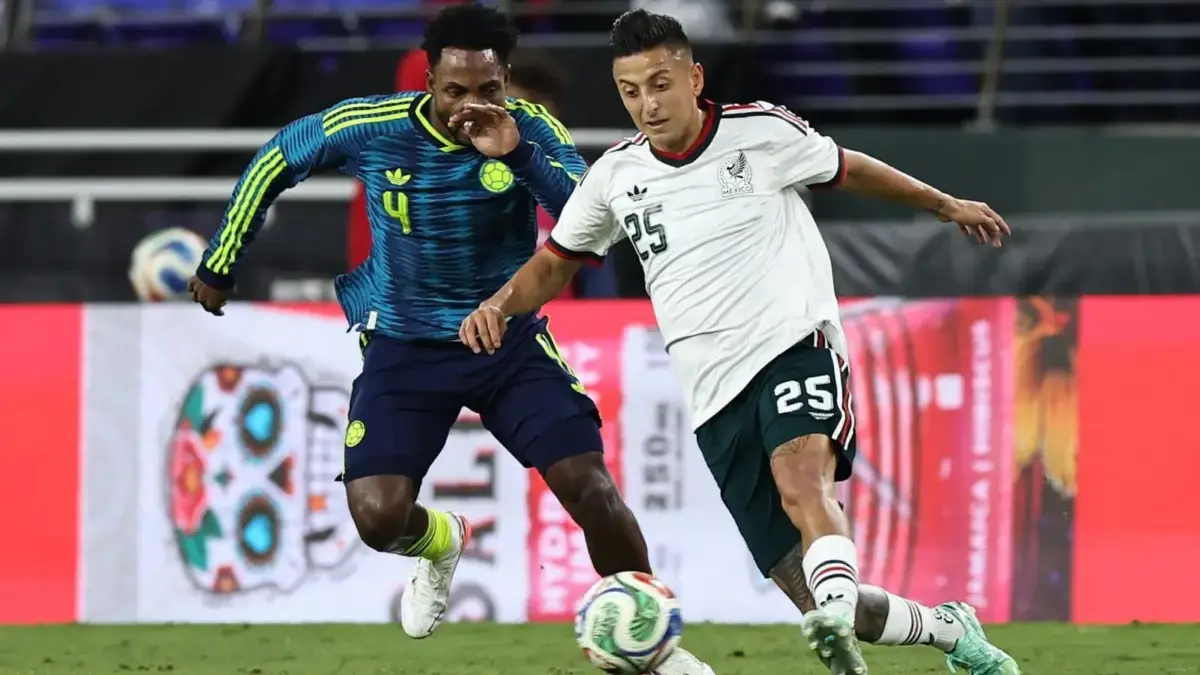
In an electrifying encounter staged on neutral soil in the United States, the Colombia Men’s National Team played out a hard-fought 1-1 draw against Mexico. The fixture, contested with all the intensity of a competitive official match, served as the Tricolor’s first outing since their elimination from the 2026 FIFA World Cup.
Beyond the scoreline, this high-profile friendly marked a watershed moment for Colombian football. It officially inaugurated a transitional era for the squad—one defined by the generational passing of the torch and the definitive absence of iconic playmakers James Rodríguez and Juan Fernando Quintero, both of whom recently announced their retirements from international duty.
While Colombia showed flashes of brilliance and early tactical discipline, Mexico dominated large stretches of the game, peppering the woodwork and testing goalkeeper Álvaro Montero repeatedly. Ultimately, a stunning header from forward Luis Suárez opened the scoring for Colombia, before young Mexican sensation Gilberto Mora leveled the playing field in the second half.
With the dust settling on a breathless 90 minutes in the U.S., the South American side must quickly turn its attention toward the horizon. Next up for the Tricolor is a stern test against Paraguay on Friday, October 2, at 7:00 PM local time, as part of an ongoing North American tour designed to rebuild and reshape the team’s identity.
Main Facts & Overview
The international friendly between Colombia and Mexico offered more than just an exhibition of continental rivals; it provided a vital diagnostic tool for two coaching staffs tasked with rebuilding after the emotional highs and lows of the 2026 World Cup cycle.
For Colombia, the stakes were psychological as much as they were tactical. Stepping onto the pitch without James Rodríguez—the creative heartbeat of the national team for over a decade—meant the squad had to find a collective rhythm. The legendary number 10 jersey famously found a new temporary home on the shoulders of Jhon Arias, signaling a deliberate shift toward a more dynamic, distributive midfield model.
Key Match Facts:
- Final Score: Colombia 1 – 1 Mexico
- Competition: International Friendly (FIFA Date)
- Location: United States
- Goalscorers:
- Colombia: Luis Suárez (9’)
- Mexico: Gilberto Mora (61’)
- Next Fixture: Colombia vs. Paraguay, Friday, October 2, at 7:00 PM (US Venue).
- Milestone: The match marked the official beginning of the post-James Rodríguez and Juan Fernando Quintero era for the Colombian national team.
Tactical Breakdown: First Half
The match began at a blistering pace, with both sides refusing to sit back in a feeling-out process. Instead, Colombia and Mexico both signaled aggressive intentions from the opening whistle, pressing high up the pitch and looking to dictate the tempo.
The Breakthrough: Suárez Strikes Early
It took less than ten minutes for the deadlock to break. In the 9th minute, midfielder Richard Ríos orchestrated a magnificent attacking sequence down the right flank. Exhibiting superior pace and vision, Ríos skipped past his marker and delivered a pinpoint, bending cross to the far post.
Lurking with intent was striker Luis Suárez. Rising above the Mexican defense, Suárez met the cross with a spectacular, textbook header that left the goalkeeper stranded, rocketing into the back of the net to make it 1-0. The strike marked Suárez’s sixth career goal wearing the colors of the senior Colombian national team, cementing his growing importance to the squad’s offensive structure.
Mexico’s Onslaught and the Woodwork
stung by the early concession, Mexico quickly reorganized and began to impose themselves on the game, carving out a series of dangerous opportunities that left Colombian supporters holding their breath.
- Minute 30: Mexican maestro Luis Chávez stepped up to take a direct free kick just outside the penalty area. His curling effort beat the wall but sailed narrowly over the crossbar, narrowly missing Álvaro Montero’s goal.
-
Minute 31 (The Triple Scare): Absolute chaos unfolded in the Colombian box. Following a defensive clearance by central defender Jhon Lucumí, the ball fell kindly to 17-year-old Mexican prodigy Gilberto Mora. Mora unleashed a fierce, crossed shot that beat Montero only to crash violently against the right vertical post.
The rebound fell straight to the feet of Luis Chávez, who reacted instinctively to strike it first-time—only to see his thunderous effort rattle the crossbar.
- Minute 35: Mexico’s relentless pressure continued. A lofted cross found veteran winger Hirving "Chucky" Lozano at the far post. Lozano directed a powerful header toward goal, marking the third time in a matter of minutes that Mexican woodwork denied an equalizer.
- Minute 42: Right before the halftime whistle, Armando González found space in the box and fired a low, crossed shot aiming for the bottom corner. However, Álvaro Montero produced a sensational reflex save, stretching out a boot to parry the ball away and preserve Colombia’s narrow 1-0 lead heading into the locker rooms.
The Second Half: Shifts and Equalizer
As the teams emerged for the second half, the tactical narrative remained unchanged: high intensity, end-to-end transition play, and aggressive ball movement.
Arias Tests Rangel
Colombia sought to double their lead early in the half. In the 51st minute, Jhon Arias—bearing the heavy historical weight of wearing the iconic number 10 shirt for this fixture—stepped up to take a direct free kick. Arias struck the ball cleanly, bending it around the wall and toward the top corner. However, Mexican goalkeeper Raúl Rangel reacted brilliantly, flying through the air to palm the ball away in what was easily one of the saves of the match.
Mora Breaks Through
After mounting wave after wave of sustained pressure, El Tri finally reaped the rewards of their offensive persistence in the 61st minute.
Jesús Gallardo initiated the move with a piece of individual brilliance on the left wing, threading a visionary, defence-splitting pass into the path of Gilberto Mora. The young sensation capitalized on hesitation within the Colombian backline, effortlessly slipping past both central defenders, Jhon Lucumí and Davinson Sánchez. With the path clear, Mora maintained his composure and slotted a clinical, low finish past Montero, restoring parity at 1-1.
Late Drama
With the scores level, the match entered a transitional phase characterized by scrappy battles in the midfield. Both managers turned to their benches to inject fresh legs and tactical variations.
Mexico continued to look the more dangerous side in the final third. In the 83rd minute, a swift switch of play caught the Colombian defense out of position, landing at the feet of substitute Isaías Violante. Violante cut inside and fired a dangerous, crossed effort toward the far corner, but Álvaro Montero was once again up to the task, diving low to smother the shot and ensure his side didn’t leave empty-handed.
As the referee blew the final whistle, it was evident that Mexico had come closer to stealing a late victory. Nevertheless, a draw was a fair reflection of a pulsating 90 minutes that severely tested both squads’ defensive depth.
Supporting Data & Match Statistics
To truly understand the narrative of this international friendly, one must look beyond the 1-1 scoreline and examine the underlying metrics. While Colombia was efficient in converting their early chances, Mexico dictated the flow of the match through sustained possession and overwhelming shot generation.
- Possession: Mexico 54% – 46% Colombia
- Total Shots: Mexico 18 – 9 Colombia
- Shots on Target: Mexico 6 – 3 Colombia
- Woodwork Hits: Mexico 3 – 0 Colombia
- Saves: Álvaro Montero (Colombia) 5 – 2 Raúl Rangel (Mexico)
- Fouls Committed: Mexico 12 – 14 Colombia
- Yellow Cards: Mexico 2 – 3 Colombia
The statistical dominance of Mexico—particularly their three shots hitting the woodwork—highlights defensive frailties that Colombian manager Néstor Lorenzo (or the technical staff leading this transitional phase) must address before facing continental opposition in October. Conversely, Colombia’s clinical efficiency, scoring from limited chances, underscores the lethal instinct of forwards like Luis Suárez when provided with quality service from wide areas like those generated by Richard Ríos.
Official Responses and Post-Match Reactions
Speaking to the press after the final whistle, members of the Colombian delegation emphasized the importance of perspective as the team navigates its post-World Cup rebuild.
"We knew this was going to be a physically demanding test against a historic rival," noted a member of the coaching staff in the post-match press conference. "Losing players of the caliber of James Rodríguez and Juan Fernando Quintero leaves a massive void, not just in terms of technical ability on the pitch, but in leadership within the dressing room. Today, we saw a young team step up, fight for every ball, and show character after conceding. There are mistakes to correct, especially defensively in transitions, but the commitment is undeniable."
Meanwhile, goalscorer Luis Suárez reflected on his performance and the broader evolution of the squad:
"I am happy to contribute with a goal and help the team, but the most important thing today was finding our footing in this new cycle. We have a lot of young talent coming up. Richard [Ríos] put in a brilliant ball for the goal, and we are learning how to play together without our veteran leaders. We take the positive aspects of this draw, but we know the work ahead of us is immense—starting with Paraguay next week."
Mexican analysts and coaching staff were equally reflective, praising the resilience of their young squad—particularly the standout performance of 17-year-old goalscorer Gilberto Mora—while acknowledging that missed chances prevented a definitive victory.
Implications for the Future: The Road to Recovery
The 1-1 draw against Mexico is much more than a routine friendly result; it is the foundational building block for a new era of Colombian football. As the nation heals from the disappointment of missing out on the deeper stages of the 2026 World Cup cycle, the national team’s infrastructure is undergoing radical renovation.
1. The Generational Succession Plan
The retirements of James Rodríguez and Juan Fernando Quintero mark the end of a golden generation that defined Colombian creativity for over a decade. Handing the number 10 shirt to Jhon Arias in this fixture was symbolic, but the true challenge lies in distributing playmaking duties across a collective system rather than relying on a single talisman. Players like Richard Ríos, who provided the assist against Mexico, are stepping into larger leadership roles, proving that the midfield possesses the raw materials for a sustainable future.
2. Defensive Vulnerabilities
While the attack showed flashes of brilliance—exemplified by Luis Suárez’s clinical movement—the defense left much to be desired. Allowing Mexico 18 shots and permitting three separate instances where the ball struck the woodwork points to a lack of compactness between the midfield and the central defensive pairing of Jhon Lucumí and Davinson Sánchez. Tightening these spaces will be the primary objective for the technical staff ahead of the upcoming fixtures.
3. The October Test Against Paraguay
Time waits for no team in international football. The Tricolor cannot afford to dwell on the lessons learned in the United States. Preparations are already underway for the second friendly of this FIFA window, scheduled against Paraguay on Friday, October 2, at 7:00 PM (North American time).
This upcoming clash against a traditional South American adversary will provide an entirely different tactical challenge compared to the high-tempo, North American style of play encountered against Mexico. For Colombia, it represents another crucial laboratory experiment to test tactical adjustments, integrate younger prospects, and restore the winning mentality that fans of the Tricolor have come to expect.
As the team boards planes and refocuses training camps, one thing is abundantly clear: the post-World Cup era has officially begun, and while the journey will be fraught with transition pains, the passion and talent within the squad remain as vibrant as ever.


Leave a Reply