

By Jhoan Sebastián Salazar
Enriched and Adapted for International Sports Journalism
Main Facts: The Dawn of a New Cycle
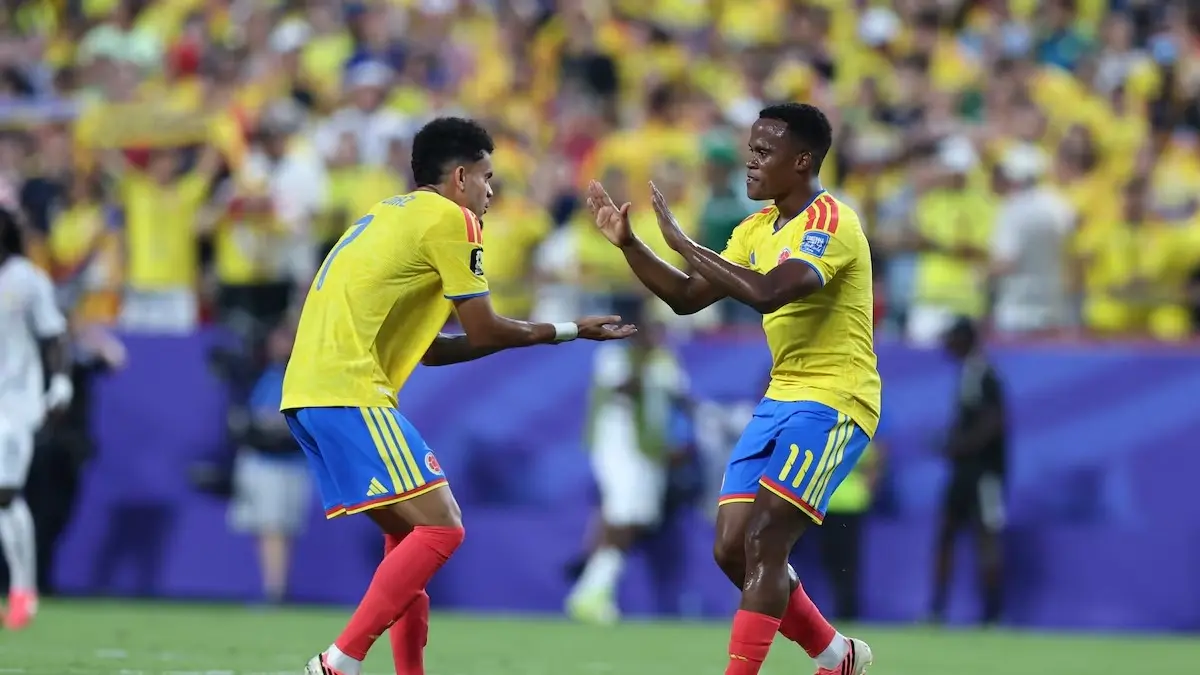
The winds of change are sweeping through the corridors of the Colombian Football Federation (FCF). Following a demanding World Cup campaign and the poignant international retirements of golden-generation icons James Rodríguez and Juan Fernando Quintero, head coach Néstor Lorenzo has officially announced the squad list for the upcoming FIFA international window.
The Tricolor is set to embark on a demanding tour of the United States, facing traditional continental rivals Mexico, Paraguay, and Peru across late September and early October. More than just a series of friendly matches, this gathering represents ground zero for a massive generational overhaul. Lorenzo’s blueprint is clear: carefully orchestrating a transition phase designed to unearth new talent, establish depth, and lay the tactical and cultural foundation for the ultimate horizon—the 2028 Copa América.
The headline of this 26-man roster is the unmistakable absence of the past decade’s familiar architects, coupled with the inclusion of fresh faces, European-based youngsters tasting senior national team action for the first time, and rising stars ready to shoulder the heavy mantle of Colombian football.
Supporting Data: Rising Stars, European Transfers, and Tactical Adjustments
While the veteran leadership of James and Quintero has departed, the squad boasts a vibrant mix of established European operators and high-performing youngsters who have captured the attention of scouts worldwide.
The European Vanguard and Domestic Standouts
At the back, defensive pillar Dávinson Sánchez brings his experience from Turkish powerhouse Galatasaray, while Jhon Lucumí commands headlines as the sole Colombian to secure a blockbuster transfer to an elite European club this season, making the high-profile switch to Italian giants Juventus.
The midfield and creative engine rooms feature Gustavo Puerta—lauded as one of the standout performers at the FIFA World Cup before earning a move to Greek giants Olympiacos—and Jhon Arias, whose scintillating form for Palmeiras has made him indispensable. Meanwhile, in the attacking third, Luis Javier Suárez is out for personal and collective redemption, continuing his prolific goalscoring exploits for Portuguese giants Sporting CP.
The Mystery of Lucho Díaz
One of the most notable omissions from the list is Liverpool (now Bayern Munich) winger Luis Díaz. The explosive forward’s absence initially sent shockwaves through the fan base, but Lorenzo was quick to clarify the situation during his press conference.
"In principle, every microcycle is a continuation of the process. There is a transition and generational renewal that we believe is necessary, and for that reason, we have decided to give rest to many athletes who are part of the National Team but are currently experiencing specific situations at their clubs," Lorenzo explained.
Addressing Díaz directly, the Argentine coach revealed that they shared an extensive conversation. Lorenzo noted that he perceived signs of physical and mental fatigue in the winger. Following a mutual exchange of views, they agreed that skipping this international window would allow Díaz to decompress and manage a heavy, taxing club fixture load.
The Giant from Guachené: Introducing Royer Caicedo
Among the new call-ups, one name has generated immense curiosity among analysts and fans alike: Royer Caicedo. Born in Guachené, Cauca, on May 5, 2006, the 20-year-old center-back developed within the famed youth ranks of Atlético Nacional before making the jump to European football. Standing at an imposing 1.95 meters (approximately 6’5"), Caicedo combines modern defensive reading with towering aerial dominance, making him a fascinating long-term prospect for Lorenzo’s defensive line.
Official Responses: Lorenzo’s Vision for the Post-James Era
The transition from a squad anchored by playmakers like James Rodríguez and Juan Fernando Quintero to a more dynamic, collective unit is no small task. Lorenzo was candid about the cultural shift required within the dressing room and the weight of wearing the yellow jersey.
"There is talent; we have to give the players playing time so that the jersey doesn’t weigh too heavily on them, and so that what they do for their clubs, they replicate for their National Team," Lorenzo stated.
Acknowledging the legendary footsteps his new squad must follow, the manager drew a direct line between past maestros and present leaders:
"James and Juanfer, just like El Pibe Valderrama, Macnelly Torres, and Edwin Cardona, took charge of that responsibility. Jhon Arias also dictates play, and he does so alongside Yáser Asprilla, Jorge Carrascal, and other players who are also stepping up to assume that responsibility."
Lorenzo’s philosophy emphasizes that creativity will no longer rest on the shoulders of a single number 10, but will instead be distributed across a multi-faceted tactical framework capable of pressing high, transitioning rapidly, and breaking down deep defensive blocks through collective movement.
Chronology: The United States Tour Schedule
The Tricolor’s North American itinerary is designed to test the tactical adaptability and mental resilience of Lorenzo’s new-look squad. The demanding fixtures will unfold across three distinct venues:
- September 26, 2025: Colombia vs. Mexico
Location: TBD, United States
Significance: The opening test of the new cycle, offering an intense tactical clash against a traditional regional rival. - October 2, 2025: Colombia vs. Paraguay
Location: New Jersey, United States
Significance: A physical, CONMEBOL-style encounter on East Coast soil, testing Colombia’s ability to handle rugged defensive blocks and direct play. - October 6, 2025: Colombia vs. Peru
Location: Miami, Florida, United States
Significance: The tour finale in the vibrant footballing hub of South Florida, providing a final laboratory setting for Lorenzo to evaluate fringe players before competitive fixtures resume.
Implications: Building Toward Copa América 2028
The decisions made by Néstor Lorenzo today will reverberate for the rest of the decade. By proactively initiating a transition away from the golden generation rather than waiting for forced attrition, the coaching staff is signaling a modern, proactive approach to national team management.
Squad Balance and Youth Integration
The 26-man roster reveals a calculated blend of domestic league talent, South American standouts, and emerging European prospects:
- Goalkeepers: Aldair Quintana, Álvaro Montero, Kevin Mier.
Analysis: Mier continues to consolidate his status as a modern sweeper-keeper, supported by the veteran presence of Montero and Quintana. - Defenders: Álvaro Ángulo, Daniel Muñoz, Dávinson Sánchez, Édier Ocampo, Jhon Lucumí, Kevin Andrade, Royer Caicedo, Samuel Velásquez.
Analysis: The inclusion of dynamic full-backs like Muñoz alongside elite central anchors like Sánchez and Lucumí, paired with raw youngsters like Caicedo, gives Lorenzo tactical flexibility (shifting between back-four and back-three systems). - Midfielders: Daniel Arcila, Gustavo Puerta, Jaminton Campaz, Jhon Arias, Jhon Solís, Juan Manuel Rengifo, Kevin Castaño, Matías Orozco, Richard Ríos, Yáser Asprilla.
Analysis: This is arguably the most dynamic sector of the squad. The blend of Ríos’s physical box-to-box engine, Puerta’s vision, Asprilla’s flair, and Arias’s tactical intelligence ensures the team will not lack for transitional speed or creativity. - Forwards: Carlos Gómez, Juan Camilo Durán, Kevin Viveros, Luis Suárez, Óscar Perea.
Analysis: With Luis Díaz rested, the attacking line relies on Suárez’s European-honed poaching instincts and the raw, electric pace of youngsters like Óscar Perea and Carlos Gómez.
The Ultimate Goal
As the team touches down in the United States, the stakes are clear. The results of these friendlies will be scrutinized, but the true metric of success will be performance: how quickly the new generation adapts to the international tempo, how seamlessly the tactical principles are executed without the historical safety blankets of James and Quintero, and whether Colombia can forge an identity capable of conquering South America in 2028.
For Néstor Lorenzo and his revamped Tricolor, the future has officially arrived.

Leave a Reply