

Main Facts
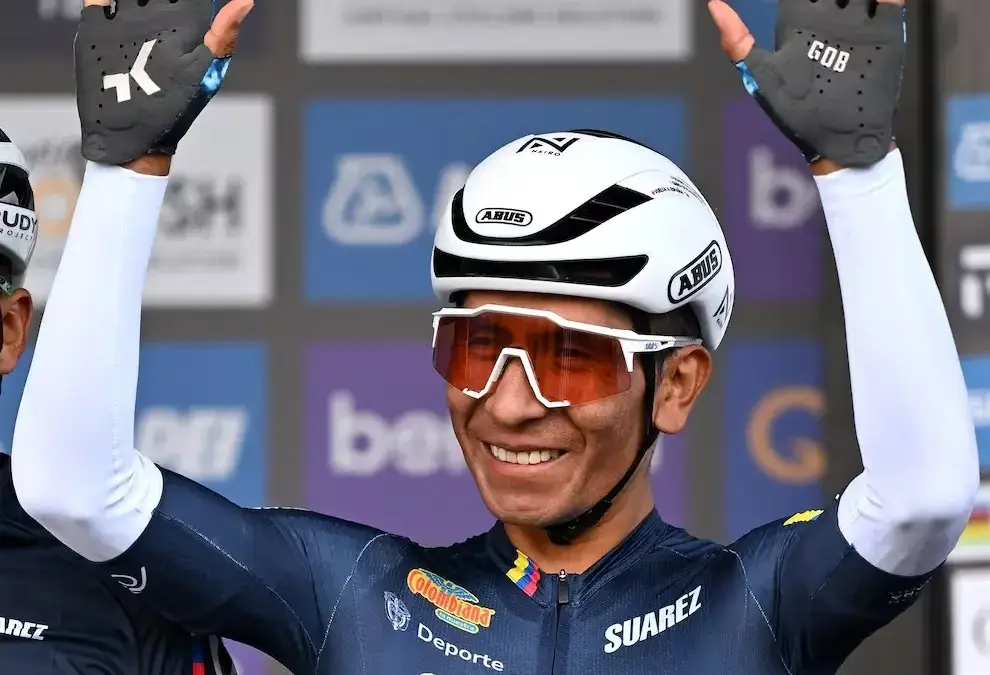
The cycling world recently bore witness to a deeply poignant moment in modern sports history as Nairo Quintana, one of the most decorated and celebrated climbers of the 21st century, donned the iconic yellow, blue, and red jersey of the Colombian national team for the very last time. The stage was the elite men’s road race at the UCI Road World Championships, held against the picturesque yet brutally demanding backdrop of Montreal, Canada.
For Quintana, a proud native of the Boyacá department, the event marked the formal conclusion of a profound international chapter. While the race itself did not yield a fairytale podium finish—with the veteran Movistar Team stalwart forced to abandon the punishing course before crossing the finish line—the sporting outcome was vastly overshadowed by the symbolic weight of the occasion. Out of a resilient Colombian contingent, only Santiago Buitrago managed to successfully navigate the attrition-heavy course and cross the final line.
Despite his early exit, Quintana remained the epicenter of affection, drawing immense ovations from both local fans and the passionate pockets of Colombian expatriates who lined the Canadian circuit. His participation in Montreal serves as the penultimate chapter of an illustrious career, paving the way for his absolute retirement from professional cycling, which is slated to occur on October 3 at the prestigious Giro dell’Emilia, where he will once again wear the blue colors of the Movistar Team.
Chronology of Events: The Montreal World Championships
The road to the elite men’s road race in Montreal was paved with high expectations and immense emotional resonance. The Canadian World Championships circuit is historically renowned for its technical descents, relentless punchy climbs, and an atmosphere that electrifies North American cycling.
The Buildup and Pre-Race Atmosphere
From the moment the Colombian delegation touched down in Canada, the spotlight was fixed firmly upon Quintana. Training sessions transformed into impromptu fan meetings, with supporters chanting his name and holding aloft banners bearing expressions of gratitude. Within the team bus, the atmosphere was a mix of solemn reverence and tactical focus. National coach and teammates alike understood the gravity of the mission: ride for glory, but above all, support Quintana in what would be his final international duty for his homeland.
The Race Unfolds
As the flag dropped, the pace was ferocious from the opening kilometer. World-class classics riders and Grand Tour contenders immediately shredded the peloton, setting an unsustainable cadence over the Montreal hills. Quintana, true to his fighting ethos, positioned himself near the front, offering tactical insights and covering early-race moves.
However, the modern one-day World Championships format demands a neurological and physical explosiveness that favors younger, explosive powerhouses. As the race ground into its second half, the cumulative fatigue of a long season—combined with the brutal acceleration rates on the circuit’s steepest inclines—began to exact a heavy toll.
Realizing that his body could no longer match the blistering acceleration of the front group, and prioritizing his physical well-being ahead of his final professional dance in Italy, Quintana made the pragmatic decision to step off the bike. As he pulled over to the side of the road, the television motorcycles captured a bittersweet moment: a wave to the camera, a final adjustment of his helmet, and the realization that an era spanning over a decade of elite national representation had officially drawn to a close.
Supporting Data: The Legacy and Numbers of a Titan
To fully grasp the magnitude of Nairo Quintana’s final ride in the national colors, one must examine the monumental statistical footprint he leaves behind on international cycling.
Grand Tour Supremacy
Quintana is one of the rare riders of his generation to have successfully penetrated the European hegemony of Grand Tour racing, establishing South America as a global powerhouse in endurance sports.
- Giro d’Italia: Crowned champion in 2014, a masterclass in high-altitude resilience and tactical climbing.
- Vuelta a España: Claimed the overall red jersey in 2016 after a legendary tactical ambush alongside Alberto Contador.
- Tour de France: Finished on the podium three times (second overall in 2013 and 2015, and third in 2016), frequently pushing the legendary Chris Froome to his absolute limits on the legendary alpine and pyrenean ascents.
National Team Contributions
Quintana’s relationship with the Selección Colombia goes far beyond the World Championships. For over fifteen years, he has been the vanguard of Colombian cycling on the global stage, serving as team leader in World Championships, Olympic Games, and regional competitions. His presence on the team not only galvanized tactical execution but also attracted vital sponsorship and global media attention to Colombian cycling federations.
In Montreal, while the race statistics recorded a "DNF" (Did Not Finish) next to his name, the sociological and emotional data told a vastly different story: an outpouring of digital engagement, millions of television viewers tuned in specifically for his farewell, and a legacy cemented in the hearts of sports fans worldwide.
Official Responses and Emotional Reflections
Following his departure from the race, Quintana addressed the media and his legions of fans with a raw, unfiltered vulnerability that has endeared him to the public throughout his career.
"Ha sido bonito y especial para mí poder terminar subiendo las pulsaciones, representando a mi país, moviendo la pasión de todo un país y dar lo máximo," Quintana reflected, his voice thick with emotion. "Siempre lo que nos caracterizó fue dar lo máximo hasta el final y no guardarnos nada."
(Translation: "It has been beautiful and special for me to finish by getting my heart rate up, representing my country, moving the passion of an entire country, and giving my absolute best. What has always characterized us was giving our maximum until the very end and holding nothing back.")
The Boyacá native went on to emphasize that his greatest victories were never merely measured in UCI points or golden trophies, but rather in the cultural impact he left behind:
"El cariño de los colombianos es el premio más grande que he podido ganar a lo largo de toda mi carrera deportiva. No solamente poder hacer soñar a los ciclistas, sino a todo un país y a todo un continente, poder transmitirles y decirles que sí se podía, que teníamos que dar lo máximo," he added. "Agradecerles infinitamente, aunque no han montado en una bicicleta, pedalearon conmigo."
(Translation: "The affection of Colombians is the greatest prize I could have won throughout my entire sporting career. Not only being able to make cyclists dream, but an entire country and an entire continent, being able to transmit to them and tell them that it was possible, that we had to give our maximum. I thank them infinitely; even those who have never ridden a bicycle, they pedaled with me.")
Teammates and federation officials also chimed in, praising Quintana for his leadership. Santiago Buitrago, the lone Colombian to finish the grueling Montreal route, dedicated his resilience on the road to the departing master, noting that watching Quintana fight on the early climbs provided the psychological fuel needed to keep the Colombian flag flying until the final meters of the race.
Implications: The End of a Golden Generation and the Road Ahead
Nairo Quintana’s retirement from international duty and his impending final professional race carry profound implications for the sport of cycling, particularly within Latin America.
The Closing of a Golden Era
Quintana, alongside compatriots such as Rigoberto Urán and Egan Bernal, formed the vanguard of a historical shift in professional cycling. Before their emergence, South American riders were often stereotyped as niche climbers useful only for individual mountain stages. Quintana shattered this glass ceiling, proving that a rider from the high-altitude terrain of Boyacá could master time trials, orchestrate multi-week team strategies, and conquer the overall classification of cycling’s most prestigious races. His departure signifies the twilight of this pioneering generation, forcing Colombian cycling to look toward a transitional future.
The Next Generation: Filling the Void
As Quintana hangs up his wheels following the upcoming Giro dell’Emilia on October 3, the Colombian Cycling Federation faces the formidable task of institutional restructuring. While talents like Santiago Buitrago, Daniel Felipe Martínez, and Egan Bernal continue to fly the flag at the World Tour level, the unifying gravitational pull that Quintana provided in the team bus cannot be easily replaced. His mentorship of younger riders has been invaluable, and the sports world will watch keenly to see how his wealth of tactical knowledge and racing intelligence is reinvested into the sport—whether through coaching, federation management, or advocacy for youth cycling development in Colombia.
Looking Toward the Giro dell’Emilia
All eyes now turn to Saturday, October 3. As autumn descends upon Italy, the Giro dell’Emilia will provide the final canvas for Nairo Quintana’s legendary career. Racing once more in the magenta and blue of the Movistar Team—the organization where he achieved his most transcendent victories—Quintana will embark on one final descent, one final climb, and one final push toward a finish line.
While the jersey of the Colombian national team rests neatly folded in a commemorative display back in Bogotá, the spirit of the Boyacense eagle remains airborne. For millions of fans across Colombia, Latin America, and the globe, Nairo Quintana did not merely pedal through European mountain passes; he carved a permanent path of possibility, proving that with grit, humility, and unwavering heart, even the highest summits are within reach.

Leave a Reply