

By the Editorial Health & Fitness Desk
For decades, public health messaging has delivered a reassuringly simple mantra to aging populations: just keep moving. Whether it is taking a gentle stroll through the neighborhood, pottering around the garden, taking a leisurely bike ride, or swimming a few laps at the local pool, physical activity has long been prescribed as the ultimate elixir for a long and healthy life.
And while any movement is undeniably better than none, modern sports science and medical research are forcing a radical paradigm shift. Ser being "active" is no longer enough. If your goal is true health, metabolic resilience, and the active retardation of physical decline, you need to push past the comfort zone. You need to embrace vigorous exercise and resistance training.
1. Main Facts: The Myth of the Gentle Prescription
The core conflict in modern wellness lies in a persistent, albeit shrinking, gap between what physical conditioning professionals preach and what traditional medicine routinely prescribes.
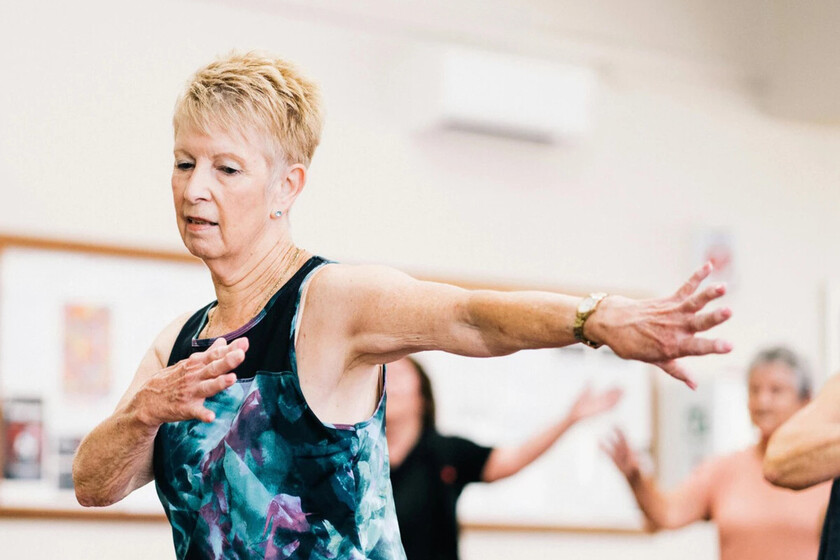
Consider a standard, highly common scenario: An older adult visits their primary care physician for a routine annual check-up. Blood panels return with a single flagged marker—perhaps slightly elevated cholesterol. It is not an acute emergency, but it is pronounced enough for the physician to offer a lifestyle intervention.
The patient asks a comforting question: "Is walking a good option? I already do that."
Delighted, the doctor nods approvingly and encourages them to keep logging those steps.
While walking, swimming, and cycling are fantastic for cardiovascular upkeep and joint-friendly movement, they completely bypass a fundamental biological rule: The human body only adapts to the specific demands placed upon it.
If you only ask your body to walk at a leisurely pace, it will optimize strictly for that. It will not build bone mineral density, it will not combat severe sarcopenia (age-related muscle loss), and it will not trigger the robust metabolic adaptations required to truly turn back the clock on biological aging.

The Problem with "Fragility Medicine"
Professional trainers and dietitians frequently encounter patients who have been handed conservative, risk-averse prescriptions by well-meaning physicians. While doctors readily endorse swimming or walking, mentioning heavy deadlifts, kettlebell swings, or high-intensity interval training (HIIT) for a 70-year-old often invites skepticism or outright prohibition.
This overly cautious approach treats aging bodies as fragile glass rather than adaptable, resilient biological systems. When older adults are shielded from physical fatigue and muscular tension, they inadvertently accelerate their own decline.
2. Chronology: How the Medical Consensus is Shifting
The journey from absolute sedentarism to modern exercise gerontology has evolved significantly over the last several decades, moving from complete bed-rest advisories for the elderly to the current push for high-intensity longevity training.
- The Mid-20th Century (The Era of Rest): Historically, aging and chronic conditions like arthritis or osteoporosis were treated with rest. Patients were told to take it easy, avoid stressing their joints, and let their bodies rest to prevent wear and tear. We now know this accelerated muscle atrophy and bone demineralization catastrophically.
- The Late 20th Century (The Cardio Boom): As cardiovascular health took center stage in the 1970s and 80s, aerobic exercise became the gold standard. Walking, jogging, and cycling were universally prescribed. However, strength training remained largely associated with young bodybuilders, completely segregated from geriatric medicine.
- The 2000s–2010s (The Rise of Geriatric Resistance Training): Pioneering studies began to demonstrate that older adults could safely lift heavy weights. Researchers discovered that muscle protein synthesis could be stimulated at virtually any age, disproving the myth that muscle loss after 60 was an irreversible fact of life.
- Recent Years (The Vigorous vs. Sedentary Paradigm): Contemporary research has flipped the script on sedentary behavior. New data shows that a lack of vigorous exercise—rather than simply sitting too much—is the primary driver of physical frailty in later life.
3. Supporting Data: What the Science Says
The shift away from purely low-intensity activity is backed by robust data from biomedical research centers worldwide.

The CIBERFES Findings
A landmark study published by researchers associated with the Biomedical Research Networking Center on Frailty and Healthy Aging (CIBERFES) revealed a critical nuance in how we view sedentary lifestyles. The researchers concluded that sedentary behavior is not necessarily an independent primary cause of poor health in older adults, but rather a consequence of a pre-existing lack of moderate-to-vigorous physical activity.
When individuals fail to maintain muscular strength and cardiovascular capacity, daily tasks begin to feel overwhelmingly exhausting. This fatigue breeds a self-fulfilling prophecy:
- Lack of vigorous exercise leads to muscle and bone loss.
- Muscle and bone loss leads to physical weakness.
- Weakness makes everyday movement difficult and exhausting.
- Exhaustion leads to increased sedentarism and a passive lifestyle.
To break this cycle, the focus must shift from merely "reducing sitting time" to actively implementing structured, challenging physical regimens.
The Reality of Fatigue
When older adults begin structured resistance training, common feedback to trainers is often: "I’m just too tired after these sessions."

Society has mistakenly branded fatigue as something toxic—a sign that the body is being harmed. In reality, fatigue is simply the biological footprint of a stimulus well-met. It is the signature of a body adapting, growing stronger, and building resilience. Shielding aging populations from all forms of physical fatigue has done them a profound disservice.
4. Official Responses and Expert Perspectives
Medical boards, geriatricians, and specialized trainers are increasingly aligning on the necessity of high-intensity training across all age demographics.
"The human body does not care about your age; it cares about your stimulus. If you do not give it a reason to retain bone density and muscle mass through mechanical tension, it will systematically discard them to save energy," explains a leading clinical exercise physiologist.
Institutions such as the Harvard T.H. Chan School of Public Health have continuously updated their guidelines for older adults, moving past simple walking programs to emphasize three foundational pillars:

- Resistance/Strength Training: Using bodyweight resistance, resistance bands, or free weights to load the skeletal system.
- Balance and Agility Work: Protecting against falls by challenging the nervous system.
- Vigorous Cardiovascular Bouts: Elevating the heart rate significantly higher than a casual stroll to expand VO2 max—one of the strongest predictors of all-cause longevity.
A poignant, real-world example comes from personal accounts within the fitness community. Consider a 66-year-old mother who suffered for years from progressive osteoporosis and osteoarthritis. For over a decade, her treatment plan consisted strictly of calcium supplements and vitamin D, paired with zero physical conditioning instructions out of fear of damaging her joints.
After years of gentle nudging from her son—a professional trainer and dietetian—she finally integrated a customized, progressive strength-training routine under medical supervision. The result? Her bone degradation slowed significantly, her joint pain subsided due to the supportive muscular armor built around them, and her functional independence skyrocketed. She is living proof that structural loading heals rather than harms.
5. Implications: How to Change Your Approach to Aging
If we are to foster a truly healthy society, our approach to health, fitness, and medicine must undergo a generational transformation. Here are the key takeaways for anyone looking to future-proof their body:
- Redefine "Being Active": Hitting 10,000 steps a day by walking slowly on flat pavement is an exceptional baseline, but it is an incomplete health strategy. It must be complemented by activities that challenge your cardiovascular ceiling and load your skeletal system.
- Embrace Progressive Overload: Whether you are 30, 60, or 90 years old, your muscles need to experience mechanical tension that feels challenging. If an exercise doesn’t require focus and effort, it is likely serving as maintenance rather than improvement.
- Rethink Medical Advice: If your primary care physician only prescribes gentle walking for metabolic or musculoskeletal concerns, do not be afraid to advocate for a referral to a clinical exercise specialist or physical therapist who understands strength conditioning.
- Do Not Fear the Burn: Muscle soreness, heavy breathing, and physical fatigue are not indicators of damage when done under proper programming; they are the biological triggers for youthfulness, hormonal balance, and structural integrity.
The bottom line is clear: Walking keeps you moving, but lifting, pushing, pulling, and working at a vigorous intensity keeps you alive, thriving, and free. Stop coddling your body—give it a reason to stay strong.


Leave a Reply