

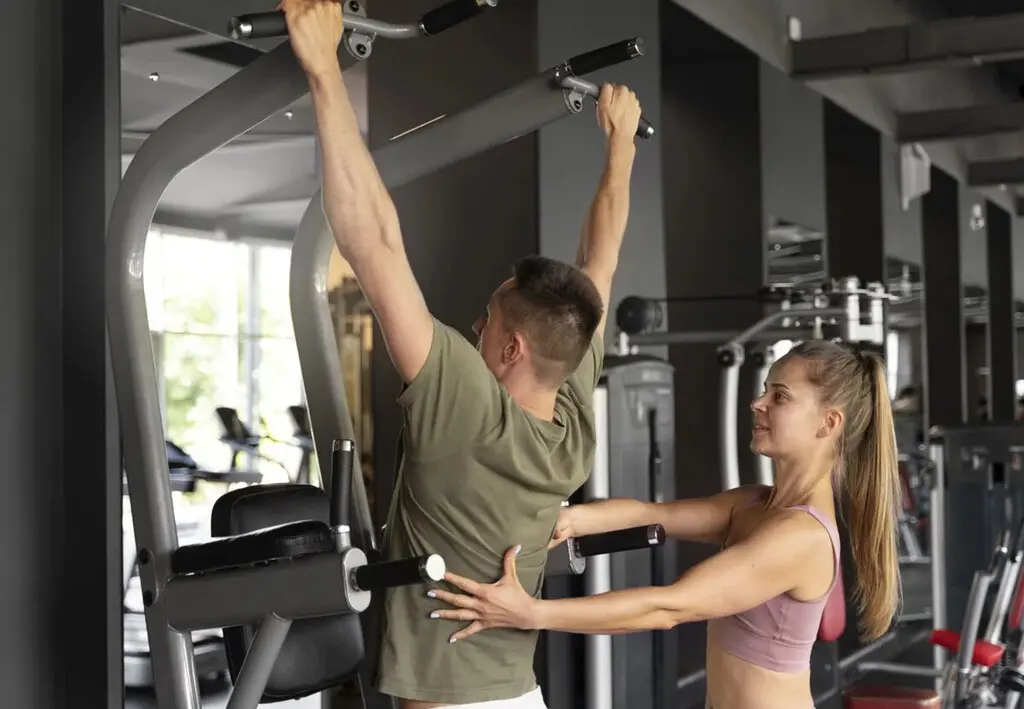
In the pursuit of physical transformation, millions of gym-goers worldwide focus intensely on lifting weights, obsessing over the explosive, breathless push or pull that defines a traditional repetition. Whether performing a heavy barbell bench press, a squat, or a simple bicep curl, the primary objective is almost always to move the load from point A to point B. However, exercise scientists and elite strength coaches argue that this obsession with the lifting phase—known scientifically as the concentric phase—causes athletes to miss out on the most potent half of the movement: the eccentric, or lowering, phase.
Recent scientific consensus, bolstered by a landmark systematic review and meta-analysis published in The Journal of Strength and Conditioning Research, reveals that the neglected eccentric phase is not merely a transition to get ready for the next lift. In fact, it is equal to—and in some contexts, superior to—the concentric phase for building muscle mass, accelerating physical adaptations, and rehabilitating injuries.
Main Facts: Decoding the Anatomy of a Repetition
Every physical repetition against resistance is a complex biomechanical process composed of three distinct phases:
- The Concentric Phase: This is the shortening of the muscle fibers as they overcome an external load. In a bench press, it occurs when you press the barbell away from your chest toward the ceiling. In a pull-up, it is the upward pull of the body toward the bar. This is where most people exert maximum conscious effort.
- The Isometric or Transition Phase: This occurs twice during a repetition: once at the point of peak contraction (arms fully extended in a bench press or chin-up) and once at the lowest point of the movement before the directional shift.
- The Eccentric Phase: This is the lengthening of the muscle fibers under tension as you decelerate or control the load back to its starting position. In a bench press, it is the controlled lowering of the bar down to your chest.
While gym culture traditionally frames the eccentric phase as "the easy part" or just a passive descent to set up the next repetition, physiological evidence proves otherwise. Muscles under eccentric load act essentially as biological brakes, absorbing force while lengthening. This generates significantly higher mechanical tension—the primary driver of muscle hypertrophy—than concentric contractions alone.
Chronology: The Evolution of Eccentric Training in Science
For decades, anecdotal evidence from bodybuilding legends suggested that "negative" training—focusing heavily on the lowering phase—produced extraordinary muscle growth. However, it is only in recent years that rigorous, high-level scientific methodology has caught up to gym lore.

- Early Observations (Mid-to-Late 20th Century): Pioneering sports scientists noted that animals and humans could lower heavier loads than they could lift. This phenomenon, known as maximal eccentric strength, laid the groundwork for sporadic experiments in athletic conditioning.
- The Rise of Isokinetic Dynamometers (2000s–2010s): Researchers began utilizing specialized laboratory equipment to isolate eccentric versus concentric movements, consistently finding greater micro-trauma and metabolic signaling in muscle tissue following eccentric-focused protocols.
- The 2025 Meta-Analysis (A Watershed Moment): Published in The Journal of Strength and Conditioning Research, a comprehensive systematic review and meta-analysis by da Silva et al. (2025) synthesized data from 26 high-quality studies encompassing 682 healthy adult participants. The explicit goal was to compare the direct impact of eccentric versus concentric muscle actions on muscle hypertrophy.
The findings upended conventional training wisdom. Not only did the eccentric phase prove to be exceptionally potent for building muscle, but upper-extremity muscle groups actually showed superior hypertrophic outcomes when subjected to targeted eccentric workloads compared to concentric ones. Furthermore, the data confirmed that eccentric actions trigger faster initial strength and physical adaptations than concentric-only routines.
Supporting Data: What the Meta-Analysis Revealed
To fully grasp the magnitude of the 2025 study by da Silva and colleagues, one must look at the rigorous parameters of the research:
- Sample Size: 26 carefully vetted studies involving 682 healthy adult participants.
- Scope: Direct side-by-side comparison of hypertrophy resulting from eccentric-biased versus concentric-biased training.
- Key Findings: Upper-body muscle groups demonstrated greater hypertrophic development during eccentric actions. Moreover, the neuromuscular and structural adaptations—such as increases in fascicle length and cross-sectional area—manifested much earlier in training cycles focused on eccentric control.
The Supramaximal Advantage
One of the most compelling data points supporting eccentric training is the human body’s capacity to handle supramaximal loads. Research indicates that human skeletal muscle can safely produce and withstand 20% to 40% more weight during an eccentric contraction than during a concentric one.
For example, if an athlete’s absolute maximum capacity for a concentric leg press is 100 kilograms, their muscles possess the structural capacity to lower and control 120 to 140 kilograms during the eccentric descent. Utilizing this hidden reserve is the key to unlocking advanced muscle-building plateaus.
Official Responses and Expert Perspectives
Strength coaches, physical therapists, and exercise physiologists have increasingly integrated these scientific insights into high-performance training regimens.

Dr. Carlos R. Bueno Júnior and his co-authors emphasized in their review that traditional resistance training programs fail to optimize mechanical tension by rushing through the lowering phase. Elite physical therapists, meanwhile, have long relied on eccentric loading for rehabilitation. Because tendons and muscles can tolerate significantly higher forces while lengthening, eccentric protocols are vital for treating conditions like tendinopathy and reversing muscle atrophy in recovering patients.
"If you are simply dropping the weight back down to your chest or letting gravity take over during the descent, you are leaving half of your muscle-building potential on the table," notes a leading voice in exercise science dissemination. "Coaches working with elite athletes during condensed pre-seasons—or actors needing rapid physical transformations—cannot afford to ignore the accelerated adaptations provided by eccentric control."
Practical Implications: How to Transform Your Workout
Translating this science into everyday gym routines does not require overhauling every exercise, but it does demand a shift in tempo and technique.
1. Master the Ideal Tempo
For general muscle hypertrophy, the most effective strategy is combining a powerful, intentional concentric phase with a strictly controlled eccentric phase. Fitness experts recommend adopting a "1-3 tempo": execute the concentric push or pull in about one second, followed by a slow, deliberate three-second eccentric descent. This simple adjustment exponentially increases time-under-tension and metabolic stress.
2. Implement Advanced Eccentric Techniques
Because you can lower more weight than you can lift, advanced lifters utilize specialized techniques to leverage supramaximal eccentric loads:

- The Two-Up, One-Down Method: Perform the concentric (lifting) phase using both limbs, then transfer the load to a single limb for the eccentric (lowering) phase. For example, during a leg extension machine exercise, lift the weight with both legs, then release one leg and lower the stack using just a single leg. This exposes that single limb to a supramaximal load it could never lift on its own.
- Partner-Assisted Negatives: A training partner assists you in lifting a heavy weight, allowing you to lower the load entirely on your own under strict control.
- Specialized Hardware: Advanced facilities now feature mechanical devices—such as safety hooks that detach from a barbell once a squat or bench press descent is completed—allowing lifters to handle heavier eccentric loads safely without crushing themselves during the ascent.
3. Utilize Dedicated Eccentric Exercises
Certain movements are designed entirely around the eccentric phase due to their extreme intensity. The Nordic Hamstring Curl and the Reverse Nordic Curl are prime examples. These bodyweight exercises require individuals to resist a forward fall as slowly as possible, delivering profound adaptations for injury prevention (particularly hamstring strains) and rapid hypertrophy.
Conclusion
The science is definitive: the eccentric phase of exercise is no longer just a passive bridge between repetitions. By respecting the biological power of our muscles to act as brakes under heavy loads, everyday gym-goers and elite athletes alike can unlock superior muscle growth, accelerate strength gains, and bulletproof their joints against injury. Next time you step under a bar, slow down the descent—your muscles will thank you.
References
- da Silva, L. S. L., Gonçalves, L. D. S., Alves Campos, P. H., Benjamim, C. J. R., Tasinafo Júnior, M. F., de Lima, L. C. R., Bueno Júnior, C. R., & Alves, C. P. L. (2025). Comparison Between Eccentric vs. Concentric Muscle Actions On Hypertrophy: A Systematic Review and Meta-analysis. Journal of Strength and Conditioning Research, 39(1), 115–134. https://doi.org/10.1519/JSC.0000000000004981



Leave a Reply