

By Global Nutrition & Science Desk
Published: October 2023
Main Facts
The chickpea (Cicer arietinum) stands proudly as the third most important legume crop cultivated worldwide. Celebrated for its rich nutty flavor and impressive culinary versatility, it serves as a dietary cornerstone for millions of people across the globe, from the Mediterranean to South Asia and the Americas. Nutritionally, the chickpea is a powerhouse: it is an exceptional source of plant-based proteins, dietary fiber, complex carbohydrates, and essential micronutrients. Remarkably, research highlights that chickpeas provide higher quantities of calcium and phosphorus than many other common legumes, and pound-for-pound, they even contain more calcium than whole cow’s milk.
Yet, despite their stellar nutritional profile, raw and improperly prepared chickpeas present notable culinary and biological challenges. These include stubbornly long cooking times, poor digestibility, and the presence of natural chemical compounds known as antinutrients.
For generations, home cooks and professional chefs alike have practiced the ritual of soaking chickpeas overnight. Traditionally, this step was understood primarily through a mechanical lens: it hydrates the dry seed coat, shortens the subsequent cooking time, and accelerates the gelatinization of starches—all of which dramatically improve both the texture of the finished dish and its gastrointestinal tolerance.
However, a critical factor often overlooked by the general public is the chemical warfare occurring right inside the soaking bowl. Beyond softening the seed, soaking initiates a leaching process that significantly reduces the concentration of antinutrientes—compounds that actively hinder the human body’s ability to absorb the very vitamins and minerals that make chickpeas so nutritious in the first place. Combined with proper cooking techniques, mastering the soak transforms the chickpea from a hard-to-digest staple into an optimized functional food.
Chronology: The Journey of the Chickpea from Field to Kitchen
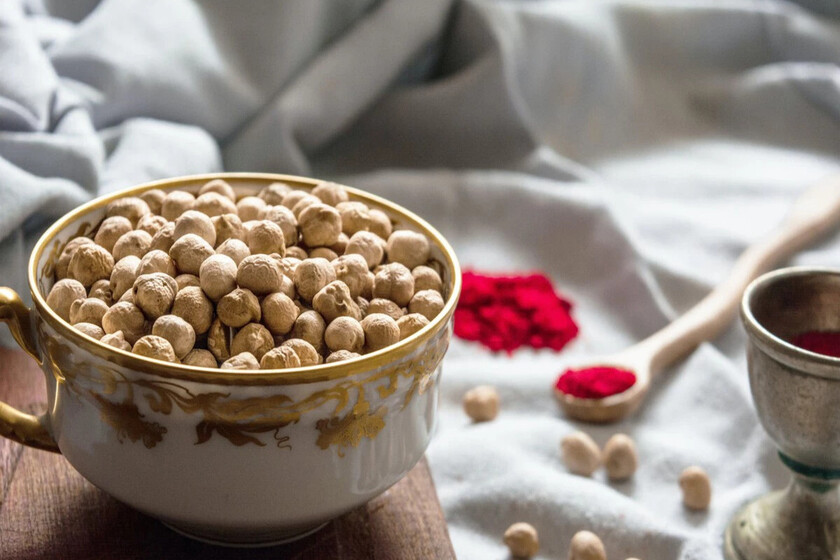
To fully appreciate the transformation that occurs during the soaking process, it is helpful to trace the chronological journey of the chickpea, from its agricultural origins to its final arrival on the dinner table.
- Agricultural Harvest and Desiccation: The journey begins in the field, where chickpea plants mature and dry under the sun. Once harvested, the seeds are dehydrated to moisture levels typically below 12%. This low moisture content halts enzymatic activity, allowing the seeds to be stored, transported, and preserved for months or even years without spoiling. In this dormant, dry state, however, defensive chemical compounds—evolved by the plant to protect its seeds from pests and predators—remain locked firmly inside the cellular matrix.
- Rehydration and Cellular Awakening (The Overnight Soak): When dry chickpeas are submerged in water, usually the night before cooking, a fascinating biological and physical sequence unfolds. Water molecules penetrate the seed coat through a small opening known as the micropyle. Within hours, the cotyledon begins to swell. This cellular rehydration triggers internal enzymes that break down complex structures. Crucially, it creates a concentration gradient that allows water-soluble antinutrientes—such as phytates, tannins, and water-soluble oxalates—to diffuse out of the seed and into the surrounding soaking water.
- The Discard Phase: As the soaking water draws out these unwanted compounds, it frequently develops a cloudy appearance or a light foam. Draining and discarding this liquid ensures that the leached antinutrientes are washed away down the drain rather than reabsorbed during the cooking process.
- Thermal Processing (Cooking): Once soaked and rinsed, the chickpeas enter the pot or pressure cooker. The application of sustained heat breaks down remaining complex sugars that cause flatulence, alters residual protein structures for easier enzymatic cleavage by human gut proteases, and neutralizes any lingering thermolabile antinutrientes.
- Digestion and Nutrient Assimilation: Finally, when consumed, the fully prepared chickpeas yield their bounty. Freed from the chemical handcuffs of phytates and tannins, the proteins, calcium, iron, and phosphorus are readily absorbed across the intestinal wall, completing a journey that bridges agronomy, food chemistry, and human physiology.
Supporting Data: Unpacking Antinutrients and Mineral Bioavailability
To understand why the soak is non-negotiable for optimal nutrition, one must examine the specific biochemical agents at play. An antinutrient is broadly defined as any natural or synthetic compound found in food sources that interferes with the absorption, utilization, or digestion of one or more essential nutrients. In essence, antinutrients act as biological thieves, "secuestrating" minerals and macronutrients so that human digestive enzymes cannot access them.
Tannins and Protein Binding
In the realm of legumes, tannins are polyphenolic compounds that serve as natural deterrents against herbivores. While they possess antioxidant properties in certain contexts, tannins in chickpeas have a distinct drawback: they bind strongly to dietary proteins. This tannin-protein complex resists enzymatic degradation in the stomach and small intestine, effectively reducing overall protein bioavailability.
Phytates, Phytic Acid, and Mineral Sequestration
Perhaps the most formidable antinutritional compounds found in legumes are phytates (or phytic acid). Phytic acid acts as the principal storage form of phosphorus in many plant tissues, particularly in the seeds and bran.
While stored phosphorus is vital for the germinating plant, it is chemically notorious for human digestion. Phytic acid possesses a strong negative electrical charge, allowing it to fiercely chelate (bind) with essential divalent and trivalent mineral ions, including:

- Calcium ($Ca^2+$)
- Iron ($Fe^2+$ / $Fe^3+$)
- Zinc ($Zn^2+$)
- Magnesium ($Mg^2+$)
When phytates bind to these minerals, they form insoluble salts—phytate-mineral complexes—that pass entirely unabsorbed through the human gastrointestinal tract. Consequently, diets high in unsoaked, unrefined legumes can inadvertently contribute to mineral deficiencies, even when the total elemental iron or calcium content listed on a nutritional label appears deceptively high.
| Antinutrient Class | Primary Target Nutrient | Mechanism of Action | Mitigation Method |
|---|---|---|---|
| Phytates / Phytic Acid | Iron, Zinc, Calcium, Magnesium | Chelates mineral ions into insoluble salts, blocking intestinal uptake. | Overnight soaking + discarding water + boiling. |
| Tannins | Proteins | Binds to dietary amino acid chains, resisting enzymatic cleavage. | Leaching via soaking and high-heat cooking. |
| Oxalates | Calcium | Binds calcium ions, inhibiting mucosal absorption. | Soaking and boiling (cooking water discarded). |
Official Responses and Expert Consensus
Nutritional scientists, food safety authorities, and gastroenterologists worldwide have long studied the intersection of traditional culinary methods and modern biochemistry. The consensus among nutritional epidemiologists and food science researchers is unequivocal: traditional preparation practices like soaking and boiling are not merely aesthetic or convenience choices; they are vital public health measures that optimize food safety and nutritional yield.
According to prominent reviews published in journals such as The American Journal of Clinical Nutrition and the International Journal of Food Science, traditional food processing techniques remain the most accessible, cost-effective biotechnology available to domestic and industrial kitchens alike.
Dr. V. Messina, a recognized authority on plant-based nutrition, emphasizes that while plant foods offer unparalleled health benefits—including a lower risk of cardiovascular disease, improved glycemic control, and enhanced gut microbiome diversity—their intrinsic chemical defenses must be managed intelligently.
Furthermore, culinary dietitians and food scientists stress a vital rule that is frequently broken in busy kitchens: never reuse the soaking water. Because the very purpose of the overnight soak is to draw water-soluble antinutrientes, oligosaccharides, and undesirable compounds out of the legume seed, keeping that water to cook the beans essentially bathes them back in the exact toxins and gas-producing sugars you just removed. Discarding the soak water, rinsing the legumes thoroughly under fresh running water, and applying a clean batch of water for the cooking cycle is the gold standard recommended by nutritional experts globally.
Implications: Translating Science into Culinary Practice
The implications of understanding chickpea chemistry extend far beyond the laboratory; they directly impact daily meal preparation, culinary art, and long-term health outcomes.
1. Maximizing Mineral Absorption
For populations relying heavily on plant-forward diets, vegetarianism, or veganism, optimizing mineral absorption is paramount. Iron deficiency anemia and suboptimal zinc status are global health concerns. By consistently soaking chickpeas for 8 to 12 hours overnight, discarding the water, and boiling them thoroughly, individuals can reduce phytic acid content by significant margins (often between 20% to 50% depending on temperature, pH, and soak duration). This simple habit transforms an average plant-protein source into a bioavailable reservoir of micronutrients.
2. Digestive Comfort and Gut Health
Beyond antinutrients, raw and unsoaked chickpeas contain high levels of alpha-galactosides (such as raffinose and stachyose). These are short-chain carbohydrates that human enzymes cannot break down in the small intestine because we lack the alpha-galactosidase enzyme. When these sugars reach the large intestine intact, colonic bacteria ferment them enthusiastically, producing significant gas, bloating, and abdominal discomfort. The soaking process initiates the breakdown of these oligosaccharides, leaching them into the discard water and easing the burden on our gut microbiome, leading to a much more comfortable digestive experience.
3. Culinary Efficiency
Time is a precious commodity in the modern kitchen. Unsoaked chickpeas can take upwards of two to three hours of vigorous boiling to achieve the creamy, tender texture required for smooth hummus, rich stews, or hearty salads. A proper overnight soak reduces active stovetop or pressure-cooker cooking times by half, saving energy and preserving the structural integrity of the legume without sacrificing tenderness.
4. Bridging Tradition and Modern Science
Ultimately, the science of the soak validates centuries of culinary wisdom passed down across generations. Long before scientists identified terms like "phytic acid," "tannins," or "chelation," ancestral cooks observed that pre-soaking legumes made people feel better, digested easier, and tasted superior. Today, modern analytical chemistry simply provides the "why" behind the "how," empowering us to approach our kitchens with both intuitive tradition and scientific precision.
References
- Bashir, K., & Aggarwal, M. (2017). Physicochemical, thermal and functional properties of gamma irradiated chickpea starch. International Journal of Biological Macromolecules, 97, 426–433.
- Messina, V. (2014). Nutritional and health benefits of dried beans. The American Journal of Clinical Nutrition, 100(suppl_1), 437S–442S.
- Yegrem, L. (2021). Nutritional composition, antinutritional factors, and utilization trends of Ethiopian chickpea (Cicer arietinum L.). International Journal of Food Science, 2021, 5570753.




Leave a Reply