

By Jhoan Sebastián Salazar
International Sports Desk
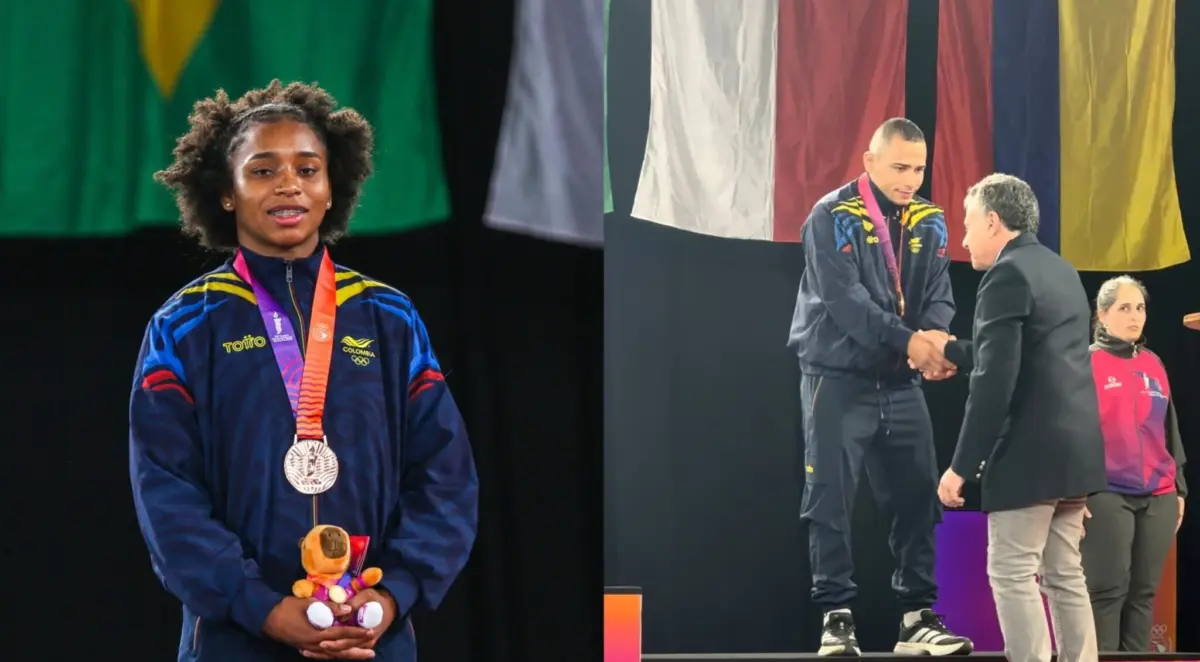
ROSARIO, ARGENTINA — The delegation representing the Huila department in Colombia has left an indelible mark on the international sporting stage during the ongoing South American Games. Displaying unmatched grit, tactical discipline, and relentless determination, elite wrestlers Julián Steven Horta, Alexa Michel Cuero, and Arbey Alarcón delivered a stellar performance, securing a combined total of one silver and two bronze medals. These reigning national champions proved that their dominance extends far beyond domestic borders, standing shoulder-to-shoulder with the finest athletes across the continent.
The achievement is all the more remarkable considering the grueling preparation cycles endured by rival delegations. Competitors arrived in Argentina battle-tested from high-altitude camps in the United States and specialized training blocks in Eastern Europe. Yet, the Huilense athletes rose to the occasion, turning the wrestling mats of Rosario into a showcase of Colombian resilience and athletic prowess.
Main Facts: A Triumphant Campaign on the International Mat
The South American Games have historically served as a rigorous crucible for regional and continental supremacy. For the department of Huila, this edition will be remembered as a watershed moment for combat sports. Julián Steven Horta spearheaded the charge, capturing the silver medal in the fiercely contested 67-kilogram Greco-Roman division. Following suit, Arbey Alarcón secured a hard-earned bronze in the 74-kilogram freestyle category, while Alexa Michel Cuero completed the podium sweep with an emotionally charged bronze in the 62-kilogram freestyle division.
These victories did not come easy. The competition featured elite athletes who had spent months fine-tuning their techniques abroad. Despite these challenges, Huila’s trio demonstrated that technical mastery and psychological fortitude can bridge the gap against heavily funded international programs. Their podium finishes have significantly bolstered Colombia’s overall medal tally, reinforcing the nation’s status as a formidable powerhouse in South American wrestling.
Chronology of Combat: How the Medals Were Won
Julián Horta’s Heartbreaking Silver in Greco-Roman Wrestling
In the Greco-Roman 67-kilogram final, Julián Horta faced off against Ecuador’s seasoned competitor, Andrés Montaño, in what would become one of the most nail-biting matches of the tournament. The bout was a tactical masterclass, with both athletes trading explosive throws and defensive wizardry.
As the final whistle blew, the scoreboard flashed an agonizing 3-3 tie. Under international wrestling regulations, the tie-breaking criteria favors the wrestler who scored the last technical point. Because Montaño had managed the final scoring action of the match, the gold medal slipped through Horta’s fingers, handing the Ecuadorian the top step of the podium.
Horta left nothing to chance. In the dying seconds of the second period, the Huilense warrior launched a desperate, high-risk offensive maneuver in search of the decisive point. Though the scoring attempt fell just short, his relentless aggression earned the profound respect of the officiating crew, his coaching staff, and the roaring crowd. While he had to settle for silver, Horta’s performance was nothing short of championship-caliber.

Arbey Alarcón’s Resilient Road to the Bronze Podium
Arbey Alarcón’s journey through the 74-kilogram freestyle tournament was a testament to physical conditioning and mental toughness. Alarcón opened his campaign with an absolute masterclass, steamrolling Bolivia’s Pedro Alarcón in a lopsided 10-0 technical superiority victory. He followed this up with a gritty, hard-fought 2-1 triumph over Argentina’s home-mat favorite, Arnoldo Proboste.
However, the path to gold hit a temporary roadblock in the semifinal round, where Alarcón dropped a tactical match to Peru’s Sixto Acuapuña. Refusing to let disappointment derail his ambitions, Alarcón recalibrated for the bronze-medal match, where fate would pit him once again against Argentina’s Arnoldo Proboste.
The rematch was a bruising, tactical war of attrition. Regulation time expired with the score deadlocked at 2-2. This time, however, the tie-breaking criteria favored the Colombian, whose superior technical points throughout the bout secured him the bronze medal and a coveted spot on the podium.
"I am very happy—not just because of the result, but because of the quality of the bouts I put together," Alarcón expressed in an exclusive post-match interview with LA NACIÓN. "I knew I had the capacity to reach the final. I left everything out there on the mat. I didn’t hold back a single ounce of energy until the very last second. These are the South American Games; everyone comes here completely prepared. The Peruvian delegation had a training camp in the United States, Venezuela prepared in Russia—everyone was training abroad. Given that context, the competition level was exceptionally high, making this medal all the more rewarding."
Supporting Data: Overcoming Adversity and Additional Huilense Glory
Alexa Michel Cuero’s Miracle Comeback
Of all the medals secured by the Huilense delegation, Alexa Michel Cuero’s bronze in the 62-kilogram freestyle category carries the most profound narrative of human perseverance. Cuero’s journey to the Rosario mat is nothing short of miraculous. Just eight months prior to the Games, the athlete suffered a devastating tear to her anterior cruciate ligament (ACL) and meniscus—a catastrophic injury that typically sidelines elite athletes for 12 to 13 months of arduous rehabilitation.
Defying conventional medical timelines, Cuero returned to competitive form in a staggering eight months. This accelerated recovery was the result of an exhaustive, day-in-and-day-out collaborative effort between the athlete, sports science specialists, and her personal physiotherapist, Oscar Jiménez. Together, they designed a rigorous rehabilitation protocol that rebuilt not only her knee stability, but also her explosive power and mat confidence.
"This is a very special medal for me. Everyone knows what I went through and how brutally difficult the recovery process was," Cuero shared with deep emotion. "Stepping onto the podium at the South American Games is a deeply moving experience that fills me with immense joy. I am profoundly grateful to everyone who contributed a grain of sand to my recovery, to God, and to my family for their unwavering support. This bronze medal definitely carries the taste and value of gold."
Juan Sebastián Camacho Makes Waves in the Pool
While wrestling dominated the combat arena, the Huila department celebrated success in aquatic sports as well. Pitalito-born swimmer Juan Sebastián Camacho, representing a different regional league, delivered a phenomenal performance in the pool, adding a silver and a bronze medal to the broader regional count.

Camacho captured his silver medal as a vital component of the men’s 4×200 meter freestyle relay final at the South American Games. Clocking an impressive team time of 7:27.22, Camacho and his teammates engaged in a fierce, high-speed battle against powerhouse swimming programs, with the Valle del Cauca contingent playing a pivotal role in the relay’s success.
Shortly after, Camacho added a bronze medal to his collection in the grueling 400-meter individual medley. Navigating all four swimming strokes—butterfly, backstroke, breaststroke, and freestyle—Camacho maintained a blistering pace, ultimately finishing behind elite Brazilian swimmers Stephan Steverink and Leonardo Santos, who claimed the gold and silver spots, respectively.
Official Responses and Stakeholder Perspectives
The monumental success of Huila’s athletes has sent shockwaves of pride through Colombia’s sports ministry and regional governing bodies. Local sports authorities have lauded the dedication of the coaching staff, sports psychologists, and medical personnel who operate behind the scenes to keep athletes performing at peak efficiency.
The resilience displayed by Cuero following her ACL reconstruction has already been flagged by the Colombian Olympic Committee as a textbook case study in elite sports rehabilitation. Medical directors have pointed to the synergy between institutional medical teams and personal trainers like Oscar Jiménez as the gold standard for returning athletes from catastrophic injuries ahead of schedule.
Furthermore, the strategic insights offered by Arbey Alarcón regarding international preparation disparities have sparked renewed discussions among sports administrators. Alarcón’s candid assessment—noting that delegations from Peru and Venezuela fortified their training camps in the United States and Russia—underscores the urgent need for increased governmental and private-sector investment in international training circuits for Colombian athletes.
Implications for the Future of Huilense and Colombian Sports
The triumphs in Rosario, Argentina, are much more than a collection of shiny metals; they represent a strategic turning point for sports development in the Huila department.
- Inspiration for Grassroots Athletes: The exploits of Horta, Cuero, and Alarcón serve as a powerful beacon for the next generation of wrestlers training in local gyms across Huila. Seeing athletes overcome severe injuries and international funding disparities to reach continental podiums proves that world-class excellence is attainable from regional training hubs.
- Resource Allocation and Infrastructure: The performances validate the efficacy of regional talent-identification programs. However, the insights highlighted by the athletes regarding foreign training camps emphasize that future Olympic cycles will require enhanced financial backing. To convert silvers and bronzes into golds on the global stage, Colombian athletes must be granted consistent access to international sparring camps.
- Momentum Toward Future Global Competitions: With these South American medals securely in their trophy cases, the Huilense delegation shifts its focus toward upcoming World Championships and the ultimate horizon: the Olympic Games. The tactical maturity displayed by Horta, the unbreakable will of Cuero, and the relentless motor of Alarcón signal that Colombia’s wrestling pipeline is healthier, tougher, and more competitive than ever before.
As the delegation prepares to return home to celebratory welcomes in Huila, their collective achievements stand as an enduring testament to the power of human grit, athletic discipline, and the indomitable spirit of Colombian sport.

Leave a Reply