

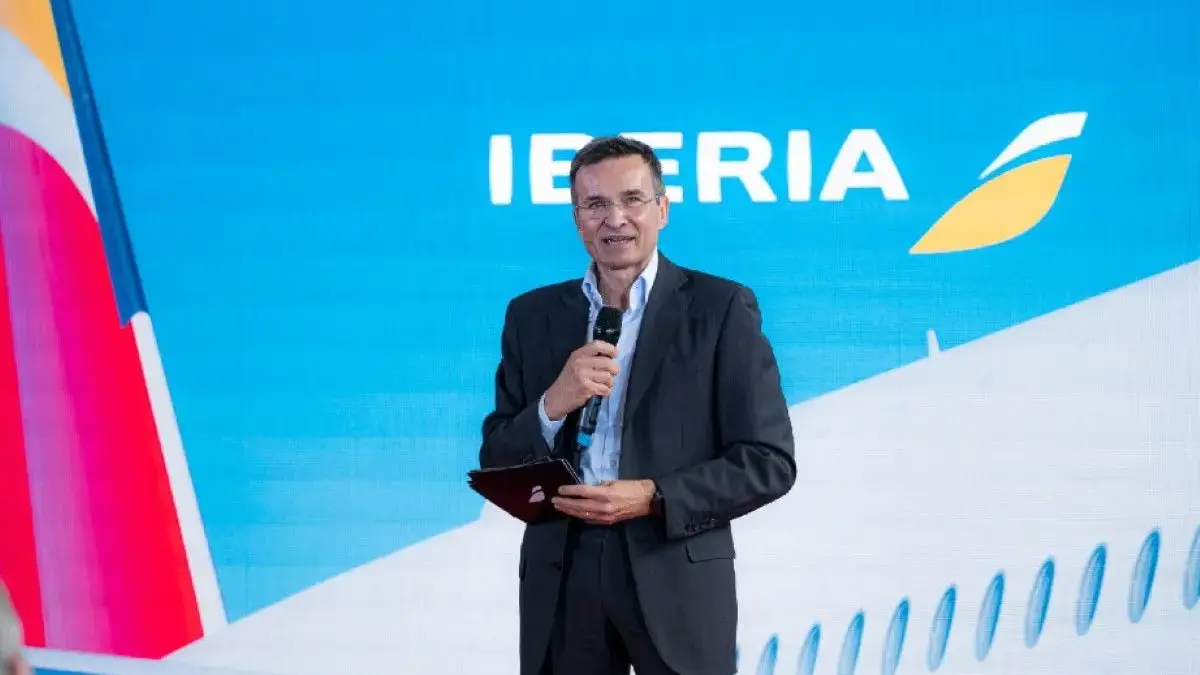
MADRID — At a high-profile industry event held at the Espacio Iberia in Madrid, Spain’s flagship carrier officially kicked off the 100-day countdown to 2027—the landmark year marking the airline’s centenary. Amid an evolving geopolitical and economic landscape defined by volatile fuel prices, company leadership doubled down on its strategic vision. Iberia confirmed it is pressing forward with the largest financial commitment in its corporate history: an ambitious €6 billion investment package designed to modernize its fleet, expand its global footprint, and redefine the passenger experience.
The presentation brought together key stakeholders from the tourism, aviation, and institutional sectors to unveil a packed calendar of cultural, corporate, and social milestones leading up to and throughout the centenary year. While acknowledging that external pressures have complicated the aviation sector since the "Flight Plan 2030" was first announced, executives maintained that the airline’s core ambitions remain entirely uncompromised.
Main Facts: The €6 Billion Bet on Growth and Modernization
The centerpiece of Iberia’s forward-looking strategy is its unprecedented €6 billion capital expenditure program. Speaking to industry leaders, Diego Fernández Ortiz, Iberia’s Director of Strategy, Transformation, and Sustainability, addressed the realities of the current economic climate head-on.
"The Plan de Vuelo 2030 was launched a year ago in a context that has unfortunately changed, but our ambition has not changed," Fernández Ortiz stated. "Although fuel prices have spiked, we are not renouncing our plans. We remain firmly committed to developing our roadmap and continuing to invest precisely as we had foreseen."
This massive capital injection directly targets fleet expansion, particularly within the lucrative long-haul segment. When the investment strategy was initially unveiled in mid-2025, Iberia’s widebody fleet stood at 43 aircraft. By the time of the Madrid announcement, that number had risen to 51, with a definitive target of reaching 70 long-haul aircraft by 2030.
In addition to buying more planes, the investment translates to tangible onboard enhancements:
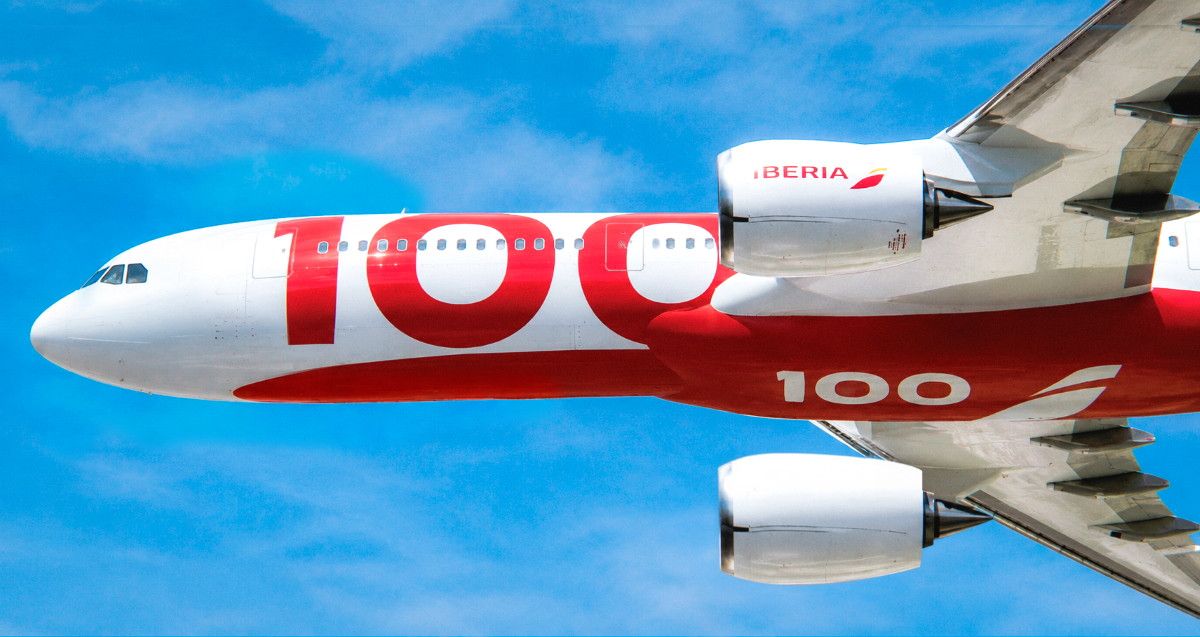
- Cabin Redesign: Total refurbishment of long-haul cabins to maximize passenger comfort across Business, Premium Economy, and Economy classes.
- Connectivity: Accelerated rollout of high-speed, free Starlink Wi-Fi across the entire fleet.
- Culinary Innovation: A revamped gastronomic program developed in partnership with the prestigious Real Academia de Gastronomía (Royal Academy of Gastronomy).
Chronology of a Century: From 1927 to the 2030 Horizon
Iberia’s history is inextricably linked to the evolution of modern commercial aviation. Founded in June 1927, the airline has served as a vital bridge connecting Spain with Europe, the Americas, and beyond.
- June 1927: Iberia is officially constituted, inaugurating an era of Spanish commercial flight.
- 1927–2027 (A Century of Service): Across its nearly 100-year history, more than 1 billion passengers have flown with the airline.
- 2025: Iberia transported nearly 25 million passengers annually—a robust figure the carrier expects to outpace significantly as new long-haul destinations are integrated into its network.
- Mid-2025: Iberia launches its transformative Flight Plan 2030, establishing a baseline fleet of 43 long-haul aircraft and introducing the €6 billion investment framework.
- September 2026: With exactly 100 days remaining until 2027, Iberia hosts a major preview event in Madrid, laying out its centenary calendar and confirming that its investment plans remain fully funded and active despite market turbulence.
- 2027 (The Centenary Year): A year-long series of global celebrations, institutional milestones, and the official launch of the Iberia Foundation.
- 2030: The terminal target year for Flight Plan 2030, by which point the airline aims to operate a modernized fleet of 70 long-haul aircraft.
Supporting Data and Fleet Metrics
To understand the scale of Iberia’s contemporary operations, analysts look closely at passenger volume and asset growth. The airline’s operational metrics underline a resilient post-pandemic recovery and an aggressive expansion strategy geared heavily toward the Atlantic corridor.
Key Operational and Financial Metrics
- Total Historic Passengers: >1,000,000,000 (Over one billion travelers since inception).
- Annual Passenger Volume (2025): ~25,000,000 travelers.
- Total Investment Program: €6,000,000,000.
- Long-Haul Fleet Baseline (2025): 43 aircraft.
- Current Long-Haul Fleet (2026): 51 aircraft.
- Target Long-Haul Fleet (2030): 70 aircraft.
These figures illustrate that Iberia is not merely maintaining operations during a volatile economic cycle; it is aggressively scaling up capacity to capture rising international demand, particularly across Latin America.
Official Responses and Executive Vision
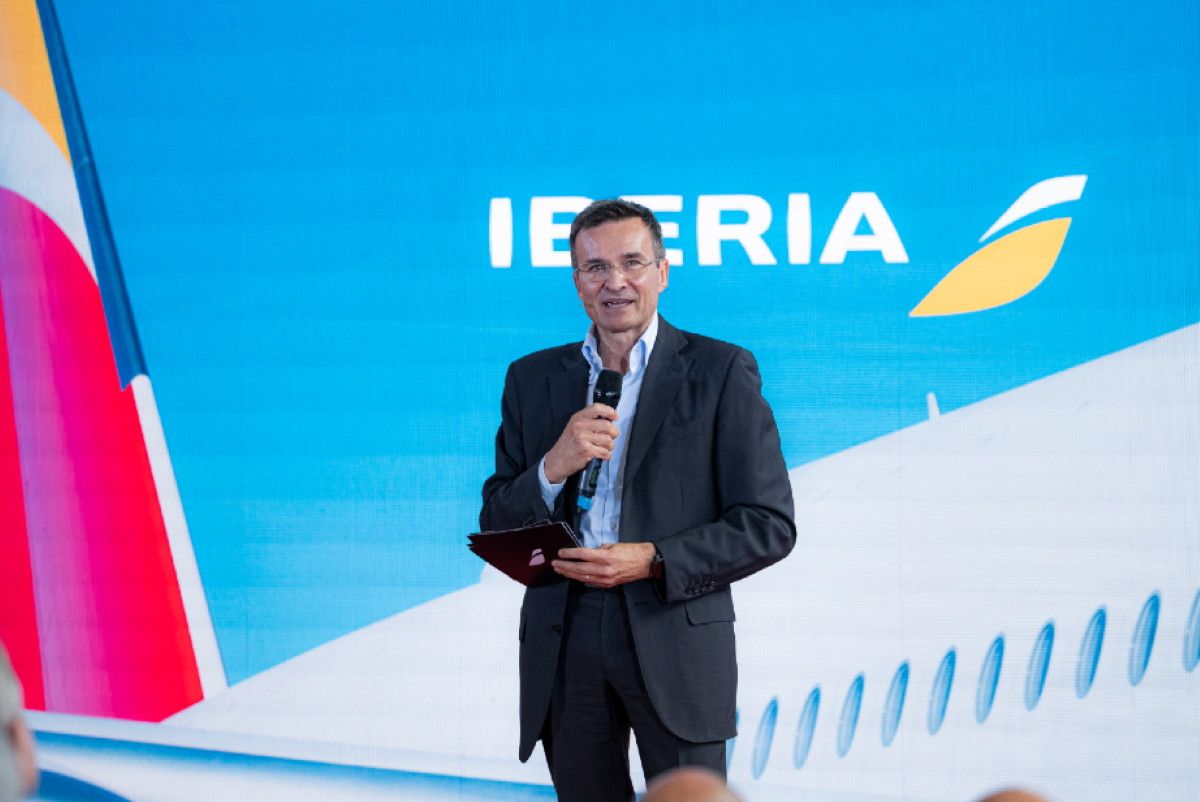
Addressing the assembled media and travel trade professionals, Iberia President Marco Sansavini emphasized that the centenary is designed to honor people above all else—the travelers, the workers, and the communities that have shaped the airline’s identity.
"The centenary events will be a tribute to the more than one billion people who have flown with Iberia over this past century, to all the employees who have made every single flight possible across these one hundred years, and to all those whose family, business, or cultural ties have been enabled by our connectivity," Sansavini remarked.
Highlighting the cultural and historical weight of the milestone, Sansavini noted that the airline’s success belongs collectively to Spanish society and its global partners. Fernández Ortiz reinforced this sentiment from an operational standpoint, reiterating that while external macroeconomic pressures—such as fluctuating energy markets—present hurdles, the corporate DNA of the airline demands forward momentum rather than retrenchment.
Implications of the Centenary Program and Global Events
The centenary celebration will not be confined to a single gala; rather, it is structured as a multi-layered, multi-continental campaign spanning institutions, the arts, philanthropy, and corporate diplomacy.
A Global Institutional and Cultural Calendar
- The Grand Institutional Event: Scheduled for June 2027—the anniversary month of the airline’s founding—the primary gala will take place inside Iberia’s historic maintenance hangars at La Muñoza, near Madrid-Barajas Airport.
- Corporate Partnerships: A high-level business summit will be hosted in collaboration with the Spanish Confederation of Business Organizations (CEOE) at the Madrid Stock Exchange.
- Naval Collaboration: Iberia will coordinate joint activities with the Spanish Navy training ship Juan Sebastián de Elcano, which likewise marks its centenary.
- Espacios Iberia Abroad: Following the success of temporary interactive brand spaces in Madrid, new "Espacios Iberia" pop-ups will be established in key international hubs, specifically Buenos Aires, Bogotá, Mexico City, and São Paulo, alongside an extended presence in Madrid throughout 2027.
- Fitur 2027: The airline will command a significantly larger exhibition stand at the upcoming Madrid International Tourism Fair (Fitur).
Focus on Latin America and the "Generation of 27"
Given that Latin America represents Iberia’s most critical international market, the region will feature prominently in the centenary programming. Casa de América in Madrid will host dedicated exhibitions celebrating the century-long social, economic, and linguistic bridges built between Spain and Latin America, emphasizing the shared heritage of the Spanish language.
Furthermore, looking toward youth and contemporary innovation, Iberia is launching the "Generación del 27" project. This cultural initiative mirrors the progressive spirit of the historic Generation of 27 literary movement, aiming to spotlight and support young, avant-garde creators and entrepreneurs in contemporary Spain.
Philanthropic Legacy: The Iberia Foundation
Perhaps the most enduring legacy of the centenary will be the formal launch of the Iberia Foundation in 2027. The philanthropic institution will institutionalize and expand upon the airline’s historical legacy of humanitarian aid missions, leveraging the collective goodwill, logistical expertise, and solidarity of Iberia’s employees, frequent flyers, and corporate allies to maximize its social impact globally.
Through a potent blend of multi-billion-euro operational investments, fleet modernization, and deep-rooted cultural engagement, Iberia enters its second century not by looking backward at its storied past, but by charting an aggressive, confident course into the future of global aviation.



Leave a Reply