

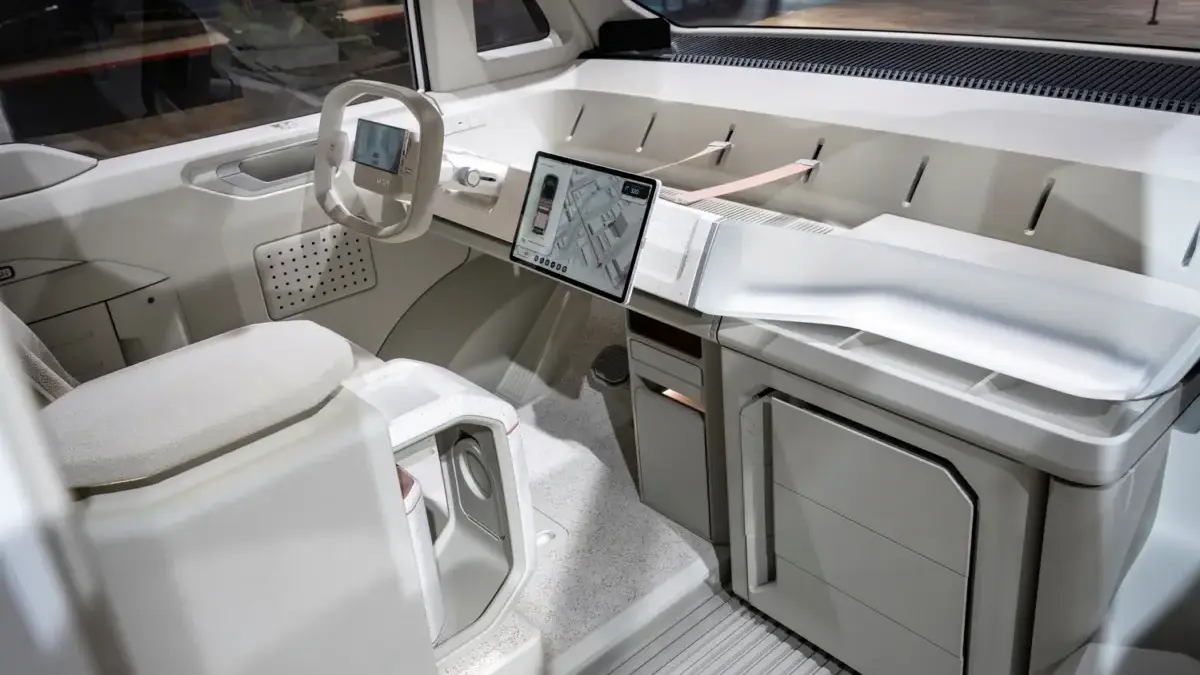
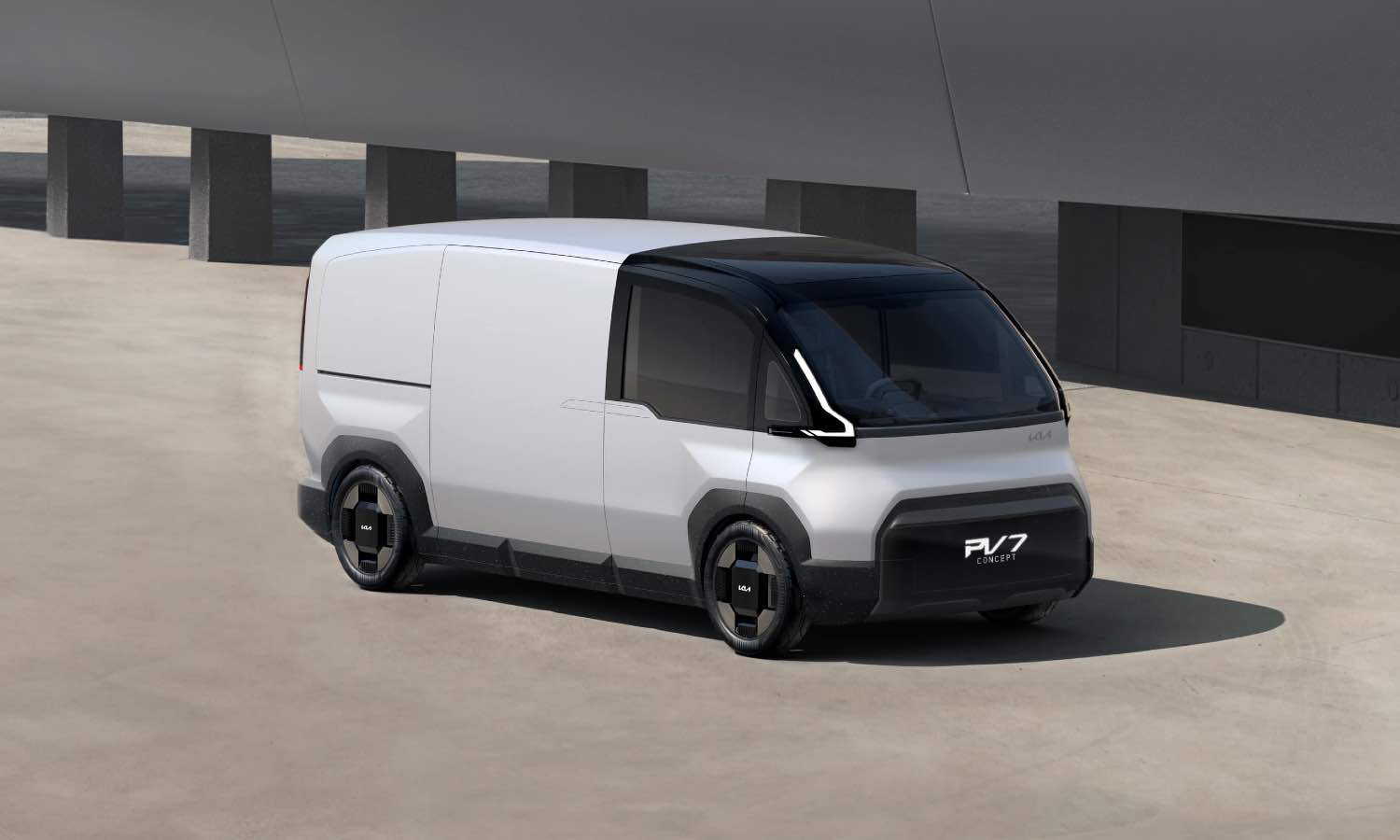
HANNOVER, Germany — Amidst the bustling exhibition halls of the IAA Transportation show in Hannover, South Korean automotive giant Kia has officially pulled the covers off its latest and most ambitious entry into the zero-emission commercial vehicle market: the Kia PV7.
As the second member of Kia’s dedicated PBV (Platform Beyond Vehicle) family—following closely in the footsteps of the mid-sized PV5—the PV7 represents a massive leap forward in terms of footprint, volumetric payload capacity, and high-voltage electrical performance. Tailored heavily toward a European market that is aggressively accelerating its decarbonization timelines, the PV7 is engineered to satisfy the rigorous daily demands of both commercial freight logistics and passenger transport.
Slated to arrive in European showrooms during the second half of 2027, the PV7 aims to challenge established internal combustion and legacy electric players by merging passenger-car comfort, cutting-edge software ecosystems, and industry-leading charging capabilities.
1. Main Facts: Platform, Performance, and Capabilities
The foundation of the Kia PV7 lies within the E-GMP.S architecture, a heavily evolved variant of the Hyundai Motor Group’s modular electric vehicle platform specifically tailored for commercial applications. Unlike traditional vans built on modified internal combustion engine (ICE) frameworks, the PV7 features a completely flat floor layout. This architectural choice maximizes interior volume while significantly improving structural rigidity and weight distribution.
Powertrain and Battery Options
Underneath its functional exterior, the PV7 packs a serious mechanical punch:
- Electric Motor: A single-motor front-wheel-drive setup outputs 200 kW (equivalent to roughly 272 horsepower) and a healthy 420 Nm of torque. Kia has already confirmed that an all-wheel-drive (AWD) variant is in development for deployment in regions prone to low-traction surfaces or severe weather conditions.
- Battery Chemistries: The vehicle is offered with two nickel-cobalt-manganese (NCM) battery capacities: a standard unit and a larger long-range pack.
- Range: Equipped with the 96.2 kWh battery, the Cargo Long Range variant achieves an impressive estimated range of over 460 kilometers (approx. 286 miles) under the WLTP cycle, though final homologation figures are pending.
Next-Gen 800V Architecture and Charging Infrastructure
Perhaps the most disruptive engineering feature of the PV7 is its adoption of an 800-volt electrical architecture. While standard in ultra-luxury or high-performance consumer EVs, 800V systems remain a rarity in the commercial van sector.
This high-voltage system allows the PV7 to support ultra-fast DC charging speeds of up to 350 kW. When plugged into a compatible high-power charger, the van can replenish its battery from 10% to 80% in approximately 20 minutes.
Furthermore, Kia has designed the vehicle with operational convenience in mind:
- Dual Charging Ports: A primary front-mounted port handles both AC and DC charging, while an optional rear-side AC port provides flexibility when parking space is tight or when backing up to depot chargers is impractical.
- Vehicle-to-Load (V2L) Functionality: The PV7 can act as a mobile power bank, supplying external electricity to power heavy-duty professional tools, laptops, or refrigeration units—a critical feature for mobile service providers and trade professionals.
2. Chronology: The Evolution of Kia’s PBV Strategy
Kia’s transition from a traditional automaker to a holistic "Platform Beyond Vehicle" (PBV) provider has been meticulously planned over several years:
- Early Concept Phase (2022–2023): Kia outlines its "Plan S" strategy, introducing the concept of purpose-built vehicles designed for specific business use cases, moving away from "one-size-fits-all" chassis designs.
- The Debut of the PV5 (Early 2024): Kia introduces the smaller PV5 at global tech and mobility conferences, establishing the initial footprint for the PBV family and positioning it as a versatile urban delivery and passenger shuttle tool.
- IAA Transportation Hannover (September 14, 2024 – Ongoing Development Cycle): Kia officially debuts the PV7 concept and near-production prototypes at the Hannover commercial vehicle exhibition, signaling its move into the larger van segments (equivalent to traditional large-medium European light commercial vehicles).
- Production and Testing Phase (2025–2026): Prototypes undergo rigorous durability, thermal management, and payload stress testing across harsh European winter climates and high-temperature testing grounds.
- Commercial Launch (Second Half of 2027): Production ramps up at specialized manufacturing facilities in South Korea, with official deliveries scheduled to commence concurrently in South Korea and European markets.
- Future Expansion (2029): Kia plans to introduce the PV9, the third and largest member of the PBV family, cementing its comprehensive ecosystem for commercial fleet electrification.
3. Supporting Data: Configurations, Volume, and Payload
Commercial operators evaluate vehicles based on strict utilitarian metrics: volume, payload, loading height, and ergonomic flexibility. The Kia PV7 breaks down into two primary configurations—Cargo and Passenger—each offering granular variations to suit distinct industrial sectors.
The Cargo Lineup: Optimized for Logistics
Designed specifically for couriers, last-mile delivery services, and regional freight haulers, the Cargo version prioritizes raw space and accessibility:
- Capacities: The standard Cargo Long offers up to 6.1 cubic meters of cargo volume (VDA standard), while the High Roof variant expands storage capacity to an impressive 8.0 cubic meters.
- Payload Ratings: Maximum payload capacity ranges up to 1,165 kg for the Long variant and 1,200 kg for the Compact version.
- Ergonomics & Loading: The loading sill on the Long version sits a mere 550 mm above the ground, drastically reducing physical strain during repetitive loading and unloading cycles.
- Floor Plan & Access: The cargo bay easily accommodates up to three standard Euro-pallets (800 x 1,200 mm). Rear access can be configured via a wide-opening 50/50 split double door or a traditional top-hinged tailgate.
The Passenger Lineup: Shuttles, Tourism, and Families
The Passenger variant targets corporate shuttle services, tourism rentals, VIP transport, and large families:
- Seating Capacities: European configurations accommodate up to nine occupants, whereas domestic South Korean variants will offer up to eleven seats.
- Flexible Interior Layouts: The seven-seat variant utilizes an advanced long-rail floor system, enabling operators to slide, reconfigure, or completely remove seats without the need for tools.
- Amenities: Rear occupants benefit from dedicated multi-zone climate control, integrated storage compartments, and high-power 100W USB-C ports capable of fast-charging laptops and mobile workstations.
4. Official Responses and Industry Insights
Speaking at the unveiling event in Hannover, Kia executives emphasized that the PBV strategy is not merely about selling vans, but about offering an end-to-end digital and physical mobility ecosystem.
"The commercial vehicle market is undergoing a structural paradigm shift," noted a senior Kia product strategist during the press briefing. "Fleet operators can no longer afford downtime, inefficient loading architectures, or slow charging cycles. With the PV7, we have designed a vehicle from a blank canvas that addresses the total cost of ownership, operational uptime, and driver ergonomics simultaneously."
Industry analysts have pointed out that Kia’s approach mirrors the software-defined vehicle paradigms popularized by passenger EVs, translating them directly into the commercial sector. By utilizing a modular platform architecture (E-GMP.S), Kia can rapidly scale derivative body styles—such as chassis-cabs, drop-sides, and specialized medical or mobile-workshop conversions—without engineering each vehicle from scratch.
Furthermore, fleet management associations have welcomed the integration of advanced telematics. Fleet operators will have remote access to diagnostic data, pre-conditioning schedules, and independent locking controls for individual cargo bay zones, directly addressing common security and logistics bottlenecks in parcel delivery.
5. Technological Ecosystem and Safety Innovations
A commercial vehicle is often a mobile office. Recognizing this, Kia has equipped the PV7 driver’s cabin with passenger-car levels of technology and safety engineering.
Infotainment and Connectivity: Pleos Connect & Gleo AI
The driver’s workstation centers around a 12.9-inch digital instrument cluster paired seamlessly with a 14,6-inch central touchscreen. Running on the Pleos Connect operating system—developed on top of Android Automotive OS—the interface supports native connected navigation, an in-vehicle app store, and Over-The-Air (OTA) software updates.
To minimize driver distraction, the system integrates Gleo AI, an advanced natural-language voice assistant. Drivers can vocally command complex routines, such as adjusting cabin temperature, updating delivery routes, or checking battery thermal pre-conditioning status, entirely hands-free.
Comprehensive ADAS (Advanced Driver Assistance Systems)
Long working hours mean driver fatigue is an occupational hazard in the logistics sector. To combat this, the PV7 features an extensive suite of active safety technologies:
- Seven Airbags: Notably including an innovative roof-mounted front passenger airbag that frees up dashboard storage space.
- Predictive Driver Aids: Autonomous emergency braking, active lane keeping assist, predictive adaptive cruise control, and traffic jam assistance.
- Remote Smart Parking Assist: Allowing drivers to maneuver the large van into tight depot spaces or loading bays using an external smart key fob.
6. Strategic Implications for the European Market
The arrival of the Kia PV7 in late 2027 carries significant implications for the European light commercial vehicle (LCV) landscape. Currently, the market for large, long-range electric vans is heavily contested by legacy European automotive groups (such as Stellantis, the Ford Pro division, and the Mercedes-Benz Vans group).
By offering a vehicle that combines 460+ km of WLTP range, an 800V fast-charging system, and up to 8 cubic meters of versatile volume, Kia is directly addressing the primary pain points that have historically slowed commercial fleet electrification: range anxiety and extended charging downtime.
As the brand prepares to roll out up to 23 distinct variants of the PV7—ranging from basic urban panel vans to highly customized coachbuilt conversions—it signals a clear intent to capture significant market share across municipal fleets, postal services, and logistics giants.
While official pricing has not yet been disclosed and will likely be revealed closer to the commercial launch window, the industry consensus is clear: the Kia PV7 is shaping up to be a formidable, highly disruptive force in the future of zero-emission commercial transport.

Leave a Reply