

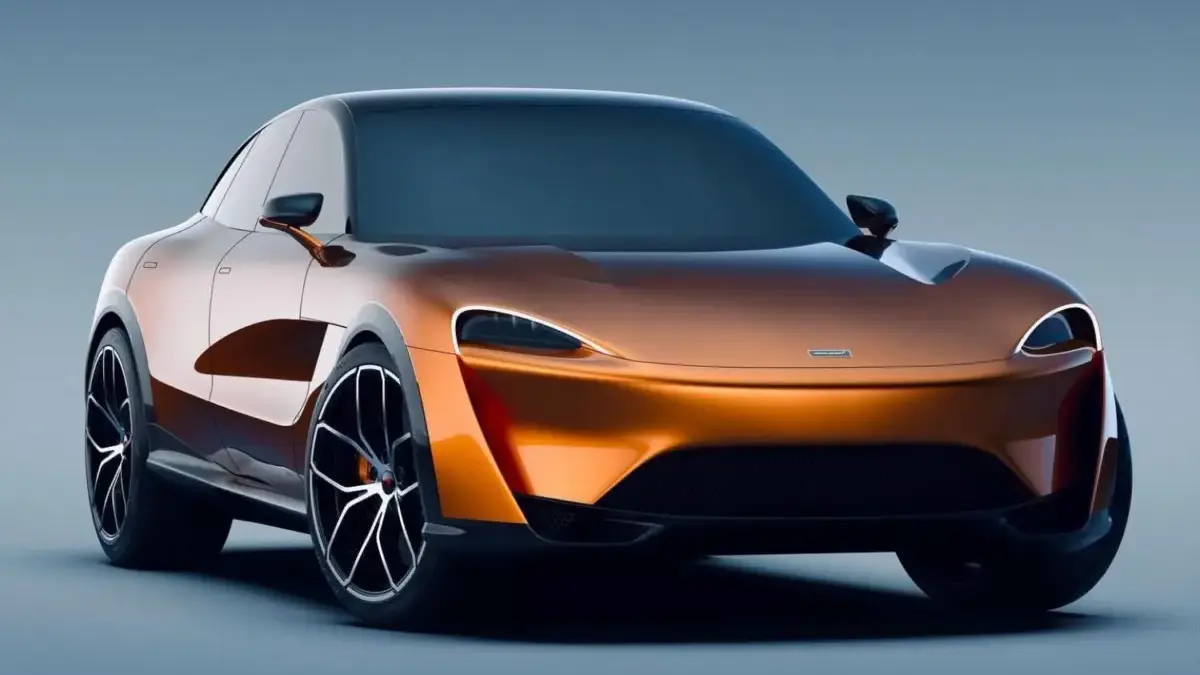
WOKING, UK — In a move that permanently reshapes the landscape of British automotive engineering, McLaren Automotive has officially confirmed the development of its very first high-performance SUV. The announcement brings to an end over a decade of fierce resistance from Woking against the hyper-lucrative utility vehicle segment.
Backed by a massive £500 million (approximately €580 million) infusion from L’IMAD, the Abu Dhabi-based investment vehicle that maintains control over the brand, the project represents an existential pivot. As traditional supercar markets contract and profitability demands intensify, McLaren is finally following in the high-riding footsteps of rivals like Ferrari, Lamborghini, and Aston Martin.
Main Facts: The Anatomy of the McLaren P47
Known internally by the codename P47, McLaren’s upcoming utility vehicle is designed from the ground up to challenge the heavyweights of the ultra-luxury segment, targeting vehicles such as the Ferrari Purosangue, Lamborghini Urus SE, and Porsche Cayenne Turbo GT.
- Vehicle Architecture: A sharply sculpted, four-door, five-passenger layout optimized for dynamic handling.
- Staggering Stance: Early dealer previews indicate the vehicle will feature unprecedented 24-inch wheels, setting a new aesthetic and engineering benchmark for the segment.
- Powertrain: The P47 will utilize a plug-in hybrid electric vehicle (PHEV) architecture, pairing an internal combustion engine with one or more electric motors to deliver blistering track-ready performance alongside reduced emissions.
- Timeline: Market introduction is slated for 2028, spearheading a rapid cadence of new product rollouts.
- Investment & Production: Funded by a £500 million injection, production will be anchored by a brand-new assembly facility in the United Kingdom, completely independent of the iconic historic McLaren Technology Centre (MTC) in Woking.
Chronology of a Paradigm Shift
The journey toward McLaren’s first SUV has been marked by ideological resistance, financial turbulence, and inevitable market pressure.
- The Early 2010s (The Purist Era): Under former leadership, McLaren repeatedly swore off utility vehicles, insisting that the brand’s DNA was strictly tied to lightweight, mid-engine carbon-fiber supercars. Executives famously declared that an SUV would dilute the brand’s racing heritage.
- 2021–2023 (Financial Pressures and Leadership Changes): Plagued by supply chain issues, developmental delays with the Artura, and pandemic-era financial strains, McLaren underwent several ownership restructurings. L’IMAD increased its stake, gaining ultimate control and steering the company toward a more pragmatic, profit-driven commercial strategy.
- 2024–2025 (Strategic Reset): Recognizing the staggering financial success of competitors—such as Lamborghini with the Urus and Ferrari with the Purosangue—management orchestrated a deliberate production slowdown. By cutting annual volume from roughly 3,300 units down to approximately 2,000 units in 2025, the brand cleared out dealer inventory and protected residual values while quietly greenlighting the P47 project.
- September 2026 (The Official Confirmation): McLaren breaks decades of tradition, officially confirming the £500 million investment package, the development of the P47 SUV, and plans for an entirely new British production facility.
Supporting Data: Financials, Production, and Market Realities
The scale of McLaren’s new industrial strategy goes far beyond a single model. The £500 million investment is designed to overhaul the company’s entire operational model, aligning it closer to Ferrari’s vertically integrated manufacturing approach.
1. Job Creation and Infrastructure
The funding will directly expand McLaren’s research and development centers and construct a dedicated manufacturing plant in the UK (with operations spanning Woking and Yorkshire). According to company projections, the initiative will:
- Create at least 1,000 direct jobs by 2032.
- Support an estimated 3,000 indirect supply chain jobs across the United Kingdom.
- Ensure that the UK remains the heartbeat of McLaren’s engineering and manufacturing empire.
2. In-House Powertrain Development
Historically, McLaren has relied on external engineering partners for various components of its powertrain development. The new investment changes this fundamentally. McLaren has confirmed it will develop two entirely new hybrid engines alongside proprietary transmissions. By bringing powertrain manufacturing in-house, Woking aims to slash supplier dependency, accelerate time-to-market, and dramatically improve profit margins.
3. Sales Volatility and the Volume Imperative
The necessity for an SUV is starkly underscored by recent sales data. In 2024, McLaren delivered nearly 3,300 vehicles. By 2025, that figure dropped to roughly 2,000 units. While a portion of this contraction was a calculated move to stabilize residual values, it exposed the structural vulnerability of relying exclusively on a two-door supercar lineup.
The P47 SUV is projected to act as a volume catalyst, instantly expanding McLaren’s demographic reach and supplying the steady cash flow required to fund future low-volume exotic cars.
Official Responses and Executive Strategy
Speaking on the strategic pivot, McLaren CEO Nick Collins emphasized that the brand’s financial goals require a product portfolio capable of generating high-volume profitability without diluting the core brand identity.
"Our objective is clear: achieve sustainable financial health and profit margins that compete with the absolute best in the luxury sector," industry sources quote executive leadership as noting. "To do that, we must meet the evolving demands of our global clientele, who increasingly desire everyday usability married to uncompromised performance."
Regarding the debate over electrification, Collins maintained a pragmatic stance. While competitors like Lotus have gone fully electric with vehicles like the Eletre, and Ferrari prepares its first EV for 2026, McLaren is exercising caution.
- The EV Stance: McLaren insists it will introduce a 100% battery-electric vehicle only when consumer demand fully justifies the massive capital expenditure.
- The Hybrid Bridge: For now, plug-in hybrid technology is viewed as the optimal sweet spot—offering dramatic emissions reductions and thunderous track capability while preserving the acoustic and mechanical theater of internal combustion engines that McLaren purists demand.
Global and Regional Implications
The European Landscape and Spanish Market Dynamics
For the European market—where McLaren maintains a robust dealer network—the arrival of the P47 is a game-changer. European automotive economies, particularly in the UK and key continental hubs, stand to benefit from the localized supply chain.
In Spain, where the high-performance luxury SUV segment has experienced sustained growth driven by models like the Lamborghini Urus and Aston Martin DBX, dealers are eagerly anticipating the P47. Spanish buyers who admire McLaren’s engineering prowess but require day-to-day practicality will finally have an option tailored to their lifestyle.
Engineering Challenges
To succeed, McLaren knows the P47 cannot simply be a heavy, badge-engineered utility vehicle. The engineering team faces the monumental task of embedding McLaren’s trademark lightweight philosophy, carbon-fiber expertise, and razor-sharp vehicle dynamics into a larger, multi-passenger footprint. If Woking can successfully translate its supercar driving dynamics into an SUV chassis, it may redefine what drivers expect from a high-performance utility vehicle.
Conclusion: A High-Stakes Leap into 2028
The official greenlighting of McLaren’s first SUV marks the end of an era of purist stubbornness and the beginning of a high-stakes commercial crusade. With £500 million in backing, a new British factory, an ambitious cadence of annual model launches (including the V6 hybrid P34 supercar arriving to replace the Artura), and a clear hybrid roadmap leading up to 2028, McLaren is writing its next chapter.
Whether the P47 can successfully balance heritage with modern market demands will determine if Woking can secure its long-term future among the automotive elite. For now, the automotive world watches and waits for 2028.

Leave a Reply