

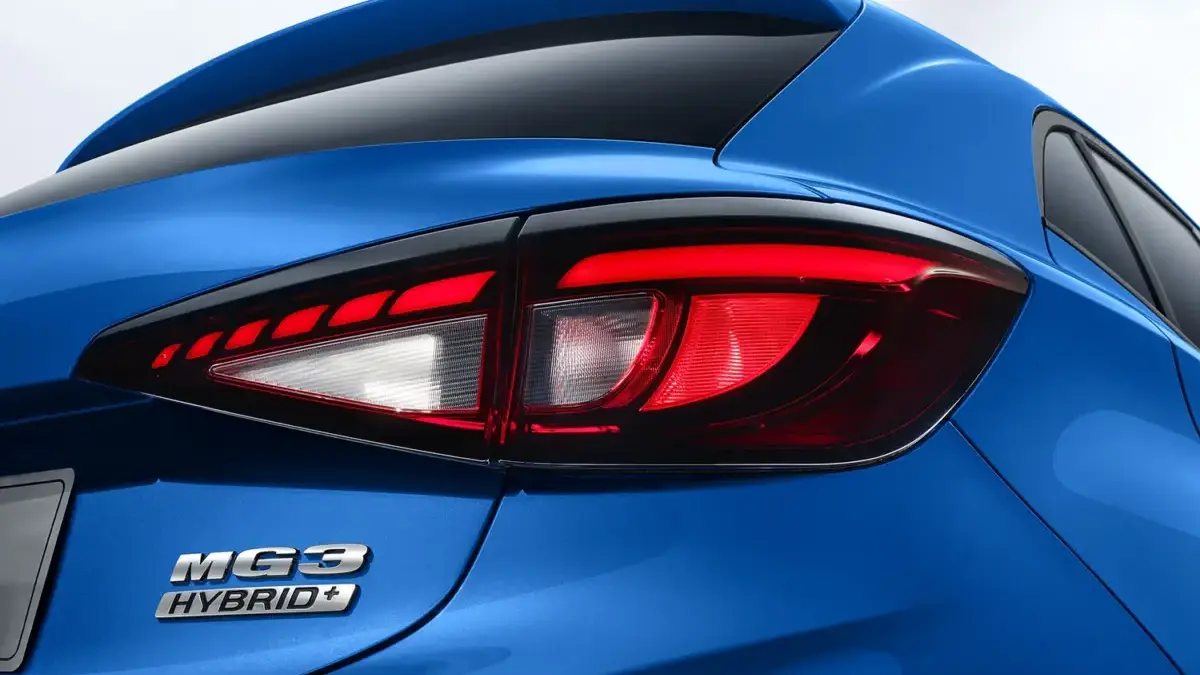
The automotive landscape for affordable urban mobility is shifting rapidly, and value-focused manufacturers are under increasing pressure to mature their products. MG Motor is tackling this challenge head-on with a subtle yet crucial update for its highly successful utility hatchback. Known internally as the MY 26.5 update, the latest iteration of the MG3 Hybrid+ focuses directly on addressing early consumer feedback concerning refinement, cabin acoustics, and powertrain responsiveness.
While the headline performance figures and the aggressive pricing structure remain untouched, these behind-the-scenes mechanical refinements aim to elevate the driving experience of a car that has already shaken up the European B-segment. As competition intensifies against established heavyweights like the Toyota Yaris Hybrid and the Renault Clio E-Tech, MG’s latest move demonstrates a commitment to not just being the cheapest option on the showroom floor, but a genuinely competitive, refined everyday vehicle.
Main Facts: What Changes in the MY 26.5 Update?
The core objective of the MY 26.5 update is to smooth out the rough edges of the MG3 Hybrid+ without altering the fundamental formula that made it a sales phenomenon. MG’s engineering teams have heavily revised both the electric traction motor and the on-board generator.
- Enhanced NVH Levels: The primary focus was placed on reducing Noise, Vibration, and Harshness (NVH) filtering into the cabin. The redesigned electric motor components significantly cut down the high-frequency hums and mechanical tremors previously noted during urban driving cycles.
- Sharper Throttle Response: Powertrain software calibration has been optimized. While total system output remains capped at a muscular 194 horsepower (143 kW), the delivery is now more immediate when the driver steps on the accelerator.
- Cabin Material Upgrades: Visual and tactile quality inside the cabin has been elevated. Standard, Comfort, and Business trims receive a newly developed black fabric upholstery, while the range-topping Luxury trim adopts a sophisticated dark mix of leather and synthetic suede (alcantara-style).
- Zero Mechanical Penalties: The vehicle’s core specifications remain robust. The 1.5-liter naturally aspirated petrol engine works in tandem with an electric motor and a 1.83 kWh battery pack, routed through a unique three-speed automatic transmission. Fuel consumption holds steady at a frugal 4.4 liters per 100 kilometers, with CO2 emissions pegged at 100 g/km, preserving its prized DGT ECO label in Spain.
Chronology: The Evolution of the MG3 in Europe
To understand the significance of this mid-cycle technical refinement, it is necessary to look back at how the MG3 carved out its market position so swiftly.
Early 2024: The Global Debut
MG officially unveiled the all-new MG3 Hybrid+ at the Geneva International Motor Show, promising a paradigm shift for budget-conscious buyers. Unlike previous iterations of the MG3—which were largely confined to budget markets with aging tech—the new generation was engineered from the ground up to tackle strict European safety, emissions, and consumer standards.
Mid to Late 2024: Commercial Launch and Rapid Adoption
Upon hitting European dealerships, the vehicle caught competitors off guard. By pairing a 194-hp hybrid setup (dwarfism-defying power for a B-segment hatchback) with a starting price well below traditional hybrid rivals, MG registered explosive sales growth across key markets, particularly in Spain, Italy, and the UK.
Late 2025: Expanding the Lineup (Business Edition)
Recognizing the demand beyond private retail buyers, MG expanded the lineup with the introduction of the Business Edition, specifically tailored for corporate fleets and comprehensive long-term renting programs. This underscored the vehicle’s reliability and cost-efficiency credentials.
Early 2026: The MY 26.5 Refinement Phase
Barely two years after its initial market launch, MG introduced the MY 26.5 update. Instead of a superficial facelift involving bumpers or headlights, the brand listened closely to automotive journalists and early adopters, targeting acoustic comfort and throttle mapping to address minor criticisms regarding cabin serenity and low-speed powertrain transitions.
Supporting Data: Technical Specifications and Market Pricing
The financial accessibility of the MG3 has always been its strongest selling point. The updated range maintains a clear hierarchy, offering both a pure internal combustion engine (ICE) option and the self-charging hybrid variant.
Powertrain Comparison
| Specification | MG3 Petrol (ICE) | MG3 Hybrid+ (MY 26.5) |
|---|---|---|
| Engine Type | 1.5L 4-cylinder atmospheric | 1.5L Petrol + Electric Motor |
| Total Power | 116 HP | 194 HP |
| Transmission | 5-speed manual | 3-speed automatic |
| Battery Capacity | N/A (Non-hybrid) | 1.83 kWh |
| WLTP Fuel Economy | 6.1 L / 100 km | 4.4 L / 100 km |
| CO2 Emissions | 137 g/km | 100 g/km |
| DGT Environmental Label | C | ECO |
Trim Levels and Equipment
Every MG3 model leaves the factory with an impressive array of standard features, defying expectations for an entry-level vehicle.
- Standard, Comfort, and Business: Feature the newly engineered black fabric upholstery, a 7-inch digital instrument cluster, a 10.25-inch central infotainment touchscreen, a reversing camera, and the comprehensive MG Pilot suite of advanced driver assistance systems (ADAS).
- Luxury: Adds premium touches including the leather-and-suede upholstery mix, enhanced audio capabilities, and 360-degree parking cameras.
Pricing Structure in Spain (Starting Tariffs)
- MG3 Petrol (116 HP): Starts from €13,990.
- MG3 Hybrid+ (194 HP): Starts from €17,840 (subject to promotional financing and commercial conditions).
- Price Delta: The premium to step up from the pure petrol manual version to the high-output self-charging hybrid is €3,850—a remarkably low barrier for entry into ECO-labeled hybrid motoring.
Additionally, MG continues to back its vehicles with a comprehensive 7-year or 150,000-kilometer warranty, complemented by temporary promotional campaigns that include two free maintenance services (capped at two years or 48,000 km).
Official Responses and Brand Strategy
MG executives have consistently framed the MG3 as a democratizing force for green technology in Europe. Speaking on the rollout of the MY 26.5 updates, corporate representatives emphasized that customer satisfaction extends beyond raw spec sheets.
"When you offer a utility vehicle with nearly 200 horsepower at an unbeatable price point, consumers take notice," noted a regional product manager during the briefing. "However, our commitment does not stop at the initial sale. Listening to our drivers meant acknowledging that while the performance and economy were universally praised, the everyday acoustic comfort in heavy stop-and-go urban traffic could be elevated. The MY 26.5 revisions successfully bridge the gap between raw power and refined execution."
MG’s strategy relies heavily on undercutting legacy Japanese and European manufacturers on price while matching—or in terms of sheer horsepower, vastly exceeding—their standard equipment levels. By rolling out quiet operational fixes without hiking the base MSRP, MG aims to protect its residual values and capture disgruntled buyers priced out of traditional mainstream brands.
Implications: What This Means for the B-Segment Market
The subtle yet strategic refinement of the MG3 Hybrid+ carries profound implications for the broader European automotive market.
1. Pressure on Legacy Competitors
Legacy automakers like Toyota, Renault, and Hyundai have long dominated the hybrid utility segment. Vehicles like the Toyota Yaris Hybrid are renowned for bulletproof reliability and fuel efficiency, but they often command a hefty price premium and have historically faced criticism for the droning noise of their CVT gearboxes under hard acceleration. By tackling its own refinement issues—specifically reducing motor noise and jittery power delivery—MG is stripping away traditional justifications for paying thousands of euros more for a European or Japanese badge.
2. Redefining Value Expectations
Buyers in the B-segment are uniquely sensitive to economic shifts. With inflation putting pressure on household budgets, spending upwards of €23,000 to €25,000 for a well-equipped hybrid supermini has become prohibitive for many. At an entry point of €17,840 for a 194-hp hybrid with an ECO label, the MG3 changes consumer expectations of what an affordable car should offer.
3. Urban Mobility and the ECO Label
In Spain and across major metropolitan areas throughout the European Union, Low Emission Zones (ZBE) are increasingly restricting access for older internal combustion vehicles holding standard or no environmental badges. The widespread availability of accessible ECO-labeled hybrids like the MG3 ensures that urban commuters can future-proof their daily transportation without breaking the bank.
Conclusion
The MG3 Hybrid+ update proves that MG is not content resting on its initial success. By smoothing out mechanical harshness, updating interior aesthetics, and preserving an aggressive pricing model, the brand has reinforced its position as a serious contender in Europe. For everyday drivers seeking a punchy, well-equipped, and economical hybrid that won’t drain their savings account, the refined MG3 stands today as one of the most compelling choices on the market.



Leave a Reply